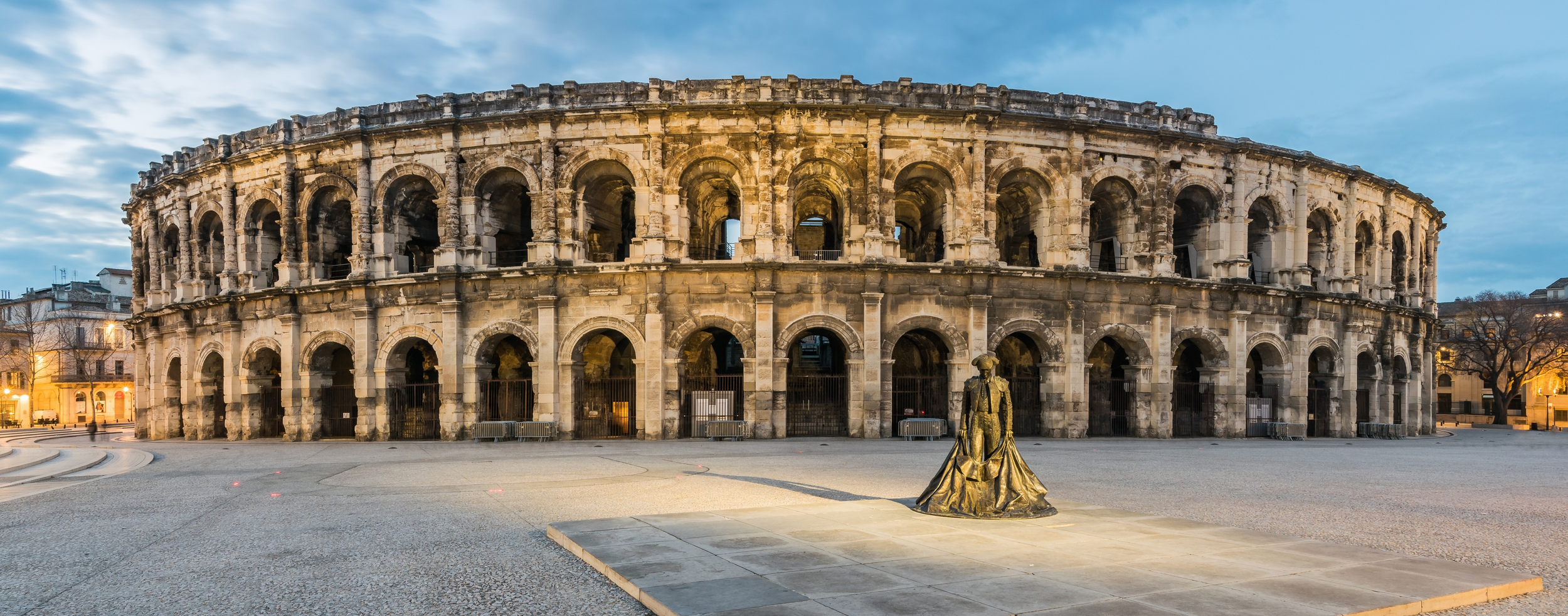
The Amphitheatre of NîmesClick to open side panel for more information, or the Arena of Nîmes, stands as a premier example of Roman civil engineering, constructed during the Flavian dynasty (roughly 70 CE). Its survival is a testament to the durability of Roman limestone construction, and it remains the most well-preserved amphitheater from the Roman world.
Advanced Architectural and Engineering Feats
Precision Masonry: The structure is built from massive blocks of local limestone, fitted together with such geometric precision that mortar was unnecessary. This "dry-stone" construction allowed the building to flex slightly during seismic events, preventing catastrophic collapse over the centuries.
The Vomitoria System: The architect utilized an elliptical design featuring 60 arcades distributed across two levels. These acted as vomitoria—sophisticated egress corridors that allowed upwards of 24,000 spectators to fill or empty the arena in minutes. This design remains a gold standard for stadium crowd control even in modern architecture.
Subterranean Complexity: Beneath the arena floor existed a labyrinthine network of chambers and galleries, known as the hypogeum. This area housed the mechanical heavy lifting equipment, including winches and counterweights, which were used to hoist scenery, gladiators, and wild animals through trapdoors onto the arena floor, creating the illusion that they appeared out of thin air.
Environmental Adaptation: The building included integrated stone corbels (brackets) along its perimeter, which anchored masts for the velarium. This was an enormous, complex system of ropes and canvas awnings operated by Roman naval specialists, designed to provide shade for the spectators throughout the changing angles of the sun.
Hydraulic Mastery: Nîmes was renowned for its water engineering (as seen in the nearby Pont du Gard). The amphitheater benefited from this infrastructure, featuring advanced drainage channels that prevented the arena floor from flooding and potentially provided water for cleaning the space or facilitating mock naval battles (naumachiae).
Sociopolitical Context and Romanization
Imperial Propaganda: The construction of such a massive project in the province of Gallia Narbonensis was an intentional display of imperial strength. It sent a clear message to the local Gallic aristocracy: Roman rule brought stability, technological supremacy, and high-culture entertainment.
The Hierarchical Spectacle: The seating was strictly partitioned, reinforcing the rigid social stratification of Roman society. The elite and high-ranking officials occupied the front rows (the ima cavea), while the lower classes and enslaved people were relegated to the highest, steepest sections of the bleachers.
Public Life and Law: The amphitheater was not merely a venue for "bread and circuses." It functioned as the primary site for the public display of justice. Executions performed here were public lessons in the reach of Roman law, ensuring that everyone in Nemausus understood the penalties for rebellion or criminal behavior against the state.
Centuries of Transformation
Medieval Fortification: After the fall of the Western Roman Empire, the arena ceased to be a venue for public entertainment and became a walled, fortified town. Between the 5th and 18th centuries, it housed a permanent population, with hundreds of dwellings, a church, and even a castle constructed within its walls. This repurposing effectively "armored" the original structure, protecting the lower arcades from the stone-robbing that destroyed many other Roman monuments.
Restoration and Modern Heritage: During the 19th century, authorities evicted the inhabitants and embarked on a major restoration project to expose the original Roman facade. This act of preservation transformed the site back into a monument of classical antiquity. Today, the arena continues to function as a bridge between history and modern life; it is still used for bullfights, concerts, and historical reenactments, ensuring that the space continues to serve as an active site of public gathering nearly 2,000 years after its inauguration.