Introduction: The Monument of Synthesis
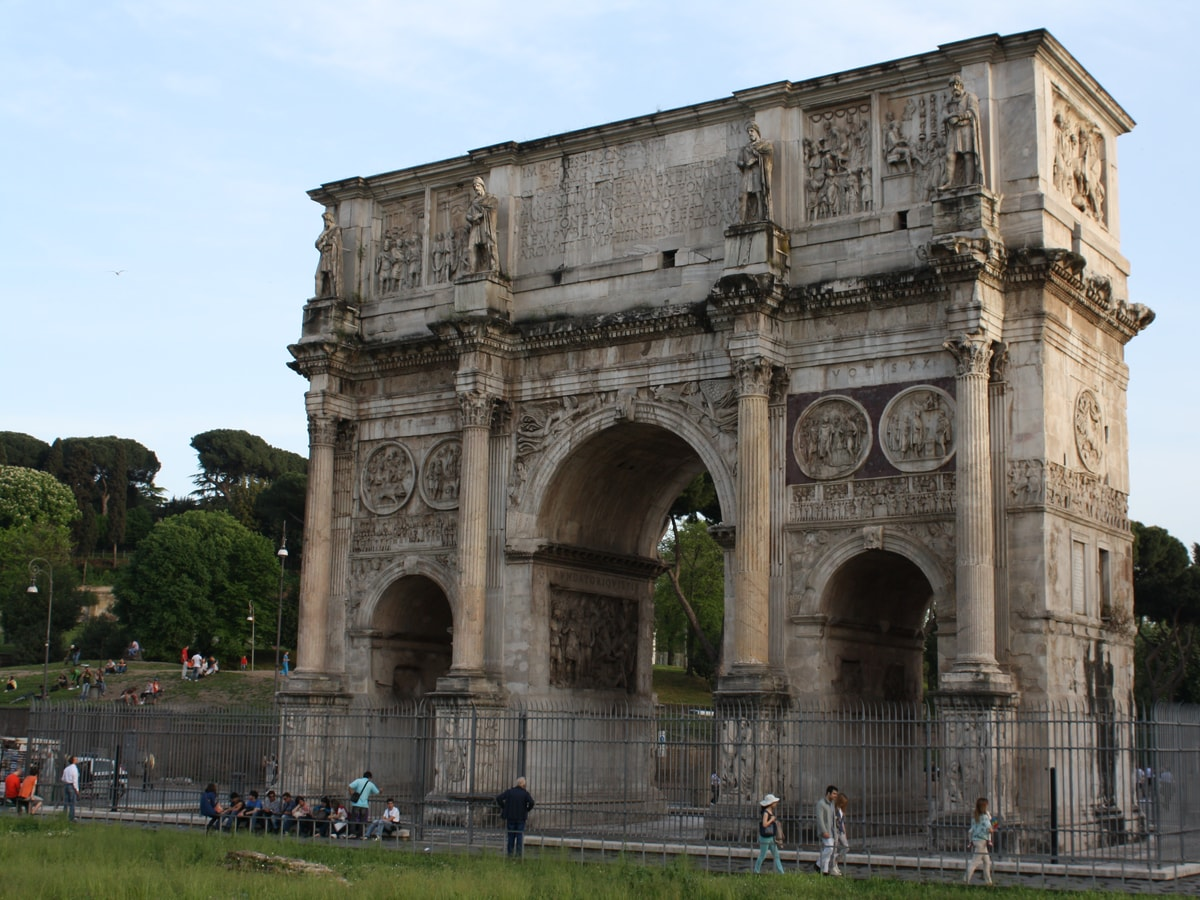
Standing in the shadow of the Colosseum, the Arch of Constantine is the largest surviving triumphal arch from classical antiquity. Erected in 315 CE, it was commissioned by the Roman Senate to commemorate Emperor Constantine I’s historic victory over his rival Maxentius at the Battle of the Milvian Bridge (312 CE). This triumph permanently altered the course of Western civilization, setting Constantine on the path to legalizing and eventually adopting Christianity.
While the arch is a architectural marvel, its true historical significance lies in its raw artistic composition. Unlike earlier triumphal monuments carved entirely from fresh marble, the Arch of Constantine is a colossal mosaic of recycled art. It is the ultimate manifestation of spolia—the practice of stripping materials from older monuments to integrate them into a new structure. Far from being a random act of architectural desperation, this calculated artistic theft served as a highly sophisticated weapon of imperial propaganda, visually binding Constantine to the greatest rulers of Rome's golden past.
1. The Anatomy of Spolia: Architectural Graverobbing
The Arch of Constantine functions as an open-air art museum of the High Roman Empire. While the structural core of the arch and the narrow, horizontal narrative bands are 4th-century originals, the most prominent figural sculptures were stripped from the monuments of three iconic "Good Emperors" who ruled two centuries prior.
The Trajanic Panels (98–117 CE): Deep inside the central archway and high on the attic sides are large reliefs showing Trajan conquering the Dacian Empire. They celebrate military ruthlessness and imperial expansion.
The Hadrianic Roundels (117–138 CE): Flanking the central arch are eight circular medallions (tondi) from the reign of Hadrian. They depict peaceful, aristocratic activities: hunting wild boars, lions, and bears, followed by pious sacrifices to gods like Apollo, Diana, and Hercules.
The Aurelian Panels (161–180 CE): On the absolute highest level (the attic) sit eight large rectangular panels from a monument to Marcus Aurelius. These scenes highlight the humanitarian and civic duties of the emperor, showing him distributing money to the poor, pardoning barbarian prisoners, and addressing his legions.
       ___________________________________________
      |  [Marcus Aurelius]     [Attic]            |
      |___________________________________________|
      |          O   O                 O   O      | <- [Hadrianic Roundels]
      |   ____   _____   ___________   _____   ___|
      |  |    | |     | |           | |     | |   |
      |  |    | |     | |           | |     | |   |
      |  |____| |_____| |___________| |_____| |___|
      |             <- [Constantinian Frieze] ->  |
2. The Propaganda Strategy: Legitimacy Through Association
For decades, early Renaissance art historians looked down on the Arch of Constantine, claiming that the reuse of older sculptures proved that the artistic skill of 4th-century Rome had decayed into total bankruptcy. Modern art historians have thoroughly debunked this theory, recognizing spolia as a deliberate political strategy.
Constantine was a usurper. He had launched a civil war against a ruling emperor, and his victory resulted in the slaughter of thousands of fellow Roman citizens. To cement his fragile grip on power, his propaganda machine needed to rewrite history.
By literally cutting the heads off the statues of Trajan, Hadrian, and Marcus Aurelius and recarving them into his own likeness, Constantine visually stole their political legitimacy.
To the Roman public walking beneath the arch, the message was unmistakable: Constantine was not a bloody civil-war tyrant; he was the spiritual heir and rightful successor to Rome's greatest, most beloved rulers.
3. The Stylistic Clash: Classical Naturalism vs. Late Antique Abstract
Because the arch seamlessly blends 2nd-century panels with 4th-century additions, it provides a striking, side-by-side visual timeline of how the Roman mind—and the way it viewed art—was fundamentally changing on the eve of the Middle Ages.
This shift toward abstract, flat, and highly symbolic art was not a failure of skill. It was a conscious ideological pivot. As the chaotic empire transitioned into an absolute autocracy, artists abandoned the messy realism of the physical world to create a new, clear visual language of divine authority—a language that would directly define the religious art of the Byzantine Empire and the Christian Middle Ages.
4. The Enigmatic Inscription: A Coding of Faith
The massive bronze-lettered inscription on the attic of the arch contains one of the most heavily debated sentences in Roman history. It praises Constantine because, through his own mind and "by divine inspiration" (instinctu divinitatis), he delivered the republic from the tyrant Maxentius.
The phrase instinctu divinitatis was a masterstroke of ambiguous political compromise. To the city's growing Christian population, it was a clear, quiet nod to the God of the Christians, who Constantine claimed had granted him victory at the Milvian Bridge. To the conservative pagan majority and the Roman Senate, the phrase was vague enough to apply to any traditional deity, from Jupiter to Apollo. The arch stood as a monument of transition, straddling the fence between the dying polytheistic classical world and the emerging monotheistic Christian empire.