Introduction: The Shamanic All-Father
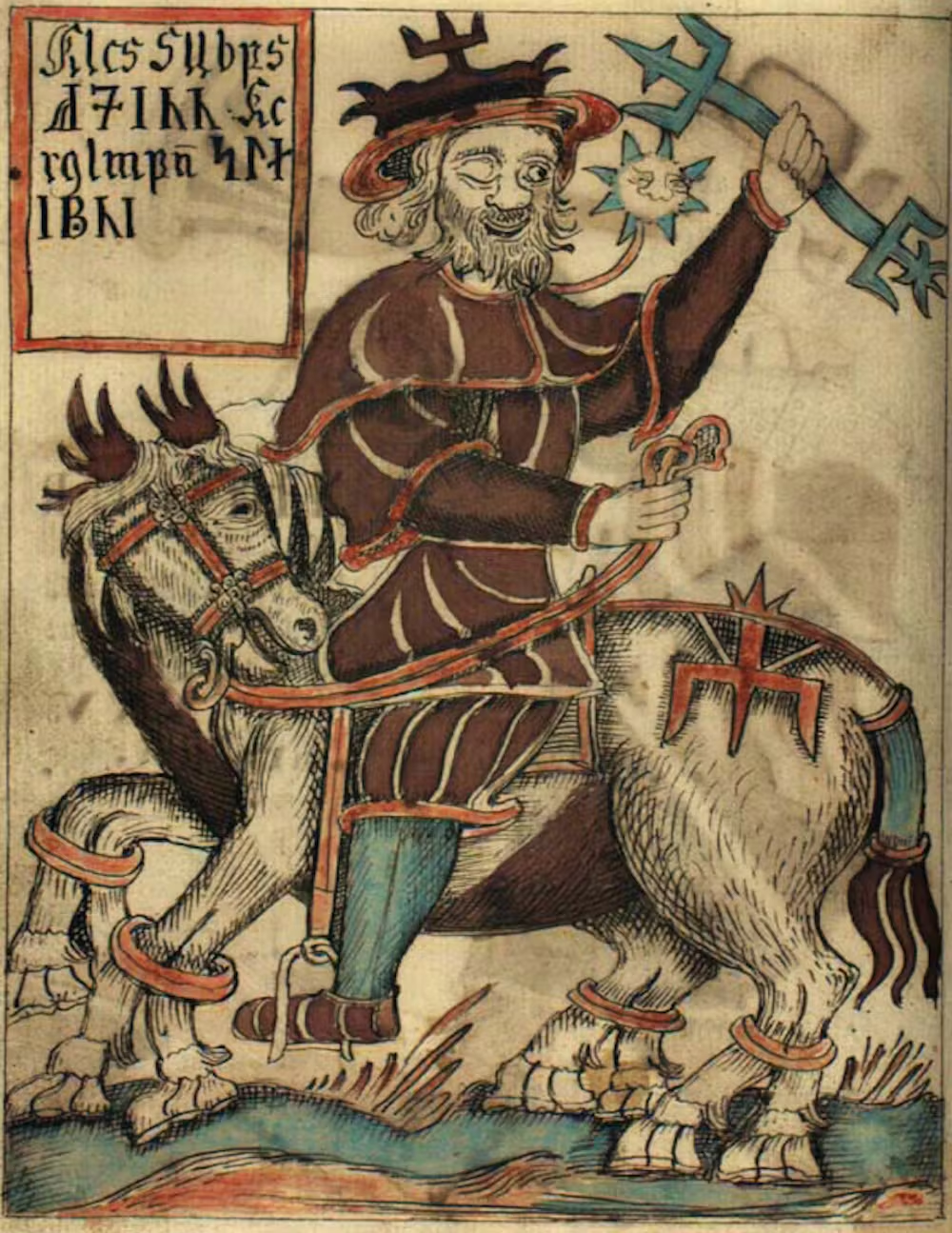
In popular culture, Odin is often envisioned as a stout, warrior-king ruling over a martial Valhalla, a northern equivalent to Zeus. However, the medieval Icelandic texts and poem collections like the Poetic Edda paint a far more complex, eerie picture. Odin was a god of ecstacy, poetry, the dead, and fundamentally, seiðr—a form of late Iron Age Norse shamanism.
Unlike the structured, state-sanctioned priesthoods of ancient Rome or Egypt, Norse shamanism relied on altered states of consciousness, spirit travel, and gender-bending magical practices. For decades, historians treated these literary accounts of Odin's sorcery with skepticism. However, modern archaeological excavations across Scandinavia have unearthed physical artifacts—staffs, amulets, amulets of animal shape, and burial sites—that provide concrete evidence that Odin's mythological shamanism mirrored real-world spiritual practices in the Viking Age.
1. Mythological Foundations: Odin as the Arch-Shaman
To understand the archaeology, one must understand how Norse mythology framed Odin's search for hidden knowledge. He was not omnipotent; every ounce of his cosmic wisdom was won through grueling, shamanic ordeals of self-sacrifice.
The World Tree Initiation: According to the poem Hávamál, Odin hanged himself from a branch of Yggdrasil (the World Tree), pierced by his own spear, for nine wind-swept nights. Fasting and isolated, he stared into the abyss until he underwent a spiritual death and rebirth, catching the secrets of the magical runes. This mimics the classic shamanic motif of undergoing ritualistic dismemberment and torture to gain access to the spirit realm.
The Price of Insight: To drink from Mímir’s Well of Wisdom, Odin gouged out his own right eye as a permanent sacrifice, choosing physical half-blindness to achieve cosmic, inner vision.
Spirit Flight and Shape-Shifting: The texts claim that while Odin’s physical body lay as if asleep or dead, his spirit could travel to distant worlds in the guise of a bird, fish, or wild beast. He was accompanied by his animal familiars: the wolves Geri and Freki, and the ravens Huginn ("Thought") and Muninn ("Memory"), who served as extensions of his psychic consciousness.
2. Archaeological Evidence of Seiðr
Seiðr was a specific branch of magic associated with prophecy, manipulation of minds, and traversing the spirit world. Archaeological finds have brought the practitioners of this magic out of the realm of folklore and into reality.
The Völva Staffs: The practitioners of seiðr were primarily women known as völur (singular: völva), meaning "wand-bearers." Excavations of rich female graves across Scandinavia—most notably the Fyrkat burial in Denmark—have revealed heavy, ornate iron or bronze rods. Long dismissed by early archaeologists as "cooking spits," trace analysis and context have proven these are ritual staffs used by shamans to anchor themselves while entering a trance state.
Psychoactive Materials: The Fyrkat völva grave also contained a pouch filled with hundreds of henbane seeds (Hyoscyamus niger). When burned or thrown onto an open fire, henbane produces powerful, hallucinogenic smoke that induces feelings of flying, delirium, and altered states—the exact "spirit flight" attributed to Odin.
3. The Symbolism of the Horned Figures
One of the most persistent iconographic links between Odin and active shamanism is found on stamped gold foils (gullgubber), belt buckles, and helmets dating from the Vendel Period into the Viking Age.
Many of these metal plates depict a male figure dancing or marching while wearing a headpiece topped with two stylized, curving horns that terminate in bird heads—traditionally identified as Odin's ravens. Often, the figure is depicted with only one eye, or with one eye intentionally obscured or defaced on the metal stamp.
This hybrid iconography represents the shamanic costume. Wearing antlers or bird-headed crests allowed the practitioner to visually and spiritually merge with their animal familiars, a cross-cultural hallmark of shamanic tradition designed to signal that the user was actively walking between the human world and the realm of the beasts.
4. The Gender-Bending Paradox of Odin's Magic
In the hyper-masculine warrior ecosystem of the Vikings, the practice of seiðr carried a deep social taboo for men. The sagas state that practicing this passive, receptive form of sorcery opened a man up to charges of ergi—a severe term implying effeminacy and unmanliness.
Loki taunts Odin in the poem Lokasenna, mocking him for practicing magic on Samsey like a witch, beating a drum, and living in the guise of a woman.
Despite the social stigma, Odin consciously chose to endure the shame of ergi because the magical rewards of seiðr were too immense to ignore. This willingness to transcend traditional gender binaries is a core feature of global shamanism. By breaking down societal taboos and embodying both masculine and feminine energies, the shaman strips away the ego, unlocking a fluid state of being that allows them to interact with spirits that ordinary mortals could never perceive.