Introduction: The Granary's Artistic Zenith
While Italy was the political heart of the Roman Empire, the provinces of North Africa (Africa Proconsularis) were its economic engine. Fueled by a massive olive oil boom and immense grain exports, ancient Thysdrus (modern-day El Jem, Tunisia) grew from a modest desert outpost into one of the wealthiest metropolitan hubs in the entire Mediterranean basin.
This immense agricultural fortune manifested in two spectacular ways: a colossal amphitheater capable of seating 35,000 spectators, and an unparalleled obsession with luxury residential flooring. The affluent elite of Thysdrus lined the floors of their expansive villas with millions of vibrantly colored stone tiles (tesserae). Today, El Jem boasts one of the world's most significant collections of in-situ and museum-preserved Roman mosaics, serving as a pristine visual encyclopedia of North African economic power, mythological devotion, and daily life.
1. The North African Style: Polychrome Masterpieces
Roman mosaics in North Africa developed a distinct aesthetic identity that contrasted sharply with the geometric, black-and-white stone trends favored in contemporary Rome.
The Vibrant Palette: Utilizing local North African limestones, marbles, and fired glass pastes, local workshops (officinae) mastered a rich, realistic palette of deep ochres, fiery terracotta reds, emerald greens, and rich blues.
Dynamic Realism: Rather than sticking to rigid geometric borders, North African artists pioneered an energetic, fluid style. They filled entire rooms with sweeping, borderless landscapes, action-packed hunting scenes, and highly complex optical illusions that created a sense of texture and motion beneath the feet of guests.
2. Iconography: The Imagery of Wealth and Entertainment
The mosaic pavements of El Jem were not purely decorative; they were deliberate displays of status, civic pride, and religious devotion designed to impress visitors.
The Amphitheater Legacy: Given the prominence of Thysdrus's massive arena, many mosaics explicitly celebrate the venationes (staged beast hunts). Pavements vividly detail specialized gladiators (venatores) combating leopards, lions, and wild boars. Some even name individual famous beasts and star performers, acting as the ancient equivalent of sports memorabilia.
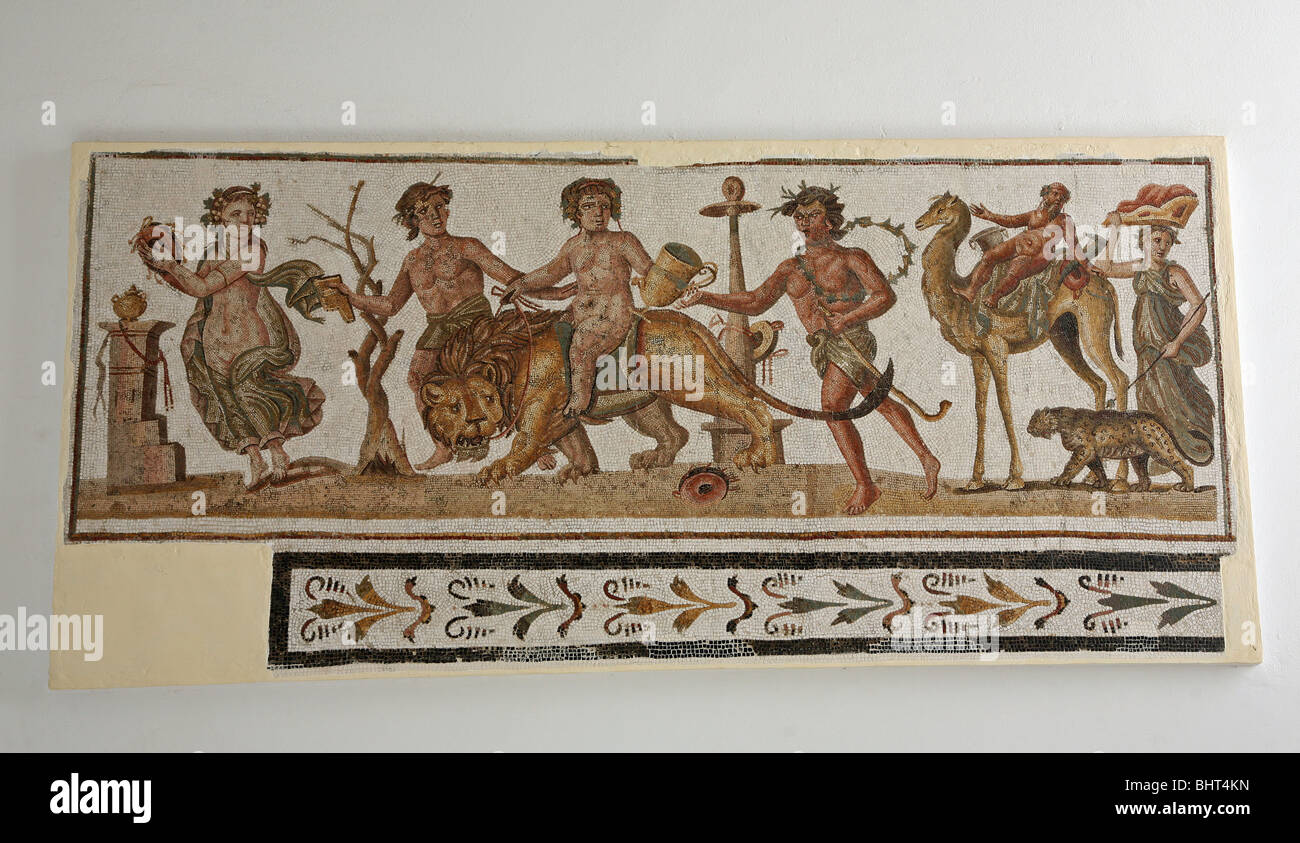
The Triumph of Bacchus: Dionysus (Bacchus), the god of wine, theater, and wild nature, was immensely popular in Roman North Africa due to the region's agricultural abundance. The mosaics of El Jem frequently depict his triumphant processions, often showing him riding panthers or tigers surrounded by ecstatic satyrs and maenads.
Marine Ecologies: Despite sitting miles inland from the Mediterranean coast, El Jem’s villas are filled with rich marine mosaics. These scenes feature Neptune riding sea-monsters, surrounded by stunningly accurate depictions of local fish, octopuses, and crustaceans—a subtle flex showing that the villa owner possessed the wealth to import coastal delicacies.
3. The Socio-Economic Fabric of the Mosaic Trade
The sheer quantity and scale of the mosaics uncovered in El Jem point to a highly organized, lucrative corporate ecosystem operating within the city.
The Patronage Network: Commissioning a multi-room mosaic layout required immense capital. Landowners, olive oil magnates, and civic magistrates used these floors to visual advertise their successful trade networks.
The Craft Hierarchy: Mosaic production was split between different tiers of artisans. The tessellarius cut the square stone tiles and laid down standard geometric fill patterns, while the highly skilled emblematiarius designed and executed the central, painterly figural panels (emblemata) in specialized workshops before embedding them into the villa floors.
4. Preservation: The House of Africa
The supreme archaeological jewel of El Jem's domestic architecture is the House of Africa, a luxurious 2nd-century aristocratic mansion discovered intact and subsequently reconstructed within the grounds of the El Jem Archaeological Museum.
Walking through the House of Africa offers an unmediated experience of how ancient elites used floor art to zone their domestic spaces.
The mansion features two remarkably preserved allegorical masterpieces. The first depicts Africa personified as an empress wearing an elephant-skin headdress, surrounded by symbols of agricultural fertility. The second depicts the Provinces of Rome, visually celebrating the interconnected global economy of the empire. These floors were explicitly designed to guide the footsteps of elite visitors, ensuring that wherever a guest looked, they were confronted with a visual reminder that Thysdrus was a vital, indispensable heart of the civilized world.