BY THE ARCHAEOLOGIST EDITOR GROUP
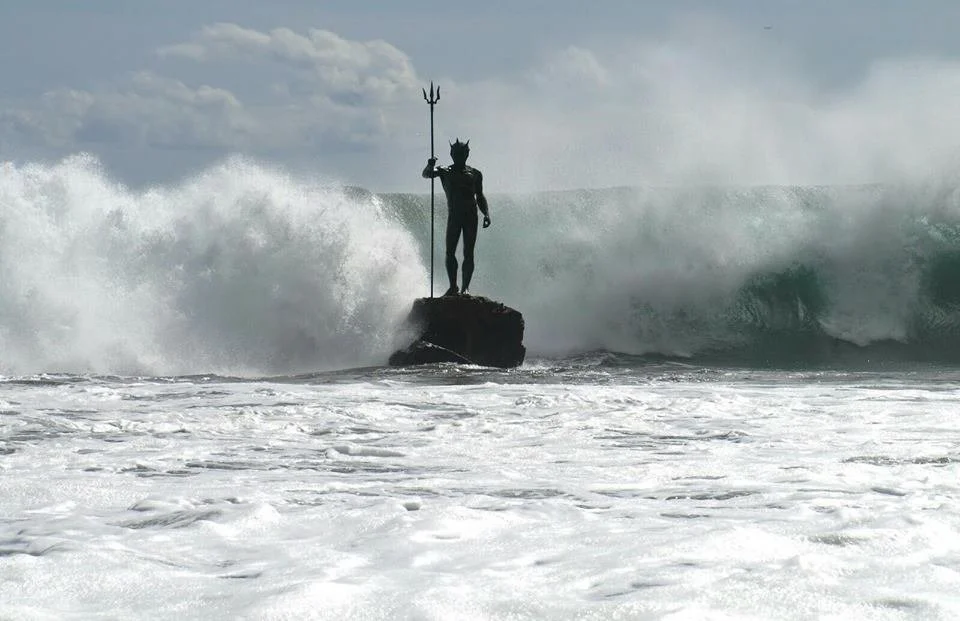
Looming grandly over the promenade of Melenara Beach, the imposing sculpture of Neptune, god of the sea, is an iconic sight for both locals and visitors to Gran Canaria, Spain. An intricate creation of the revered Spanish sculptor Luis Arencibia, this statue has become a symbol of the island's cultural charm and oceanic heritage. Today, we delve into the captivating history and distinct characteristics of the Neptune statue, explore the life and career of its maker, Luis Arencibia, and provide insight into its strategic location in Plaza de Melenara.
The Statue of Neptune
The statue of Neptune in Gran Canaria was designed and created by Luis Arencibia, a talented sculptor who managed to infuse a blend of traditional Canarian culture and classical mythological symbolism into the artwork. It stands as an indomitable embodiment of the sea, an element that plays a central role in the lives and livelihoods of the people of Gran Canaria.
Constructed entirely out of bronze, the statue exhibits Neptune with his characteristic trident in hand, appearing to emerge powerfully from the ocean waves. It's not merely an artwork; it is a tribute to the sea's significance in Canarian life and an acknowledgement of its dominance and influence on the archipelago. From a distance, Neptune seems to be standing guard over the sea, a beacon of strength and courage for the seafaring residents of Gran Canaria.

Sculptor Luis Arencibia
Born and bred in Gran Canaria, Luis Arencibia is known for his affinity for the sea, a central theme in his many artworks. His artistic endeavors began at a young age, and over the years, he has developed a remarkable ability to shape materials into stunning representations of life.

With a keen eye for detail, Arencibia gives each of his creations a unique personality and meaning. His works are characterized by a deep sense of realism blended with a touch of mythology, often drawing inspiration from the island's natural beauty and historical heritage.
The Neptune statue, like his other works, showcases his exceptional craftsmanship and artistic flair. It's an embodiment of Arencibia's love for his homeland, its people, and their deep connection with the sea. The statue demonstrates his mastery of handling intricate details, an attribute that has made his work resonate strongly with both art connoisseurs and casual admirers.

The Plaza de Melenara: A Strategic Location
The Neptune statue's location, Plaza de Melenara, is a spot steeped in history and local significance. Positioned along the eastern coast of Gran Canaria, the Plaza de Melenara is a popular locale that bears witness to the constant interplay between land and sea.
The plaza is a hub of local life, where people gather for socializing, events, and celebrations. The Neptune statue's strategic placement here, against the backdrop of the sea, makes it a central figure, an embodiment of the town's spirit and character.

Melenara Beach, adjacent to the plaza, is a popular attraction for locals and tourists alike. Its golden sands and azure waters add to the allure of the plaza and provide a perfect setting for the Neptune statue.
In conclusion, the Neptune statue in Gran Canaria, a creation of the talented Luis Arencibia, is more than just a public artwork. It is a symbol that seamlessly intertwines local culture, mythology, and the island's unending love affair with the sea. And its location, the Plaza de Melenara, is a vibrant testimony to the harmonious co-existence of natural beauty and human creativity. It's a must-see for anyone visiting Gran Canaria and a testament to the island's rich heritage and artistic prowess.