5,500-Year-Old Wildcat Discovery Sheds Light on Ireland’s Prehistoric Wildlife
The recent discovery of a 5,500-year-old wildcat in a cave in Co Clare provides new insights into Ireland’s prehistoric animal populations. While archaeologists have long believed wildcats were present in Ireland in prehistoric times, it is only now that definitive evidence has been found.
The bones, dating to the Neolithic period, were uncovered during excavations in Glencurran Cave, located in the Burren region of Co Clare. Atlantic Technological University’s Dr. Marion Dowd explained on an ATU podcast that the cave has been a hub of human and animal activity for thousands of years. During the Bronze Age, the site was used as a ritual space where people left offerings. Bears also lived in the cave at one point, and around a thousand years ago, humans inhabited it. Even today, goats continue to live there.
Over several years of excavation, the research team led by Dowd uncovered more than 35,000 animal bones, including those from bears, wolves, cattle, foxes, pigs, ducks, dogs, and cats. Zooarchaeologist Margaret McCarthy oversaw the analysis of the animal bones to identify different species.
Researchers at Queen’s University Belfast radiocarbon dated the 39 cat bones discovered and confirmed they are over 5,500 years old. “Little by little we started radiocarbon dating some of the bones and when we radiocarbon dated the cat, we were really surprised to get such an early date. That was very exciting,” said Dowd.

Marion Dowd.
Ancient DNA Confirms European Wildcat in Prehistoric Ireland
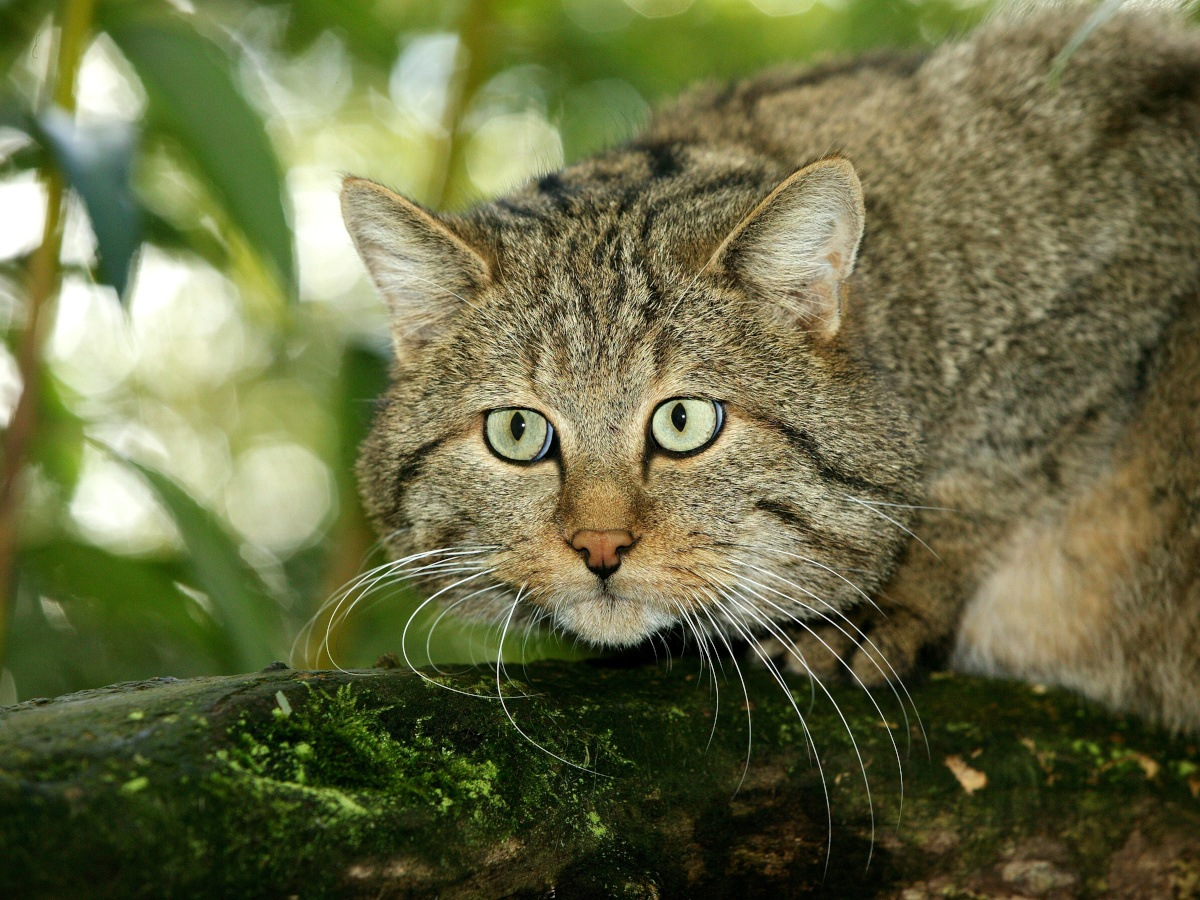
The research team initially suspected the cat bones belonged to a wildcat but needed ancient DNA (aDNA) analysis for confirmation. Professor Claudio Ottoni and his team at the University of Rome Tor Vergata conducted the sequencing and verified that the Glencurran cat was a European wildcat, distinct from modern domestic cats (Felis catus) and Near Eastern wildcats (F. lybica lybica).
The analysis revealed that the Glencurran wildcat was a male and part of an ancient European lineage, closely related to wildcats from Italy and Spain, rather than the modern Scottish population. “This is the first time we can say with certainty that European wildcats lived in prehistoric Ireland. It transforms what we thought we knew about Ireland’s ancient wildlife,” said Dr. Marion Dowd.
According to Dowd, the Glencurran wildcat represents a much older, wilder lineage than today’s domestic cats. While similar in size and appearance to domestic cats, European wildcats are a distinct species. They favor forest habitats, are mostly solitary and nocturnal, and were once widespread across Europe. Populations declined sharply from the 1700s onward due to habitat loss, hunting, and competition with domestic cats.
The discovery raises questions about how wildcats first arrived in Ireland. Were they brought by early Mesolithic hunter-gatherers, or did they come later with Neolithic farmers? How long did they survive before going extinct, and why are prehistoric cat remains so rare? “We simply don’t know when wildcats arrived in Ireland or when they vanished,” said Dowd.
Medieval writers mention wildcats in Ireland, though these may have been feral domestic cats, and confusion with the pine marten known in Irish as cat crainn, or “cat of the trees” is common. Dowd emphasized that radiocarbon dating and analysis of cat bones from other prehistoric Irish sites are needed. Studying all available remains could reveal how wildcats reached Ireland, how they lived, and when and why they disappeared from the landscape.