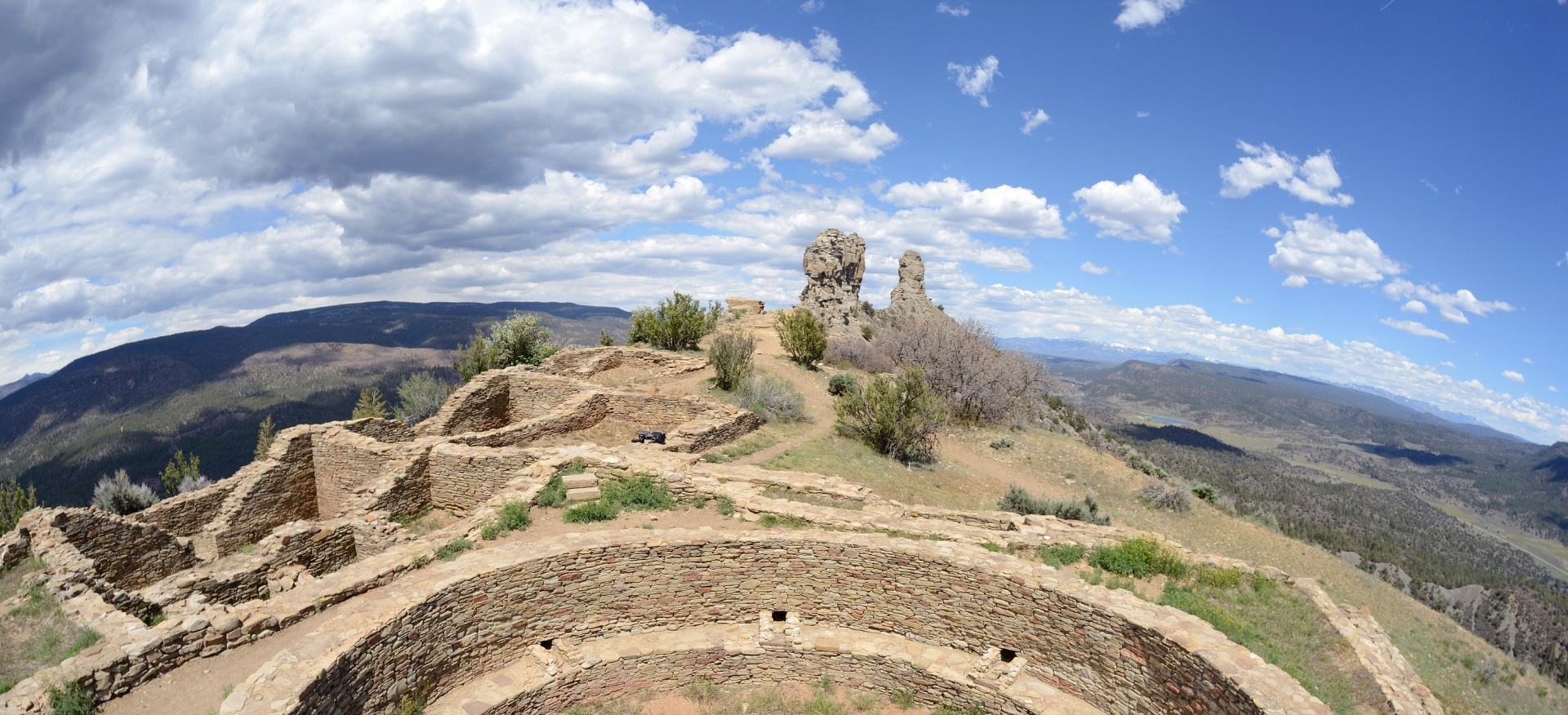
In the following video we will see how Hans Staden, who was a prisoner of Cannibals in Brazil, describes life among them during 1557 AD. Watch the video to find out more!
Copper Mining and Trade in Bronze Age Europe
There is a strangely popular theory that the copper used by bronze age Europeans came from ancient copper mines in the Great Lakes region.
The theory says that this north American copper was excavated in enormous quantities for thousands of years in prehistory. And that this copper was then transported across the Atlantic to Europe and the Ancient Near East.
The fact is, we do know where European copper came from. There are many Bronze Age mines in the Old World that collectively produced thousands of tons of copper, enough to make millions of tools, weapons, and decorations for Europe and the Near East.
Scariest Prehistoric Creatures
In the following video we will be talking about the scariest prehistoric creatures ever existed. Enjoy!
Sea Raiders in Nordic Bronze Age Rock Art
Prehistoric Scandinavian rock art displays scenes of warriors and long, narrow boats. Are these figures showing some kind of Bronze Age Vikings?
The world famous ancient petroglyphs in Sweden, dating to the Nordic Bronze Age, portray a world of sword-wielding warriors and their ships. But these figures - holding aloft axes and spears and shields - are usually said to be carrying out rituals, not warfare.
Is that true? Are there any scenes of violence here amongst the thousands of weapon-bearers?
If this is about ritual then what were the rituals for?
And what can all this tell us about the lives of these seaborne Nordic warriors who lived 3500 years ago?
The London Hammer – A 400 million years old intriguing Out-of-place artifact
Discovered in Texas, in 1936, the London Hammer was embedded in a limy rock concretion originating from the Cretacious rock formation 400 million years ago! The 6-inch-long hammerhead consists of 96.6% iron and has not rusted since its discovery!
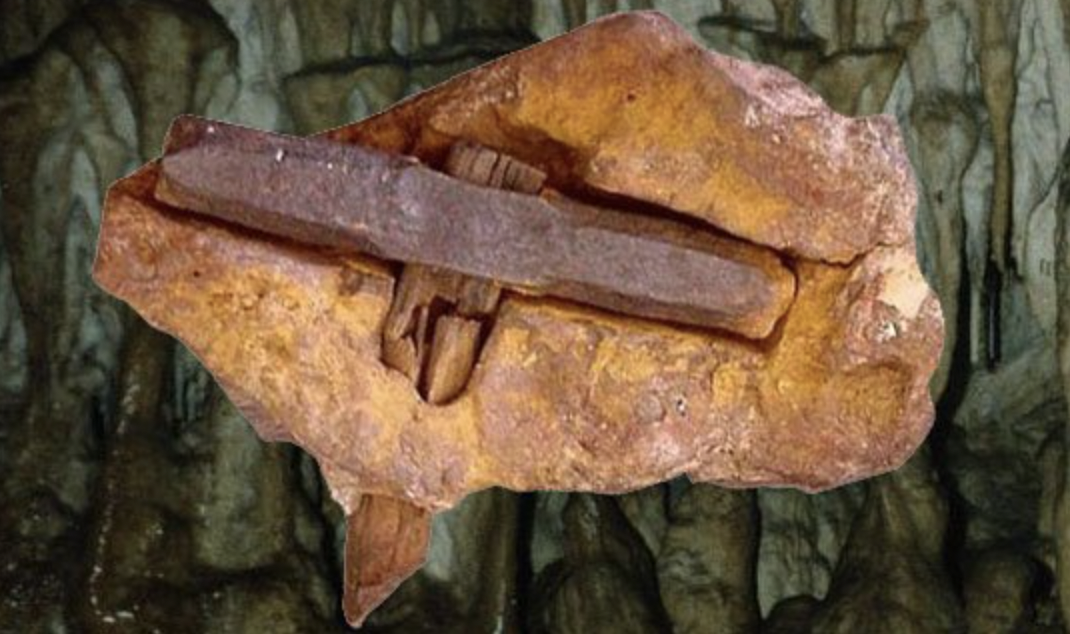
The London Hammer, sometimes also called the “London Artifact,” is a name given to a hammer made of iron and wood that was found in London, Texas, in the United States in 1936. Many have claimed that the hammer is actually a 400 million years old artifact.
Discovery of the London Hammer OOPArt
In June 1936, Max Hahn and his wife Emma were on a walk when they noticed a rock with wood protruding from its core. They decided to take the oddity home and later cracked it open with a hammer and a chisel. Ironically, what they found within seemed to be an archaic hammer of sorts.
What strange facts were revealed about the artifact?
A team of archaeologists checked it, and as it turns out, the rock encasing the hammer was dated back more than 400 million years. The hammer itself turned out to be more than 500 million years old. Additionally, a section of the handle has begun the transformation to coal.

The hammer’s head, made of more than 96.6% iron, is far more pure than anything found in nature could have achieved without an assist from modern technology.
Here’s how the London Hammer got a world wide attention
Creationists, of course, were all over this. The Hammer began to attract wider attention after it was bought by creationist Carl Baugh in 1983, who claimed the artifact was a “monumental ‘pre-Flood’ discovery.” Baugh has used it as the basis of speculation of how the atmospheric quality of a pre-flood earth could have encouraged the growth of giants.
Possible rational explanations for the London Hammer OOPArt
Other observers have noted that the hammer is stylistically consistent with typical American tools manufactured in the region in the late 1800s. Its design is consistent with a miner’s hammer.

One possible explanation for the rock containing the artifact is that the highly soluble minerals in the ancient limestone may have formed a concretion around the object, through a common process which often creates similar encrustations around fossils and other nuclei.
The London Hammer is now an exhibit in Baugh’s Creation Evidence Museum, which sells replicas of it to visitors.
Extraordinary Etruscan And Roman Treasure Trove Unearthed In San Casciano dei Bagni, Italy
Archaeologists have unearthed an extraordinary treasure trove consisting of Etruscan and Roman artifacts in the village of San Casciano dei Bagni, Tuscany, Italy.

Famous for its numerous springs of sulfurous waters spread throughout its territory, the San Casciano dei Bagni village has long attracted visitors from all over Europe.
“The Etruscans were the first to build structures for thermal waters, however, it was under the domination of the Romans, true devotees of thermal baths, that the healing properties of these waters gained their huge appeal, as evidenced by the presence of numerous archaeological finds in the area.”
The Etruscans settled in a region of Central Italy known as Etruria. They were one of the most influential civilizations in ancient Italy before the rise of the Romans.
“Although these ancient people were much closer to us in time, they were even more enigmatic and inaccessible than other ancient cultures such as Crete, Mesopotamia, or Mycenae, and scientists still have much to learn about them.”

The Etruscan and Roman sanctuary of the Bagno Grande in San Casciano dei Bagni “is a geothermal hub with forty hot springs, six connected to the thermal sanctuary. The Etruscan picked this location to utilize the therapeutic power of the water's chemical properties -- it is rich in minerals such as calcium and magnesium, as well as chloride and sulfates.
Archaeologists at the site unearthed last week a treasure trove of artifacts and relics, shedding light into the intimate connection Italy's past civilizations had with "water religion," or the healing, divine origins of hot spring water.”
Archaeologists have been excavating at the site for a long time and their work has been rewarding.
Rare items believed to have been used as votive offerings to the gods, including so-called fertility statuettes shaped like a phallus, a womb and a pair of breasts -- have been dug out from the site's mud. So have 3,000 ancient coins, 700 of which are freshly minted and still shiny. In the second century AD, Roman emperor Marcus Aurelius Carus had the coins thrown into the baths to honor gods watching over his health, as well as that of all Romans traveling to San Casciano for thermal treatment.

"What makes this site unique in the entire Mediterranean is the exceptional state of preservation, and the [evidence] it provides for how medical hot water practices were considered curative under divine protection," said archaeologist Jacopo Tabolli, scientific director of the excavation project and professor of Etruscan studies at Siena's University for Foreigners. "The amount and quality of the objects recovered are also astonishing. We knew something was down there but weren't expecting such a surprise.
Archaeologists have also discovered many relics sculpted in the shape of miniature bronze legs, arms and ears. These ancient objects were “left to thank the gods for healing specific body parts, or to call attention - hence the ear shape -- to the prayers of mortals in pain.”
During Etruscan and Roman times, womb-shaped votive offerings were usually made with terracotta. A bronze one found at San Casciano -- which would have been very expensive to commission -- is the first of its kind, said Tabolli, and serves as proof of how important this thermal site was.
"The discoveries tell us a lot about Italy's ancient communities," Tabolli explained to CNN, "and advance our research on their social, cultural and religious landscape with regard to the sacred nature of hot water."
The excavation site currently features one Etruscan pool, eleven meters long and five meters deep known as the "big bath," and five smaller Roman pools where hot water still flows in at a pace of some 2,000 gallons per minute. There are ruins of fountains and statues alongside travertine stone altars to the god of prophecy and medicine, Apollo, the goddess of fertility, Isis, and the goddess of the first born, Fortuna Primigenia.
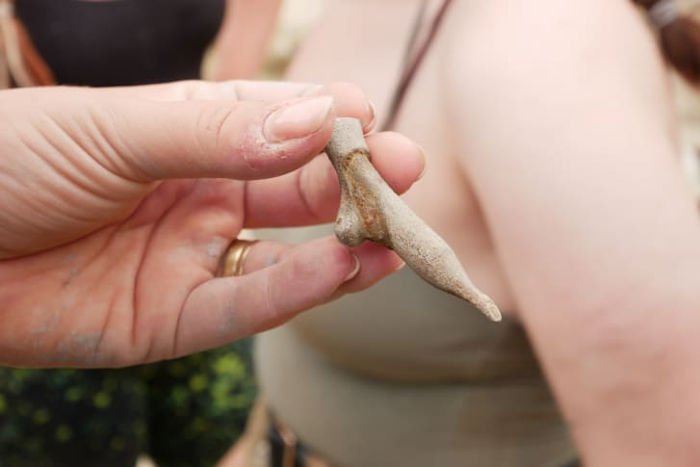
The number of bronze, silver, orichalcum coins, a precious metal believed by the Romans to have mystical powers found in the big bath, is also extraordinary, said Tabolli. It is the largest collection of ancient currency associated with hot springs in the Mediterranean and is unique for its perfect state of preservation. The coins have retained their original coloring thanks to the water's chemical properties and being blanketed by mud, which prevented oxidation.
"They're still shiny brown and shiny yellow -- such bright colors have never been found in any excavation site," said Tabolli. "It's a miracle."
A new village museum will soon showcase the recovered wonders to the public. Local authorities and experts believe the spa still holds more treasures waiting to be discovered, with its deepest muddy layers hiding items dating back to the Etruscan era.
Archaeologists will keep working at the site, with Tabolli excited about what might next come to light. "I hope to unearth the founding sanctuary in its entirety," Tabolli said. "We can already spot a pre-Roman layer."
This Farmer Discovered Something Gigantic Under His Corn Field
In recent years, we have unearthed several of the most unnerving and mysterious things buried beneath the ground.
In this video, we’ll take a look at some of the most mysterious and intriguing things people have found.
From a horrifying slaughter pit to a Stone Age burial, here are the 15 scariest things found buried underground!
What They Discovered in Antarctica Shocked the Whole World
Antarctica is one of the last truly remote and uncharted places in our world, but we are slowly uncovering the mass of secrets this frozen continent has held since the dawn of its discovery. Since Antarctica was only discovered a little over 2 centuries ago, it should be impossible for there to be anything other than ice and snow here, but this is proving to not be true. From ancient structures that defy all historical knowledge to unexpected life in the darkest and coldest parts of Antarctica, follow along as we count down 15 Unsettling Discoveries In Antarctica Nobody Can Explain.
12 Most Incredible Artifacts Finds
What’s the difference between an everyday artefact and an incredible artefact? Well, an average artefact might have a little to tell you about the people who made it, but an amazing one might help you to see the past in a whole new life. The best way to explain the difference between the two is to show you, which is precisely what we’re going to do in this video!
Scientists Can't Still Explain These Imposible Old Technologies!
For centuries, humans have been leaving behind artifacts and structures that don't seem to fit within the timeline of our known history. From mysterious stone structures to structures made of metal that predate our modern technology, here are fifteen of the oldest technologies that scientists still can't explain.
The First Horse Warriors | Bronze Age Warfare
Who were the first people to fight on horseback? Horses were domesticated on the Eurasian steppe thousands of years ago and were first used for their milk, meat, and hides.
And at some point, people began riding them. But when were they first used in warfare? Where was mounted combat first practiced and who were the first people to perfect it?
In this video we're looking at the late Neolithic Yamnaya and Corded Ware cultures, the Bronze Age Sintashta and Andronovo cultures, and the Iron Age Assyrians, Scythians, Saka, and Cimmerians.
This is the story of the first horse warriors.
Paganism in Roman Britain
What was religion like in Roman Britain? What pre-Roman deities persisted? Which new gods came with Romans?
This lecture by Ronald Hutton looks at the evidence: inscriptions, statues and figurines, carvings and all the impediments of ritual, as well as the testimony of hundreds of burials. It shows how the Romans developed the cults of native deities such as Sulis and Belatucadros, and imported their own official divinities such as Jupiter and Mercury and mystery religions such as that of Mithras.
12 Most Amazing Ancient Inventions That Were Way Ahead Of Their Time
There are inventors, and then there are visionaries. An inventor is someone who can take existing materials and technology and make something that's new, but entirely in keeping with the era it was created in. A visionary follows the same invention process, but comes up with an idea or creation unlike anything else in the world, and so far ahead of its time that we wonder how they ever came up with the idea in the first place. This video is a celebration of ancient visionaries and their incredible inventions!
Short But Wise Arabic Proverbs and Sayings
Arabic wisdom is as old as the world. From the depths of centuries, the statements of Arab scientists and people have survived to this day. Arabic proverbs and sayings are full of deep meaning and pure wisdom. The wise words of the Arab people will help you find harmony and understand your own thoughts. The best Arabic quotes, sayings and thoughts.
Scientists Just Announced This Old Bible Has Just Been Found & It Reveals This Secret About Jesus
Scientists just announced this old bible has just been found & it reveals this secret about Jesus. Today, we take a look at this old bible that was found and what it reveals about Jesus.
The story of Jesus Christ is an incredibly familiar one to anyone who is acquainted with Christianity and the Bible. However, the historical period in which Jesus lived was one that's also of great interest to historians and archaeologists, and finding evidence of early Christianity through religious texts and artifacts is just as exciting to historical scholars as it is to religious scholars.
Ireland's Supernatural Island that Can't be Reached
For over 500 years an Island called Hy-Brasil appeared off Ireland’s coast, well it at least did on maps. Watch the video for more!
What They Found In King Tut's Tomb...
Ancient Egyptian king Tut's tomb was never found until a hundred years ago. This caused the tomb to be the most intact tomb to be ever found and was the arguably the best archeological find ever.
In this video we'll dig further into this and talk about 9 findings in the tomb. Enjoy!
Mysterious Lost Sunken City: 9,000-Year-Old Settlement of Atlit-Yam
For the past few decades, dozens of submerged sites have been found off the Mediterranean coast of Israel. We have a Kebaran site dating back 22,000 to 14,500 years ago. There is a Natufian site dating from 14,500 to 11,500 years ago, we have many Neolithic and early Chalcolithic submerged sites but what I’m focussing on today is the incredible Pre-Pottery Neolithic site of Atlit-Yam.
This is a late Pre-Pottery Neolithic B site, although some classify it as Pre-Pottery Neolithic C, with continuous occupation dating from 9,400 to around 8,000 years ago.
It’s a large fishing village, a permanent settlement now lying 9-12 metres below sea level, off the coast of Israel, 10km south of Haifa, in the North Bay of the town of Atlit.
This is a truly incredible site with unique archaeology, including the world's oldest example of a stone water well, a megalithic stone circle, rectangular dwellings, artefacts, human, animal and plant remains and more.
Although it was eventually swallowed up by the rising sea level, is this the reason Atlit-Yam came to an end? Some say yes, but others say there is evidence the settlement was struck by an enormous tsunami. Watch the video to learn more.
Why We Should Be Building With Dirt
Have you ever wondered whether we should be building with dirt? That’s exactly what we will analyze in the following video. Enjoy!
The Real Reason Eunuchs Were Castrated In Ancient China
The Eunuchs were significant political figures in the early Chinese administration. They began as dependable slaves in the royal household, and they had aspirations to leverage their favorable standing to acquire political power.
Eunuchs, often known as "non-men" because they were sometimes referred to as such, first made their appearance in the royal courts of ancient pre-imperial Chinese governments.