Introduction
Kaloko-Honokōhau is a significant traditional Hawaiian cultural landscape on the western coast of Hawaiʻi Island.
The area is famous for its fishponds, coastal features, agricultural remains, religious sites, and traditional resource-management systems.
The association of the area with salt production reflects the importance of coastal resources in Hawaiian subsistence.
A Complex Coastal Landscape
Kaloko-Honokōhau was not a single-purpose industrial site.
It contained a combination of:
fishponds;
salt-making areas;
agricultural features;
habitation areas;
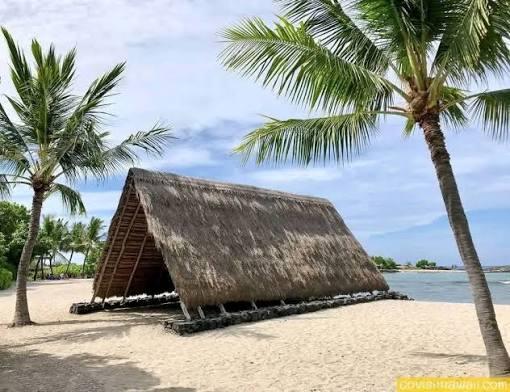
religious structures;
trails;
coastal gathering zones.
This integrated landscape demonstrates how Hawaiian communities used different ecological zones together.
Salt Production
Salt can be produced through evaporation.
Seawater is exposed to sunlight and allowed to evaporate until salt crystals remain.
In traditional settings, this process requires careful control of:
water movement;
evaporation;
cleanliness;
collection;
storage.
Salt was valuable for food preparation and preservation.
Fishponds
The area is especially well known for Kaloko Fishpond.
The massive stone wall enclosing the pond demonstrates the scale of traditional Hawaiian coastal engineering.
Construction required enormous quantities of stone and coordinated labor.
Honokōhau Fishpond
Another important feature is the Honokōhau coastal fishpond system.
Such ponds were integrated into the surrounding environment.
Freshwater springs, seawater, tides, and biological productivity all influenced their operation.
Religious Landscapes
Kaloko-Honokōhau also contains traditional sacred structures.
This demonstrates that food production and religion were not separate spheres.
Agricultural and fishing success could be understood through spiritual relationships with gods, ancestors, and the land.
Social Organization
Large engineering projects required social coordination.
Chiefly authorities and local communities played roles in organizing labor and managing resources.
The ability to maintain fishponds and agricultural lands contributed to political stability.
Archaeological Research
Researchers study:
stone walls;
fish remains;
shell;
botanical remains;
habitation features;
soil deposits;
religious structures.
These materials reveal how people interacted with the coastal environment.
Conclusion
Kaloko-Honokōhau demonstrates the sophistication of traditional Hawaiian coastal management.
Its salt-making areas, fishponds, agricultural features, and sacred sites reveal an integrated system in which food production, engineering, religion, and social organization were inseparable.