• MAIN PAGE
  • LATEST NEWS
    • Lost Cities
    • Archaeology's Greatest Finds
    • Underwater Discoveries
    • Greatest Inventions
    • Studies
    • Blog
  • PHILOSOPHY
  • HISTORY
  • RELIGIONS
    • Africa
    • Anatolia
    • Arabian Peninsula
    • Balkan Region
    • China - East Asia
    • Europe
    • Eurasian Steppe
    • Levant
    • Mesopotamia
    • Oceania - SE Asia
    • Pre-Columbian Civilizations of America
    • Iranian Plateau - Central Asia
    • Indus Valley - South Asia
    • Japan
    • The Archaeologist Editor Group
    • Scientific Studies
    • Aegean Prehistory
    • Historical Period
    • Byzantine Middle Ages
    • Predynastic Period
    • Dynastic Period
    • Greco-Roman Egypt
  • Rome
  • PALEONTOLOGY
  • About us
Menu

The Archaeologist

  • MAIN PAGE
  • LATEST NEWS
  • DISCOVERIES
    • Lost Cities
    • Archaeology's Greatest Finds
    • Underwater Discoveries
    • Greatest Inventions
    • Studies
    • Blog
  • PHILOSOPHY
  • HISTORY
  • RELIGIONS
  • World Civilizations
    • Africa
    • Anatolia
    • Arabian Peninsula
    • Balkan Region
    • China - East Asia
    • Europe
    • Eurasian Steppe
    • Levant
    • Mesopotamia
    • Oceania - SE Asia
    • Pre-Columbian Civilizations of America
    • Iranian Plateau - Central Asia
    • Indus Valley - South Asia
    • Japan
    • The Archaeologist Editor Group
    • Scientific Studies
  • GREECE
    • Aegean Prehistory
    • Historical Period
    • Byzantine Middle Ages
  • Egypt
    • Predynastic Period
    • Dynastic Period
    • Greco-Roman Egypt
  • Rome
  • PALEONTOLOGY
  • About us
No results found

Salmon Ruins: New Mexico's Chaco Colony

September 18, 2026

Introduction

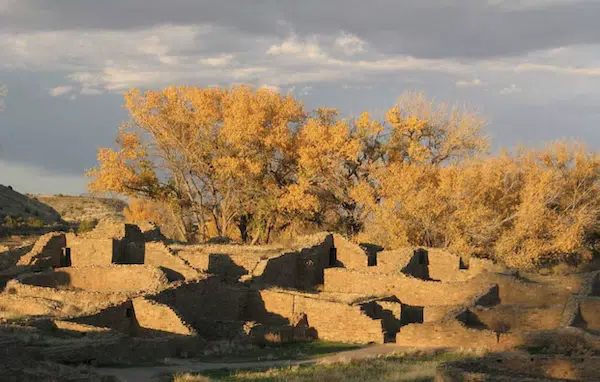
Salmon Ruins is a major archaeological site in northwestern New Mexico associated with the broader Chacoan cultural world.

Constructed during the eleventh century, the site represents an important example of a great house outside Chaco Canyon.

Its archaeological record provides valuable evidence for architecture, household life, craft production, migration, trade, and changing social organization.

The Great House

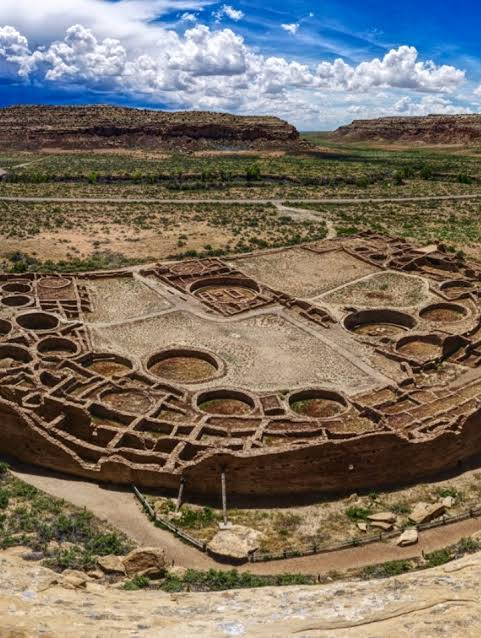
Salmon Ruins was a large masonry complex.

Its construction involved:

  • sandstone masonry;

  • timber beams;

  • plaster;

  • extensive labor.

The scale of the building demonstrates that it was more than an ordinary household.

Chacoan Architecture

Salmon contains architectural characteristics associated with Chacoan great houses.

These include:

  • large room blocks;

  • plazas;

  • kivas;

  • formal construction techniques;

  • planned architectural arrangements.

Such similarities suggest connections with Chaco Canyon.

Migration and Population

Archaeological research indicates that Salmon was occupied by communities with connections to Chaco.

However, population history was complex.

People moved into and out of the settlement at different times.

This means the site should not be understood as a permanent colony controlled directly from Chaco.

Kivas and Ritual Life

Kivas were important ceremonial spaces.

They were often circular and partly subterranean.

Their functions likely included:

  • ritual activities;

  • community gatherings;

  • social organization;

  • religious ceremonies.

Craft Production

Salmon contains evidence of specialized production.

Archaeologists have identified areas associated with:

  • pottery manufacture;

  • stone working;

  • woodworking;

  • food preparation.

Craft activities reveal the economic diversity of the settlement.

Agriculture

Residents relied heavily on agriculture.

Maize formed an important component of the diet.

The surrounding environment required careful management of water and soil.

Trade

Objects recovered at Salmon demonstrate regional exchange.

Materials moved between communities through networks involving:

  • stone;

  • pottery;

  • shell;

  • turquoise;

  • food;

  • other specialized goods.

Destruction and Abandonment

Salmon eventually experienced a major episode of destruction and was abandoned.

Evidence suggests violent conflict may have played a role.

After abandonment, parts of the site were reused or modified by later populations.

Archaeological Importance

Because Salmon contains multiple occupation phases, it provides a valuable record of social change.

Researchers can compare early Chacoan-associated occupation with later local developments.

Conclusion

Salmon Ruins demonstrates the complexity of the Chacoan world.

Rather than representing a simple colonial outpost, it was a dynamic community connected to broader networks of architecture, migration, trade, ritual, and political change.
← Anasazi Chacoan Outliers: New Mexico's Road NetworkAztec West: New Mexico's Great House Community →
Featured
image_2026-09-15_213233600.png
September 18, 2026
Kaloko-Honokohau: Hawaii's Ancient Salt Pans
September 18, 2026
Read more →
September 18, 2026
image_2026-09-15_213313883.png
September 18, 2026
Anasazi Chacoan Outliers: New Mexico's Road Network
September 18, 2026
Read more →
September 18, 2026
image_2026-09-15_213356305.png
September 18, 2026
Salmon Ruins: New Mexico's Chaco Colony
September 18, 2026
Read more →
September 18, 2026
image_2026-09-15_213433098.png
September 18, 2026
Aztec West: New Mexico's Great House Community
September 18, 2026
Read more →
September 18, 2026
image_2026-09-15_213526907.png
September 18, 2026
Casamero Pueblo: New Mexico's Chaco Outlier
September 18, 2026
Read more →
September 18, 2026
image_2026-09-15_214058824.png
September 18, 2026
Chimney Rock: Colorado's Astronomical Great House
September 18, 2026
Read more →
September 18, 2026
read more

Powered by The archaeologist