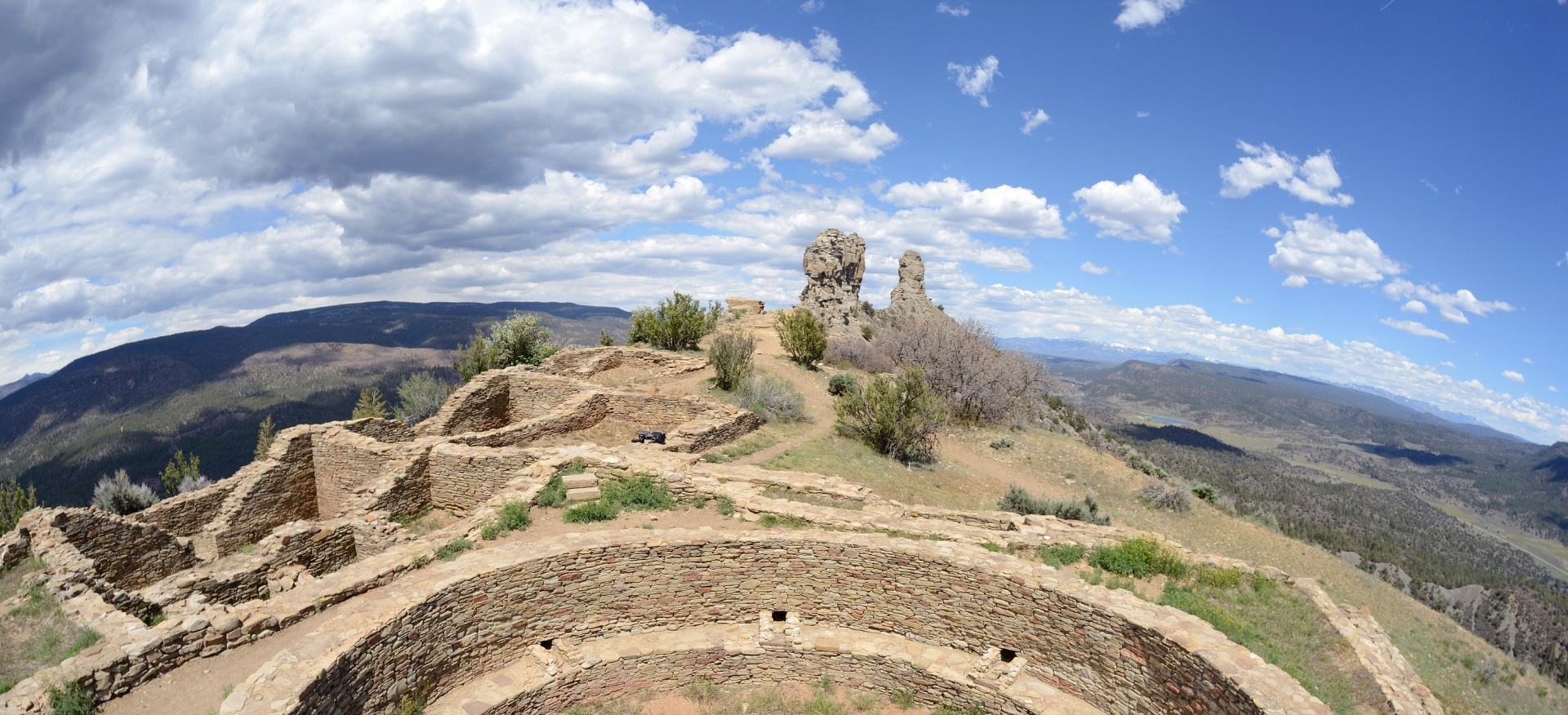
In the video below we will investigate whether 10 million megalithic ruins have been found in jungle. Watch the video to find out more!
25,000 Year-Old Pyramids Exposed In Indonesia?
In the video below we will be talking about 25,000 year-old pyramids exposed in Indonesia. Watch the video to find out more!
We Met Neanderthals Way Earlier Than We Thought
Maybe it’s a little self-centered that we can be pretty focused on the DNA that we got from Neanderthals – but we shouldn’t forget that gene flow goes both ways. Watch the following video to find out more!
The Luckiest Dig in Archaeological History
Finding the remains of Richard III is said to be one of the luckiest finds in history. How, and the events leading up to the discovery is nothing short of amazing!
12 Most Mysterious Artifacts Finds That Change History
Almost every discovery made by an archaeologist is interesting, but some are more interesting than others. Sometimes, an archaeologist will find something that seems to confirm that the things they already believe about history are correct. On other occasions, they find things that challenge our existing understanding of history. This video is all about those types of discovery - the ones that challenge our understanding of the past!
10 Most Mysterious Recent Archaeological Discoveries
In today’s video we will be exploring the 10 most mysterious recent archaeological discoveries. Watch the video to find out more!
Earth's Real Lost Continents
Miles beneath the ocean there are numerous sunken lands just waiting to be discovered. How did these lost lands form, and what would they be like today if they had been just a little higher up?
Creepiest & Scariest Archaeological Discoveries
In the following video we will be exploring some of the creepiest and scariest archaeological discoveries. Watch the video to find out more!
Top 5 Mummy Discoveries that Scared Archaeologists
Archaeologists' feared response to Mummy Finds. When it comes to ancient people you definitely don't want to meddle with the supposedly cursed mummies who have been buried for thousands of years. In this video let’s find out Top 5 mummies unearthed by archaeologists that gave them the willies.

Why Socrates Hated Democracy
Socrates: The Intellectual Critique of Democracy
In the annals of history, few figures have sparked as much debate and introspection about the nature of governance as Socrates, the ancient Greek philosopher. His critique of democracy, as detailed in the video "Why Socrates Hated Democracy," offers a profound exploration of the philosophical skepticism that surrounded democratic principles in classical Athens. This article aims to dissect Socrates' arguments against democracy, drawing insights from the video to understand why a philosopher who lived in what is often hailed as the cradle of democracy harbored such pessimism towards it.
The Skeptical Philosophy of Ancient Greece
The Parthenon, a symbol of democratic values, stands in stark contrast to the critical eye with which Greek philosophy viewed democracy. Socrates, a figure central to this philosophical tradition, questioned the very foundation of democratic governance. His skepticism, shared by his student Plato, was not an outright rejection of democracy's ideals but a nuanced critique of its execution and underlying principles.
Plato's Allegory and the Flaws of Democracy
Plato, through the allegory of the ship in "The Republic," illustrates the flaws he and Socrates saw in democracy. This allegory questions the wisdom of allowing the unskilled to navigate the ship of state, proposing instead that only those with the necessary knowledge and virtue—philosopher-kings—should lead. Socrates extended this critique to the process of voting, arguing that it should not be an uninformed choice but a skill developed through systematic education.
The Trial of Socrates: A Case Study in Democratic Failure
Socrates' execution, a consequence of his alleged corruption of Athenian youth, serves as a historical example of the pitfalls of democratic judgment. His trial and subsequent death by hemlock highlight the dangers of mob rule and the potential for democracy to turn against its most insightful critics.
Intellectual Democracy versus Birthright Democracy
Socrates envisioned an "intellectual democracy," where the right to vote was contingent upon rational thought and deep consideration of issues. This stance is not an elitist dismissal of the common man's capacity but a call for a democracy supported by education and wisdom, aiming to prevent the ascent of demagogues who could lead the polis astray.
The Warning Against Demagogues
The figure of Alcibiades in ancient Athens exemplifies Socrates' warnings. A charismatic leader who led Athens into catastrophic military ventures, Alcibiades represents the dangers of allowing persuasive, yet unwise, individuals to gain power through populist appeal. Socrates feared that democracy, without the safeguard of education, could too easily fall prey to those offering simple solutions to complex problems.
The Essential Role of Education
Socrates' critique culminates in the assertion that democracy's success is inherently linked to the strength of its education system. Without fostering a populace capable of discerning truth from rhetoric and wisdom from folly, democracy risks devolving into a contest of popularity rather than a governance of the informed.
Socrates' Enduring Legacy
The philosophical skepticism of Socrates towards democracy invites contemporary societies to reflect on the nature of their own governance systems. It suggests that democracy, to be truly effective, requires more than the mere act of voting; it demands an electorate that is educated, rational, and deeply engaged with the issues of the day. In this light, Socrates' critique is not a rejection of democracy per se but a call to elevate it through the cultivation of wisdom and virtue among its citizens. As we navigate the complexities of modern democratic governance, the insights of a philosopher from ancient Athens remain as relevant as ever, urging us to consider not only our rights as citizens but also our responsibilities.
The History of India: Every Year
This video will show the entire history of India from 29th century BC to 2016. Due to their extreme timescales, the Indus Valley and Vedic periods cannot be shown every year, although every year is shown from 413 BC.
Katana VS Longsword - The Sad Truth!
In today's video we take a deep dive into the truth of which sword is better, a Katana or Longsword. This is a hotly debated topic and by that I mean a bunch of neckbeards online are mad that weebs exist.
Mysterious Doors That Can Never Be Opened
If you saw a door, what do you do? You open it! But the doors we want to talk about in this video are different. Because these doors should NEVER be opened. These are 20 mysterious doors that can never be opened!
In 1836, a Worker Followed an Old Drain and Found Secret Treasure at the End
There are crimes that require meticulous planning, perfect timing, and exceptional intelligence. However, the unique incidents we're about to share with you don't fall into any of these categories. True to the motto "opportunity makes the thief", some valuables were almost ridiculously easy to steal. You want to know how a simple construction worker managed to calmly walk into the belly of a high-security bank? Or how to become a millionaire with stolen fast food? Then grab something to nibble on, sit back, and be sure to watch today's video to the end!
The Island of Secrets
A remote Mauritian island is being quietly transformed into a military hub for India's navy. That’s what we found using satellite pictures, shipping data, financial documents, and images from a barely accessible island about 1100 km north of Mauritius. The Island of Secrets also shows how the construction project on Agaléga has the potential to uproot the lives of its 300 residents in order to make way for a military facility.
Residents worry that what happened on the Mauritian island of Diego Garcia in the 1960s will happen to them. The Mauritian government responded to this film by restating its position that there is “no agreement” with India to set up a military a base in Agaléga. It said that construction work on the island is designed to improve “inadequate infrastructure facilities”. The government also stated that it has no intention of displacing people living on the island. India’s Ministry of Defence and Ministry of External Affairs did not respond to our request for comment.
Lost Chapter of a 2000-year-old Bible Revealed with Terrifying Information About Human Origins
The Bible is basically a collection of religious texts or scriptures that are holy in Christianity, Judaism, Samaritanism, and many other religions. It is an anthology, which is a collection of texts that were originally written in Hebrew, Aramaic, and Koine Greek.
The Entire History of Neolithic Britain and Ireland (4000 - 2500 BC)
The entire history of Neolithic Britain and Ireland from the migration and rise of the first farmers to the fall of their civilisation.
Who were the first farmers of the British Isles? Where did they come from and why did they migrate to these islands? And why did they build all those incredible megalithic monuments that we see in the landscape today?
This documentary covers the history of the Neolithic in Britain from around 4000 BC to the arrival of the Bell Beaker people in about 2500 BC.
We will look at the first farmers of Europe and their migrations across the continent, as well as their interactions with the Mesolithic Western Hunter Gatherers who were already there.
And we will dispel some of the biggest popular misconceptions about these amazing people.
The History of the Ottoman Empire (All Parts) - 1299 - 1922
The Ottoman Empire was founded circa 1299 by Osman I in northwestern Asia Minor, south of the Byzantine capital Constantinople. The Ottomans crossed into Europe in 1352, moving their capital to Adrianople in 1369. They expanded in Asia Minor by annexing many small Turkic beylics.
They conquered Constantinople in 1453, and then expanded deep into Europe, northern Africa, and the Middle East. The Ottoman territory increased exponentially under Sultan Selim I, who assumed the Caliphate in 1517 as the Ottomans defeated the Mamluks of Egypt and annexed western Arabia, Egypt, Mesopotamia, and the Levant. Within the next few decades, much of the North African coast became part of the Ottoman realm. Slowly after many wars and internal problems, the Ottoman sultanate started to crumble. See the entire story in this video!
World's earliest python identified from 47 million-year-old fossil remains
Together with his colleague Hussam Zaher of the University in São Paulo, Senckenberg scientist Krister Smith described the world's oldest known fossils of a python. The almost completely preserved snakes with a length around one meter were discovered in the UNESCO World Heritage Site "Messel Pit" and are about 47 million years old. The new python species, Messelopython freyi, was named in honor of paleontologist Eberhard "Dino" Frey of the State Museum of Natural History in Karlsruhe. The study was published today in the scientific journal Biology Letters.

Reaching a length of more than six meters, pythons are among the world's largest snakes. Today, various species of these constrictors are found primarily in Africa, Southern and Southeast Asia, and Australia. "The geographic origin of pythons is still not clear. The discovery of a new python species in the Messel Pit is therefore a major leap forward in understanding these snakes' evolutionary history," explains Dr. Krister Smith of the Senckenberg Research Institute and Natural History Museum in Frankfurt.
The new python species Messelopython freyi described by Smith and his Brazilian colleague, Dr. Hussam Zaher, is the oldest known fossil record of a python anywhere in the world. "According to our findings, these snakes already occurred in Europe at the time of the Eocene, over 47 million years ago. Our analyses trace their evolutionary history to Europe!" adds Zaher.
However, the large constrictor snakes subsequently disappeared from the European continent for quite some time. Fossils of this snake family did not appear again until the Miocene—between 23 and 5 million years ago. "As the global climate began to cool again after the Miocene, the pythons once again disappeared from Europe," says Smith.

Contrary to the primeval python from Messel, modern pythons live in complete spatial separation from their anatomically very similar relatives, the boas. "However, in Messel, both Messelopython freyi as well as primitive boas such as Eoconstrictor fischeri lived together in the same ecosystem—we therefore have to revisit the thesis that these two groups of snakes competed with each other, making them unable to share the same habitats," explains Smith.
The snake's scientific name is a combination of the locality where it was found and the snake's family. The specific epithet of the newly discovered fossil is owed to Prof. Dr. Eberhard Frey of the State Museum of Natural History Karlsruhe. "Eberhard Frey bears the nickname "Dino' for a good reason—he is world-renowned for his exacting studies of fossil reptiles. By naming a new species after him, we wanted to honor his accomplishments in the field of paleontology," adds Smith to explain the fossil's naming.
A 70-Million-Year-Old Fossil of a Giant Predator Fish Was Found in Argentina
A giant 70 million year old fossil of a fish that lived amongst dinosaurs has been discovered in Argentine Patagonia, a team of researchers said on July 2020.
Argentine paleontologists "found the remains of a predator fish that was more than six meters long," the researchers said in a statement.

The discovery was published in the scientific journal Alcheringa: An Australasian Journal of Palaeontology.
The fish "swam in the Patagonian seas at the end of the Cretaceous Period, when the temperature there was much more temperate than now," the statement said.
"The fossils of this carnivorous animal with sharp teeth and scary appearance were found close to the Colhue Huapial lake" around 1,400 kilometers south of the capital Buenos Aires.
This fossil belonged to the Xiphactinus genus, "amongst the largest predatory fish that existed in the history of Earth."
"Its body was notably slim and ended in a huge head with big jaws and teeth as sharp as needles, several centimeters long."

Examples of this species have been found in other parts of the world, "some of which even have preserved stomach contents," said Julieta de Pasqua, one of the study authors.
Previously, the Xiphactinus had only been found in the northern hemisphere, although one example was recently found in Venezuela.
Patagonia is one of the most important reservoirs of fossils of dinosaurs and prehistoric species.