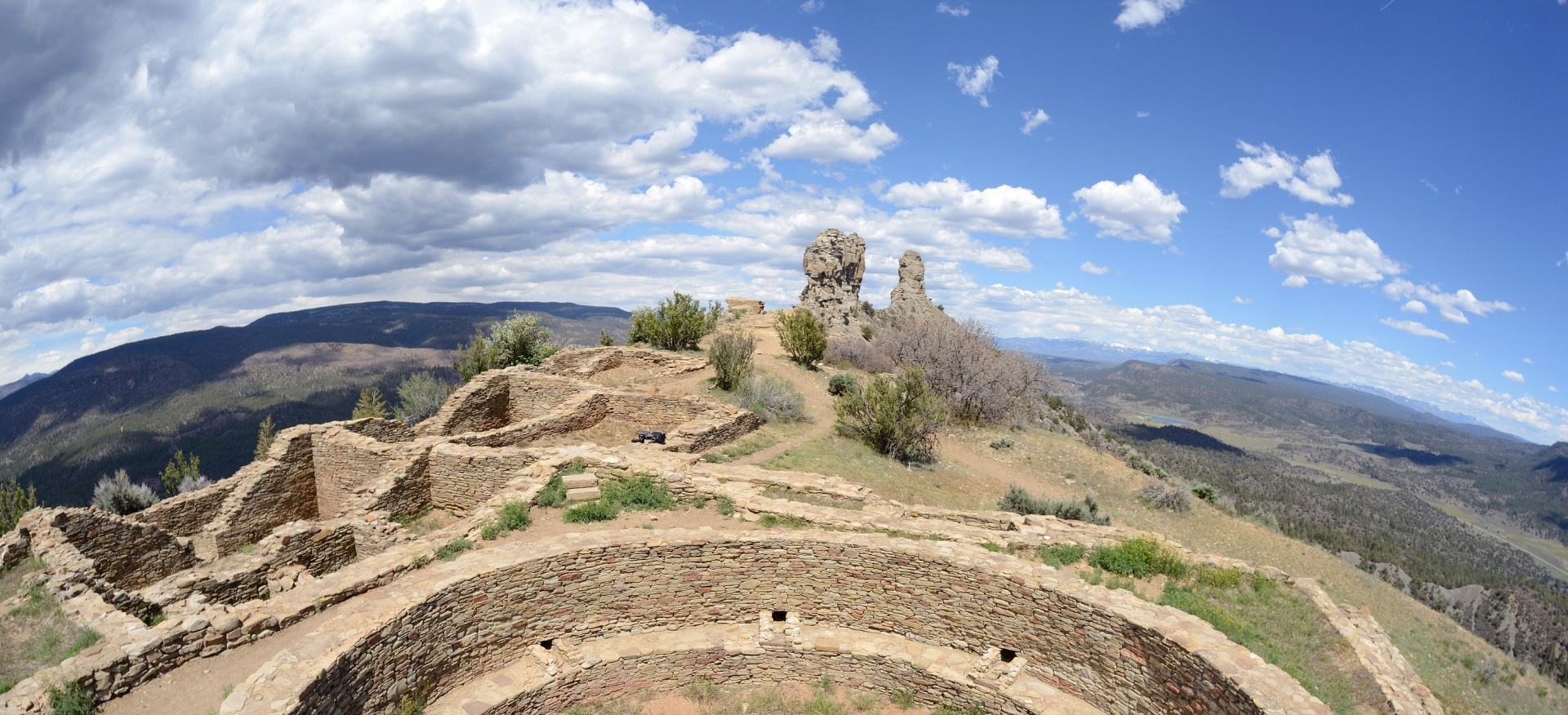
Scientists cannot explain everything. It would be a dull, dreary world to live in if they could. Mysteries are part of what makes the world exciting, and we’re fortunate enough to live in a world that’s full of them. We’ve got some of the very best of them in this video, so have fun trying to solve them!
What is Stoicism and how you become undefeatable
Stoicism helps us steer through past and present storms into calmer and more peaceful waters. And if our ship sinks and we all drown, we can take peace in the fact that we lived a good life, albeit not as long as we had hoped. Because remember, everything has an end.
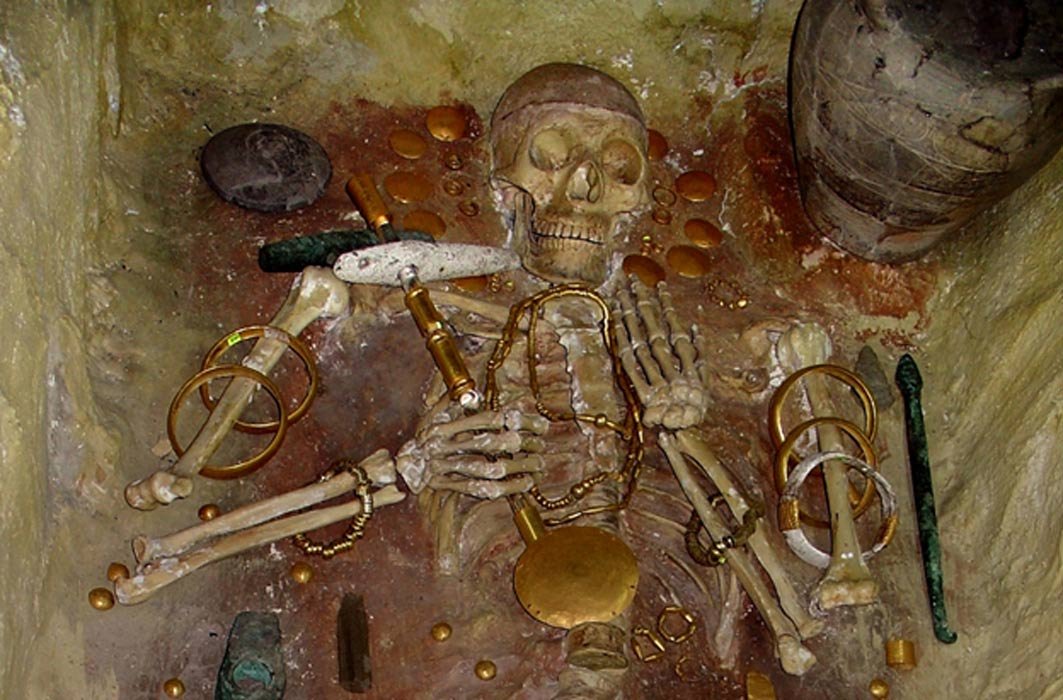
The Varna Man and the Richest Grave of the Fifth Millennium BC
BY THE ARCHAEOLOGIST EDITOR GROUP
Archaeologists in Bulgaria uncovered the earliest golden items ever found in the 1970s, close to the present city of Varna, in a massive Copper Age necropolis from the fifth millennium BC. The true significance of the discovery was not understood, however, until they arrived at grave 43. More gold was discovered in grave 43 than was discovered in the entirety of the world at that time. Within were the bones of a high status male who had been buried with unimaginable riches.
Most people have heard of Mesopotamia, Egypt, and the Indus Valley, which are renowned for being the first civilizations to be recognized to have urbanization, structured government, and cultural innovation. The mystery civilisation that first appeared 7,000 years ago on the borders of lakes close to the Black Sea, however, has mostly gone unnoticed.
The Stunning Culture of Varna
The Varna culture, as it has come to be known, was not a little, insignificant civilisation that developed in a remote region of what would become Bulgaria and vanished without a trace into the annals of time. As the first known society to produce golden items, it was an astonishingly advanced civilization that was older than the civilizations of Mesopotamia and Egypt.
A richness in cultural traditions, intricate funerary ceremonies, an antiquated religious system, and the ability to create gorgeous and expertly-crafted objects are reflected in the biggest known prehistoric necropolis in south-eastern Europe, which is located in Varna. The term "cradle of civilization" in Europe has come to refer to it.
Goldsmithing's and wealth's ascent
According to available data, goldsmithing originally appeared in Varna between 4600 and 4200 BC. The population now had something incredibly precious to trade as technology advanced and craftsman mastered the smelting of copper and gold. The development of the society depended heavily on the opening of economic links between the Black Sea and Mediterranean region as a result of increased interactions with neighbors in both the north and south. Ships traveling across the Black Sea could dock comfortably in the deep port where the villages of Varna were located, and the city grew to be a thriving commerce hub.
The metallurgists were able to amass wealth thanks to increased trading, and very rapidly a social stratification with the metallurgists at the top, merchants in the center, and farmers making up the bottom class emerged. Extraordinary finds at a nearby cemetery further bolster the idea that Varna formerly had strong rulers or kings, but we will get to that later.
Hence, the groundwork had been done for the establishment of a strong, thriving civilization that would later impact all of Europe for thousands of years.
Learning About The Ancient Varna Culture
Tools, containers, utensils, and figures made of stone, flint, bone, and clay are the first examples of ancient Varna culture. Suddenly an amazing by chance find was made, making international news. The oldest gold objects ever discovered were found in a large Copper Age necropolis that excavator operator Raycho Marinov discovered in October 1972.
It eventually rose to prominence as one of Bulgaria's most significant archaeological finds. Under the guidance of Mihail Lazarov (1972–1976) and Ivan Ivanov (1972–1991), extensive excavations were conducted that allowed for the first time to be seen the splendid civilisation of Varna.
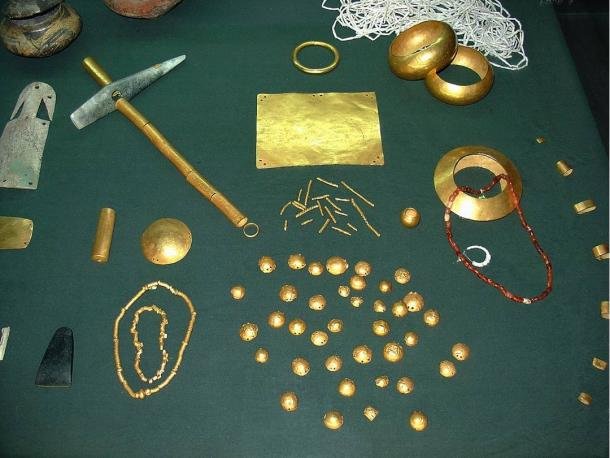
In the necropolis, more than 300 graves were found, and over 22,000 beautiful objects, including 3,000+ pieces of gold with a combined weight of 6 kg, were retrieved from them (13.23 lbs.) Other priceless artifacts discovered in the burials included copper, excellent flint tools, jewelry, Mediterranean mollusc shells, ceramics, obsidian blades, and beads.
Analysis of the graves revealed that the Varna culture had a highly structured society. Elite members of society were buried in shrouds with gold ornaments sewn into the cloth wrappings, and their graves were filled with treasures like gold ornaments, heavy copper axes, elegant finery, and richly decorated ceramics, while others had simple burials with few grave goods.

The Wealth of Grave 43
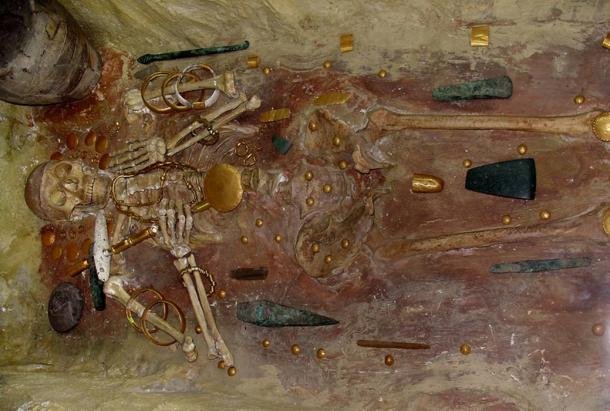
Despite the fact that numerous elite graves had been discovered, grave 43 stood out from the others. Archaeologists discovered the remains of a high level guy who looks to have been a monarch or leader of some sort inside grave 43. This tomb contained more gold than was discovered in the rest of the world at the time. The male, who came to be known as the Varna man, was buried with a scepter, a representation of great rank or spiritual power, and he wore a sheath of solid gold around his penis.
It is the first documented elite male burial in Europe, making the burial extremely noteworthy in addition to the grave items. Women and children had previously gotten the most extravagant funerals.
The well-known Lithuanian-American archaeologist Marija Gimbutas asserted that matriarchal pre-Indo-European communities can be inferred from Neolithic sites throughout Europe. She also suggested that the transition to male domination in Europe started about the end of the Fifth Millennium BC. In the Varna culture, it was noted that men began to receive better posthumous care about this time.

The Varna Necropolis's Complicated Funerary Rituals
In addition to the priceless objects discovered inside and the social hierarchy revelations made, the burials in the Varna necropolis have also revealed important details about the religion and elaborate funerary customs of this ancient civilisation.
Researchers soon realized that the males and females were arranged differently within the graves: the males were positioned on their backs, while the ladies were positioned in the fetal posture. The finding that some graves had no skeletons at all and were instead considered "symbolic graves" was the most surprising of all. These graves were the wealthiest in terms of the amount of gold and other things found inside of them. Unbaked clay masks of human size that were positioned where the head would have been were also found in some of these symbolic tombs, also known as cenotaphs.
It was also discovered that the tombs where the clay masks were buried had gold amulets in the form of ladies placed in the neck region. These amulets, which are connected to pregnancy and delivery, show that the 'burials' were intended for women. This is further supported by the discovery of copper pins, flint knives, and spindle whorls instead of battle-axes in each of the cenotaphs.
The Demise and Imprint of the Varna Culture
The once-dominant Varna culture started to fall apart towards the end of the fifth millennium BC. The collapse of the Varna civilisation has been attributed to a number of factors, including climate change, which converted vast tracts of agricultural land into marshes and swamps, and the invasion of soldiers on horses from the steppes.
The people of the ancient Varna civilisation left behind many enduring legacies and prepared the way for the creation of succeeding civilizations across Europe, despite the fact that they left no direct offspring. They possessed metallurgical abilities that were unmatched in Europe, if not the entire world, and their society exhibited many traits of a highly developed civilisation.
They also created the societal framework for a centralized authority, or someone or something that would watch over and guarantee the smooth operation of the society. A model of civilisation that we still adhere to today had all the key tenets of contemporary society uncovered.
20 Horses That Are Born Only Once In a Thousand Years
Dogs get most of the credit as man’s best friend but let’s not forget about the incredible and special relationship between humans and horses. Our equine pals have been by our sides throughout history and are one of the few animals we can actually ride around on, which is pretty weird when you think about it. But also very cool. And there are so many different kinds of horse in the world, you might have missed some of the rarer ones. From the horse that was bred for world war to the horse that could pass for a leopard, here’s 20 Horses That Are Born Only Once In a Thousand Years
Top 10 Concerning Evidence That Confirms Giants Exist On Earth
How could incredibly tall people actually exist? Giants have always seemed to be made-up stories. However, history has shown us that they were very real! Let's get into the Top 10 Concerning Evidence That Confirms Giants Exist On Earth.
The First Warriors of Europe | Bronze Age Warfare
Who were the first warriors of Europe? In the Neolithic, violence was sporadic but by the Bronze Age warfare and warriors were a core part of society.
In the late Neolithic and Copper Age, clans from the Yamnaya, Corded Ware, and Bell Beaker cultures raided others. They were armed with bows, copper daggers, and battle axes but the extent to which these men were "warriors" is debated.
By the time of the Late Bronze Age, warriors served chiefs and kings from Mycenaean Greece to Nordic Bronze Age Sweden and Denmark.
They guarded trade routes like the so-called Amber Road and fought pitched battles like at the Tollense Valley battlefield.
So when and where did a class of dedicated warriors emerge? What weapons did they use? And how and why did they fight?
15 'Extinct' Animals You Won't Believe Existed!
The topic of extinct animals is a fascinating and thought-provoking subject that explores the history of life on Earth and the impact of human activity on the natural world. From the massive Woolly mammoth that roamed the prehistoric planet millions of years ago to more recent extinctions like the dodo bird, the disappearance of these creatures has significant ecological and cultural implications. This topic highlights the importance of conservation efforts to prevent future extinctions and preserve the diversity of life on our planet.
This archeological dig site in Miami is uncovering 7,000-year-old history
An archaeological dig site in Miami's Brickell district has uncovered artifacts going back 7,000 years, along with postholes, gravesites, human remains and other evidence of substantial settlement by the Tequesta Native American tribe.
Conspiracies Of The Vatican
In the following video we will be talking about various conspiracies of the Vatican. Watch the vide to find out more!
Graham Hancock: "Archaeologists Are Lying About Ancient Technology Used"
In the following video we will be seeing Graham Hancock explaining how archaeologists are lying about ancient technology used. Enjoy!
10 Most Incredible Finds in Egypt That Scare Scientists
The ancient Egyptians were one of the most remarkable cultures of the old world. In terms of art, architecture and science, they were light years ahead of almost everybody else - so much so that modern-day historians can't understand where their knowledge came from! Even now, there are many ancient Egyptian discoveries that historians and scientists struggle to rationalize. Many of ancient Egypt’s rulers known today as pharaohs built themselves elaborate monuments and tombs, inscribing them with their names and achievements in hieroglyphics. Through painstaking excavations, research and translation, modern scholars have used these written records to trace Egypt’s history and divide it into three distinct periods known as the Old, Middle and New Kingdoms with periods of relative instability in between. Ancient Egypt has many secrets to tell, and in 2022, archaeologists made some fascinating findings, including the tomb of a previously unknown queen, a falcon shrine with a cryptic message and a massive tunnel beneath a temple. Here are some of the most amazing discoveries at ancient Egyptian archaeological sites this year. In this video, we are looking into 10 Most Incredible Finds in Egypt That Scare Scientists.
12 Most Incredible Archaeological Finds
This video is all about archaeological treasures - but treasure can take many forms! You’ll find plenty of golden treasures in this video, but you’ll also find discoveries that are considered treasure because of the things they’re able to tell us about the people and places that existed long before any of us were born. Let’s get started!
The Olympians of Ancient Greece Gods and Goddesses Beyond Mythology
The Olympians of Ancient Greece are a fascinating topic that has captured the imagination of people for centuries. These deities, who were believed to reside atop Mount Olympus, were an integral part of Greek mythology and played a significant role in shaping the culture and beliefs of Ancient Greece. In this article, we will explore the Olympians of Ancient Greece and delve deeper into their stories and significance.
The Olympian Gods and Goddesses were a pantheon of twelve deities who were the rulers of the world according to Greek mythology. The gods were believed to be immortal, possessing supernatural powers and abilities that made them superior to mortals. They were often depicted in art and literature as larger-than-life figures, capable of great feats of strength and prowess.
Rarest Discoveries That Almost Cannot Be Explained
In the following video we will be exploring the rarest discoveries that almost cannot be explained. Enjoy!
Scary 4500 Year Old ancient Hidden Room Discovered In Egypt
Prepare to be transported back in time as we journey deep into the heart of an ancient and mysterious room in Egypt that has remained untouched for over 4500 years. Join us as we explore the secrets of this eerie and ominous chamber and uncover the terrifying truths that lie within.
Located in a remote part of Egypt, this room has long been shrouded in darkness and mystery, with tales of curses, ancient spells and evil spirits surrounding it. As we step inside, we are greeted with a sight that is both awe-inspiring and terrifying. The walls are adorned with strange hieroglyphics and symbols, and the air is thick with the musty scent of decay and ancient dust.
As we venture further into the room, we discover a series of strange and mysterious artifacts that hint at the power and knowledge of the ancient civilization that once inhabited this place. From ornate jewelry and pottery to ancient weapons and tools, each artifact offers a glimpse into the lives of those who once called this place home.
But as we continue our exploration, we begin to sense a growing unease and dread. Strange sounds and whispers seem to fill the air, and we begin to feel as though we are being watched by unseen eyes. The atmosphere becomes increasingly tense and ominous as we delve deeper into the room, until we are faced with a presence that is beyond our comprehension - an ancient evil that has been lying dormant for thousands of years.
Join us as we delve into the heart of this ancient and terrifying room, and discover the dark secrets that have remained hidden for millennia. But be warned - the truth we uncover may be more frightening than we ever imagined.
Ancient Greece AI: Transport yourself to a world where Ancient Greece never fell
Transport yourself to a world where Ancient Greece never fell, and imagine its evolution in the Space Age. A technologically advanced Ancient Greece isn't just science fiction, it's a tantalizing possibility. The magnificent marble temples and ancient ruins are the foundation of the Greek civilization, let’s see how they evolved into the most dominant and technologically advanced civilization in human history.
In this futuristic Greece, advanced technology and interstellar ships have enabled the Greeks to conquer the vast expanse of the universe. The heroic warriors of the past, with their valor and might, are reborn in a new era, exploring the unknown and expanding the boundaries of Greece's glory.
This journey explores the possibility of Greece rising to prosperity in the Space Age. This magnificent world, where ancient and future coexist, is limitless. Imagine a world where the legacy of Greece continues to inspire and amaze us for generations to come.
Scientists Terrifying New Discovery Under Antarctica's Ice
Antarctica is a continent that is devoid of human life. Aside from explorers and researchers, no one has ever dared to live in this unforgiving land. The frozen continent makes up most of the region–a remote place located in the Southern Hemisphere. It is the fifth largest continent in terms of total area, but aside from ice and creatures that somehow manage to withstand the almost uninhabitable environment, there is nothing else in its vicinity.
However, it also hides some pretty amazing things.
From extraordinary creatures to potentially precious stones, here are 15 strange things found frozen in Ice Antarctica.
Live a Day in the Life of King Tut
Ever wonder how Egyptian royalty lived 3,000 years ago? In 1922, British archaeologist Howard Carter’s discovery of an intact tomb revealed a wealth of artifacts and information that turned King Tut into a household name, and perhaps the most famous Egyptian to ever live. In this video, learn everything we know about “The Boy King,” from his education to his expensive fashion.
Native American Elders Warned About This Race That Wiped Out Their Tribes
Native American culture is surrounded by deep and rich legends that helped to shape the diverse and extraordinary culture that they have today. Through these legends, older generations of Native Americans have been able to pass on precious lessons and spiritual value.
There have been several Native American tribes that describe legends of a unique race of...
Hidden Mathematics - Ancient Knowledge of Space, Time & Cosmic Cycles
Randall Carlson is a master builder and architectural designer, teacher, geometrician, geomythologist, geological explorer and renegade scholar. This presentation takes a deep dive into the realm of sacred geometry, ancient stone monuments and the hidden mathematics that is embedded in things we use everyday. Enjoy!