What’s the deadly secret that has been kept hidden by the greatest scientists? Watch the video below to find out!
These Fossils Came From Space (But Aren’t Aliens)
Fossils are the remains of living things like dinosaurs, right? Not necessarily. Fossil meteorites are totally a thing! They're rare, but when scientists find them, they help fill in the picture of Earth's ancient past.
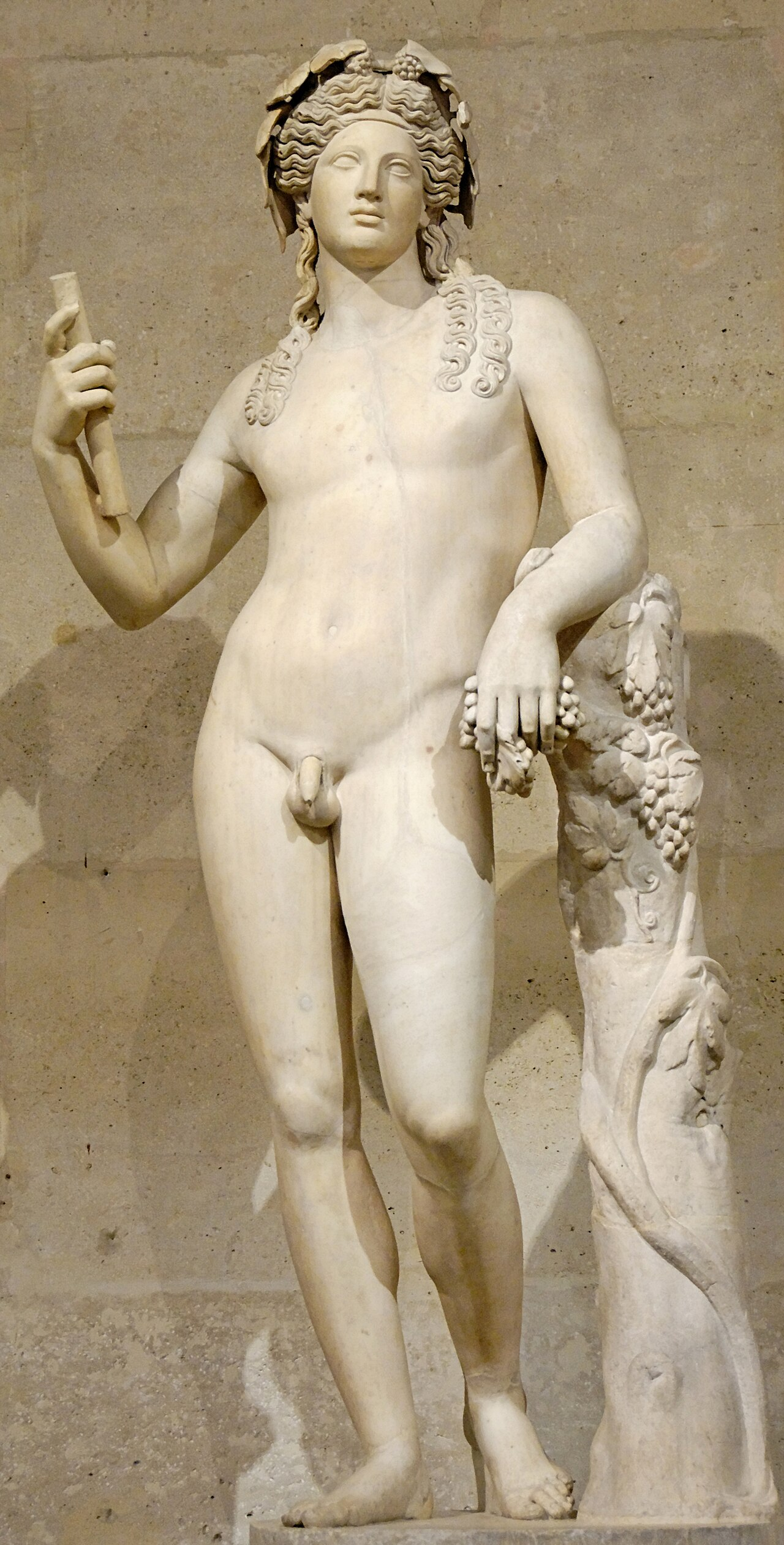
The Most Popular Hairstyles Throughout History
Much like the tide, historical trends and taboos ebb and flow. Some of them, like fashion throughout the centuries and the most common ways to die, are solid and almost definitive indicators of the cultural zeitgeist. Others, like hair trends throughout history, may seem inconsequential in comparison. However, like the tide itself, these hairstyles have affected humanity on a global scale.
What is Hidden under the sands of the Sahara? Why are Historians Silent?
In this captivating video, we embark on a thrilling journey to uncover the enigmatic mysteries that lie hidden beneath the vast sands of the Sahara Desert. Prepare to be amazed as we delve into the secrets that historians have remained silent about for centuries.
Join us as we explore the uncharted territories of the Sahara, where ancient civilizations once thrived, leaving behind traces of their existence. Why have historians been silent about these remarkable findings? What is it that they don't want us to know? We'll dive deep into the intriguing reasons behind their silence and uncover the truth that has been concealed for far too long.
15 Abnormally Large Animals That Really Exist
In the video below we will analyze 15 abnormally large animals that really exist. Watch the video to find out more!
Scary Things That Were “Normal” for the Most Feared Viking
The Vikings were one of the most feared and respected cultures in medieval Europe. They were a society of warriors, skilled shipbuilders and maritime masters who seemed to materialize out of thin air and lay waste to entire cities. Their warrior kings ravaged Great Britain and beyond, imposing their will and leaving a trail of destruction leaving anyone who survived traumatized and mumbling to themselves about apocalypse and the wrath of god. But one warrior king rose above them all to become the first and only king of England, Norway, and Denmark. And no it’s not Ragnar Lothbrok.
Today, we’ll explore the life and conquests of Canute the Great, the most powerful Viking who ever lived. Enjoy!
What Was The First Virus?
In the following video we will be talking about the first virus ever existed. Watch the video to find out more!
The Most Mysterious Ancient Technologies Lost to Time
Discover the mysteries behind two of history's lost technologies: Greek Fire and Flexible Glass. These ancient inventions were so advanced that we still can't figure out exactly how they were made.

Is Gunung Padang the Oldest Pyramid in the World?
BY THE ARCHAEOLOGIST EDITOR GROUP
The world of archaeology is no stranger to controversy. New findings often disrupt accepted historical narratives, inviting both excitement and skepticism. The ongoing research and exploration at Gunung Padang, a megalithic site located in West Java, Indonesia, has been no exception. There have been bold assertions that this site is not just another megalithic structure, but in fact, the world's oldest pyramid.
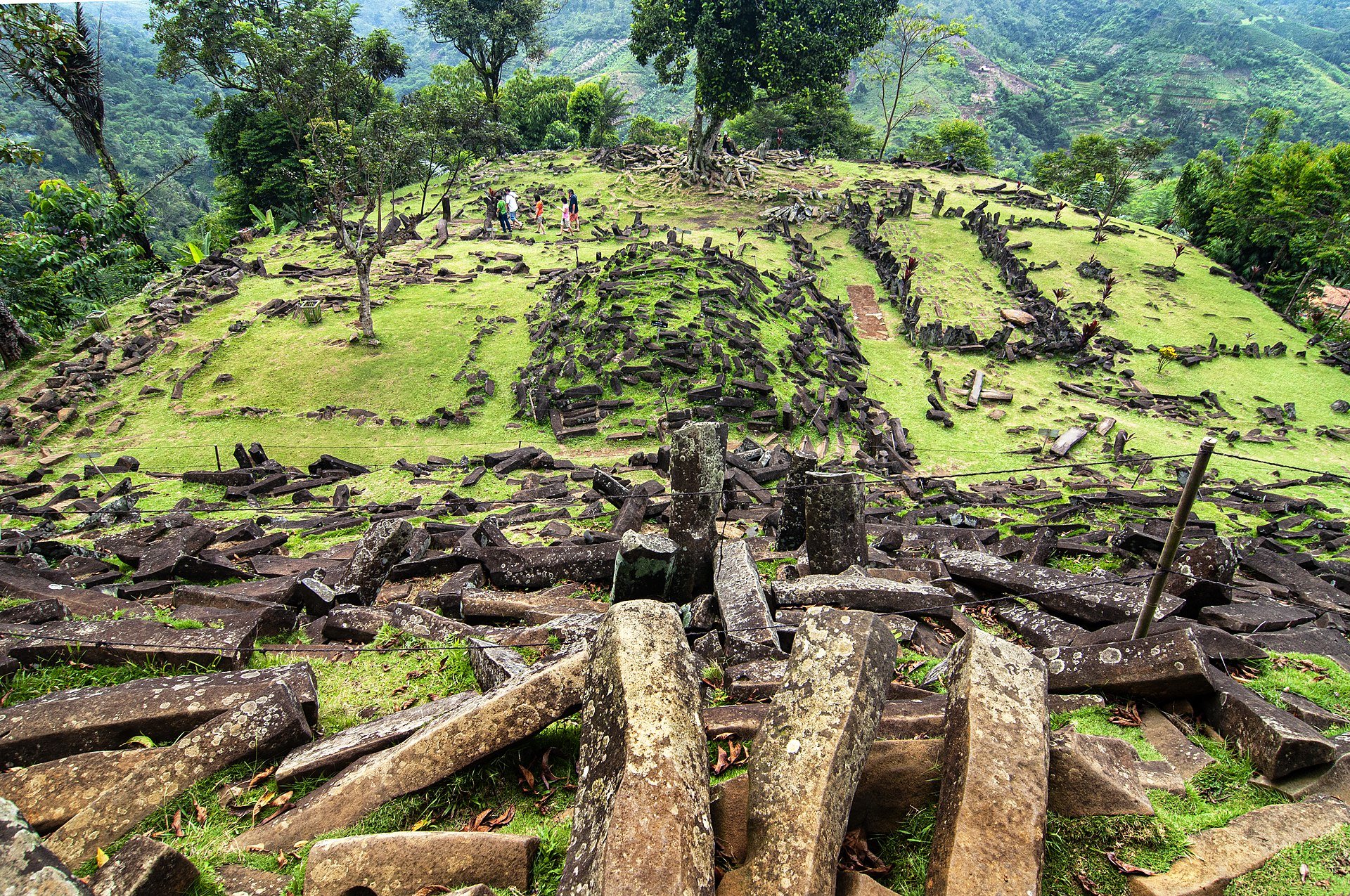
For the uninitiated, Gunung Padang, which translates to "Mountain Field" in the local Sundanese language, isn't a conventional pyramid like those seen in Egypt or Mexico. From a distance, it appears to be a hill topped with a variety of large stone columns and terraces. The surface layer dates back to around 2500 BCE, making it at least as old as the Great Pyramid of Giza. However, recent research proposes that this is merely the youngest layer, with the full structure dating back much, much further.
The controversial theory regarding Gunung Padang's age emerged when Dr. Danny Hilman Natawidjaja, a geologist from the Indonesian Institute of Sciences, began extensive geological surveys at the site. Employing sophisticated ground-penetrating radar, seismic tomography, and other remote sensing techniques, he and his team identified several layers of structures buried beneath the surface. In their view, the oldest of these layers could be up to 20,000 to 25,000 years old. If this dating is accurate, Gunung Padang would be far older than any known pyramid, by a considerable margin.
However, it's crucial to note that the pyramid theory isn't universally accepted. The main contention lies in the dating methodology and interpretation of the results. Critics argue that the geological techniques used can establish that there is indeed a man-made structure below the surface, but they can't accurately determine its age. The carbon dating done so far has also been of organic material found within the structure, which some argue does not definitively establish the age of the structure itself.
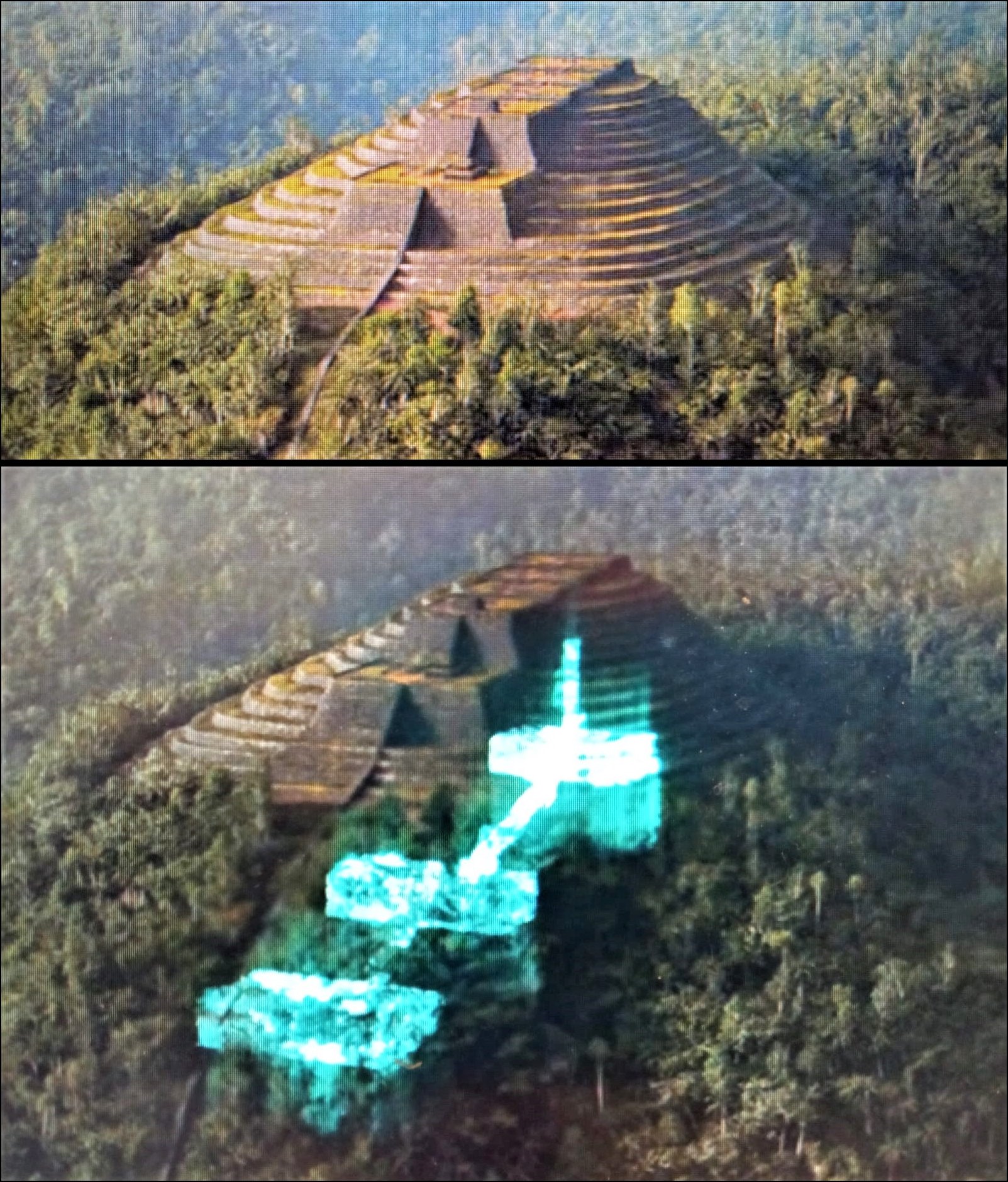
The age of Gunung Padang remains an open question. Despite the excitement around the pyramid theory, more scientific research is needed to prove or disprove it. Critics call for careful excavation, arguing that only through stratigraphy (the analysis of the layers of rock and soil) and extensive carbon dating can we arrive at a reliable conclusion about the age of the structures beneath Gunung Padang.
Furthermore, acknowledging Gunung Padang as a pyramid also requires broadening our understanding of what a pyramid is. The structures unearthed so far do not conform to the popular conception of pyramids, being terraced and built into a hill rather than rising as a freestanding structure with a pointed apex. But if the definition of a pyramid is to evolve, Gunung Padang could indeed claim the title of the oldest pyramid.
The Gunung Padang site is more than a potential scientific breakthrough. It is a testament to Indonesia's rich cultural heritage and prehistoric human civilization. As the research continues, it has the potential to reshape our understanding of human history, regardless of whether it ultimately claims the title of the oldest pyramid in the world.
The story of Gunung Padang serves as a reminder of the evolving nature of knowledge, where today's accepted facts can be tomorrow's disproven theories. It underscores the importance of scientific inquiry and the pursuit of truth, however complex or challenging the journey may be.

The Symbolism and Metaphors of the Vedas: Hidden Meanings and Profound Significance
BY THE ARCHAEOLOGIST EDITOR GROUP
Some of the oldest and holiest texts in Hinduism can be found in a collection of Sanskrit texts known as the Vedas. Scholars and spiritual seekers have studied these texts for centuries, but we still don't know everything there is to know about them.
Hymns, prayers, and rituals made up the Vedas, and they were passed down orally for centuries before being written down in Sanskrit. The Rigveda, Yajurveda, Samaveda, and Atharvaveda are the four primary Vedas. Even though each Veda is organized and contains different information, they are all revered as holy scripture by Hindus.
The Vedas' origins are a mystery. Scholars generally agree that the Vedas were written between 1500 BCE and 500 CE, but the exact date is unclear. Sages and seers in Hinduism were said to have received the Vedas as a divine revelation, and this has led to the belief that the Vedas are eternal. The Vedas have another name, ruti, which means "that which is heard," because they were originally transmitted through a system of recitation and memorization.
Yet another enigma is the Vedic language. Sanskrit, the language in which the Vedas were originally composed, is no longer spoken. Sanskrit is revered for its lyrical beauty and linguistic precision, but its complexity and high structure make it difficult to learn. The Vedas were composed in a form of Sanskrit called Vedic Sanskrit, which is distinct from the classical Sanskrit used in later Hindu texts. Scholars have been fascinated by the Vedas and their study of their language and structure for centuries.
Yet another unsolved puzzle is what exactly is in the Vedas. The Vedas are a treasure trove of knowledge about ancient Hinduism's cosmology, metaphysics, and even the mythology of the Hindu pantheon and the rituals and ceremonies performed in their honor. Hymns and prayers found in the Vedas are still regularly recited in Hindu homes and worship centers today. Scholars often disagree on how to make sense of certain Vedic passages and the extent to which they should be taken literally.
The Vedas' mysterious allure stems in no small part from the allegory and metaphor that permeate their texts. The Vedas are full of allegory and metaphor, which are used to explain abstract ideas in philosophy and religion. The Rigveda, for instance, has hymns that portray the cosmos as a sacrifice, with the gods and goddesses performing the ritual and the elements of space and time serving as the offering. The Samaveda details how to play the music used in Vedic rituals, while the Yajurveda details how to conduct sacrifices.
Due to their esoteric nature, the Vedas are also shrouded in mystery. It was the Brahmin caste's responsibility to perform the Vedic rituals and ceremonies, so only members of the Brahmin caste were allowed to read and understand the Vedas. It was only through a system of oral transmission from teacher to student that the Vedas could be preserved and spread from generation to generation, as they were regarded as sacred texts containing sacred knowledge.
The Vedas, for all their obscurity and difficulty, remain a cornerstone of Hinduism. When it comes to Indian religion and culture, the Vedas serve as the cornerstone. Buddhism and Jainism are just two examples of religions and philosophies that owe something to the Vedas. In conclusion, the Vedas' enigmas never cease to enthral and perplex academics and spiritual explorers. Many mysteries surround the Vedas, including their origin and language, as well as their symbolism and esoteric nature. The Vedas have been an integral part of human spirituality and culture for thousands of years, but their depth and mystery may be their most enduring qualities. And what other mysteries and insights might the Vedas still hold? Time, along with continued research and thought, may be the only thing that can shed light on the situation.

The Tomb of Pakal the Great: A Window into Mayan Culture and Beliefs
BY THE ARCHAEOLOGIST EDITOR GROUP
Finding the tomb of Mayan king Pakal the Great in Palenque in 1952 was a major find for Mexican archaeologist Alberto Ruz Lhuillier. The elaborately decorated funerary artifacts discovered in the tomb shed light on the Mayans' worldview.
From about 2000 B.C.E. to 900 CE, the Mayan civilization thrived in what is now southern Mexico and Central America. The Mayans left behind many works of art and architecture, including pyramids, temples, and hieroglyphs, which account for a large portion of our understanding of their culture.
One of the most important finds in Mayan archaeology is Pakal the Great's tomb, also called the Temple of the Inscriptions. The pyramid-like Temple of the Inscriptions was constructed during Pakal's reign in the seventh century CE; the tomb was found underneath it. A carved stone sarcophagus, a stone mask, and various jade and shell objects were among the many burial artifacts discovered in the tomb.
What stands out most is the sarcophagus, which was hewn from a single block of stone. Intricate carvings adorn the structure and depict Pakal's descent into the underworld. The sculptures depict Pakal being whisked away on a divine chariot to the underworld through a series of gates and portals. A hieroglyphic inscription detailing Pakal's life and achievements is also found on the sarcophagus.
Stone mask placed over sarcophagus depicts Pakal's face and is also intricately carved. The jade and shell objects found near the sarcophagus may have played a role in rituals and ceremonies.
Important insights into Mayan religion and culture were uncovered upon the discovery of Pakal the Great's tomb. The Maya had a sophisticated belief system regarding the afterlife, as evidenced by the sarcophagus's carvings. Furthermore, the sarcophagus's hieroglyphic inscription is a rich source of data pertaining to Pakal and his reign.
Finding Pakal the Great's tomb was a major breakthrough for Mayan archaeology and for the study of ancient cultures more generally. It gives us a look into the worldview of a civilization that flourished more than a thousand years ago but still fascinates and inspires us today.
In recent years, the tomb's been restored and expanded to become a popular tourist destination in Palenque. World Heritage status was awarded to the Temple of the Inscriptions and the tomb of Pakal the Great by UNESCO in 1987. Since the Mayan civilization as a whole remains obscure to many, the finding of Pakal the Great's tomb is an important step forward in deciphering its history.
In conclusion, Alberto Ruz Lhuillier's 1952 discovery of the tomb of Mayan emperor Pakal the Great is an important find in archaeology. It is still read and studied today because of the insights it provides into Mayan religion and culture. The discovery of Pakal the Great's tomb is a reminder of the Mayans' lasting legacy and a testament to the wealth of cultural artifacts they left behind.

The Unwavering Legacy of the Iron Pillar: India's Timeless Monument
BY THE ARCHAEOLOGIST EDITOR GROUP
The Iron Pillar of Delhi is among India's most famous historical relics, and for good reason. This massive iron column has stood tall in the city center for over 1,600 years, and it still looks as good as new. The Iron Pillar has been the subject of countless investigations, but its true nature and purpose remain a mystery, casting doubt on our knowledge of ancient metalworking and engineering and giving rise to much speculation.
The Iron Pillar's materials and methods of construction remain a mystery. The wrought iron used to construct the pillar is of the highest quality, making it highly resistant to rust and corrosion. There is a great deal of mystery surrounding the pillar's construction due to the fact that it has withstood the test of time in essentially pristine condition despite the severe climate and air pollution of Delhi.
The Iron Pillar's history and age remain mysteries. The pillar was probably built sometime around the fourth century A.D., but the specific date and the reasons for its construction are unknown. It has been speculated that the Gupta Empire commissioned the pillar, while others argue that it was built by the Tomara dynasty. This mystery is made more complicated by the fact that the pillar is covered in illegible Sanskrit inscriptions.
Beyond these unexplained scientific conundrums, the Iron Pillar is also linked to a deep cultural history and religious practice. Both the Hindu and Muslim communities have held the pillar in high regard over the years, and it has become the focus of many myths and legends. It is believed that the Hindu gods invested the pillar with their magical powers, giving it the ability to grant wishes and ward off evil spirits. The presence of these myths and legends has prompted conjecture regarding the religious practices and beliefs of ancient India.
The Iron Pillar is surrounded by a plethora of myths and legends, but one thing is certain: this ancient artifact never ceases to amaze us with its mystery and beauty. The Iron Pillar of Delhi is a symbol of India's cultural and spiritual heritage as well as a testament to the ingenuity and resilience of the human spirit, whether viewed through the lens of engineering and metallurgy or as a symbol of India's rich cultural and spiritual heritage.
The Untold Truth behind Ancient Technologies
Prepare for a mind-bending journey through time as we reveal the astonishing secrets of ancient technologies! From the depths of ancient pyramids to the heights of towering megaliths, our ancestors left us clues of their remarkable innovations and wisdom. Join us as we peel back the layers of history to unravel the mysteries of these ingenious creations!
The Ancient Occupation of Antarctica and its connection to Lost Civilizations
Antarctica continues to be one of the most mysterious places on Earth. Scientific teams from around the world have set up long established laboratories in hope of learning more about the frozen continent and occasionally they discover something that shocks the scientific community. Antarctica is also known for its rumoured UFO sightings, underground tunnels, ancient secrets extraterrestrial bases and even a hole to the inner earth where highly advanced beings continue to monitor Earth. Discoveries beneath the ice seemingly indicates that the location was once covered in grass, trees, and maybe even civilizations such as the Sumers and others. Could there truly be ancient lost pyramids still standing buried beneath ice and snow? More recently even the magnetic pole seemed to have shifted. Could this be the start of a great thaw, and if so, what other mysterious discoveries beneath the ice will emerge?
Unearthing the Secrets of Mesopotamia, The American Archaeology Quest for the Cradle of Civilization
American archaeologists have played an important role in the study of ancient Mesopotamia, also known as the "cradle of civilization" or the land between the Tigris and Euphrates rivers, which is now modern-day Iraq.
One of the most significant early American archaeological expeditions to Mesopotamia was led by Edgar James Banks in the early 1900s. Banks worked with the Ottoman government to excavate several important sites, including Nippur, the religious center of ancient Sumer, and Bismaya, one of the oldest cities in Mesopotamia.
Another prominent American archaeologist in Mesopotamia was Robert McCormick Adams, who directed excavations at the ancient city of Nippur in the 1960s and 1970s. His work helped to reveal the complex social and economic structures of ancient Mesopotamia.
More recently, American archaeologists have been involved in excavations at the ancient site of Ur, the birthplace of Abraham according to the Bible, as well as other sites such as Tell Brak, an ancient city in northeastern Syria.
American archaeologists have also played a role in preserving the cultural heritage of Mesopotamia, including the restoration of important sites and the training of Iraqi archaeologists. However, political instability and conflict in the region have made archaeological work difficult in recent years.
Most Amazing Fossil Discoveries Ever
This top 10 list of mysterious archaeological discoveries has some of the strangest and most incredible prehistoric animal bones ever found! Watch the video below for more!
Archaeologists In London Made A Strange Discovery Beneath The Dirt
A structure of a very different kind, one that was nothing like an artifact from the future, was discovered by archaeologists in London. Watch the video below to find out more!
Scotland's mysterious Clava Cairns
The Clava Cairns, also known as the Balnuaran of Clava, are a nest of three mysterious structures located halfway between Cawdor Castle and the infamous Culloden battlefield. Little has been learned about the genesis of the structures through scientific inquiry, leaving them as intriguing testament to the enigmatic existence of Scotland's early inhabitants.
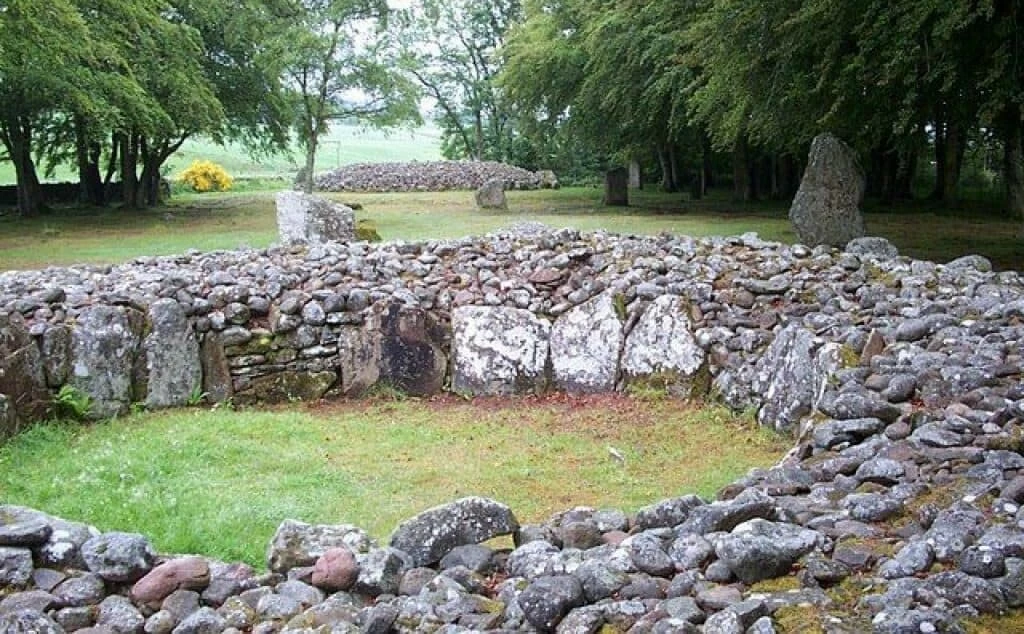
Clava Cairns from late Neolithic Period. This Ring Cairn was constructed without an entrance or passageway. Wikimedia Commons, Elliott Simpson.
Characteristics of Clava Cairns
The site's main features are what appear to be three 50-foot-diameter circular rock piles that are surrounded by standing stones.
A short passageway leads to the center of two of the three cairns, which are referred to as "passage cairns" and are composed of round mounds of stones stacked to a maximum height of 10 feet.
Pathway Cairn

South-West Passage Cairn. On Winter Solstice the setting sun would illuminate the chamber. Wikimedia Commons, Elliott Simpson.
There is a "ring cairn" in between the passage cairns that is built similarly to the other two but does not have an entrance other than by scaling the stone walls themselves.
Ring Cairn

Ring cairn. Passage cairn and standing stones are in the background.
Strange Stone Cupped
The existence of what are referred to as "cup marks" is a perplexing but typical feature of the cairns. Many of the stones have intentional circular indentations chipped onto their surface. Scholars continue to debate the function of these circular engravings, much as they do with the cairns themselves. It is impossible to determine whether the cup markings in the stones were carved at the same time as the cairns were constructed. Boulders that had previously been cut by an even earlier culture may have been utilised by the builders.
Cup Marks Cairn

Cup marks in a passage-type Clava cairn. Public domain.
Theories on the Site's Goals
The three cairns are constructed from reddish-colored rocks. The importance of this stone selection is no longer understood, though. The positioning of three lines of stones that extend from the ring cairn to nearby standing stones is another intriguing aspect of the structure. These slightly elevated offshoots have no recognized function or connotation.
Festivals or Burials of People
The purpose of the cairns' construction remains a mystery. They might have served as cemeteries or as locations for religious celebrations. Unfortunately, little has been learned from local excavations. There were some human remains and a small amount of cremation evidence found during digs in 1828 and 1858. There aren't enough corpses for a cemetery in any size village. Some academics, however, were still hesitant to abandon the burial site notion. They proposed that the buildings were not used to bury commoners. They were only given to a select few people who were seen to be particularly deserving for some reason. According to other archaeologists, the fact that there are so few bones may be because fewer people have been offered as sacrifices, as shown by the small number of human remains.
The 1828 excavation also uncovered pottery pieces from the late Bronze Age. The majority of academics concur that the cairns were built between 2000 and 1500 BCE.
Winter Solstice Sun Alignment
Some scholars have proposed that the cairns were utilized for astronomical purposes, similar to other enigmatic man-made structures like Stonehenge and the Egyptian Pyramids. For instance, it appears that the Clava Cairn site may have served as a focal point for star maps. Additionally, a research team recently found that on the winter solstice, the sun illuminated the route openings at dusk. A series of roughly 50 planet-aligned cairns in the Inverness-Nairn Valley includes these three Clava cairns as well as others.
One of the best specimens of prehistoric architecture is still the Clava cairns. As a result, they are now the norm for classifying related structures. Due to their resemblance to the original three constructions, more than 30 cairns discovered along the rivers Enrick, Beauly, and Spey are also referred to as "Clava cairns"; to this day, all of them continue to confound academics and amateur enthusiasts.
The largest flying animal in the world, Quetzalcoatlus, has a wingspan of up to 52 feet (15.9 m)
The climate was warmer during the Late Cretaceous period, about 100 to 66 million years ago. All of the continents saw the emergence of several new species, including the enormous Quetzalcoatlus that inhabited North America.

The Quetzalcoatlus compared to a man, car, and pterodactyl. Source Pinterest
One of the biggest known flying animals ever, Quetzalcoatlus has a wingspan that can measure up to 15.9 m (52 ft). This enormous creature was given the name Quetzalcoatl in honor of the feathered serpent god of Mesoamerica, who was well-known there under various titles.
He was referred to as Kukulkan by the ancient Maya and Quetzalcoatl by the Aztecs.
In the Maastrichtian Javelina Formation at Big Bend National Park in Texas, the United States, the first Quetzalcoatlus fossils were found in 1971 by Douglas A. Lawson. Later, Lawson found the partial skeletons of even smaller people at a different location.
It was how we discovered the existence of this enormous flying creature.
Despite not being a dinosaur, Quetzalcoatlus coexisted with them. The most well-known azhdarchid, or flying reptile, family member was Quetzalcoatlus.
"From earlier reptilian life forms, the pterosaurs and dinosaurs appear to have developed along different paths. It also becomes obvious that pterosaurs did not turn into birds.
The anatomy is similar to that of a wing in this sense. The fourth finger of each forelimb was noticeably longer in pterosaurs. It held up the leading edge of a membrane that reached all the way from the body's flank to the tip of the finger. The remaining fingers were little, reptilian, and ended in a pointed claw.
The main strut of a bird's wing is its second finger, and most of the wing is made up of feathers, according to Wann Langston.
Despite the fact that Quetzalcoatlus is frequently portrayed as having feathers, scientists believe it actually had pycnofibres instead of animal hair. Quetzalcoatlus was more than five meters (16.4 ft) tall, weighed 250 kilograms, and was as tall as a giraffe when it was standing on the ground.
As Quetzalcoatlus flew through the air, it was able to observe numerous other enormous species moving about our world. Then, everything came to an end since around three-quarters of Earth's plant and animal species became extinct 65 million years ago.
Because it happened at the transition between the Cretaceous (K) and Tertiary (T) periods, this event is known as the K-T mass extinction. The Quetzalcoatlus did not survive, and the dinosaurs were the most famous creatures to perish.
Archaeologists Made A 14400 Year Old Discovery In Jordan That Radically Rewrites Human History
In the dark desert of Jordan, archeologists endured quite a long while researching a site. Why? Because experts were of the opinion that the people who lived there in the past might be able to tell us more about one of the greatest inventions ever invented. Watch the video for more!