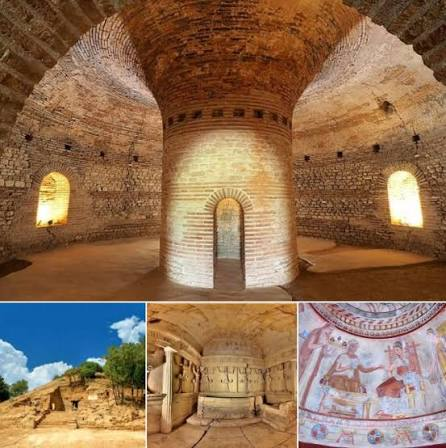
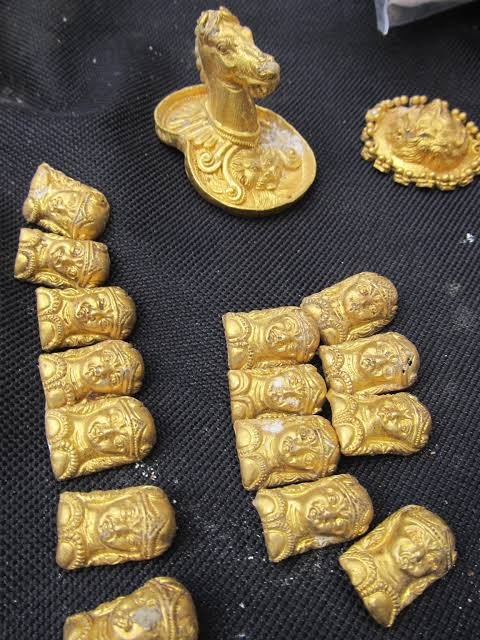
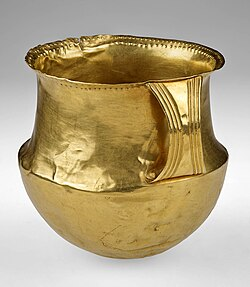
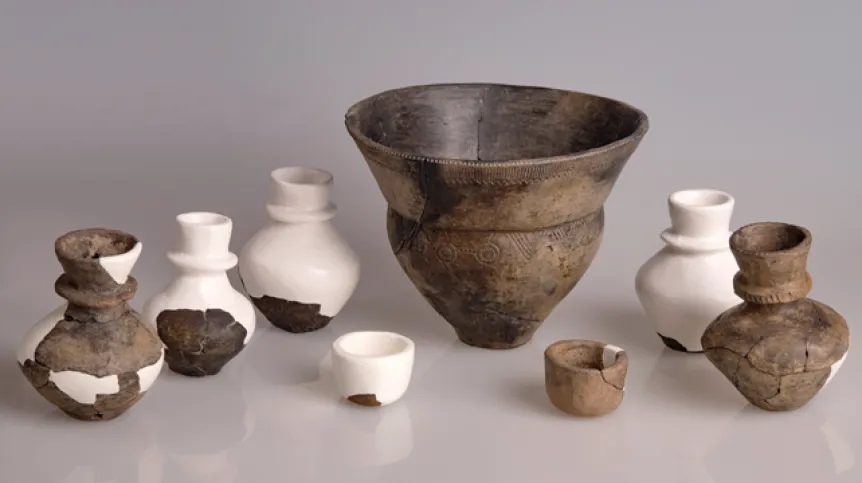
The world’s largest non-polar desert, is actually the widespread burial grounds of countless, mysteriously unknown, ancient ruins & civilizations, that have long since been forgotten, having been consumed and hidden by the sands of time, thousands of years ago. And here’s the thing…when we say “thousands of years ago”…that’s the part where things start to get really strange…
12 Most Amazing Archaeological Finds
Is your understanding of history about to be transformed by this video? Who’s to say - but we’re certainly going to give it a try! It’s an audiovisual collection of phenomenal archaeological finds from all over the world, ranging from hundreds to thousands of years old and taking in cultures and civilisations that have been lost to time. Let’s get going!
Genghis Khan - 10 Fun Facts about the Greatest Conqueror in History
In the following video we will analyze 10 fun facts about Genghis Khan, the greatest conqueror in history. Watch the video to find out more!
Nephilim: TRUE STORY of Goliath And His Brothers (Bible Stories Explained)
In today’s video we will say the true story of Goliath and his brothers. Watch the video below to find out more about this Bible’s story!
The Schöningen Spears | The Oldest Weapons in Human History?
Are these some of the earliest weapons in human history? In this video Tristan Hughes speaks to Dr Annemieke Milks, Researcher at the University of Reading, about the significance of the Schöningen spears. These wooden spears prove that early humans, including Neanderthals, were hunting and interacting in complex social groups 300,000 years ago.
The Schöningen spears are a set of ten wooden weapons from the Palaeolithic Age, excavated between 1994 and 1999 from the 'Spear Horizon' in the open-cast lignite mine in Schöningen, Germany. The spears are the oldest hunting weapons ever discovered and were found together with animal bones and stone and bone tools, providing proof early human ancestors were much closer to modern humans in both complex social structure and technical ability than previously thought.
Dr Milks shows Tristan how these spears were built and the range of possibilities for how they were used. Wooden spears survived as a technology for hundreds of thousands of years, suggesting they were used effectively by hunters throughout human history.
What happened with the Muslim Majority of Spain?
The history of Spain has been vast and elaborate for centuries. It seems that the sizeable Iberian nation managed to keep itself relevant rather consistently over hundreds of years, and it's often remembered as a powerful, European, Christian nation. But before the colonial era or the Spanish Inquisition, came the Reconquista - something that was only necessary due to the conquest of Spain by Muslim Arabs and Berbers. Before the Reconquista was the period launched by such invaders - the time of Islamic Spain. But where did the Muslims go? How did Spain become synonymous with Christianity instead?
Battle of Castillon, 1453 - The end of the Hundred Years' War
In the following video we will analyze the Battle of Castillon and the end of the Hundred Years’ War. Watch the video to find out more!
How Pagan Was Medieval Britain?
Did paganism survive all through the Middle Ages, as scholars once thought, remaining the religion of the common people, while the elite had embraced Christianity? Or did it die out earlier?
This lecture will consider a broad range of evidence, including figures in seasonal folk rites, carvings in churches, the records of trials for witchcraft and a continuing veneration of natural places such as wells. It will also compare ancient paganism and medieval Christianity as successive religious systems.
DNA Taken From This Vast Neolithic Tomb Exposed Some Grim Truths About Ireland’s Former Rulers
From the outside, it has the look of some alien spaceship that’s been dumped in the green landscape of rural Ireland. But this extraordinary structure is actually the handiwork of humans who lived more than 5,000 years ago. And recent DNA analysis of remains found at the site points to some disturbing truths about these ancient Irish people.
Inside, narrow passages decorated with exquisite Stone-Age carvings lead through the ancient structure. And they end in chambers that were used as tombs for the remains of the chieftains of these long-dead people. This astonishing edifice called Newgrange is located in the Boyne Valley, where a range of ancient tombs have been uncovered over the years.
The Most Macabre Objects in London's Churches - An In-Depth Guided Tour
In this video we will take you on a detailed guided tour of the most macabre things found in London’s churches, just in time for the Hallowe’en season. We’ll explore the history of body snatching, public hangings, flayed saints, incorruptible bodies, memento mori, haunted mummies, and much, much more.
How is THAT possible? Archaeological Finds That will Surprise You
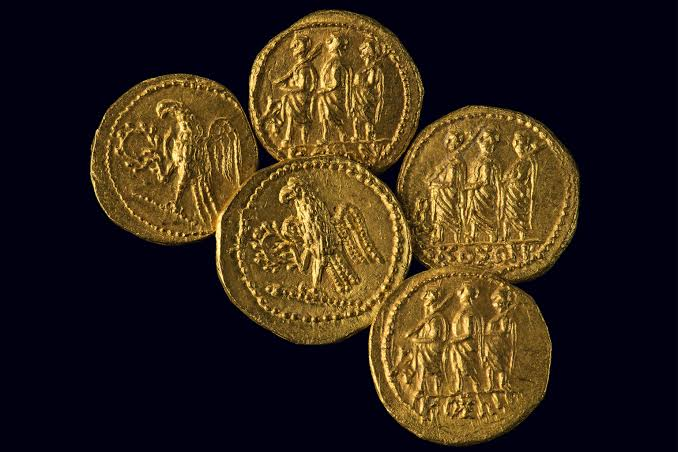
Archaeologists around the world want justice! Their main goal is to return the artifacts to their rightful place of discovery! Cave of the time of Ramesses II, the oldest heart on the planet and gold coins in the wall. Funeral costumes of the Han Dynasty and the real sounds of a Roman battle! Archaeological discoveries that will surprise!
The Ancients Want You To Hear This (Rules for Life)
Ancient stoic wisdom to help you rise above life's challenges, written by us, through our passion and study of stoicism. Watch the video for more!
Nodosaur Dinosaur ‘Mummy’ Unveiled With Skin And Guts Intact In Canada
"We don't just have a skeleton," said one of the nodosaur researchers involved. "We have a dinosaur as it would have been."
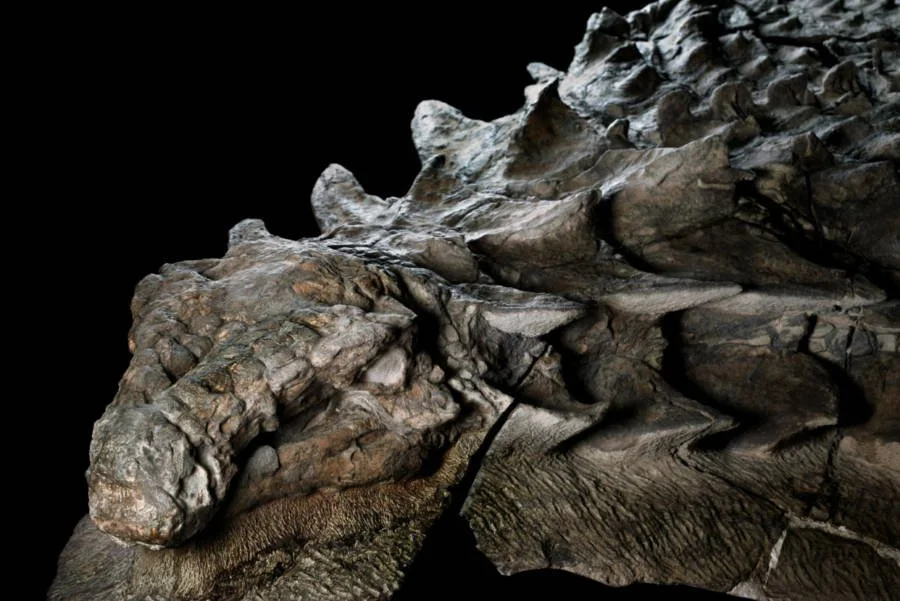
You can’t even see its bones, but scientists are hailing it as perhaps the best-preserved dinosaur specimen ever unearthed. That’s because those bones remain covered by intact skin and armor — 110 million years after the creature’s death.
The Royal Tyrrell Museum of Palaeontology in Alberta, Canada recently unveiled a dinosaur so well-preserved that many have taken to calling it not a fossil, but an honest-to-goodness “dinosaur mummy.”

With the creature’s skin, armor, and even some of its guts intact, researchers are astounded at its nearly unprecedented level of preservation.
“We don’t just have a skeleton,” Caleb Brown, a researcher at the Royal Tyrrell Museum, told National Geographic. “We have a dinosaur as it would have been.”

When this dinosaur — a member of a newly discovered species called nodosaur — was alive, it was an enormous four-legged herbivore protected by a spiky, plated armor and weighed in at approximately 3,000 pounds.
Today, the mummified nodosaur is so intact that it still weighs 2,500 pounds.
How the dinosaur mummy could remain so intact is something of a mystery, although as CNN says, researchers suggest that the nodosaur may have been swept away by a flooded river and carried out to sea, where it eventually sank to the ocean floor.

As millions of years passed, minerals may have eventually taken the place of the dinosaur’s armor and skin. This might help explain why the creature was preserved in such a lifelike form.
How “lifelike” are we talking? According to Science Alert, the preservation was so good that researchers were able to find out the dinosaur’s skin color.

By using mass spectrometry techniques, researchers detected pigments on the scales of the dinosaur. Apparently, the nodosaur’s coloring was a dark reddish brown on the top of the body — and lighter on the underside.
Scientists think the coloring was an early form of countershading — a camouflage technique that uses two tones to protect an animal from predators. Considering this dinosaur was an herbivore, its skin color likely played a role in protecting it from the enormous carnivores of the time.
“Strong predation on a massive, heavily-armored dinosaur illustrates just how dangerous the dinosaur predators of the Cretaceous must have been,” said Brown.

As if the preservation of skin, armor, and guts weren’t impressive enough, the dinosaur mummy is also unique in that it was preserved in three dimensions — meaning that the original shape of the animal was retained.
“It will go down in science history as one of the most beautiful and best preserved dinosaur specimens — the Mona Lisa of dinosaurs,” said Brown.
Although the nodosaur dinosaur mummy was exceptionally well-preserved, getting it to its current display form was still difficult. The creature was, in fact, first discovered in 2011 when a heavy-machine operator accidentally found the specimen while digging through oil sands in Alberta.

Since that lucky moment, it has taken researchers 7,000 hours over the course of six years to test the remains and prepare them for display at the Royal Tyrrell Museum. Now, visitors finally have the chance to gaze upon the closest thing to a real-life dinosaur that the world has likely ever seen.
Bizarre & Mysterious Discoveries
In the following video we will be talking about some of the most bizarre and mysterious discoveries. Enjoy!
12 Most Incredible Ancient Atrifact Finds Scientists Still Can't Explain
What can you tell about an ancient culture or civilization from the artifacts they left behind? Sometimes, these items tell us a lot about what our ancestors believed or how they lived their lives. Other times, they tell us almost nothing at all. Mysterious ancient artifacts will always be a source of fascination for us because we can't explain them. In some cases, we can't even say how they were built! We love hearing about mysterious riddles from long ago and far away, and so we're sharing some of them with you in this video.
Uncovering the Mysteries of Crystal Mountain: A 33-Million-Year-Old Oasis in Egypt
“Crystal Mountain”. Located within the white desert, 120 km from the Farafra Oasis and 160 km from the Bahariya Oases is one of the rarest mountains in the world, it is a mountain full of different crystal, where there are more than 12 types Crystal, clustered with each other in a huge mountain mass.
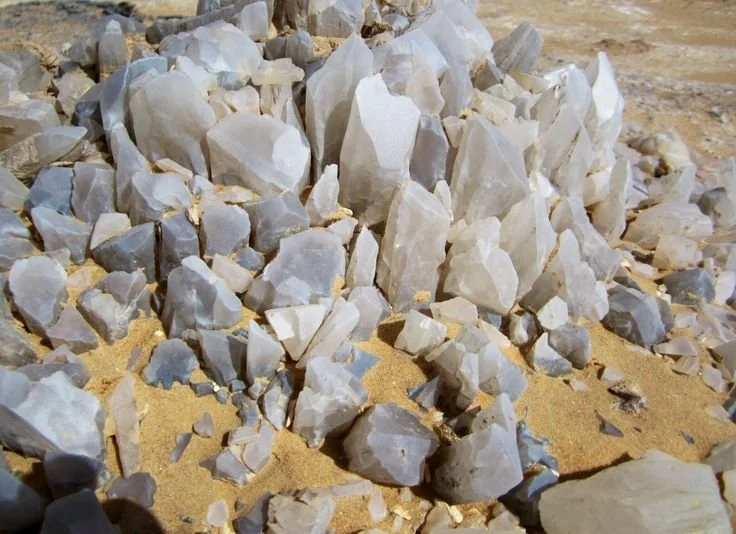
Crystal Mountain, which is often called the Jewel of the Desert is formed by the quartzite crystals and looks amazing in the sun’s rays.
A few decades ago, that natural feature has been found quite by accident. Local residents for several years used the minerals to build the road.
When researchers realized the uniqueness of this place, Crystal Mountain has been taken under protection. Today, it is an unmissable destination for all desert tours.

One of the most beautiful mountains of the world, a small arch of rock, shining brightly in the sun, making it look like a crown decorated with thousands of colored gems in the desert, making it like a treasure hunting behind every seeker of wealth, and this is what attracts many tourists and locals, His jewels are scattered in a unique landscape.

“Crystal Mountain”. Located within the White Desert, 120 km from the Farafra Oasis and 160 km from the Bahariya Oases is one of the rarest mountains in the world, it is a mountain full of different crystal, where there are more than 12 types Crystal, clustered with each other in a huge mountain mass.
Crystal Mountain is usually thought to be a giant mountain that rises above the surface of the desert, but they are shocked when they visit it.

The presence of this treasure in a place open to all led to its destruction, most of the tourists and even local people, insist on going to the Crystal Mountain, to collect some pieces of calcite crystals scattered, and thought “Alkhirtia”, who are working as “guides” and “guides” desert, Imagine that tourists collect it as a hobby to collect colored stones, which threatened to disappear.
According to a new study, giant amphibians used to swim like crocodiles 250 million years ago
According to a new study, 2-meter-long amphibians swam like crocodiles long before real crocodiles existed.
Around 250 million years ago, in the Late Permian Era, South Africa was the home of rhinesuchid temnospondyls, enormous predatory amphibians with crocodile- or gigantic salamander-like bodies.
The majority of our knowledge of these extinct animals comes from their skeletal remains, but in this paper, scientists reveal an amazing collection of trace fossils that shed light on how these animals interacted with their surroundings.

The fossils were discovered at a location in the KwaZulu-Natal Province of South Africa that the researchers have named the Dave Green palaeosurface. There, they were discovered on a rock surface that was originally the bottom of a tidal flat or lagoon of the ancient Karoo Sea. Seven body impressions (resting traces) and several tail-marks (swimming traces) thought to have been left by a two-meter-long rhinesuchid temnospondyl were examined by researchers.
The researchers hypothesize that these traces were left by one or two animals swimming between resting areas, maybe in search of food, based on the spatial arrangement of these traces.
According to the sinuous curve of the tail marks, these animals moved their tails continuously side to side while swimming, just like modern crocodiles and salamanders do. In keeping with crocodiles, these amphibians appear to have tucked their legs against their bodies while swimming, based on the shape of the body impressions and the relative lack of footprints seen beside the traces.
These fossils suggest that these extinct amphibians led an active lifestyle that included swimming and bottom-walking, an interpretation made possible by the exceptional preservation of locomotion traces.
This fossil site is important for understanding Permian Period ecosystems since it also retains numerous traces from other tetrapods (four-legged animals), fish, and invertebrates.
They continue, "The study's results are important since they close knowledge gaps about these extinct animals. A window onto the shoreline of the Karoo Sea about 255 million years ago, the amazing marks and traces preserved on the Dave Green palaeosurface show how these animals traveled and interacted with their surroundings.
This study not only makes a significant scientific contribution, but it also shows how important paleontological discoveries are frequently made by curious individuals who then alert paleontologists to their findings."
Who are the Caucasians - DNA History
In this video we will analyze the DNA history of the Caucasians. Watch the video for more & enjoy!
Why Do All SLAVIC Countries Have Similar Flags?
In this video we will talk about Slavic Flags and how they are similar. Attempting to provide an historical context, we will explain how all of these flags share the red, white and blue colours with the pan-slavic flag created at the Congress of 1848, which was itself inspired in the Russian flag. The Russian flag was, in turn, influenced by the Dutch flag - due to Peter The Great's desire to turn Russia into a European Power, as well as his passion for all things Dutch due to his visits to the country.
After understanding who the Slavs are, which countries are considered Slavic, and which of these effectively use the slavic tricolor(s). Finally we will go through the 7 countries (Serbia, Croatia, Slovenia, Slovakia, Czechia, Bulgaria, and Russia) that do use them and look into when they were put into use, as well as how these colours often reflect not only the slavic heritage but also a connection to the banners and coats of arms of the local medieval predecessors.
Stoic Laws for Dark Times
These principles based on the ancient philosophy will help give you the strength to endure adversity. The stoics were masters at handling difficult times, this video aims to capture their wisdom.