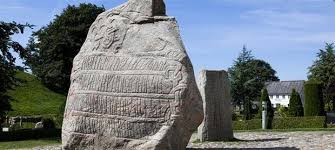
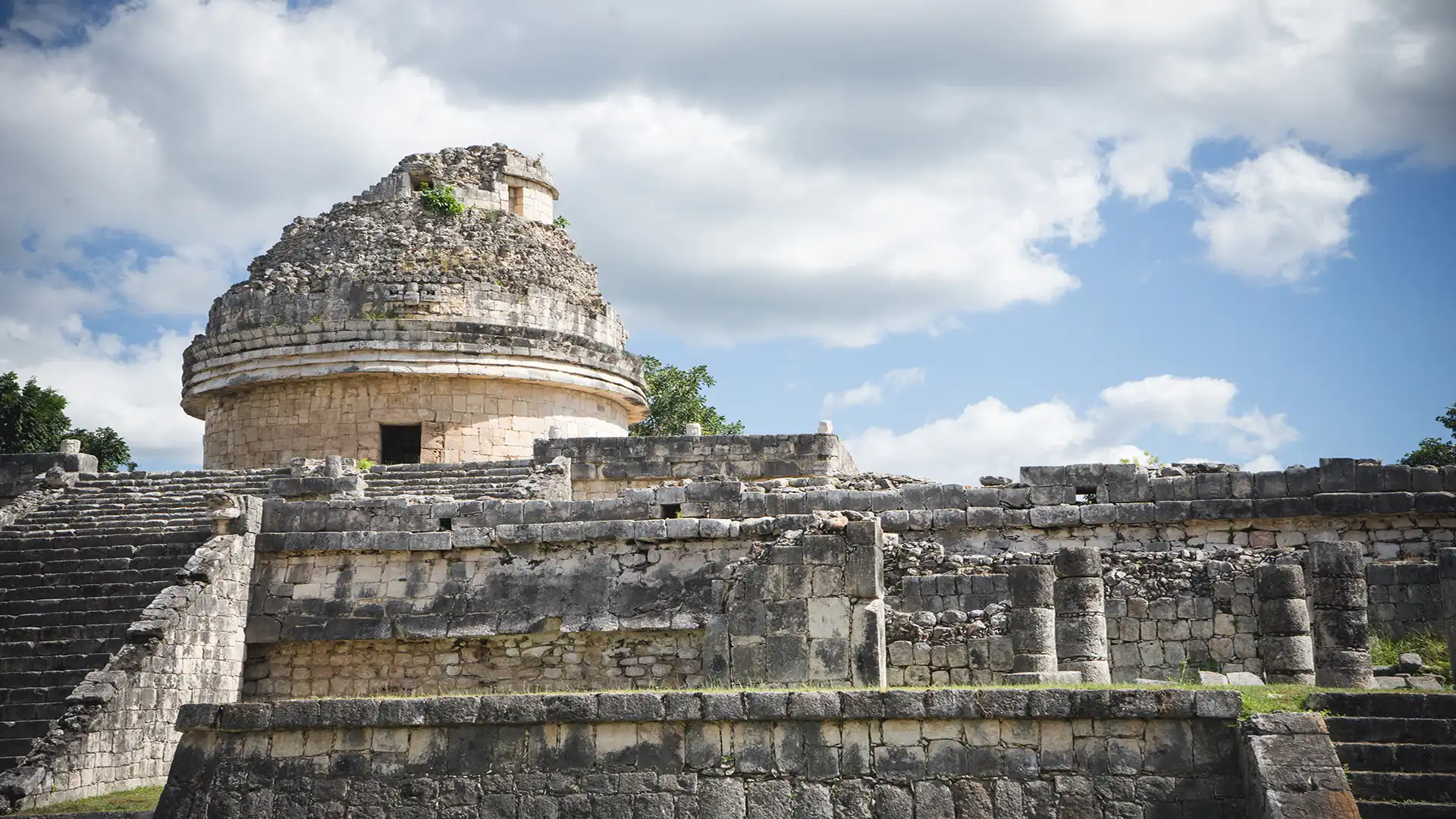
In the video below we will execute a 4,000 year old recipe for the Babylonian New Year. Enjoy!
Hinduism Explained
What is Hinduism?
Hinduism, the religion of over a billion people, is the world’s oldest religion and the most confusing one to non-Hindus. It makes billions of people around the world ask, What is Hinduism? Some say it isn’t even a religion, more a way of life. Hindus themselves call it Sanātana Dharma, the eternal tradition. So what is Hinduism, does YOLO apply to them, and who is that elephant god?
Hinduism is the world's oldest active religion. It's the result of the merging of the ancient Indus Valley civilisation and nomads that came into India around 1500BC. Some scholars say it could even go back many more thousands of years.
Hinduism has a long long history. But today we'll be focusing just on the core beliefs of Hindus because I don't have the willpower to animate a 3-hour video.
Hinduism is so diverse, so deep, and means so many different things to different people. Learning even the basics of this fascinating and ancient religion gives us an insight into the worldview of over a billion people.

New Study: Ivory Bag Rings Found in Anglo Saxon Cemeteries Came From African Elephants
High class female burials from the late fifth and seventh centuries AD frequently contain bag rings, but the origin of the ivory has been a subject of discussion since the 19th century; walrus and mammoth ivory have also been suggested as alternatives to elephantid ivory.
In Scremby, Lincolnshire, recent excavations of an Anglo-Saxon cemetery turned very elaborate female graves with bag rings. These burials were studied using radiocarbon dating and zooarchaeology by mass spectrometry (ZooMS).
The report states that "Strontium analysis was also used to pinpoint the elephantids' habitation at the time that their tusks formed. We have determined through a multi-methodological approach that the elephants that lived in an area of young volcanic rocks in Africa somewhere between the fifth and sixth century AD provided the ivory for the Scremby bag rings.

A well-preserved ivory bag ring from the an Anglo-Saxon burial at Scremby in Lincolnshire. Photo: ©Hugh Willmott
The ivory most likely came from the Kingdom of Aksum, which is now in modern-day Eritrea and northern Ethiopia; the strontium isotope readings point to an area near Eastern Africa.
The emergence of the Aksumite Kingdom in the ancient historical kingdom of Dmt was first mentioned in a trading manual from around the middle of the first century AD called the "Periplus of the Erythraean Sea." The Kingdom was centered in Aksum, which was strategically located to rule both the highland and coastal districts of northern Ethiopia, not far from the foot of the Adwa highlands.
The Periplus text claims that the Aksumite Kingdom's position in the world had a significant part in the transcontinental commerce route between Rome and India from the very beginning.

Ivory bag ring in-situ alongside other belt accessories in a woman’s grave at Scremby Photo: ©Hugh Willmott
Up to the 7th century AD, the Kingdom had a significant influence on the supply of ivory. A trade monopoly between the region and the Mediterranean was created at the same time as the early Islamic conquests and expansion into North Africa.
The noticeable decrease in the presence of ivory bag rings in Anglo-Saxon graves dating from the 7th century onwards may have been caused by the disrupted trade routes to the West. Due in part to the re-establishment of Christianity, England also experienced larger changes to burial customs during this period of transition.

© Facebook/Gemeente Tiel
Stunning images: 'Dutch Stonehenge' found
There is a mound there that served as a "solar calendar."
Archaeologists in Tiel revealed an "amazing find, unique in the Netherlands": a more than 4,000-year-old "outdoor shrine" where locals gathered to perform sacrifices and ceremonies.
The archaeological monument, known as "Dutch Stonehenge," is the size of three football fields and features a mound that served as a "solar calendar."
Over 60 men's, women's, and children's remains were found inside the mound, which had a diameter of about 20 meters. During the longest and shortest days of the year, sunlight directly entered via its holes.
The excavation, whose findings were revealed today, started in Tiel, which is located about 50 kilometers from Utrecht, in 2017.
"Such a remarkable archeological find! A 4,000-year-old shrine has been discovered by archaeologists in an industrial region. "Tiel's government posted something on its Facebook page. The municipality observed that "it is the first time that such a site has been unearthed in the Netherlands."
Three mounds
Just a few kilometers from the bank of the Vaal, the archaeologists discovered a total of three burial mounds in this region by examining the variations in the soil's chemical makeup.
According to the researchers, the apertures around the main mound served as a solar calendar that "recorded crucial dates such as feasts and harvest."
According to national broadcaster NOS, "this hill is reminiscent of Stonehenge, the famous and enigmatic prehistoric monument in England, where the same phenomenon happens." The size of the other two mounds is smaller. They were all interred for about 800 years.

© Facebook/Gemeente Tiel
An old Mesopotamian bead was also discovered
An astonishing find made by archaeologists was a glass bead that was discovered within a tomb and was later determined to have originated in Mesopotamia, which is modern-day Iraq. 5,000 kilometers were covered by this bead four millennia ago, according to team leader Christian van der Linde.

© Facebook/Gemeente Tiel
According to Stein Arnoldussen of the University of Groningen, "Glass was not manufactured here; the bead was a surprise thing for people because it was composed of an unfamiliar material. According to scientists, the bead is evidence that people from the two places had previously interacted at that time.
According to a recent study, the mysterious boats painted in an Australian cave may be records of "battle ships" from modern-day Indonesia
Two bizarre artworks were discovered within a cave in northern Australia some 50 years ago. They represent a pair of boats with strange qualities that have perplexed scholars ever since their discovery, and they are probably hundreds of years old.
Researchers may have now discovered the images in a study that was just published in the journal Historical Archaeology, shedding light on Indigenous stories that have been long-erased.
Even while neighboring drawings of Indonesian fishing boats and later European ships have been discovered, the two mystery vessels are distinct: The vessels, according to the experts, are "combat ships" from the Moluccas, a collection of Indonesian islands situated immediately to the north of Australia.
According to a statement from Flinders University in Australia, the study's lead author, Mick de Ruyter, a maritime archaeologist, these motifs "support existing ideas that sporadic or accidental voyages from Indonesia to the Australian coastline took place before or alongside regular trepang [Indonesian for "sea cucumber"] fishing visits."
Uncertainty exists over the specific circumstances in which Aboriginal populations came into contact with Moluccan boats. The researchers note that the existence of fighting craft nevertheless suggests instances of physical violence or at the very least a projecting of authority. It's possible that the two groups got into a fight over commerce, headhunting, or slavery.
An other hypothesis put forth by Sue O'Connor, an archaeologist at Australian National University who was not involved in the study, is that Aboriginal groups may have traveled to the Moluccas. This either shows that such crafts have traveled to the coastlines of Arnhem Land [a region in northern Australia] or Arnhem Land residents have traveled to the Moluccan region, seen those crafts there, and returned to paint them.
The level of detail portrayed in the paintings astounded the researchers as well. Such accuracy suggests that the Indigenous artists spent more time with these ships than they did merely glimpsing them from the shore. The paddles, prowl boards, pennants, and other decorative elements of the ship have all been accurately depicted.

Based on certain features, such as the oars and pennants, researchers concluded that these boats likely weren't fishing vessels. Darrell Lewis / Flinders University
According to the university's statement, reports from Dutch colonists show that during the 17th century, groups from the Moluccas were sailing "frequently" to Australia.
The study was not conducted by Australian archaeologist Paul Tacon of Griffith University; nevertheless, he is collaborating with Wesley and a wider group to investigate how Aboriginal people documented their contacts with outsiders. He tells Live Science's Jennifer Nalewicki that the new study gives encouraging new information.
This thorough investigation demonstrates persuasively that there was communication between Moluccan islanders and Aboriginal people in Arnhem Land, Australia, hundreds of years ago.
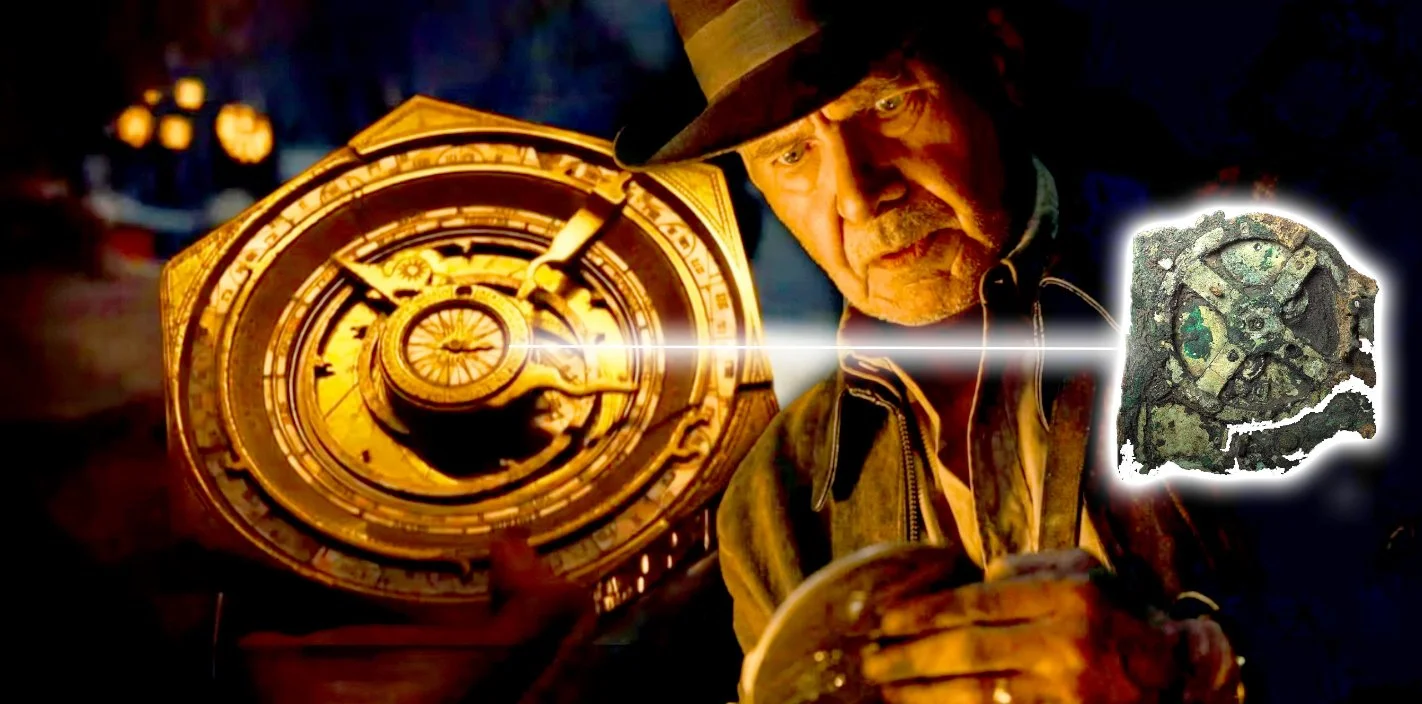
The Antikythera mechanism: Indiana Jones investigates this century-old secret in the new film
BY THE ARCHAEOLOGIST EDITOR GROUP
The Antikythera Mechanism, the first “computer” of humanity, is the focus of the most well-known and recognizable “archaeologist”, Indiana Jones, and his most recent investigation into the biggest riddle of antiquity. In this article, you will find everything you need to know about this miracle, which continues to astound us thousands of years after it was created.
Divers discovered an old wreckage off the coast of Antikythera around 1900. However, one of the important ancient objects they managed to recover is the smallest and divided into various fragments, which is a true miracle whose value at that time they could not even imagine. With the limited resources available at the time and with significant losses (one dead diver and two permanently paralyzed), they managed to recover many important ancient objects.
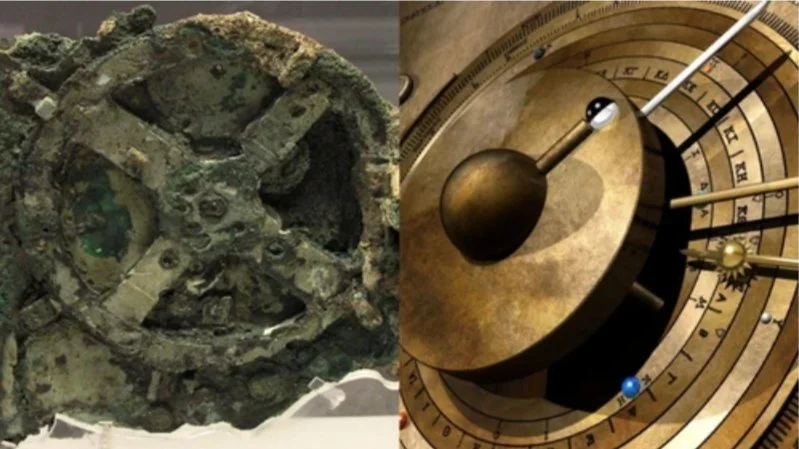
IMAGE: WIKIMEDIA (LEFT), © 2020 TONY FREETH (RIGHT)
A "computer" that was capable of giving its user knowledge that we also did not know the people of the Hellenistic Period possessed was described in the research of the following decades as being an incredibly complex and unimaginable device for the tools and knowledge of antiquity. It moved thanks to a system of dozens of gears.
Years passed, and while the significance of this finding was recognized early on, it took us until the contemporary period, when we could completely comprehend it thanks to the development of specific digital devices like spectrographs.
Greek professor of space physics and leader in the study of the Antikythera Mechanism, Xenophon Moussa, presented the first comprehensive and contemporary study in conjunction with academics from other countries as part of the mechanism's research program.

At the same time, an exact functional replica of the Mechanism was built at the "Kostas Kotsanas Museum of Ancient Greek Technology," both in terms of physical size (tablet size) and much larger, in order to understand how the invention functions with all of this intricate gearing that our prehistoric forefathers used to observe and predict the motions of the planets in our solar system.
We can only infer that he did because the probe is still open. The logic behind how it works is that by entering the right information into the device, we can observe things like solar eclipses and moon phases, as well as look up to 400 years into the past and future! The precise dates of significant holidays like the Olympic Games, Isthmia, and Nemea can be inferred from these facts. A current and precise astronomical calendar accomplishes this.

According to specialists, gathering this information would require literally centuries of sky-watching and meticulously documenting all phenomena, so that with all of this and the necessary technology, which we did not know existed, a true ancient tablet could be built.
The answers cannot all be found in archeology. Perhaps this is why the finest, Indiana Jones, was chosen, providing the culmination of his expeditions with a wider mythological dimension and contributing to the preservation of this priceless ancient legacy.
The plot of the new Indiana Jones’ movie
As Indiana Jones and Oxford archaeologist Basil Shaw try to collect the Lance of Longinus from a fortress in the French Alps in 1944, the Nazis seize them. Astrophysicist Jürgen Voller notifies his superiors that the Lance is a fake but that he has discovered half of the Antikythera device called Archimedes' Dial, which was created by the ancient Syracusan mathematician Archimedes. This device reveals temporal fissures and enables potential time travel. Jones frees Basil and makes his getaway on a train carrying stolen artifacts. The two jump from the train barely in time for the Allied soldiers to stop it when he has the Dial piece.

Jones, who is now elderly and resides in New York City, retired from Hunter College in 1969. Due to Jones growing depressed and secluded after their son Mutt was killed in the Vietnam War, Marion left and filed for legal separation. Archaeologist Helena Shaw, Jones' goddaughter, shows up unannounced and claims she is there to conduct a study on the Dial. Jones cautions that before giving the Dial to Jones to burn (which he never did), her late father, Basil, became obsessed with examining it.
Voller's henchmen attack Jones and Helena as they are removing the Dial-Half from the college archives. The CIA aids Voller, who is currently employed by NASA under the guise of "Dr. Schmidt." In order to sell the Dial on the illegal market, Helena, who is later revealed to be an antiquities smuggler, flees with it. Jones is falsely accused of killing two of his coworkers, which forces him to flee through a parade commemorating the Apollo 11 moon landing, an anti-war demonstration, and the New York City Subway. He looks for Sallah, an old acquaintance who is now a cab driver in New York.

Sallah predicts that before he assists Jones in leaving the country, Helena will probably auction the Dial in Tangier. Jones stops Helena's unlawful private auction at a hotel in Tangier, but Voller and his goons show up and take the relic. Together, Jones, Helena, and Teddy Kumar, her teen sidekick, chase the suspects through the streets in a tuk-tuk. After the American government denounces Voller for turning rogue, the CIA attempts to capture him, but Voller's accomplices kill the agents and take their chopper.
Jones, Helena, and Teddy pursue Voller to Greece, where they join forces with Renaldo, an experienced diver who was formerly Jones' old friend. By using Basil's study as a guide, they scuba dive to an old shipwreck in the Aegean Sea and recover a "graphikos" tablet with instructions for getting to the other half of the Dial. When Voller gets there, he kills Renaldo. While being pursued by Voller, Jones' group escapes and travels to Sicily.
Jones and Helena discover Archimedes' grave, the second part of the Dial, and a 20th-century wristwatch on Archimedes' skeletal arm inside the Ear of Dionysius grotto. Jones is wounded when Voller arrests him. Teddy and Helena break free, pursuing Voller. Voller discloses his plans to time travel to 1939 in order to kill Adolf Hitler and aid Germany in winning World War II after putting the Dial back together. Voller turns on the Dial at an airstrip and finds a time rift in the sky. Helena stows out via the plane's landing gear as Jones is held captive on Voller's hijacked aircraft. Teddy flies on a different plane after them.

Jones discovers that continental drift might have changed the chronology's coordinates as he gets closer to the breach. The group arrives at the Siege of Syracuse in 212 BC rather than 1939. The opposing troops mistake Voller's aircraft for a dragon and shoot it down. When Teddy makes a successful landing, Jones and Helena jump out of the plane just before it crashes, killing everyone on board. Among the debris, Archimedes discovers Voller's body and wristwatch. While keeping the watch, he gives Jones the Dial. Jones and Helena find out that Archimedes built the Dial so that people from the future might travel via cracks that only led to 212 BC. Jones wants to stay behind when the fissure starts to collapse because he feels he has nowhere to go back to. Helena knocks Jones out because she won't give up on him.
A recuperating Jones awakens to find Helena, Teddy, Sallah, and Marion in his contemporary apartment. Jones and Marion make up romantically after the others have left.
Creepy Things That Were Normal for Vikings!
From their pillaging of distant lands to their fierce battles, Vikings were a force to be reckoned with. But what you may not know is that they had some strange and creepy customs too! From sacrificing animals to the gods, to believing in a mysterious "death tree," this video will uncover these dark secrets and more. Prepare to be spooked by the mysterious and often-forgotten customs of the ancient Norsemen.
300,000-Year-Old Artefacts Discovered in Britain! 800 in Total
Researchers from UCL Archaeology South-East have found some of the largest early prehistoric stone tools ever discovered in Britain, including enormous foot-long hand axes.
In total 800 stone artefacts have been uncovered from the dig in Kent. The objects were buried in material that filled a sinkhole and an ancient river channel and they are more than 300,000 years old.
The area under excavation in Kent is a hillside above Medway Valley, which is made up of deep ice age sediments. Watch the video to learn more about this exciting discovery!
16,000 year-old Ice Age Horse Found During Utah Family’s Backyard Renovation
Paleontologists have determined that a skeleton discovered during a landscaping project belonged to a horse from the Pleistocene Era.

The horse had arthritis when it died. It is possible, too, that it had bone cancer in one ankle.
That can happen to any horse once it gets to be a certain age. This one is nearly 16,000 years old.
In 2018 paleontologists identified the skeleton of a horse from the ice age in Lehi, Utah — a particularly unusual discovery given that much of the western part of the state was underwater until about 14,000 years ago. Buried for thousands of years beneath seven feet of sandy clay, the remains were discovered only when the Hill family began moving dirt around their backyard to build a retaining wall and plant some grass.

Laura Hill said she and her husband, Bridger, uncovered the skeleton on September 2017, but didn’t think much of it at first. They wondered if it was a cow; Lehi is about 15 miles from Provo and was once mostly farmland that hugged the edges of nearby Utah Lake. She consulted a neighbor, a geology professor at Brigham Young University, who examined the bones, and guessed they were from a horse from the Pleistocene Era.
“I was shocked,” Ms. Hill said. “This is something we did not expect.”
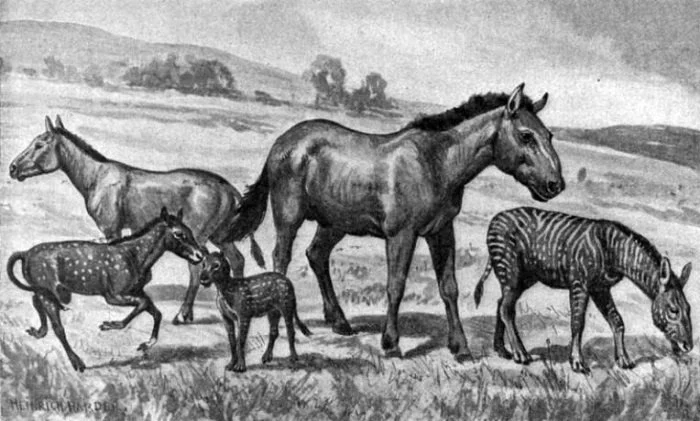
Utah is home to several fossil sites where dinosaurs and other ice age animals, including mammoths, mastodons and saber-toothed tigers, have been discovered. Horses have roamed North America for 50 million years, said Ross MacPhee, a curator in the department of mammalogy at the American Museum of Natural History. During the Pleistocene Era, the continent was dominated by two kinds of horses, he said, adding that he believes today’s domesticated horses are linked to one of those breeds. Despite harsh conditions, Mr. MacPhee said, “those horses could live anywhere.”
Rick Hunter, a paleontologist at the Museum of Ancient Life, a short drive from the Hill home, said Ms. Hill approached him last month to investigate the family’s discovery.
“She came in and said, “I found a skeleton in the backyard and I don’t know what to do,’” Mr. Hunter recalled. “I replied, ‘I do.’” Last week he and a team from the museum’s lab, where they study dinosaur fossils, went to her home.

The skeleton was missing its head, but was otherwise intact. Mr. Hunter estimated the horse to be the size of a Shetland pony; it was found lying on its left side, with all four legs tucked near its torso. Parts of the skeleton were damaged from exposure to weather. Curious onlookers had picked at the ribs and other bones.
Mr. Hunter did not know how the animal died, but he has a theory. Utah was covered during the last ice age by Lake Bonneville, a prehistoric lake. (The Great Salt Lake as it currently exists is a remnant of Lake Bonneville.)
Perhaps the horse was trying to escape from a predator and ran into the lake, Mr. Hunter surmised. “Horses can swim,” he said. “Maybe it got trapped out there, drowned and sank to the bottom.”
Mr. Hunter said he and his team visited the site at the Hill home for two days last week to excavate the remains. The bones were uncovered in a sandbank seven feet below the surface. “This is not uncommon,” the paleontologist said. Still, there was the question of what happened to the head.
He broadened the search to 50 feet beyond the original site. In the expanded area the group found bone fragments, molars and small pieces of the skull. Mystery solved: The skull had been shattered and moved when the landscaper cleared the land.

The skeleton was taken back to the museum, where it was cataloged, preserved and repaired. Unlike with dinosaurs, the horse’s bones were dehydrated and not yet fossils. Fossilized minerals in bone turn to stone, but the horse was not old enough for that to have happened. That posed a problem for Mr. Hunter’s team. “If they dry too quickly, they will crack,” he said. “You have to cure them slowly.”
Mr. Hunter also hopes to pin down the horse’s age with greater precision. The current estimate of 14,000 to 16,000 years is the team’s best guess until it can be studied further. Once the skeleton is reassembled, Mr. Hunter said, he would like it to become a permanent exhibit at the Museum of Ancient Life. Mr. MacPhee of the American Museum of Natural History concurred.
“It’s important that it ends up in an institution somewhere,” he said.
Ms. Hill said she and her husband were not sure what they were going to do yet. She said neighbors had flocked to the backyard to see the oddity before it was removed, and family members were advising the couple to have the skeleton appraised. (They are hoping to get a tax deduction if they donate it.) “It would be nice to have it here at the museum,” Ms. Hill said. “Mr. Hunter does want us to donate it.”

When Mr. Hunter visited last week he brought a volunteer who talked to the neighborhood children about Lake Bonneville, ancient animals and, of course, the horse in the backyard. Mr. Hunter said he would name it “Hill Horse” in honor of the family that found it.
Ms. Hill was pleased. “Now all these little kids want to be paleontologists,” she said with a laugh.
12 Most Amazing Recent Archaeological Finds
There's rarely anything more fascinating in the field of archaeology than that which has been discovered recently. Artefacts that were found years ago have been extensively studied and discussed by now, and much of their mystery has been lost. With things that have been found more recently, the mystery still exists! It's clear from these recent discoveries that we still have much to learn about our ancient ancestors, so let's start learning now.
Who are the Filipinos: Ethnic groups of the Philippines
This brief video details the multiple migrations that have taken place into the Philippine archipelago. It was modelled on the most recent paper on Philippine Genetics.
The RISE and FALL of the Roman Empire
What was the Roman Empire? Many empires have established world order in the past. However, only a handful of them has managed to become eternal. But, even among these, there is only one winner. An empire to whose superiority no other empires come on par with. Do you know which realm we are referring to? It is no other than the Roman Empire.
11 Secrets of the Mysterious City of Machu Picchu
In 1911, Yale archaeologist Hiram Bingham and a small team of seven set out in Peru to uncover the lost city of Vilcabamba but were quickly led to one of the world's most fascinating sites. The expedition team met Melchor Arteaga, a local farmer, on their trip from Zuzco, who told tales of the "old mountain" ruins known as Machu Picchu - this would eventually prove to be the "Lost City of the Incas." It dates back to at least the 14th century and is today regarded as a Modern World Wonder. Even with cutting-edge technology, scientists need clarification on how the Incas created their city without using steel, masonry, or wheels.
The Strangest Objects in the British Museum - A Guided Museum Tour
In this video we will take you on a guided tour of the strangest, weirdest, and most macabre objects in the British Museum. Enjoy!
Anglo-Saxon Pagan Gods
When the Western Roman Empire crumbled, the Anglo-Saxon peoples who occupied Britain brought their own paganism with them. This was Germanic, with a pantheon of deities that included Woden, Thunor, Tiw and Frig. Its temples were wooden structures that leave scant traces in the landscape, but you can find evidence for their beliefs in cemeteries like Sutton Hoo.
This lecture looks at such evidence and at literature such as Beowulf and the history written by the Christian scholar Bede.
Incredible Advanced Ancient Technology
In the following video we will analyze some incredible advanced ancient technology. Watch the video to find out more!
The Chilling Truth Of The Phoenician Child Sacrifice Ritual
The truth of the damning charges made against this great race.
They invented the alphabet and modern navigation and introduced wine to Europe. But after the sacking of Carthage by the Romans in 146 BC and the destruction of their famous library, the world was left with very little evidence of Phoenician life and culture.
The Greeks and Romans describe them as a race of unscrupulous profiteers, grubby merchants – and worse. They were seen as a morally corrupt race who forcibly prostituted their daughters in sacred rituals and killed their own young in an attempt to win over their violent gods. But were they truly evil or victims of a vicious propaganda campaign?
Religion in Ancient Mesopotamia
In today’s video we will explore the vast and important religious tradition of ancient Mesopotamia! Enjoy!
Unraveling the Strange and Unexplained Archaeological Discoveries of the Past
This video showcases an array of bizarre and inexplicable findings from various archaeological excavations that pose challenging questions to our understanding of human history. From objects of mysterious origin and undecipherable ancient scripts to perplexing architectural wonders of the ancient world, we unravel some of the most enigmatic pieces of our past. Each discovery we explore stands as a testament to our ancestors' ingenuity, leaving us amazed at the complexity of their lives and achievements. Along with high-quality visuals and expert commentary, we provide a comprehensive analysis of these archaeological marvels. Come, let's embark on a thrilling expedition into the enigmatic past, where each turn reveals new secrets and keeps you gripped till the very end. Join us in our quest to uncover the mysteries of human history, one strange artifact at a time!
12 Most Incredible Archaeological Finds
Archaeology fans, we know you love hearing about great discoveries. It’s why so many of you are already subscribed to our channel! Our team goes looking for tremendous tales about discoveries from distant locales and bygone eras. In this video, it’s just great story after great story. No waiting around - let's get things started!