Egyptian Gods Explained In 13 Minutes

The Egyptian Gods - Egyptian Mythology has the most interesting Gods of the ancient world, including Ra, Amun, Osiris, Isis, Horus, Seth, Anubis, Thoth, Ptah, Sekhmet, Bastet, Hathor and Neith. Starting with the creation of the world, we will witness the birth of the Gods and their epic power struggle to become the Pharaoh of Egypt.

At the beginning of time, there was only Nu, the primeval waters of chaos. Then, in a great flood, the sun god Atum rose from the water and willed himself into creation. Atum then created Air, a son he named Shu, and moisture, a daughter he named Tefnut. They were the first divine pair and soon had children of their own, the Earth named Geb, and the Sky called Nut. This second divine pair then had four children of their own, Osiris, Isis, Seth and Nephthys, completing the group of nine primeval Gods known as the Ennead, consisting of Atum and his eight descendants.
What Latin Sounded Like - and how we know

Take a trip with us back to Catholic school, then back even further to old Rome. We'll see what Latin pronunciation did - and did NOT - sound like in the mouths of the Romans. Thanks to ancient authors and modern Romance languages, we'll even glimpse a range of evidence for the speech of Caesar and pauper alike!

Tarbosaurus II. The Mightiest Ever

70 million years ago dinosaurs ruled the Korean Peninsula the same way they ruled the rest of the earth. At that time the part of the land now known as Jeonnam Yeosu was the forest habitat of numerous dinosaur species: Tarbosaurus. he youngest of a family of Tarbosaurs, Spotty is a curious and playful child. Along with his mother and siblings, he lives happily in the forest, waiting patiently to learn to hunt...

Who Are The Tamil People

Today there are 80 million Tamils in the world, more than there are French, Colombians, or Kenyans. Most Tamils live in North and East Sri Lanka and in the southern Indian state of Tamil Nadu, literally Tamil country. Tamil Nadu is now a state in India but for thousands of years Tamilakam or the homeland of the Tamils was much larger, and ruled by independent kingdoms. Tamil culture is the last surviving classical civilisation because they have preserved their beliefs, culture, and language intact for 2000 years.

But who are the Tamils, what is their story, and what does it have to do with 700 billion golden coconuts. Well Let's Find Out!

Greeks & Romans in Ancient India: 8 Things You Might Not Know

In ancient times, the Greco-Roman world and India were closely interconnected. The religion, trade, philosophy, science, and art of these regions influenced one another and created a fascinating melting pot of ideas and peoples. Watch the video to find out more!

The History of the Bible, Animated Video

From scrolls to codices to the books we know today, the Bible has taken different shapes and has been written with different techniques.

The Dead Sea Scrolls are the oldest biblical texts ever found. The discovery gave us important clues about the everyday lives of the people who recorded these stories more than 2,000 years ago.

Today, the search for more treasures continues. Are there additional manuscripts that might shed more light on the earliest versions of the Bible’s stories?

How did Brazil Become a Country?

Once Portugal realized that this newfound land was on their side of the Tordesillas line, the initial goal was to establish a settlement with a focus on monopolizing trade, particularly of the widely popular pau-brasil redwood trees. Watch the video to find out more!

Green Land of the Pharaohs: Ancient Egypt Was Never a Desert

Desert, camels and workers toiling under the scorching sun, this is how ancient Egypt is often portrayed in cinema. In fact, the real ancient Egypt was a fertile green land, blessed with plentiful rivers and full of Stunning huge gardens and orchards. In this documentary we will explain this historical fact in detail.

The Legends of King Arthur

In the video below we will explore the legends of King Arthur. Watch the video for more & enjoy!

God of War - How Zeus was born

In this video we will show how Zeus was born and killed the Titans in God of War. Watch the video below for more!

Who Are The Scots?

A brief history of the origin of the Scots ethnic group and its changes over time.

Gaelic names are pronounced in OLD GAELIC. This is to show the clear link between the English version of names and their Old Gaelic origins. Modern Gaelic has changed in its pronunciation, modern Irish to an even greater degree.

Also note that there is no intent to promote a "pure" Scot, but to demonstrate the core origins and original language. Ethnicity is an evolving thing, as the video shows.

Artemis: The Goddess of Hunt

In the following video we will be talking about Artemis, the goddess of hunt. Watch the video to find out more!

The Terramare Culture and the Bronze Age Collapse

In Bronze Age northern Italy the Terramare culture thrived for centuries until one day in about 1200 BC, the population of 120,00 people disappeared.

This was the same era as the Late Bronze Age collapse, when the mysterious Sea Peoples invaded the Near East and destroyed so many ancient civilisations, leading to the first great dark age in history.

Were the people of the Terramare culture involved in some way?

Were they also the victims of climatic changes and foreign invasions that wiped them out?

Or were they perhaps one of the perpetrators? Could they in fact be one of the Sea Peoples?

This is the mystery of the Terramare culture.

7 Lost Roman Wonders

The longest ancient bridge and the tallest ancient dam. An imposing pyramid. A statue the size of a skyscraper. These are some of the Roman wonders that have vanished.

Catholic vs Orthodox - What is the Difference Between Religions?

You may be wondering what the real difference is between religious beliefs. They all believe in God, so what makes them so different? Today we are going to examine what the fundamental differences are between Catholic and Orthodox religions.

The unthinkable things Genghis khan did to his enemies

Genghis Khan, known as the fierce Mongolian warrior-ruler, was one of the most popular conquerors of history. He was a genius warrior who, from an obscure beginning, brought all the nomadic tribes of Mongolia under his rule and his family into a disciplined military state.

He later started a series of campaigns of conquest, leading to the establishment of the great Mongol empire. But little did we know he was cruel and unkind to his enemies and did unthinkable things to them. In today’s video, we will discuss some unthinkable things he did to his enemies.

This 4000 Year Old Book Found In Egypt Reveals A Shocking Message

Are you ready to explore the depths of ancient Egypt's underworld and uncover its chilling secrets? The Book of Two Ways holds the key to navigating this treacherous realm, where danger lurks at every turn. Join us as we delve into this recently uncovered 4,000-year-old copy and discover the mysterious guidebook necessary for the deceased to reach the glorious realm of Aru and the god of death, Osiris. What do its contents reveal about ancient Egyptian beliefs and the afterlife? Get ready to be amazed by this shocking discovery as we unlock the mysterious and suspenseful world of the underworld.

This is How Humans Can Build a Stone Fortress on a High Hill

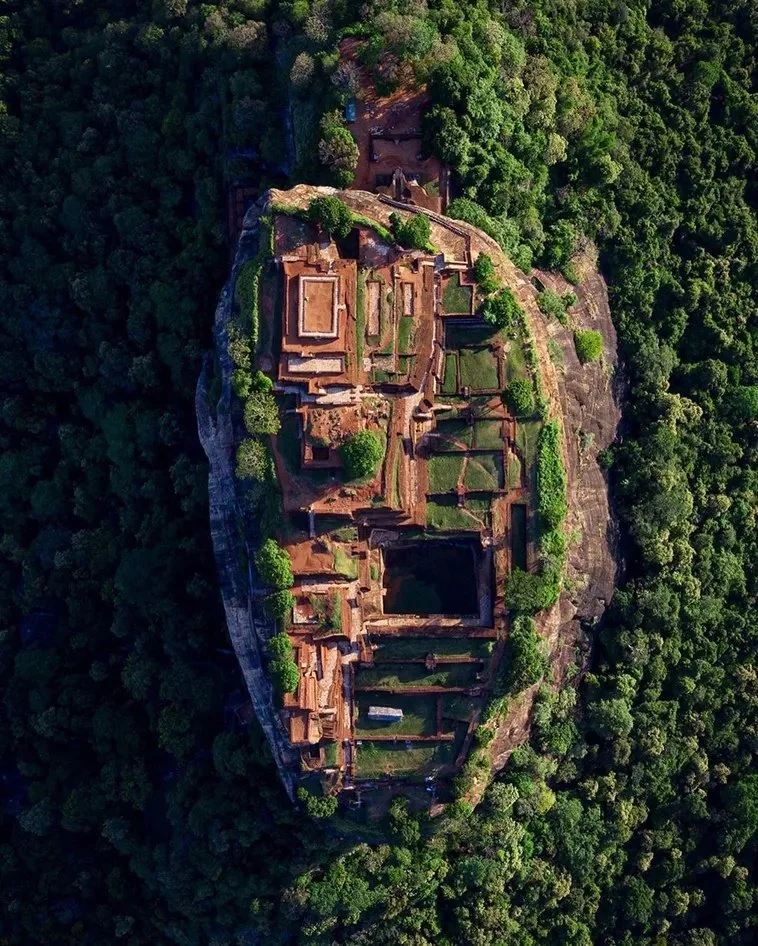
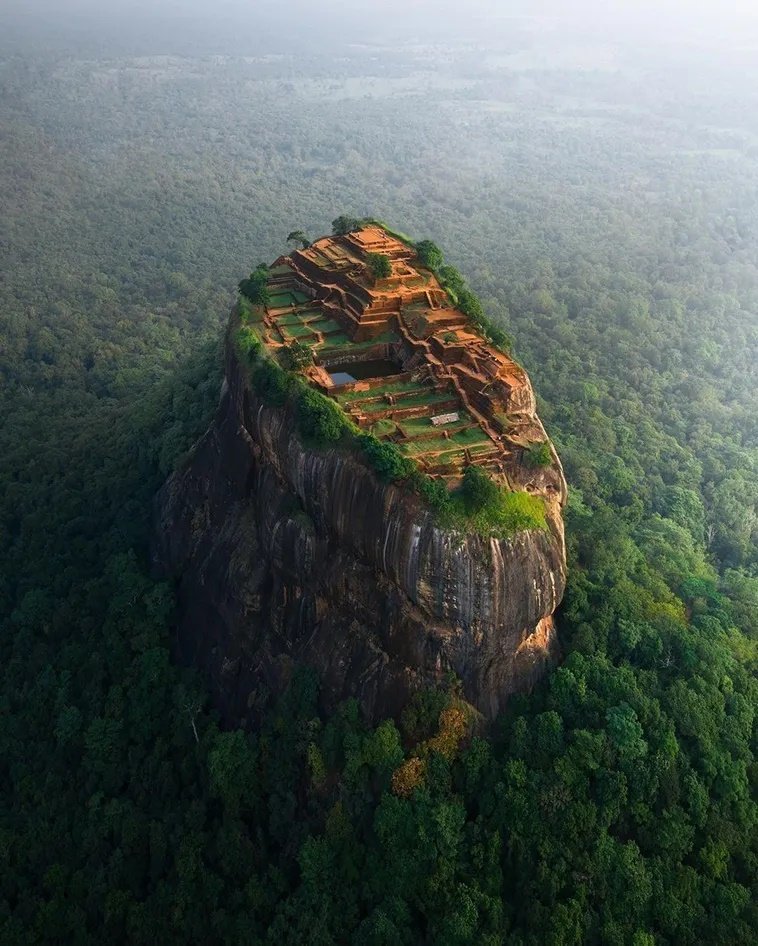
Perched on a slab of rock that juts dramatically over the forests of central Sri Lanka, Sigiriya is as imposing a sight now as it must have been when it was first built by a fierce king in the fifth century A.D. Meaning “lion’s rock,” Sigiriya (designated a UNESCO World Heritage site in 1982) is accessed by way of passageways cut into the rock face between a monumental pair of lion paws.

The fortress was later swallowed by the forest, and only familiar to local villagers. Outsiders used knowledge of its past, preserved in Buddhist texts, to search for the ancient site. British historians rediscovered its astonishing buildings and frescoes in the 19th century.

Kingdom to colony

Sigiriya was built by the fifth-century king Kashyapa I, who ruled the native Sinhalese dynasty, the Moriya. The imposing fortress was the capital of the Sinhalese kingdom until Kashyapa was defeated in A.D. 495. (Watch: An ancient palatial fortress overlooks this barren desert in Israel.)

After Kashyapa, dynasties rose and fell, their fortunes shaped by internal power struggles and conflicts between native Sinhalese and outside invaders from India.

Various cities held the status of capital after Sigiriya, such as Polonnaruwa. By the 12th century, however, overall control of Sri Lanka progressively weakened. Sinhalese power retreated to the southwest of the island, abandoning the Rajarata region, and the former administrative centers, including Sigiriya, started to fall into disuse.

Sri Lanka’s position in the Indian Ocean made it vulnerable to Europeans looking to expand their control in the region. By the mid-1500s the Portuguese had thoroughly exploited dynastic tensions in Sri Lanka’s ruling elite and controlled much of the island.

A century later the Dutch had replaced the Portuguese as colonial masters, and they were in turn displaced by the British in the late 1700s. By 1815 the Kingdom of Kandy, the last independent, native state on the island, became part of the British Empire.

Knowledge is power

British imperial rule brought civil servant George Turnour to the island. An aristocrat, scholar, and passionate historian, Turnour worked with a Buddhist monk to translate an ancient fifth-century chronicle, the Mahavamsa, from the Sri Lankan Pali language into English. Based on this and other texts, he identified two ancient capitals: Anuradhapura and Polonnaruwa.

Turnour also studied a later chronicle of Sri Lankan history, the Culavamsa, which told the story of King Kashyapa. In the late fifth century, this Sinhalese prince killed his father, King Dhatusena, and seized the throne, usurping his brother, who fled to India. Fearing reprisals, he built the fortress Sigiriya—but in vain: His brother returned, defeating Kashyapa, and Sigiriya lost its brief status as capital.

In 1827 a Scottish officer, Jonathan Forbes, became friends with Turnour, and on hearing the story of Kashyapa and his palace, decided to look for it. In 1831 he set off to where locals told him he would find the remains of an ancient city.

His memoir, Eleven Years in Ceylon, describes “the rock of Sirigi [sic], . . . frowning defiance over the scanty fields and the far-extending forest of the surrounding plain.” As he approached, he could see platforms and galleries carved into the rock. Two of his party managed to scramble some way up but dislodged rocks, “which crashed among the boughs of the trees at a great depth below.”

Unsure as to whether he had found the Sigiriya mentioned in the Buddhist texts, Forbes abandoned the expedition. Revisiting a few years later, he traced the moat that surrounds the gardens at the foot of the rock but did not attempt to climb the cliff face. He doubted that the name Sigiriya was related to lions, as he had seen nothing to support that etymology.

Fabulous frescoes

British mountaineers eventually reached the top in 1851, but the task of surveying the site fell to the Archaeological Commissioner of Ceylon, Harry C.P. Bell. His survey at the end of the 19th century has formed the basis of all studies since.

Bell painstakingly ascertained the layout of Kashyapa’s fantastical city as well as detailed the magnificent carving of the lion’s paws at the entrance, which Forbes had not been able to see.

In addition to the elaborate water gardens at the foot of the rock, Bell’s survey also lavished attention on the galleries on the rock face. These are decorated with exquisite wall paintings that have become some of the most prized objects in Sri Lanka’s artistic heritage. A total of 21 surviving frescoes may depict apsaras, celestial singers and dancers. (See also: 40,000-year-old cave art may be world's oldest animal drawing.)

Nearby, also on the walls of the rock face, are well over 1,000 items of graffiti, scratched by monks and pilgrims who visited the site in the eighth to the 13th centuries. These messages from the past can cause a frisson when read by visitors today. One reads: “At Sigiriya, of abundant splendor, situated on the island of [Sri Lanka] we saw, in happy mood, the rock that captivates the mind of all people who come here.”

Source: https://www.nationalgeographic.com/history...