Photos reveal the discovery of an ancient treasure hoard next to a 2,200-year-old Celtic "sanctuary"

Archaeologists have discovered new proof of ancient human life more than 20 years after the discovery of an Iron Age town in the Czech Republic.
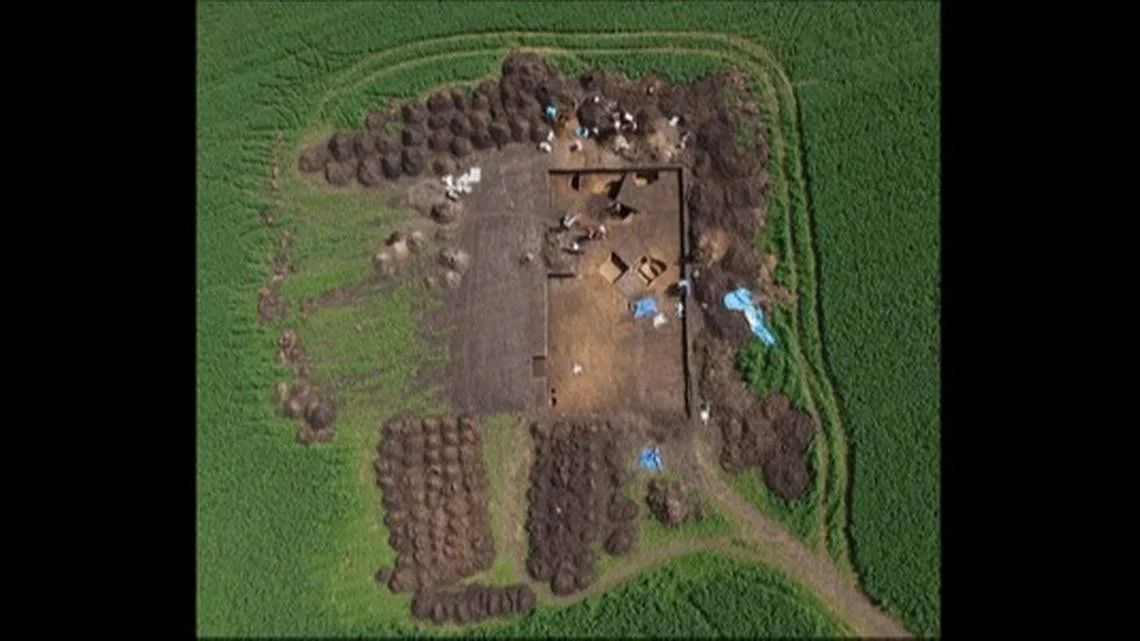
Excavations at the Němčice site have been underway for several years, archaeologists said. I. Čižmář

According to a study released on June 29 2023, experts have now discovered an ancient glass workshop at the site of Němčice that dates to the La Tène age, specifically between approximately 250 B.C. and 150 B.C., sunken huts, and a potential ritualistic sanctuary.

Here is what was found.

Transalpine Europe's 'First and Oldest' Glass Workshop

Archaeologists reported constantly finding "semi-finished products and rejects of glass beads and production waste" in the same circular area during earlier investigations.

Although experts believed that this meant that the glass was being made on-site, a workshop has never before been shown to exist, according to the study.
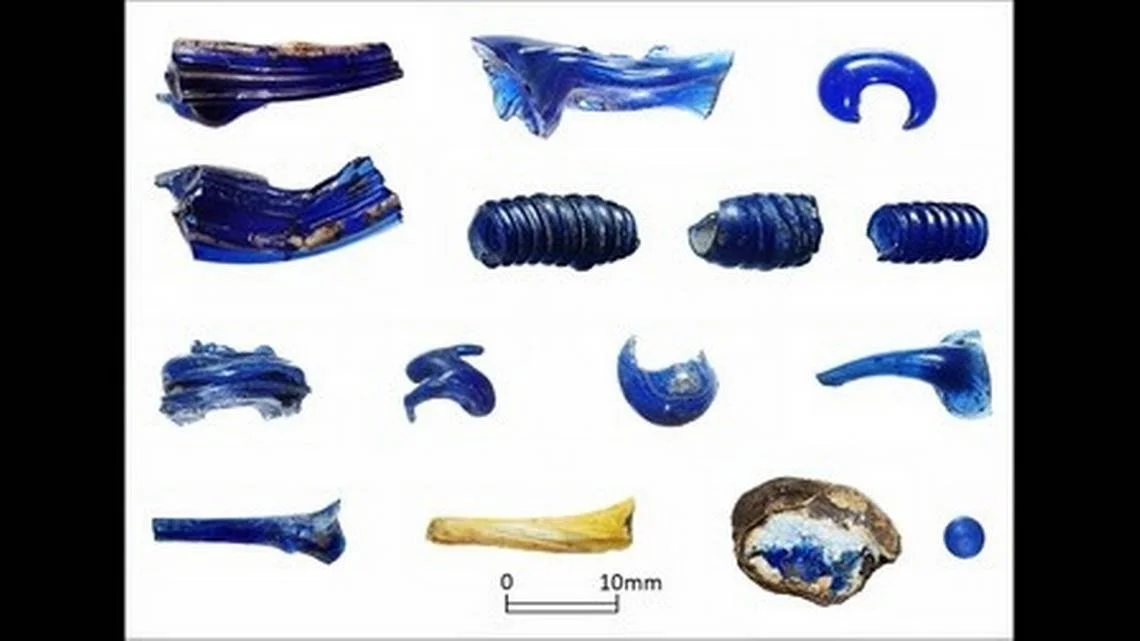
Archaeologists said they will continue analyzing the glass pieces to learn more about production methods. I. Čižmář

According to the investigation, archaeologists discovered remnants of the machinery and manufacturing characteristics required for producing glass. These discoveries provided evidence of production at the settlement and provided information on the processes used.

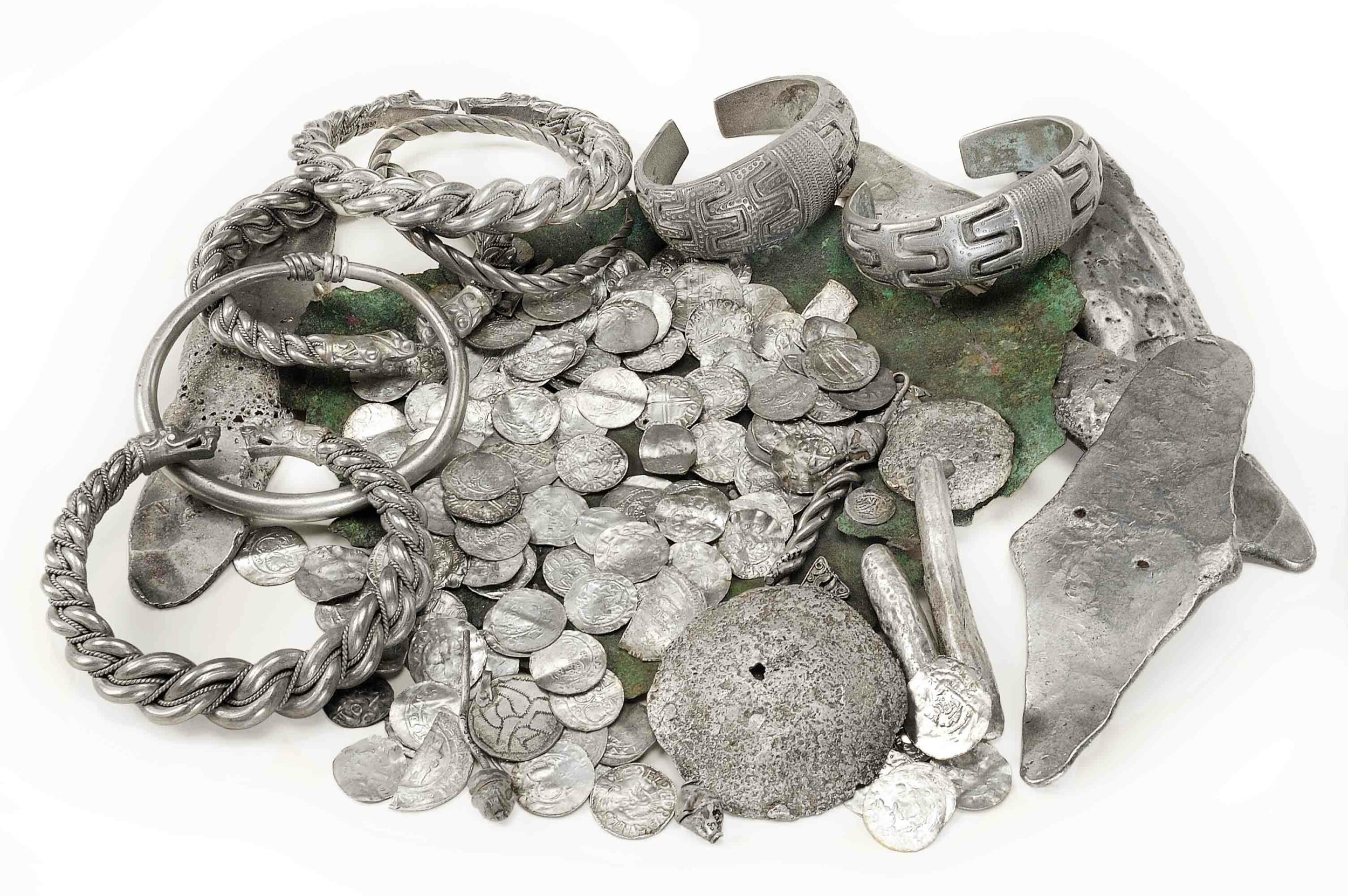
More than 2,000 Celtic coins from the first and second century B.C. were discovered in earlier investigations using metal detectors. Along with a range of bronze objects, archaeologists also discovered glass beads and bracelets.

In Transalpine Europe, which includes portions of what is now France and Belgium, as well as Germany, the Netherlands, and Switzerland, experts claimed that the glass workshop is the oldest one ever discovered.
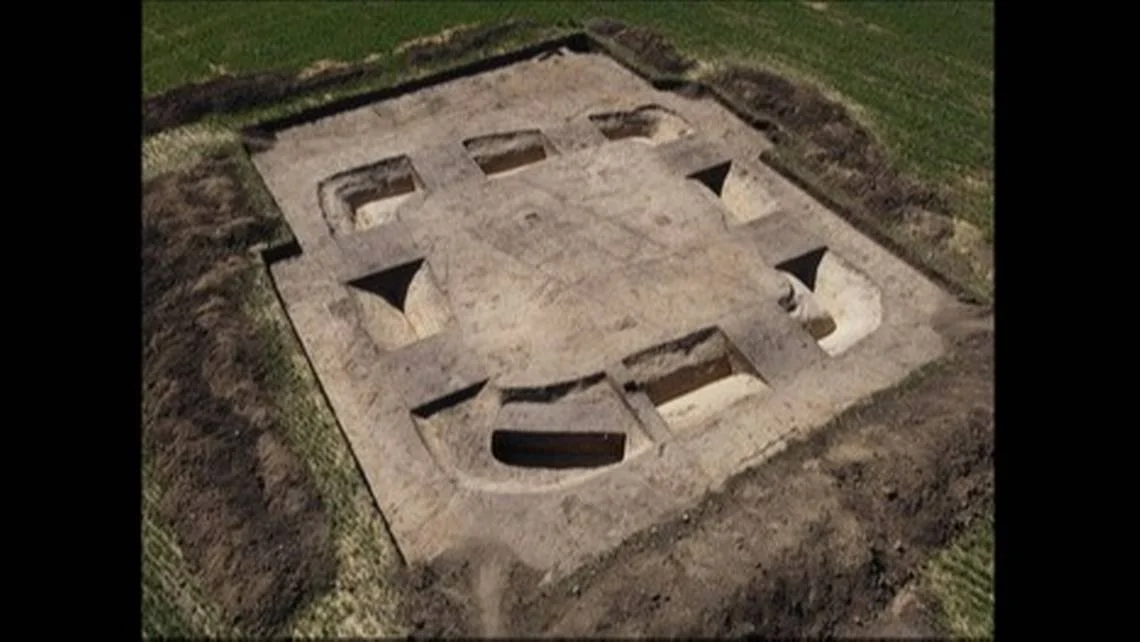
The square structure is similar to ritualistic sanctuaries found at comparable sites, experts said. I. Čižmář

A Possible ‘Sanctuary’

A square construction was also discovered by archaeologists there.

The investigation determined that similar discoveries at related sites were ritualistic locations. The putative "sanctuary" at Němčice, according to experts, presumably played a similar socio-cultic role, showing that the location acted as both a center for trade and industry and a place for religious ceremonies.

Experts claimed that the discovery of the workshop and the sanctuary attests to Němčice’s location in a vast network of Central European villages along the Amber Road, an old trade route connecting the Baltic coast to the Adriatic region.

The Czech Republic's eastern region, Moravia, contains Němčice.

Source: https://www.charlotteobserver.com/news/nat...

A lifelike reconstruction of a woman who perished in the fatal Vasa warship crash 400 years ago

An early shipwreck skeleton from the 17th century was initially mistaken for being male. However, a fresh reconstruction, based on findings from a DNA investigation conducted earlier this year, identifies her as female.

The new reconstruction shows Gertrude wearing a gray jacket and red hat, as pieces of these items were found by her skeleton on the Vasa shipwreck in Sweden. (Image credit: Oscar Nilsson)

Nearly 20 skeletons were found when the Vasa, a 17th-century Swedish warship that sank in Stockholm harbor on her maiden voyage, was raised by experts in the 1960s. One of the remains, designated G, was identified by scientists as belonging to a man they called Gustav.

Genetic testing earlier this year revealed that G was a woman instead of a man. Now, a fresh reconstruction of G, now known as Gertrude, shows what she looked like before the fatal 1628 disaster.

She was between 25 and 30 years old when she passed away, Oscar Nilsson, a forensic artist based in Sweden who made the reconstruction, told Live Science in an email. Her eyes were blue, her hair was blonde, and her complexion was pale. According to the new genetic data.

The size of Gertrude's mastoid process indicated that she had larger than usual ears. (Image credit: Oscar Nilsson)

When Nilsson discovered that G was female after creating a reconstruction of Gustav in 2006, he was taken aback. Nevertheless, he was happy to right the record by creating a fresh reconstruction for the Stockholm Vasa Museum.

He pointed out that G's sex shows she was wed. Only married women who were also living with a male on board the ship were permitted to travel on this inaugural journey, according to documented sources.

Nilsson expanded on the 2006 reconstruction's CT scan and 3D plastic print of G's skull by calculating the thickness of Gertrude's tissue using data from contemporary Scandinavian and North European women who were roughly the same age and weight as Gertrude.

These tissue measurements helped him determine the placement of the pegs on the replica skull, which he utilized as a reference as he overlaid plasticine clay muscles on her head. The size and shape of the nose, eyes, and mouth were determined using scientific methods. The size and surface of the mastoid process, which is positioned behind the ears, are quite important, according to Nilsson: "The ears are more speculative." "A huge ear equals a big mastoid process. Additionally, Gertrude unquestionably has noticeable mastoid structures.

This 2006 reconstruction of G's skeleton shows Gustav, a 45-year-old man. (Image credit: Oscar Nilsson)

Although he was "careful of trying to give her an expression as close to Gustav's as possible," there are some changes between the two reconstructions. Prior to the latest cranial examination, Nilsson had tipped Gustav's nose downward, giving Gertrude a more conventional-looking nose. Gustav was also believed to be 45 years old. Gertrude is younger, so "I provided her with more volume in her lips," he remarked.

Gertrude likely had a difficult life despite her youth; a skeletal examination of her back shows that she frequently moved large objects. So, he remarked, "just by being 25 to 30, her face must give the impression of hard work."

As a result, Nilsson sculpted her face to depict a woman who had endured arduous work but was also conscious of the awful event that had led to her demise.

The skeleton of G, who was previously called Gustav until a genetic analysis revealed the absence of a Y chromosome, which almost all men carry. G's new nickname is Gertrude. (Image credit: Oscar Nilsson)

As bits of this clothing were discovered with her bones, Nilsson collaborated with Anna Silwerulv, a textile expert at the Vasa Museum, to clothe the reconstruction in a dark gray jacket and hat. According to a microscopic examination, the hat was vivid crimson. "And the original design was striking: a very high hat, reminding [us] of the traditional festive dressing of the Swedish peasantry, and the Samic ones as well," remarked Nilsson. (Indigenous people known as the Sami live in Sweden.)

Gertrude's gravity was "further enhanced when Anna and I put the bright red tall hat on Gertrude's head." Nilsson remarked, "I leave that to all visitors to the museum," when asked what Gertrude is contemplating in this restoration.

When the new "Face to Face" exhibition at the Vasa Museum debuts in roughly a year, Gertrude, who went on display there on June 28, will be the center of attention.

Source: https://www.livescience.com/archaeology/wo...

Chinese civilization's wonders are shown by ancient ruins

Golden masks, a bronze altar used for religious ceremonies, a bronze statuette with bird-like feet... These remarkable finds from the Sanxingdui Ruins excavation site were formerly concealed and buried within the dirt.

They are now proudly on exhibit in the Sanxingdui Museum's brand-new facility in Guanghan City, Sichuan Province, southwest China, giving viewers a taste of their true magnificence. Intricate patterns and forward-thinking ideas come together to create an incredible work of art.

Over 1,500 items or sets of artifacts discovered in the renowned Sanxingdui Ruins are on display at the new facility, which recently began its trial operation. Nearly 600 of these items are being displayed for the first time.

It is thought that the Sanxingdui Ruins are the remains of the long-gone Shu Kingdom, which peaked roughly 3,000 years ago. Bronze masks with bulging eyes and a sacred bronze tree reaching over 4 meters tall are two of the site's famous items. These artifacts are praised for being the ideal synthesis of the bright imagination and expert craftsmanship of the ancient people.

Beyond its beautiful artifacts, the Sanxingdui Ruins have played a significant part in the advancement of Chinese culture, making them prominent in the history of Chinese archaeology.

Questions about the beginnings of Chinese civilization have been significantly impacted by the Sanxingdui finds. The Yellow River Basin in northern China was thought to be the birthplace of Chinese civilization up until the 1980s, according to the prevailing opinion in scholarly circles.

However, a fresh viewpoint has evolved as a result of the discovery of significant sites in the Yangtze River Basin, including Liangzhu, Shijiahe, and Sanxingdui. Sanxingdui, a symbol of the ancient Shu civilization, has come to be acknowledged as a crucial component of the varied antecedents of Chinese civilization.

At Sanxingdui, archaeologists have also discovered artifacts that incorporate a variety of cultural influences from other parts of China. A sculpture with a human head and a snake's body, for instance, combines aspects from three different cultures: the ancient Shu culture, the Zhou Dynasty culture, and the culture from Zhongyuan, often known as the central plain region.

According to scholars, the Sanxingdui Ruins show how exchanges and cultural fusions helped to carry on the genes of Chinese civilization.

The 12 square km Sanxingdui Ruins were stumbled upon by a farmer as he was excavating a ditch in the 1920s. The discovery of a group of jade and ceramic shards from a village in Guanghan aroused the curiosity and interest of archaeologists all over the world.

Significant fresh discoveries have continued to be produced there ever since. At Sanxingdui, eight sacrificial pits and more over 50,000 artifacts have been discovered so far.

Although Sanxingdui's archaeological discoveries have gained it international recognition, the site's continuing excavation continues.

Only a tiny portion of the entire site has been investigated thus far; it only makes up roughly two thousandths of its overall area.

Visitors can receive a first look at recently discovered items and the restoration process in the Sanxingdui Museum's cultural relic conservation and restoration hall.

"I can make out unrepaired items with weathered patina, and workbenches are piled high with tools and equipment. It gives us a chance to confront history, inspiring pride and a deep appreciation for China's exceptional traditional culture", a tourist once said.

Source: http://en.people.cn/n3/2023/0729/c90000-20...

Found: a 5,000-year-old funerary monument

On the summit of Monte do Oural, in the municipality of Vila Verde, a group of archaeologists and students from the University of Minho (UMinho) are now excavating a recently found megalithic funerary monument.

According to the municipality, the goal is to preserve the preservation of "a valuable heritage find" whose construction is thought to have occurred more than 5,000 years ago, between 4,000 and 3,000 BC.

On the municipality's website, archaeologist Luciano Vilas Boas, who oversees the excavation work of the Oural mound on the ground, noted that the area is extremely rich in terms of archaeological heritage, identifying the existence of three additional megalithic monuments of a funerary nature and a collection of rock art there.

It is now feasible to confirm that there were "various populations" present in this region, which was close to the lookout point on the Ribeira do Neiva's boundaries.

Source: https://www.theportugalnews.com/news/2023-...

We now know what the Egyptian queen smelt like because to Cleopatra's perfume

Scents in Color, an exhibition, will debut in The Hague's Mauritshuis in the fall of 2021. A scent dispenser was installed next to a picture from the 17th century so that visitors may smell the subject of the painting. The outcome was unexpected, if not unpleasant. Myrrh and fresh linen hints were drowned out by the stink of Amsterdam's canals, something we don't typically associate with upper class life in the Dutch Republic but which would have been inevitable for even its wealthiest people.

Cleopatra by Margaret Foley, 1876 / Smithsonian Museum

Smell is a significant but frequently ignored part of history that is difficult to represent in writing or art. Science has made it possible for historians to replicate both unpleasant and enticing smells, from the manure-covered streets of Europe's biggest cities to the ashes of Roman funeral pyres. The perfume worn by the Egyptian queen Cleopatra VII, who was as infamous for her power as she was for her beauty, is one of the few scents from antiquity that has surprisingly shown to be as seductive.

Essence of Cleopatra

Egypt has a long history of creating incense and perfumes, which it sold throughout the ancient world during the reign of Cleopatra. The first recorded recipe for a scent called kyphi in Greece dates to the time when the first pyramids were being built. Kyphi was created using animal fat and vegetable oil, as opposed to current fragrances, which are based on alcohol. Together with resins, roots, and berries, these were burned to produce a smoke that the Egyptians used to fragrance both their dwellings and their clothing.

The distinctive scent that Cleopatra is said to have worn originated in Mendes, a thriving community in the Nile Delta that was crucial to the commerce of spices from India, Africa, and Arabia. According to archaeologists who tried to piece together its long-lost recipe from various historical writings, Mendesian perfume was regarded as the best of its kind by both the Roman philosopher Pliny the Elder and the Greek physician Dioscorides. It was a classical version of "Chanel No. 5."

Archaeologists have to rely on Greco-Roman tales to fill in the blanks since there are no extant Egyptian texts that provide a complete formula for Mendesian perfume. Four key ingredients are shared by all of these accounts. In addition to resin and myrrh, the scent also included cassia, a less potent variety of cinnamon plant, and balanos oil, a semi-drying oil made from the seeds of a tree native to northern Africa and the Middle East called Balanites aegyptiaca (Egyptian basalm).

The town of Mendes today. (Credit: Roland Unger / Wikipedia)

The overlap, however, stops here. While some sources don't even mention cinnamon, others advise adding pure cinnamon to the mixture. One of the most thorough and extensive lists of substances comes from the Byzantine physician Paul of Aegina and contains terebinth, a tree from the cashew family that was once employed as a source of turpentine. While other authors claim the recipe asks for a total of 10 pounds of terebinth, Paul simply recommends one pound. Balano's are comparable.

The sources dispute not just about the ingredients, but also about how they should be prepared. Before the other ingredients may be added, the oil basis for the perfume must be boiled for 10 days and nights, according to the Greek philosopher and Aristotelian pupil Theophrastus. Paul, on the other hand, advises keeping the perfume on low heat for at least 60 days rather than boiling it. Additionally, he claims that the resin must be added last and that the mixture needs to be stirred for an additional week before being stored.

By experimenting with different combinations of components, Egyptologists Dora Goldsmith and Sean Coughlin were able to recreate a potential Mendesian perfume in 2018, which they characterized as smelling "elegant" and "luxurious." The spicy and mildly musky perfume, which Caro Verbeek, curator of olfactory art, described as "voluminous, red-colored, strong, warm, rich, sweet, and slightly bitter," not only recalled Pliny and Paul's writing, but also lingered longer than many of its modern-day counterparts.

Although intriguing, Goldsmith and Coughlin's experiment is by no means definitive. There is no way of knowing which, if any, of the Greco-Roman recipes matched the original Egyptian, as author Elaine Velie explains in an article she wrote for Hyperallergic. The scientists' soon-to-be-published second attempt, which will be based on actual residue sampled from a third-century BC perfume factory south of Mendes, promises to be more accurate while also revealing how close they came the first time.

Cleopatra’s beauty routine

Perfume was only a tiny component of Cleopatra's extensive beauty regimen. Crushed carmine beetles, still used today to color everything from shampoo to lollipops, are claimed to have been utilized in the lipstick worn by the Egyptian queen, who is credited with popularizing numerous long-lasting cosmetic techniques. In order to revitalize her complexion, Cleopatra also took milk baths—specifically, fermented donkey's milk—and may have scrubbed her face with mixtures of honey, chalk, and apple cider vinegar.

A relief showing the Egyptian perfume-making process. (Credit: Jastrow / Wikipedia)

Although the lack of stink was a luxury few could afford during Cleopatra's day, her beauty regimen obviously had a political component. The queen used her attractiveness as a tool to advance in society and keep control of her country, as both modern and ancient historians have highlighted. She did this when she began dating Julius Caesar and again when she joined a rebellion against the Eternal City alongside Marc Anthony, Caesar's general and rival for Caesar's throne.

When describing her seduction of Anthony, the Roman historian Plutarch mentions perfume. She is supposed to have slept on a canopy covered in gold while sailing down the river Cydnus to see her tragic lover, with servants costumed as cupids fanning her incense across the riverbanks. Modern historians have rejected this derogatory picture of Cleopatra as Augustan propaganda, portraying her instead as an everyday Egyptian lady who merely shared her culture's love of perfume rather than as a cunning siren.

Source: https://bigthink.com/the-past/cleopatra-pe...

Golden Sandals of Tutankhamun

A pair of golden sandals of Tutankhamun found on his feet. These stunning gold sandals were just one of 42 pairs King Tutankhamun had in his tomb. Too many ointments poured on Tutankhamun’s mummy caused severe damage to the tissues, except for those protected by gold: the face, fingers, and toes. In fact, gold sheaths covered the toes and finally the golden sandals were put on the feet while the lector priest recited incantations, which would permit the king to trample his enemies underfoot.

The last stage of the embalming was the bandaging. Each finger and toe was individually wrapped, then each limb, and finally the whole body.

The golden sandals that were found on the feet of Tutankhamun’s mummy imitate these palm leaf, grass and papyrus sewn sandals, indicating that they were a favored design. They compare well with the sandals that are depicted on the statue, which depicts the king wearing the White Hedjet Crown of Upper Egypt.

These particular golden sandals have engraved decoration that replicates woven reeds. Created specifically for the afterlife, they still covered the feet of Tutankhamun when Howard Carter unwrapped the mummy.

Source: https://egypt-museum.com/pair-of-golden-sa...

Couple find rare coins worth over $800,000 while renovating their kitchen floors

A couple in England had the surprise of a lifetime when they discovered a stash of rare coins underneath the kitchen floorboards during a renovation project.

Gregory Edmund, an auctioneer and British coin specialist at Spink and Son, said that the coins were discovered by the North Yorkshire couple, who initially thought they had stumbled on a piece of electrical cable while working on their 18th century home in 2019.

“Why they decided to touch it who knows, but when they did, they realized it was a gold disc and there were hundreds more beneath!” Edmunds said in an email.

The haul of rare coins were recently sold at auction for $852,380 against a provisional sale estimate of $231,390. According to The Yorkshire Post, the coins have been linked to a Hull merchant family, the Maisters.

The coins date from 1610 until 1727, from the reigns of King James I to King George I. The period covers the time of the marriage of Sarah Maister to Joseph Fernley. According to The Sun, Fernley died in 1725 and Maister remained in the area until her death in 1745.

Over 200 years later, the Yorkshire couple discovered the hidden treasure.

Edmund said it was a unique opportunity to be involved in the auction, which included 372 global registrants and dozens of successful bidders.

“It is a rare privilege for an auctioneer to be graced with a white glove sale (100% sold), but when the story of Joseph and Sarah Fernley and their misers millions came to my attention back in 2019, I just knew the story had to be told,” he said. “The anonymous finders were absolutely staggered by the result. It dwarfed any pre-conceived expectations and set dozens of world records along the way.”

Edmund said buyers flocked from around the world, bidding up the coins for the privilege of owning a part of their 292-year old treasure.

“The sale was unique in so many ways,” he said. “The story of the coins, the method of discovery and the rare opportunity to buy them at auction.”

“I have never seen a response to an auction like that before,” he said, adding that sales went three times over his provisional estimate.

“This last coin is a new world record for any ‘brockage’ mint error coin of any country ever sold at auction, besting a US gold dollar sold in Texas for $54,625 in October 2011,” Edmund said.

He explained that while it’s ordinary for rare coins to be sold at auction, the unique history of these coins and their amazing discovery made the sale extraordinary. Still, he hopes that it won’t cause people to start renovating their homes in hopes of making a similar discovery.

“I do hope people think before ripping up their floors,” he said.

Source: https://finance.yahoo.com/news/couple-find...

Where Did All the Water Go After the Biblical Flood?

In the following video we will reveal where all the water went after the biblical flood, as well as whether or not the flood could have been a local (rather than worldwide) event, as some people have proposed. Watch the video to find out more!

Strange carvings at Göbekli Tepe reveal a devastating comet impact around 13,000 years ago

Analysis of symbols carved onto stone pillars at Göbekli Tepe, Turkey revealed that a swarm of comet fragments hit Earth around 10,950 BC. The event perhaps wiped out animal species including mammoths and triggered a mini ice age lasting around 1,000 years.

When archaeologists were able to translate famous ancient symbols at Göbekli Tepe in Turkey, they found that those strange carvings tell the story of a devastating comet impact more than 13,000 years ago.

Cross-checking the event with computer simulations of the Solar System around that time, researchers discovered that the carvings could actually describe a comet impact that occurred around 10,950 BCE ― about the same time a mini ice age started that changed civilization forever.

This mini ice age, known as the Younger Dryas, lasted around 1,000 years, and it’s considered a crucial period for humanity because it was around that time agriculture and the first Neolithic civilizations arose ― potentially in response to the new colder climates. The period has also been linked to the extinction of the woolly mammoth.

But although the Younger Dryas has been thoroughly studied, it’s not clear exactly what triggered the period. A comet strike is one of the leading hypotheses, but scientists haven’t been able to find physical proof of comets from around that time.

The research team from the University of Edinburgh in the UK said these carvings, found in what’s believed to be the world’s oldest known temple, Göbekli Tepe in southern Turkey, show further evidence that a comet triggered the Younger Dryas.

The translation of the symbols also suggests that Gobekli Tepe wasn’t just another temple, as long assumed ― it might have also been an ancient observatory for monitoring the night sky. One of its pillars seems to have served as a memorial to this devastating event ― probably the worst day in history since the end of the Ice Age.

The Gobekli Tepe is thought to have been built around 9,000 BCE ― roughly 6,000 years before Stonehenge ― but the symbols on the pillar date the event to around 2,000 years before that. And the pillar on which the carvings were found is known as the Vulture Stone (pictured below) and show different animals in specific positions around the stone.

The symbols had long puzzled scientists, but now researchers have discovered that they actually corresponded to astronomical constellations, and showed a swarm of comet fragments hitting the Earth. An image of a headless man on the stone is also thought to symbolize human disaster and extensive loss of life following the impact.

The carvings show signs of being cared for by the people of Göbekli Tepe for millennia, which indicates that the event they describe might have had long-lasting impacts on civilization.

To try to figure out whether that comet strike actually happened or not, the researchers used computer models to match the patterns of the stars detailed on the Vulture Stone to a specific date ― and they found evidence that the event in question would have occurred about 10,950 BCE, give or take 250 years.

Not only that, the dating of these carvings also matches an ice core taken from Greenland, which pinpoints the Younger Dryas period as beginning around 10,890 BCE.

This isn’t the first time ancient archaeology has provided into civilization’s past. Many paleolithic cave paintings and artifacts with similar animal symbols and other repeated symbols suggest astronomy could be very ancient indeed.

Source: https://mysteriesrunsolved.com/2021/11/sym...

15 Emerging Technologies That Will Change Our World

Technology is developing at a crazy pace. It is no wonder that many of us like to imagine what the world will look like in the future. Those who lived in the 1900s also loved to picture what the year 2000 would look like. Unfortunately, most of their guesses were pretty far off the mark.

Flying cars, robots with brooms and polishers, automated haircut and makeup machines, instant clothes, information from books transferred via electrical signals—most of these speculations sound silly, especially to us. Still, what the people in the 1900s envisioned about the future was not entirely wrong.

We might not have flying cars or what the people back then named ‘aero cabs’, but we are definitely getting there.

In this video, we’ll take a look at amazing things that might change how the world looks in the future. From astounding robot butlers to flying cars, here are 15 emerging technologies that will change our world!

Fascinating Facts - Pyramids of Giza

Ancient wonder of the Pyramid of Giza, a lasting testament to the architectural and engineering prowess of the ancient Egyptians. Stand in awe at the massive structure, built over 4,500 years ago and still standing tall today. Join us on a infographic tour of this mysterious and iconic monument, and discover the secrets that it holds.

What People Ate to Survive In the Victorian Era

What did it mean to eat like a Victorian? There was no single culinary experience in the 19th century. Just like the era itself, Victorian Britons had diverse tastes and habits, and the food they consumed often reflected their ingenuity. The Victorian era was a long period of time filled with shifting trends, attitudes, and innovations. Food was no exception.

Plesiosaur fossil prep - Acid prepping reveals something amazing

This plesiosaur vertebra was found during 2021 on private land and was almost fully hidden inside rock and thought this would be a great candidate to try out some acid prepping using acetic acid (vinegar). We used normal strength acid prep and removed the rock to within 1mm of the bone and then put it in acid to remove the rest. Watch the video to find out more!

First Contact - Seeing white man for the first time

Stumpy Brown is a Wangkujanka woman who lives at Christmas Creek in the Kimberley. Stumpy has seen many changes throughout her lifetime but nothing so dramatic, when as a teenager, she saw a white man for the first time.

In London archaeologists unearth a medieval man wearing his footwear

Archaeologists excavating a site along the Thames Tideway Tunnel—a massive pipeline nicknamed London’s “super sewer”—have uncovered the skeleton of a medieval man who literally died with his boots on.

"It’s extremely rare to find any boots from the late 15th century, let alone a skeleton still wearing them," says Beth Richardson of the Museum of London Archaeology (MOLA). "And these are very unusual boots for the period—thigh boots, with the tops turned down. They would have been expensive, and how this man came to own them is a mystery. Were they secondhand? Did he steal them? We don't know."

Unearthing skeletons during major construction projects is not unusual in London, where over the centuries land has been reused countless times and many burial grounds have been built over and forgotten. But archaeologists noticed right away that this skeleton was different.

The position of the body—face down, right arm over the head, left arm bent back on itself—suggests that the man wasn’t deliberately buried. It’s also unlikely that he would have been laid to rest in leather boots, which were expensive and highly prized.

In light of those clues, archaeologists believe the man died accidentally and his body was never recovered, although the cause of death is unclear. Perhaps he fell into the river and couldn't swim. Or possibly he became trapped in the tidal mud and drowned.

Sailor, fisherman, or "mudlarker"?

Five hundred years ago this stretch of the Thames—two miles or so downstream from the Tower of London—was a bustling maritime neighborhood of wharves and warehouses, workshops and taverns. The river was flanked by the Bermondsey Wall, a medieval earthwork about fifteen feet high built to protect riverbank property from tidal surges.

Given the neighborhood, the booted man may have been a sailor or a fisherman, a possibility reinforced by physical clues. Pronounced grooves in his teeth may have been caused by repeatedly clenching a rope. Or perhaps he was a “mudlarker,” a slang term for those who scavenge along the Thames' muddy shore at low tide. The man’s wader-like thigh boots would have been ideal for such work.

"We know he was very powerfully built," says Niamh Carty, an osteologist, or skeletal specialist, at MOLA. "The muscle attachments on his chest and shoulders are very noticeable. The muscles were built by doing a lot of heavy, repetitive work over a long period of time."

It was work that took a physical toll. Although only in his early thirties, the booted man suffered from osteoarthritis, and vertebrae in his back had already begun to fuse as the result of years of bending and lifting. Injuries to his left hip suggest he walked with a limp, and his nose had been broken at least once. There’s evident of blunt force trauma on his forehead that had healed before he died.

“He didn’t have an easy life,” says Carty. "Early thirties was middle age back then, but even so, his biological age was older.”

The investigation is continuing. Isotope analysis will shed light on where the man grew up, whether he was an immigrant or a native Londoner, and what kind of diet he had.

"His family never had any answers or a grave," says Carty. "What we're doing is an act of remembrance. We're allowing his story to finally be told."

Source: https://www.nationalgeographic.com/culture...

12 Most Mysteries of Ancient Egypt That Scientists Still Can't Explain

Was there ever a race on Earth more advanced or mysterious than the ancient Egyptians? Sure, you could make an argument that all of today’s major nations and cultures have access to more technology and knowledge than the Egyptians did, but the Egyptians stand out because they were so far ahead of their time. In fact, there’s much about the ancient Egyptians that we still don’t understand today - as you’re about to find out.

Jesus Christ - Life Changing Quotes

This video contains some of the most powerful quotations from Jesus Christ. The Christian religion believes that Jesus was conceived by the Holy Spirit, was born of a virgin named Mary, performed miracles, founded the Christian Church, died by crucifixion as a sacrifice to achieve atonement for sin, rose from the dead, and ascended into Heaven, from where he will return.