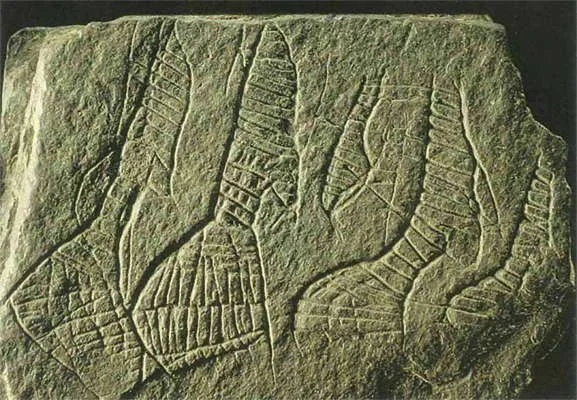
Decoding of an Ancient Mysterious Script

Using the same method that helped interpret the Rosetta Stone, archaeologists have partially decrypted the 'unknown' writing system of the Kushan Empire.

KUSHAN INSCRIPTION DISCOVERED ON A ROCK FACE IN TAJIKISTAN. CREDIT: BOBOMULLO BOBOMULLOEV

Between the first and third centuries, the ancient Kushan Empire, which spanned from what is now Uzbekistan into northern India, contributed to the introduction of Buddhism to East Asia. Archaeologists first noticed items in the area of the empire carrying a "unknown Kushan script" that they couldn't decipher in the 1950s. But in July 2023, scholars from Germany and Tajikistan declared that they had successfully partially decoded the ancient writing system.

The researchers did this by contrasting a trilingual text discovered in Afghanistan by French archaeologists in the 1960s with a bilingual text discovered in Tajikistan by Tajik archaeologists in 2022.

A "bilingual text" or a "trilingual text" is a parallel piece of writing that conveys about the same meaning in two or three languages. These multi-script writings served as the equivalent of the Rosetta Stone for scholars, enabling them to recognize words and symbols in the Kushan writing system from antiquity.

The discovery of the Kushan "Rosetta Stone(s)"

When characters from the unidentified Kushan script were discovered inked on a stairway at Surkh Kotal in Afghanistan in the 1950s, archaeologists were able to identify it for the first time. The script was discovered once more on a boulder at Dat-i Nwur, also in Afghanistan, in the 1960s by French archaeologists. Along with two additional scripts that represented the Bactrian language and the Gndhr language, the text on the boulder also included the Kushan script.

The trilingual text did not, however, instantly result in a breakthrough in the comprehension of the obscure Kushan script. According to Svenja Bonmann, a linguist at the University of Cologne in Germany and the lead author of the recent article about the unidentified Kushan script published in Transactions of the Philological Society in July 2023, this was at least partially because French archaeologists took shoddy photos of the trilingual text and used an inaccurate drawing of it to discuss the discovery.

Researchers were unable to translate the untranslated Kushan script in the absence of clear, exact photographs of the trilingual text. Archaeologists discovered numerous additional examples of the script over the following several decades, including an inscribed silver bowl in Kazakhstan, but they were unable to decipher its meaning. Then, in 2022, Tajik archaeologists discovered a bilingual document in Tajikistan's Almosi Gorge that had both the Bactrian language and an unidentified Kushan script.

According to Jakob Halfmann, a linguistics scholar at the University of Cologne and a co-author of the latest report, "[the archaeologists] were following information provided by a local man." He had noticed writings on the sides of nearby mountains, and he had tried to inform archaeologists about them for a while, but they just listened to him and believed him last year. They immediately launched an expedition, during which they discovered that there were in fact inscriptions.

The Tajik archaeologist Bobomullo Bobomulloev discovered the bilingual script, and together with Bonmann, Halfmann, and Natalie Korobzow, another linguist at the University of Cologne, they tried to interpret the text (Bobomulloev and Korobzow are also co-authors on the new article).
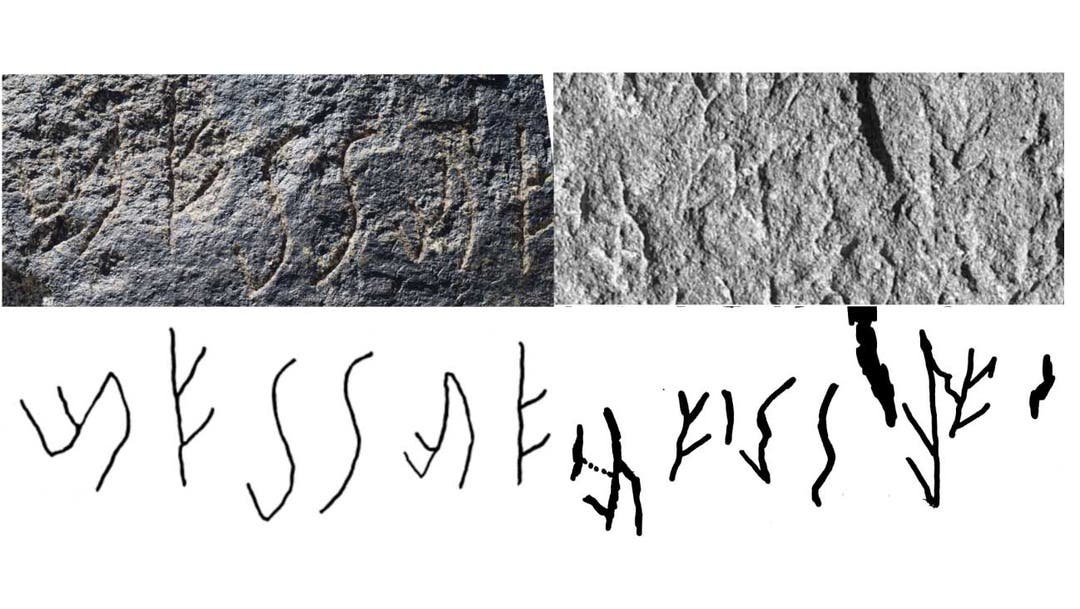
THE TITLE ‘KING OF KINGS’, ON THE LEFT ON A KUSHAN INSCRIPTION FOUND IN TAJIKISTAN, ON THE RIGHT ON THE INSCRIPTION FOUND IN AFGHANISTAN.

One of their most important discoveries was that they were able to identify the ruler Vema Takhtu's name in both the bilingual and trilingual manuscripts because it occurred in the Bactrian portions of both texts.

This approach is comparable to the method French philologist Jean-François Champollion used to translate the Rosetta Stone, which is famous for containing a section written in Greek, Egyptian Demotic script, and Egyptian hieroglyphs. Champollion began by recognizing royal names like Cleopatra in the Greek script and then locating them in the areas of the stone that were written in ancient Egypt.

Bringing the Kushan Empire to light

The majority of documented Kushan script artifacts were discovered in the contemporary nations of Afghanistan, Uzbekistan, Kazakhstan, and Tajikistan between the second and third centuries B.C. Along with languages like Bactrian, Gandhr, and Sanskrit, the script corresponded to an unidentified Iranian language that was probably one of the Kushan Empire's official tongues.

Research by Bonmann and her coworker is important because it adds to the body of knowledge about Vema Takhtu, who ruled the Kushan Empire in the first century and extended its dominion into northwest India. Before, some academics argued over whether he actually existed. The discovery of his name in two distinct specimens of Kushan writing strengthens the historical proof that he was a significant Kushan Empire monarch.

The authors of the new piece not only named Vema Takhtu but also named the expressions "king of kings" and "great savior"—both of which describe Vema Takhtu. The writers think they have roughly half of the Kushan characters figured out, and they intend to figure out more in the future. The empire and the people who lived there about two millennia ago may be better understood with further study.

Source: https://www.history.com/news/ancient-kusha...

In a Polish "necropolis" cemetery, archaeologists found a 17th-century "vampire child" with a padlocked ankle

The head archaeologist on the excavation told Insider that they have discovered the remains of what they believe to be a 17th-century "vampire" infant who was buried face down and padlocked to the ground in an effort to allay the villagers' anxieties that the child wouldn't rise from the dead.

Archeologists discovered the skeletal remains of what they believe to be a 17th-century "vampire child" in an unmarked Polish cemetery. Łukasz Czyżewski

The child's bone remains, which experts estimate to be between 5 and 7 years old, were found in an unmarked mass grave in the Polish hamlet of Pień, close to Ostromecko.

The "necropolis," which is Greek for "city of the dead," is also where archaeologists found a "vampire" woman who had been buried with a sickle laying across her neck and a padlock fastened to her big toe in case she tried to rise from the dead.

The two graves were discovered just two meters apart in the cemetery, which his team believes to be a makeshift graveyard for "the excluded," or those who were not welcome in Christian cemeteries for various reasons, according to archaeology professor Dariusz Poliński of Nicolaus Copernicus University, who oversaw both digs.

Triangular padlocks were attached to people’s feet to keep them tethered to the ground once buried, Poliński said. Magdalena Zagrodzka

About 100 graves have been discovered in the cemetery, according to Poliński and his team of researchers. Many of these graves exhibit unusual burial practices, including "anti-vampiric" strategies to prevent people from "coming back from the grave," such as triangular padlocks fastened to people's feet to keep them tethered to the ground, as well as proof that grave sites were disturbed or dug into after the initial burial.

A individual could have been interred in such a cemetery for a number of reasons, according to Poliński. The person might have had an illness or an uncommon physical condition that altered their appearance, or they might have displayed bizarre conduct that made others dread them while they were alive.

Through a translator, Poliński added, "It might have also been that someone died violently and unexpectedly in peculiar circumstances." "Sudden death was frequently regarded as something that people ought to fear."

Villagers in the seventeenth century were also prone to worry about drowned victims and unbaptized or unchristened youngsters being buried.

Archeologists also found a collection of loose bones near the child's gravesite, as well as a pregnant woman. Magdalena Zagrodzka

Near the child's tomb, according to Poliński, archaeologists also discovered a group of loose bones and a pregnant woman carrying a fetus estimated to be around 6 months old.

According to Insider's Katherine Tangalakis-Lippert and Marianne Guenot, Matteo Borrini, lead lecturer of forensic anthropology at Liverpool John Moore University, "vampire burials" were a regular practice throughout Christian Europe as early as the 14th century.

People used to link "vampiric" epidemics with periods of huge mortality that, though at the time unexplained, are now thought to have been pandemics or widespread poisonings. According to Borrini, the prevailing belief was that these "vampires" would hunt down and murder their family members first before turning on their neighbors and other villagers. This belief corresponded to how we currently understand the spread of infectious diseases.

Source: https://www.businessinsider.com/archaeolog...

Ancient Greeks - Real Faces Recreation

In this video we will be bringing to life some ancient Greek faces especially from the golden age. Having some personal knowledge of ancient Greece, this could be the first part of an info, teach thingy about this subject or perhaps the Persian invasions of Greece.

12 Most Amazing Archaeological Finds Scientists Still Can't Explain

Archaeologists and scientists often work together to solve the mysteries of a discovery. An archaeologist might be able to say roughly where and when an artefact or an object was made, but they can’t always say why or how it was made. In those circumstances, they’ll turn to a scientist for assistance. There are times when the scientists can’t help, though - and those are the times that allow us to make videos like this one!

Why The Giraffe Got Its Neck

How and why the giraffe's neck emerged in the first place has been a mystery that generations of biologists have argued over – one that has made us reconsider our understanding of how evolution actually works over and over again. Watch the video to find out more!

Jesus' Tomb Explained--the evidence & the story!

Join us in today’s video as we travel from Israel to Rome to Turkey, to explain the evidence for and tell the story of the first and most important archaeological dig ever conducted...the excavation of the Tomb of Jesus. Enjoy!

Ancient Giants in America: The Mysterious Blonde Hair Blue-Eyed Giants of Catalina Island

A fascinating and highly controversial chapter of prehistoric America is said to have been found on the sun-drenched shores of Catalina Island, off the coast of Southern California. Hidden among the quiet beaches and rolling hills, there allegedly lies proof of an ancient race of fair-haired giants, taller and more robust than the modern human.

Identified through the discovery of giant skeletons, the giants are said to have possessed technology far advanced for the time. This assertion has sparked a vivid debate among scholars, archaeologists, and enthusiasts alike.

Meanwhile, a more widely accepted archaeological treasure resides just north on Santa Rosa Island — the Arlington Springs Man. Discovered in 1959, it is the oldest known human skeleton in North America. These remains, belonging to a man who roamed the Earth over 13,000 years ago, have significantly enriched our understanding of early human migration patterns and life in prehistoric North America.

What are the stories of these discoveries that have contributed to the compelling mystery of our human past and the eternal quest for our origins…?

Secret Nasty Kinky Sex Lives Of Roman Gladiators

Gladiators were the rock stars of ancient Rome, embodying the virtues of the society but also viewed as social outcasts. Despite their low status, they were lusted after by women who desired their sweaty bodies and even used their blood as an aphrodisiac.

However, gladiators were also akin to sex workers in Roman society, with little standing and often compared to actors and those in the sex industry.

This unique position allowed for sexual encounters, with some women hiring gladiators as bodyguards or engaging in sexual relations with them. The erotic fascination with gladiators was evident in Roman graffiti and even in the beauty of the gladiators themselves, who were chosen based on their attractiveness.

White Huns: Rise and Decline

In the following video we will be talking about the White Huns - the Hephthalites. Their origins, rise and decline, their attacks on India and the Sassanid empire and beyond. Enjoy!

How the Ancients Cut Stone with Sound - Lost High Technology Explained

How did the ancient civilisations cut and shape such intricate stonework like we see in AncientEgypt? How were holes seemingly drilled through solid granite? How did the Incas create walls with perfectly connecting blocks of stone? Did they use traditional tools? Did they harness the power of the sun? Or did they know the secrets of sound and this was a form of ancient high technology? Watch the video below to find out!

Emperor Nero's Theater Ruins Found Close to the Vatican

Archaeologists working on a property close to the Vatican discovered the remains of a private theater where the notoriously harsh Roman emperor Nero once practiced for his public appearances before the construction of a luxury hotel.

An aerial view of the ruins of Nero’s private theater near the Vatican. Credit: Soprintendenza Speciale di Roma

The location of the theater from the first century C.E. that is mentioned in Roman texts was unclear until recently. The discovery's experts believe Nero, who was notorious for persecuting Christians and thought of himself as a great performer, sung, acted, and read poetry on the theater's stage frequently.

Marzia Di Mento, the site's principal archaeologist, notes that even though there is no proof that this could have happened, Pliny the Elder and Tacitus mention how Nero performed in a theater, which we propose to associate with one of these structures.

Elegant Theater

The Special Superintendency for Archaeology in Rome, a division of the Italian Ministry of Culture, was in charge of the project. Work on the theater site started around two years ago, and the excavations have grown to the area of a city block. There, two sizable brick buildings were discovered next to a courtyard that may have been enclosed by a portico.

One of the buildings was a semicircular cavea with tiers of seats for the audience facing the ornate stage backdrop (known as the scaenae frons) of a Roman theater to the west. What's left shows that marble and gold leaf were used to overlay the background. The second structure, which lay parallel to the first, contained chambers that appeared to have served as servicing quarters for theatrical props including sets and costumes.

The obvious wealth of the ruins, according to Renato Sebastiani, one of the project's leaders, shows that they are from Nero's theater. "We are dealing with works created for the imperial family," he claims. "The richness of the materials used, the marbles, the stuccos decorated with gold leaf... testifies that." The theater and other artifacts at the site are from the early Roman Empire, which lasted from the first century (Nero's reign began in the middle of the first century) through the medieval era in Rome, which lasted from the 15th century.

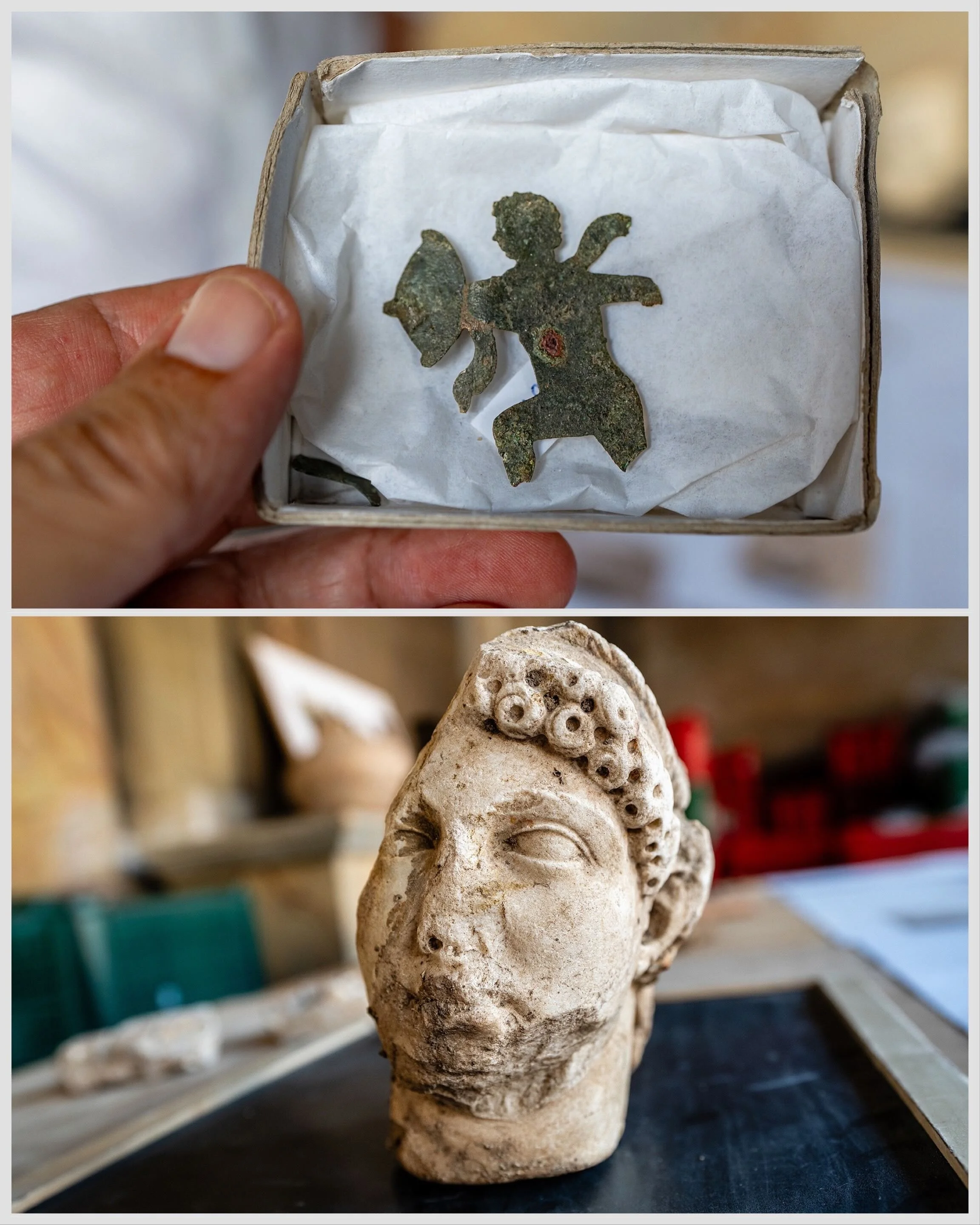
Part of a metal badge worn by a medieval Christian pilgrim to the site, which was thought to be near the location where Saint Peter was buried (top). Such badges or insignia showed pilgrims had visited the shrine of a particular saint. The ornate decorations of Nero’s theater included a sculptured marble head, which may have once been part of a larger statue (bottom). Credit: Soprintendenza Speciale di Roma

Gardens of Nero

The location, which sits on the west bank of the Tiber River in an area that used to be the Gardens of Nero, is just a few hundred feet from the Vatican. The region was formerly owned by Julia Agrippina's grandmother, Agrippina the Elder, a descendant of Augustus.

Julia Agrippina, often known as Agrippina the Younger, was Nero's mother according to an obscure Roman statesman. She was the niece of Caligula's successor Claudius and the sister of the emperor Caligula, who was assassinated by his own Praetorian Guard in C.E. 41.

Agrippina became Claudius' fourth wife in C.E. 49, despite the fact that the union of an uncle and a niece was frowned upon. Agrippina convinced Claudius to adopt her 12-year-old son, who would also be his heir, just a few months after they wed. When Claudius passed away in C.E. 54, presumably as a result of Agrippina's poisoning, the boy adopted the name Nero Claudius Caesar Augustus Germanicus and succeeded to the throne.

Agrippina attempted to dominate Rome through Nero again, but the ungrateful kid had her killed in C.E. 59, according to Tacitus, who lived nearly 60 years later.

The worst emperor of Rome?

Nero is one of the worst rulers Rome has ever seen, according to conventional history. He allegedly had a cruel and debauched personality. A few years after Tacitus, his biographer Suetonius stated that Nero had "practiced every sort of obscenity," from incest to murder.

Nero enjoyed theater performances as a singer, pianist, and actor as well as chariot racing. Nero's reputation was not helped by horrifying accounts of the way he persecuted Christians, who, after the fourth century, authored the majority of the history of the time that are still in existence. However, Romans at the time considered such acts to be exceedingly lower-class.

It's possible that the emperor's most infamous claim to fame is that he "fiddled while Rome burned." In actuality, Nero frequently strummed a cithara, a kind of lyre. However, there is no proof that he did so during the great fire that destroyed Rome in 64 CE, nor that he was even present in the city.

The Praetorian Guard eventually lost patience with Nero's excesses and swore allegiance to Galba, a rival Roman senator who succeeded Nero as emperor for a short time in C.E. 68.

Part of a frescoed wall of the theater’s cavea—a tiered semicircle where the audience sat to watch the performances on the stage (top). The structure’s sumptuous architecture included finely worked columns of precious colored marble (bottom). Credit: Soprintendenza Speciale di Roma

Nero retreated into hiding at a villa outside of Rome after being abandoned and nearly left alone. There, he attempted suicide but apparently was unable to complete it. Finally, he gave the order for a servant to murder him. "Qualis artifex pereo!" he screamed out, according to Suetonius. "What an artist dies within me!"

Problem solved?

The newly discovered theater, according to archaeologists, served primarily as a private location where Nero prepared for performances he would later give elsewhere in the city.

According to Paolo Carafa of the Sapienza University of Rome, Pliny the Elder mentions a theater in the Gardens of Nero where he performed before singing at the big theaters. This theater might have been the culprit.

Nero "claimed to be a great singer, which led him to perform in front of large audiences," said Leonardo Visconti di Modrone, governor general of the Order of the Holy Sepulchre, which controls the site. But in order to practice, he gave himself a very opulent and refined private theater where he could perform in front of chosen audiences.

Even though Nero's theater was mentioned by its contemporaries, its location remained a mystery. Visconti di Modrone declares, "Today we can say that this riddle has been solved.

Source: https://www.scientificamerican.com/article...

After 'ancient' dolphin remains discovered in Stirling yard were shown to be much more recent than originally believed, archaeologists became "disappointed"

It is now believed that the artist who once lived in the house buried them in the garden and forgot about them.

The dolphin bones found in a Causewayhead garden and were initially estimated to be around between 6000 to 8000 years old

The dolphin bones discovered in a Stirling backyard are far younger than previously believed, and they were probably buried by a 19th-century artist.

Paul McDonald, a resident of Causewayhead, had lately found the bones in clay while working to construct a swimming pool for his kids.

The 10 foot long bones, which were assumed to be the remains of a dolphin that had washed up on the coast of an ancient inland sea that is now the Carse of Stirling, were estimated to be between 6000 and 8000 years old.

It was praised as a "once in a lifetime" discovery by archaeologists.

The skull was then removed and brought to the National Museums of Scotland (NMS) for analysis. But on Thursday, during on-site excavations, the tale of the bones came to light.

Murray Cook, an archaeologist with Stirling Council, said: “The joke is on me. I had thought that the dolphin bones were thousands of years old, making them important on a global scale. But when we started working on the bones last week, we discovered that they had been sawed. The spine has saw marks on it.

It was divided into three distinct pieces. That proved to us that it is unquestionably not archaic. It appears that someone brought it to the backyard garden to have its flesh removed. At this location, in the nineteenth century, Joseph Denovan Adam maintained a studio where he drew from skeletons. Even though the artist typically painted livestock, it's most probable that he buried the dolphin in the garden and then forgot about it.

A National Museum of Scotland crew provided assistance for the excavation effort. They had all they needed to finish the job. They are still overjoyed to have the dolphin skeleton in their possession. Even though it's not tens of thousands of years old, I still feel it to be an astounding discovery. Archaeology is primarily concerned with the process of discovery.”

Source: https://www.dailyrecord.co.uk/news/local-n...

Church of Holy Sepulchre excavations are ongoing 24/7, producing historical artifacts

The Custodia Terrae Sanctae, which is in charge of looking after Christian holy places in Israel, reports that experts from Rome have finished weeks of meticulous archaeological work in one of the Church of the Holy Sepulchre's most vulnerable areas. The area surrounding the Holy Edicule, or main tabernacle, was excavated by archaeologists from the Department of Antiquities of the University of Rome Sapienza as part of a NIS 41 million ($11 million), two-year rehabilitation and archaeological excavation.

Christian pilgrims hold candles as they gather during the ceremony of the Holy Fire at Church of the Holy Sepulchre, where many Christians believe Jesus was crucified, buried and rose from the dead, in the Old City of Jerusalem, on April 23, 2022. (Olivier Fitoussi/Flash90)

According to Christian legend, Jesus was crucified by the Romans 2,000 years ago outside the city's walls and buried nearby in a cave tomb.

From June 20 to June 27, archaeologists worked nonstop for seven days and seven nights while excavating the area in front of the Edicule. Because the excavation involved closing the Edicule to the public, the tight schedule was designed to cause as little inconvenience to tourists as possible. The Edicule was constructed where it is thought that Jesus was interred.

More details concerning the Edicule's early Christian layout, some of which date to the fourth century, were discovered during the most recent excavation. Archaeologists uncovered a currency trove under one of the floor slabs, which contained coins produced up until the reign of the Roman Emperor Valens (364–378 AD).

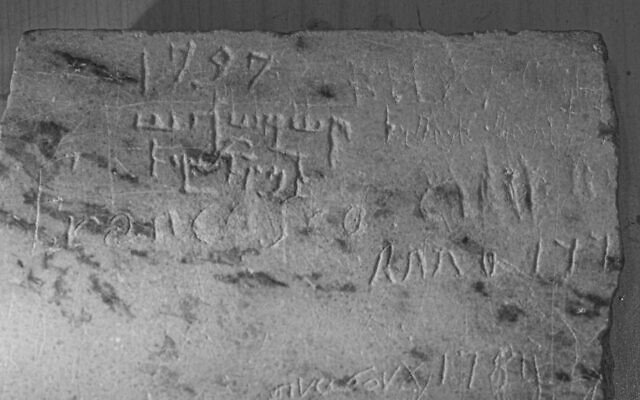
Other intriguing finds include a section of the main Edicule's external wall that was covered in 18th-century graffiti in multiple languages, including Greek, Latin, and Armenian.

Earlier this summer, with the aid of a conservation team from Turin, Italy, and the Franciscan Faculty of Biblical Sciences and Archaeology in Jerusalem, archaeologists worked on the repair of additional sections of the basilica floor. They investigated several construction methods and cement types while discovering an old drainage system.

Part of the cladding of the Church of the Holy Sepulchre in Jerusalem’s Holy Edicule contained 18th-century graffiti. (Courtesy Gianfranco Pinto Ostuni/Custodia CTS)

Christian church's past

Around 330 CE, when Emperor Constantine converted to Christianity and his mother Helena visited the Holy Land to locate locations associated with Jesus, the Church of the Holy Sepulchre was constructed. She ordered the construction of grand structures, such as the Church of the Holy Sepulchre, which is thought to be the site of Christ's crucifixion and burial.

It was perhaps a pilgrimage place for early Christians before that. Latin inscriptions from before the church was built have also been found by archaeologists on the site, further supporting the idea that it may have already been a place of pilgrimage for Christians.

However, it was a pagan temple until the church was constructed there beginning in 330 CE. The early Christian community was persecuted by the Romans, and Emperor Hadrian believed that the location would be excellent for a temple to Jupiter or Venus.

The church was burned down by Persian invaders in 614, and it was once more destroyed in 1009 by the psychopathic caliph al-Hakim, who attacked Christians, Jews, and even other Muslims. The Church of the Holy Sepulchre was renovated by Crusaders in the 12th century, giving it its present form.

A partially excavated floor in the Church of the Holy Sepulchre in Jerusalem in June 2023 reveals the different types of construction and masonry used throughout the centuries. (courtesy Archivio Università La Sapienza, Roma)

The "status quo"—a strict power-sharing arrangement among the many Christian denominations—has ruled the site since 1852. The church's keys have been in the hands of a Muslim family for at least 800 years.

According to the agreement, the various religions have made minor improvements to the chapels that are under their jurisdiction, but coordinated action to maintain shared areas has frequently proved challenging. When Israeli officials momentarily shuttered the Edicule in 2015 because they deemed it unsafe, it served as a wake-up call.

The Edicule's limestone and marble construction need immediate repair after years of exposure to elements like water, humidity, and candle smoke.

Christian community leaders visit archaeological excavations at the Church of the Holy Sepulchre in Jerusalem in June, 2023. (courtesy Archivio Università La Sapienza, Roma)

A church that renovates collectively remains collective

The Holy Edicule underwent its first significant refurbishment since the clearing up after a fire in 1808 in 2016, when representatives of various Christian traditions joined together. Conservationists asserted to have discovered the original limestone bed on which Jesus was interred in October 2016, when the restoration project was in full gear. A year later, the public may enter the Edicule after its restoration.

The Edicule's refurbishment, however, brought attention to the need for more repairs, including immediate work on the basilica's floor, as renovations often do. The church's floor, like much of it, is a jumble of construction techniques from different eras, with stones from the Crusader period in the 12th century, more modern extensions from the 19th century, and splotches of concrete and cement from previous, shoddier reconstructions.

The church, which is tucked away in the middle of Jerusalem's bustling Old City, will get the opportunity to undergo archaeological investigation as well as repairs to the sewage and power lines that run beneath it during the reconstruction.

Between 2020 and 2022, when it was largely empty owing to the coronavirus pandemic, the church conducted a preliminary investigation. The restorations and archeological excavations got under way in March 2022.

Part of the Italian team excavating the Church of the Holy Sepulchre in Jerusalem in June, 2023. (courtesy Gianfranco Pinto Ostuni/Custodia CTS)

Phased repairs will be made to the 1,200 square meter (13,000 square foot) level so that liturgical services and visitation can continue. Depending on what the archaeologists find, the renovation will be paid for by contributions and should be finished in May 2024.

When the excavations first started last year, Rev. Francesco Patton, the leader of the Catholic Franciscan order dedicated to protecting Christian monuments in the Holy Land, said, "The cooperation among the three communities is the most important thing." "It demonstrates to the whole world that fraternal relationships between Christians from various churches and communities are possible."

The restoration effort itself appears to have aided in the reconciliation of the various denominations' disputes.

As Patton stated last year, "discussion is really facilitated when you are doing something together with the others." "Working together is something that helps people get to know each other and to start a process of trusting."

Source: https://www.timesofisrael.com/round-the-cl...

Researchers find the oldest stilt settlement in Europe

Scientists have discovered what may be one of Europe's earliest settled towns beneath the turquoise waters of Lake Ohrid, the "Pearl of the Balkans," and they are working to understand why it hid behind a protective spike fortress.

A diver scouring an archaeological site at the bottom of Lake Ohrid in Albania, the site of Europe's oldest stilt village - Copyright AFP Jade Gao

Archaeologists think a town of stilt dwellings previously stood along a section of the lake's Albanian shore around 8,000 years ago, making it the oldest lakeside settlement in Europe to be found thus far.

The site was shown by radiocarbon dating to date between 6000 and 5800 BC.

According to Albert Hafner, an archaeology professor at the University of Bern in Switzerland, "it is several hundred years older than previously known lake-dwelling sites in the Mediterranean and Alpine regions."

According to our research, it is the oldest in all of Europe, he told AFP.

The most ancient of these towns, according to the authority on European Neolithic lake houses, were found in the Italian Alps and date to around 5000 BC.

The excavations at Lin, on the Albanian side of Lake Ohrid, which spans the hilly border of North Macedonia and Albania, have been conducted by Hafner and his team of Swiss and Albanian archaeologists for the past four years.

The village, which included homes built on stilts above the lake's surface or in locations frequently inundated by increasing waves, is said to have been home to between 200 and 500 people.

Spike fortification

And it is gradually exposing some astounding secrets.

Archaeologists recently discovered evidence that suggests the settlement was reinforced with thousands of spiked planks that were used as defensive barricades during the plunge.

Hafner remarked, "They had to clear a forest to protect themselves in this way.

But why, in order to defend themselves, did the hamlet construct such massive fortifications? The evasive question has archaeologists scratching their heads in search of an explanation.

Hafner described the find as "a real treasure trove for research" and researchers believe that over 100,000 spikes were driven into the lake's bottom off Lin.

Having existed for more than a million years, Lake Ohrid is one of the oldest lakes in the world.

With the help of trained divers, archaeologists have been searching the lake's bottom, frequently finding valuable oak and timber that has been preserved as fossils.

Similar to a Swiss watch

According to Albanian archaeologist Adrian Anastasi, tree ring analysis offers "valuable insights into the climatic and environmental conditions" of the time. This allows the researchers to reconstruct the daily lives of the locals.

Oak is extremely exact, like a Swiss watch, according to Hafner.

Anastasi, the leader of the Albanian research team, continued, "In order to comprehend the structure of this prehistoric site without hurting it, we are performing very painstaking investigation, working very slowly and very carefully.

The site's dense foliage can sometimes make the labor tediously sluggish.

It's crucial to comprehend why these folks made this decision, according to Anastasi, who said that building their village on stilts was a challenging and intricate undertaking.

Scientists say it is safe to presume for the time being that the village relied on agriculture and tamed cattle for food.

Professor of archaeology from Albania Ilir Gjepali remarked, "We discovered various seeds, plants, and the bones of wild and domesticated animals."

However, it will take another 20 years for the location to be thoroughly investigated, analyzed, and the results to be determined.

Each excavation trip, according to Anastasi, provides useful material that helps the team piece together a picture of life along the beaches of Lake Ohrid thousands of years ago, including the design of the homes and the makeup of their society.

These are significant prehistoric sites that fascinate the entire southwest of Europe, according to Hafner.

A 3,800-year-old clay tablet in cuneiform was discovered in a prehistoric tumulus in southern Turkey

After the significant earthquakes that struck the area earlier this year, restoration work revealed a 3,800-year-old cuneiform clay tablet in southern Türkiye.

A 25-person team discovered the clay tablet with the cuneiform inscription in the Akkadian language in the approximately 4,000-year-old Accana tumulus in the southern Hatay region, according to Murat Akar, an archeology professor at Hatay Mustafa Kemal University.

The historical site, which was identified as the site of Alalakh, the location of the Mukish Kingdom's capital during the Middle and Late Bronze Ages, was impacted by the twin earthquakes on February 6 that were centered in Kahramanmaras and caused significant damage in Hatay.

According to Akar, the Turkish Culture and Tourism Ministry has begun restoration and preservation work to address the damage to portions of the palace wall ruins.

A clay tablet was discovered among the ruins by the crew that cleared the wall rubble for the investigation.

When the Akkadian language tablet was initially examined, it contained information about a deal that Yarim-Lim, the first king of Alalakh who is known to have existed, had made to buy a different city.

The tablet is undamaged, and Akar described the discovery as "so exciting."

It demonstrates to us that the monarchs of that era had the financial capability and potential to acquire a second city.

He continued, "There is probably also the name of the significant city residents who saw this sale on the tablet.

According to Akar, "the work emerged as an extremely singular example, particularly to decipher the economic structure of that era, the relationship between cities, and the economic and political model."

After the inspections, the tablet will be moved to a museum, according to the leader of the restoration team.

Source: https://www.aa.com.tr/en/culture/3-800-yea...