Gönnersdorf, located near the modern city of Neuwied in the Central Rhineland of Germany, is one of Europe's most important archaeological sites for understanding the artistic and social life of Late Magdalenian hunter-gatherers. Excavated beginning in the late 1960s, the site revealed the remains of a substantial Late Glacial settlement containing dwellings, tools, animal bones, personal ornaments, and—most famously—hundreds of engraved slate plaques.
The engravings are particularly remarkable because they preserve a diverse repertoire of human and animal representations. More than 500 stylized female figures have been identified on the engraved slate fragments, alongside naturalistically rendered animals including horses, mammoths, ibex, rhinoceroses, reindeer, wolves, bears, birds, and other creatures.
Gönnersdorf therefore provides much more than evidence of prehistoric "art." It offers a window into how Late Magdalenian communities represented people, animals, movement, and perhaps social identities.
The Discovery of Gönnersdorf
The site was discovered in 1968–1969 during construction work near Neuwied-Gönnersdorf.
Archaeological excavation revealed a prehistoric settlement preserved beneath later deposits.
The preservation conditions were unusually favorable.
Gönnersdorf and the nearby Andernach-Martinsberg site were buried beneath volcanic material associated with the Laacher See eruption, helping protect portions of the Late Glacial archaeological record.
This exceptional preservation is one reason the site has become so important.
Instead of recovering only isolated stone tools, archaeologists could reconstruct a settlement containing spatially distributed artifacts and activity areas.
A Late Magdalenian Settlement
The Magdalenian was one of the major Upper Paleolithic traditions of western and central Europe.
It developed during the later stages of the last Ice Age.
People belonging to Magdalenian communities were highly mobile hunter-gatherers who exploited large herds of animals and possessed sophisticated stone, bone, antler, and ivory technologies.
Gönnersdorf belongs to the later part of this tradition.
Radiocarbon research confirms that Gönnersdorf and Andernach-Martinsberg represent important Late Glacial Magdalenian occupations of the Central Rhineland.
The Settlement
Gönnersdorf was not simply a cave occupied by passing hunters.
It was an open-air settlement.
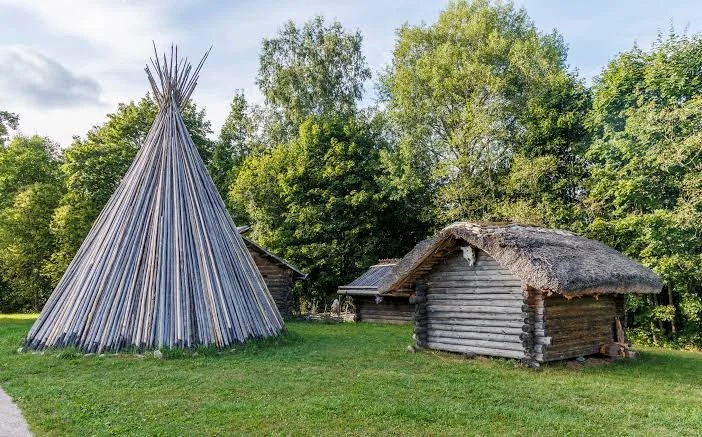
Archaeologists identified evidence of several structures, including the remains of approximately four huts and post arrangements associated with dwelling areas.
This provides an important perspective on Paleolithic architecture.
People living during the Ice Age were not restricted to caves.
They could construct shelters in open landscapes using organic materials that rarely survive archaeologically.
The Engraved Slate Plaques
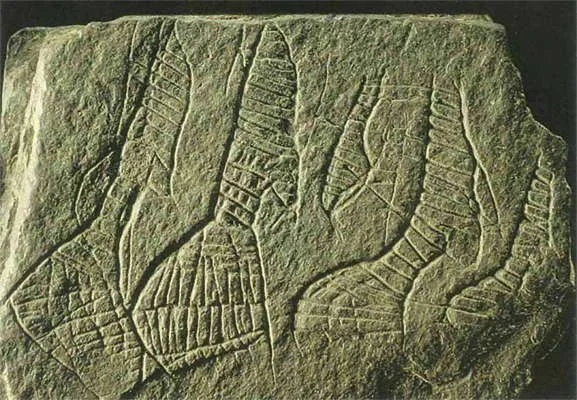
The most famous artifacts from Gönnersdorf are the engraved slate plaques.
The people who occupied the site used thin pieces of slate as surfaces for engraving.
Using sharp implements, they incised lines into the stone.
Some plaques contain overlapping images, suggesting that the same surface could be reused.
The resulting engravings are among the most extensive collections of Paleolithic portable art in Europe.
The "Gönnersdorf Women"
The stylized female figures have become known as the Gönnersdorf type.
More than 500 representations have been identified.
They are highly simplified.
Unlike the relatively volumetric female figurines from sites such as Hohle Fels or Willendorf, Gönnersdorf figures are generally represented through thin outlines.
Many emphasize:
the buttocks,
hips,
legs,
and body profile.
The head and upper body may be minimally represented or absent.
Why Are the Women So Stylized?
The reason for this style remains uncertain.
Several interpretations have been proposed.
The figures might represent:
human beings,
women within a particular social category,
dancing or moving individuals,
fertility-related imagery,
symbolic figures,
or representations whose meaning is now inaccessible.
It would be inappropriate to claim that archaeologists know exactly what the figures meant.
Prehistoric artists left no written explanation.
The images must therefore be interpreted through comparison with other artifacts and archaeological contexts.
Movement and Dance
One particularly interesting interpretation concerns movement.
Some Gönnersdorf female figures appear to be represented in dynamic positions.
Their bodies may be tilted or positioned in ways that suggest movement.
This has led researchers to consider whether some images could represent dancing or other bodily activities.
However, this remains an interpretation rather than an established fact.
The images clearly depict human bodies.
Their precise narrative meaning remains uncertain.
The Animals
The contrast between the human and animal representations is striking.
The female figures are highly schematic.
The animals, by comparison, can be remarkably naturalistic.
Engravings include:
horses,
mammoths,
woolly rhinoceroses,
reindeer,
ibex,
wolves,
bears,
birds,
and other species.
This suggests that the artists were capable of highly detailed observation.
The contrast may therefore have been intentional.
Mammoths and the Ice Age Environment
The mammoth was one of the most important large mammals of Ice Age Europe.
Its presence in Gönnersdorf's artistic record reflects the ecological world inhabited by the site's occupants.
The Central Rhineland landscape during this period differed dramatically from modern Germany.
Cold, open environments supported large herbivore communities.
Humans followed these animals and developed specialized hunting strategies.
The artistic record therefore preserves something about the environment as well as human imagination.
Animal Hunting and Subsistence
Faunal remains from Gönnersdorf provide evidence for hunting and animal processing.
Horse was particularly important.
Research on the site's fauna has identified approximately 14,500 faunal remains, making it possible to examine not only large game but also smaller animals and birds.
The large-game economy demonstrates the importance of hunting in Magdalenian life.
But the archaeological evidence also shows that these communities did not depend exclusively upon one species.
Birds and Small Animals
Bird remains are present at Gönnersdorf, although they appear to have played a relatively minor role as food compared with large mammals.
The bird assemblage nonetheless provides valuable information about human behavior.
Bird remains can reveal:
hunting practices,
seasonal activity,
environmental conditions,
and possible use of feathers or other bird products.
The presence of birds in the archaeological record therefore demonstrates a broader pattern of resource exploitation.
Art and Daily Life
One of the most important lessons of Gönnersdorf is that art was not necessarily separate from everyday life.
The same settlement contained:
houses,
hunting equipment,
food remains,
tools,
ornaments,
and artistic objects.
This suggests that symbolic behavior was embedded within ordinary social life.
The artists were hunters.
The hunters were artists.
The people who made tools also made images.
Portable Art
The slate engravings are examples of portable art.
Unlike paintings permanently attached to cave walls, these plaques could theoretically be carried.
That creates interesting possibilities.
They may have been:
displayed,
handled,
exchanged,
transported,
reused,
or discarded.
Their portability potentially allowed imagery to circulate between individuals and communities.
Social Identity
Art can also communicate identity.
A repeated style may indicate shared cultural conventions.
The distinctive Gönnersdorf female figures appear at other European sites as well, leading archaeologists to use the term "Gönnersdorf type."
This suggests that the imagery was not necessarily an isolated local invention.
It may have formed part of a broader visual tradition.
The Meaning of the Art
The meaning remains uncertain.
Possible interpretations include:
Social representation
The figures may have represented members of the community.
Ritual symbolism
They could have been involved in ceremonies or ritual practices.
Storytelling
The images might have represented narratives.
Identity
The repeated female form may have communicated group identity.
Everyday experience
Some scenes may depict ordinary human activities.
No single interpretation can currently explain all of the evidence.
Gönnersdorf and Human Creativity
The artistic record demonstrates that Late Paleolithic people possessed sophisticated visual traditions.
Their artists could:
select suitable surfaces,
control engraving depth,
create repeated motifs,
represent movement,
distinguish animal species,
and organize compositions.
These abilities required both technical skill and cultural knowledge.
Conclusion
Gönnersdorf is one of Germany's most important windows into Late Magdalenian life.
Its value comes from the combination of settlement evidence and artistic production.
The site preserves dwellings, tools, ornaments, animal remains, and hundreds of engraved slate plaques.
The highly stylized female figures contrast with remarkably naturalistic animal representations, creating one of the most distinctive artistic traditions of Late Ice Age Europe.
Gönnersdorf ultimately demonstrates that Paleolithic people were not simply surviving in a harsh environment.
They were building homes, organizing communities, hunting, creating technology, decorating objects, and producing complex visual representations of their world.