Archaeologists uncover the altar of the Magnesia Temple of Zeus in Türkiye

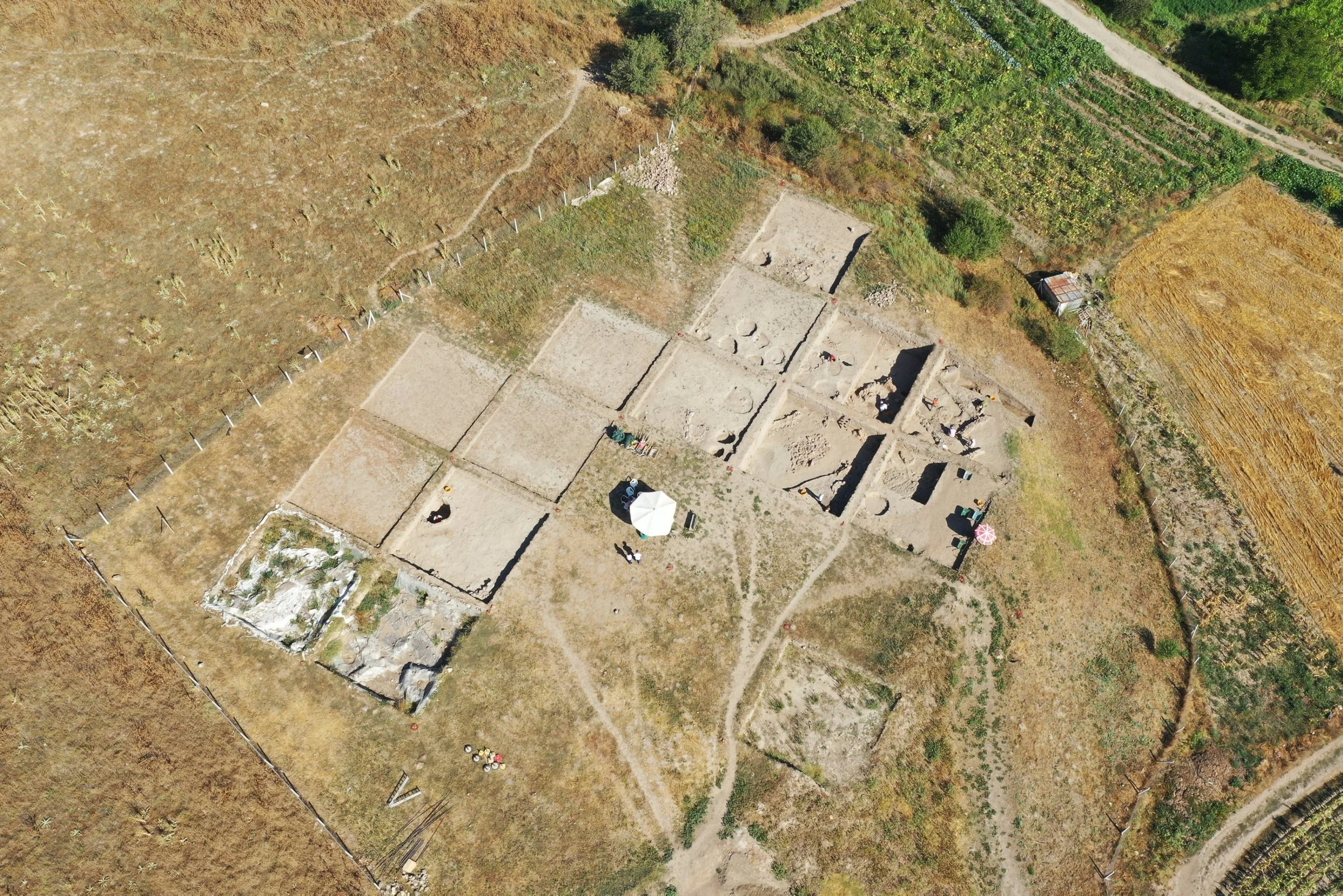
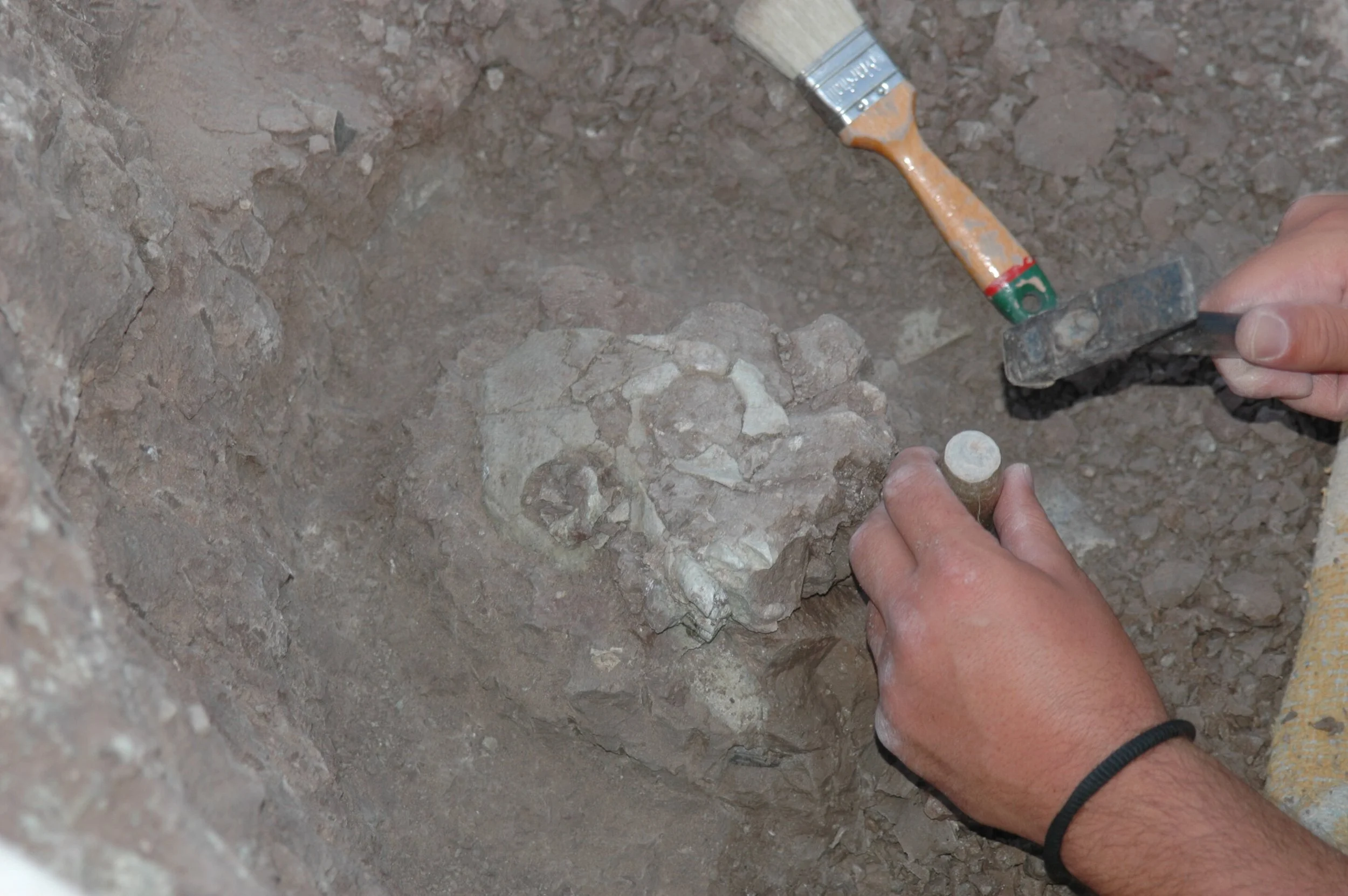
Archaeological excavations in the ancient city of Magnesia in Aydın province in Türkiye uncovered the altar of the Temple of Magnesia Zeus, a replica of which is on display at the Pergamon Museum in Berlin.

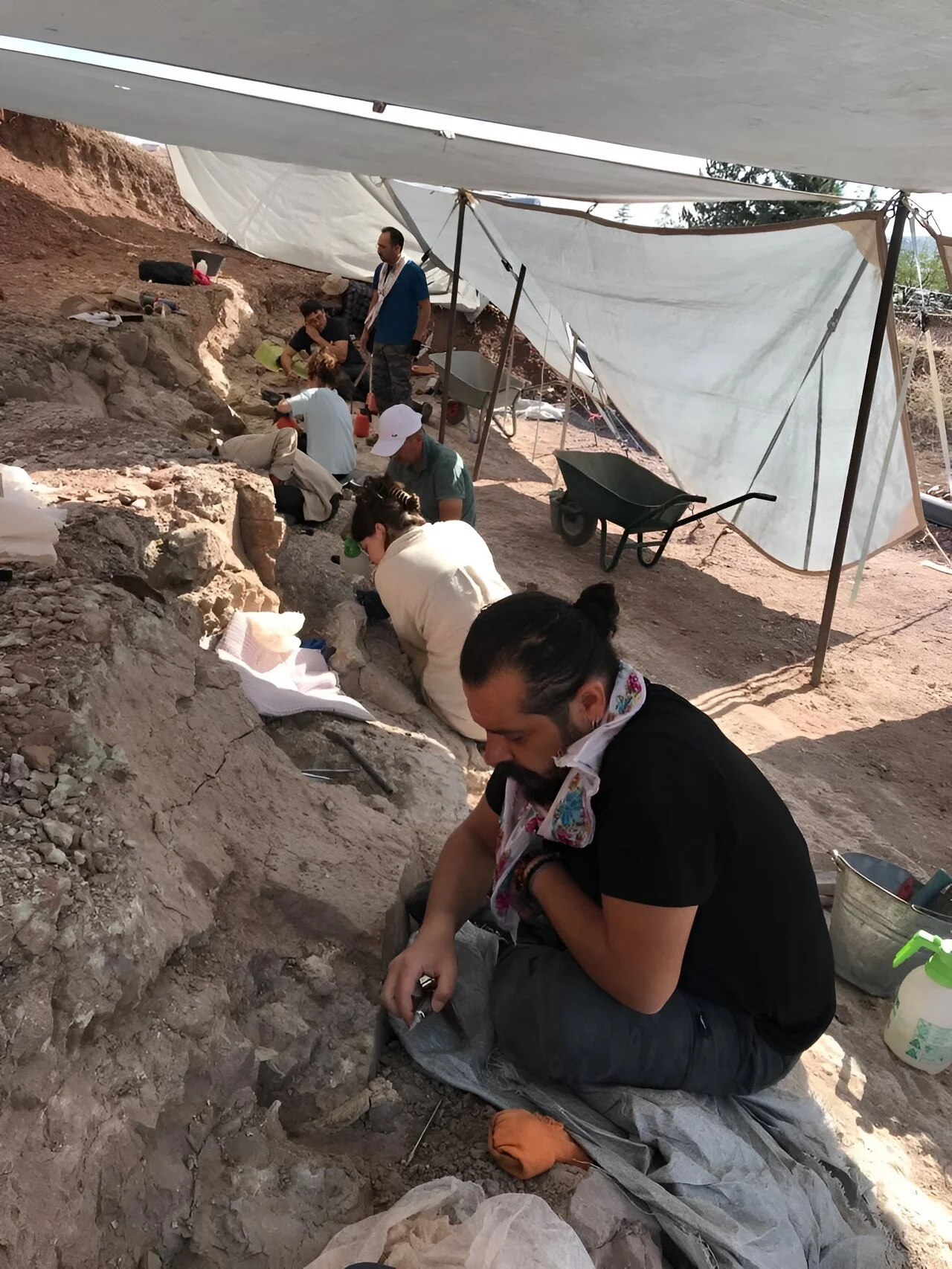
Excavations in the Ancient City of Magnesia are being carried out under the direction of Assoc. Prof. Dr. Görkem Kökdemir, a faculty member at Ankara University Department of Archaeology.

As a result of the works that started two years ago, the remains of the Temple of Zeus, located in the area defined as the "religious agora" in the ancient city, were unearthed.

During the works carried out in the western part of the temple, an altar 3 meters 53 centimeters wide, 5 meters 10 centimeters long and 70 centimeters high was unearthed.

It is believed that the altar was used in sacrificial ceremonies in the cult of Zeus.

In his statement, Dr. Kökdemir reminded that nearly 600 architectural blocks belonging to the Temple of Zeus were removed from the excavation area.

Solving the Mystery of the Khafre Pyramid Shafts

The Pyramid of Khafre on the Giza Plateau is the second largest in all of Egypt, a truly incredible feat of engineering, but the truth is, it’s very much in the shadow of its big brother, the Great Pyramid.

The interior passages and chambers are far more inferior but they are no less mysterious, and in this video we take a look at the Khafre Burial Chamber, and two small square-shape openings we find in the walls inside. Are these air shafts like we see in the Great Pyramid King's Chamber or are they something else?

The Pagan Necropolis Under Vatican City

Beneath the floor of St. Peter's Basilica, an ancient Roman cemetery holds the secret to the origins of Vatican City. Watch the video to find out more!

Archaeologists Find Mysterious 2,800-year-old Channels Near Temple Mount in Jerusalem

Deep grooves cut into the bedrock date to the biblical Kingdom of Judah, and bolster the theory of Jerusalem’s early expansion. But what purpose they served remains a riddle.

Archaeologists excavating in Jerusalem have uncovered a network of mysterious channels dating back to the days of King Joash and Amaziah, some 2,800 years old.

The installations are the first of their kind ever discovered in Israel, the IAA said in an announcement Wednesday. The national park in which the structures were found contains the City of David archaeological site—considered by most scholars to be the location of the original settlement at Jerusalem.

The grooves, cut into the bedrock, were likely used to soak some kind of product, though it is unclear what exactly the ancient Jerusalemites were making there, the Israel Antiquities Authority and Tel Aviv University said in a statement Wednesday 30th of August 2023.

Bronze Age remains of a human brain and skin were found in Turkey

In the course of excavations at the heart-shaped Tavşanlı Mound in Turkey's Kütahya district, archaeologists found two Bronze Age individuals' well-preserved brain and skin remains.

Skeletal remains discovered at Tavşanlı Mound in Türkiye's Kütahya province in this photo released on Sept. 4, 2023. (AA Photo)

According to specialists, the discovery was noteworthy because it was the first time that skin remains had been found during archaeological excavations in Türkiye, whereas brain remains had only been found four or five times.

According to Anadolu Agency (AA), specialists think the brain and skin fragments, which belonged to two men of different ages and were preserved through carbonization, belonged to two persons who were unable to evacuate their homes after they were set on fire during an attack 3,700 years ago.

Heart-shaped Tavşanlı Mound in Türkiye's Kütahya province in this photo released on Sept. 4, 2023. (AA Photo)

The results were presented at a conference held by the European Association of Archaeologists from August 30 to September 2 in Belfast, Northern Ireland.

Professor Erkan Fidan, head of the archaeology division of Bilecik Şeyh Edebali University (B EU), is in charge of the excavations at the location, commonly known as the "Heart of Kütahya."

According to Fidan, who spoke at the conference, the mound is the oldest village in the vicinity, and scholars think that it served as the region's capital during the Bronze Age.

He continued by saying that they think the city was attacked on a huge scale and completely destroyed approximately 1,700 BCE.

Aerieal view of the Tavşanlı Mound in Türkiye's Kütahya province in this photo released on Sept. 4, 2023. (AA Photo)

For almost 300 years, according to the archaeologist, it was uninhabited.

Professor Yılmaz Selim Erdal of the Anthropology Department at Hacettepe University pointed out that both skeletons were subjected to intense heat, which allowed the brain to be preserved inside the skull. They also mentioned that they discovered fragments of skin that had been carbonized by heat in one of the skeletons, between the chest and abdomen.

The attack's motive and perpetrator will now be investigated, according to experts.

An executive order started the excavations at the mound, and they are scheduled to continue for about 30 years.

Source: https://www.dailysabah.com/life/history/br...

Discovered: Potentially Over 2,000-Year-Old Underground Galleries

At a location high in the Peruvian Andes mountains, archaeologists have uncovered ancient underground passages.

An archaeologist conducting an excavation. Stock image: An archaeologist conducting an excavation. Researchers have discovered ancient underground galleries at a site high up in the Peruvian Andes mountains. iStock

El Dominical de Panamericana said that scientists made the discovery next to a lagoon that is situated above sea level at a height of more than 11,200 feet. The body of water is located a few miles northeast of Huari in the Ancash region of Peru.

The stone block-built underground galleries are thought to date back to Peru's pre-Hispanic "Chavín" culture, which flourished thousands of years ago.

According to the Encyclopedia Britannica, the Chavín culture, which flourished between around 900 and 200 B.C. but may have earlier origins, was one of the most famous ancient civilizations in Peru.

The highly advanced culture began to have an impact on the northern and central regions of what is now Peru during this time.

Chavín de Huántar, which is situated at a height of more than 10,400 feet in the Andean highlands of the Ancash province, is the most significant archaeological site of this civilization.

Although it is unclear if Chavín de Huántar was the center or genesis of this culture, it does include ruins and artifacts connected to it.

The archaeological site, however, is among the earliest and best-known from Peru's pre-Hispanic era. Chavín de Huántar was named a UNESCO World Heritage Site in 1985 due to its historical significance.

The main structure at Chavín de Huántar is a sizable temple complex made of stone blocks and embellished with intricate artwork.

According to the UNESCO classification of the monument, "Its appearance is striking, with the complex of terraces and squares, surrounded by structures of dressed stone, and the mainly zoomorphic ornamentation."

"Chavin was a ceremonial and pilgrimage center for the Andean religious world and hosted people from different latitudes, distances and languages."

Interior galleries within the temple complex are comparable to those that have just been found nearby in Huari, but they are larger.

An extended vertical stone known as a huanca served as a guide for the archaeologists when they made the most recent discovery.

Huancas had a variety of purposes and had numerous symbolic meanings for the ancient Andean peoples, who revered them as sacred objects. Pre-Hispanic societies performed rituals and laid offerings around these stones as a sign of respect.

The old galleries, according to archaeologists, were most likely built around 700 B.C. The galleries served ceremonial purposes at Chavin de Huántar, however its exact purpose is still unknown.

Researchers are doing investigations to shed light on this issue, but the identities of those who built the galleries at the lagoon location remain a mystery.

Source: https://www.macon.com/news/nation-world/wo...

Coin discoveries at Scole connected to 1970s Roman hoard

Two silver coins discovered in a housing development have been connected to a trove of Roman artifacts discovered in 1973.

The first denarii dates to AD196-8, the reign of Marcus Aurelius Severus Antoninus Augustus, known as Caracalla

A pre-construction archaeological dig in Scole, Norfolk, uncovered the stash of 46 coins.

A metal detector was loaned to a beginner acquaintance by a detectorist who lives on the estate and has been searching for more coins for years. He immediately found two denarii.

Helen Geake, an archaeologist, said: "We never know when more could be found."

The findings liaison officer for Norfolk, Dr. Geake, stated: "The detectorist had searched all his neighbour's gardens but never found a thing. He told a friend, who joked, 'I bet you I could', swept a garden and found the denarius."

The second one is from the reign of Caesar Marcus Aurelius Antoninus Augustus, known as Elagabalus, and dated to AD218-22

Seven denarii were discovered in 1973, and because three of them were discovered close together, they were deemed to be a hoard.

Although Scole was next to a Roman road and was known to contain a Roman-British hamlet, archaeologists were only able to explore a small portion of the site.

Dr. Geake stated: "In those days, excavations were done in negotiation with the developer. Today, the developer would pay archaeologists to do the whole lot, but back then it was public money and only a small amount was found."

Helen Geake urged the estate's residents to report any Roman coins found in the decades since it was built

The two most recent discovery, which the finder and landowner donated to the museum, will be added to the trove, which is already a part of the collection at Norwich Castle.

Roman coins are occasionally discovered in the estate's gardens, according to Dr. Geake, who urged visitors to report any such finds.

"You can tell something about the site just from the coins, it's importance and what sort of activities are happening," she remarked. "If we find too far too many, then it's more likely to be a temple site as they would throw coins for good luck."

Norfolk Coroner's Court determined the coins to be treasure.

Source: https://www.bbc.com/news/uk-england-norfol...

While attempting to construct a supermarket, a sleepy Italian town discovered an incredibly rare Roman temple

Sarsina, in the Emilia Romagna region of Italy, is undoubtedly charming and surrounded by beautiful landscape, but it has never been used to attracting large numbers of visitors.

It was formerly a fortified fortress at a vital mountain pass that served as part of Rome's military perimeter and gave birth to the renowned Roman playwright Plautus.

However, very little, if anything, of that heritage is still visible today. The sleepy town of 3,000 was about to get a new sports complex and supermarket when workers laying the foundation stumbled upon a "extremely rare" relic of Republican Rome, which brought Sarsina back into the public eye for the first time in nearly two thousand years.

Roman scholars are highly interested in a Capitolium, a pagan-Roman temple that was built in the last century BCE and was dedicated to Jupiter, Minvera, and Juno.

The sandstone and limestone slabs that make up its base and podium are 6,200 square feet (577 square meters) and are still in a state of preservation typical of Roman monumental architecture.

Lead archaeologist at the excavation site Romina Pirraglia told CNN that the team had found three distinct rooms that were probably devoted to the triad of gods Jupiter, Juno, and Minerva.

“The excavations are still underway… and we have already identified an older, deeper layer of ruins dating back to the 4th century BC, when the Umbrian people (an ancient Italic tribe who predated the Romans) lived in the area. The entire temple could be even larger than what we now see.”

Federica Gonzato, superintendent of fine arts, archaeology, and landscapes for the provinces of Ravenna, Rimini, and Forl-Cesena in eastern Emilia Romagna, called the temple "extremely rare" and said there will undoubtedly be space for shopping and recreation, but the current plans will need to be altered to preserve this magnificent structure.

“The marvelous quality of the stones has been spared from sacks, enemy invasions, and plunders across millennia thanks to the remote location of Sarsina, a quiet spot distant from larger cities,” Gonzato told CNN. “Temples such as this one (were) regularly plundered, exploited as quarries with stones and marble slabs taken away to be re-used to build new homes.”

Gonzato claimed that one of the unique characteristics of Italy is the country's seemingly constant discovery of fresh antiquities and antique structures. Julius Caesar organized his armies from the adjacent city of Ravenna, where the Umbri were integrated as Italian tribal allies of the Roman Republic in 89 BCE, and crossed the Rubicon Creek on his way to Roman dictatorship.

In addition, after Rome itself had been taken over, it served as the seat of the Western Roman Empire. There are probably still a ton of secrets buried beneath this place.

Source: https://www.goodnewsnetwork.org/sleepy-ita...

Peru's Ancient Ruins Reopened after Being Closed for More Than a Year

One of the largest ancient monuments in the Americas, the Llaqta de Kuélap ruins in northern Peru, were forced to close to visitors in April 2022 due to damage from high rains. However, restrictions have since been placed on entry.

The site, which is in the Andes Mountains in the country's Amazonas area, has recently grown in popularity among foreign tourists, particularly as a substitute for the overcrowded Machu Picchu. It is particularly striking for its scope. "Kuélap’s size is monumental," says Peruvian travel expert Marisol Mosquera, the creator of eco-luxury travel agency Aracari Travel, noting that some of its outer walls are over 60 feet tall and that, in contrast to most surviving structures from the time, it is made of stone rather than adobe. According to the Chachapoyas culture, which predates the Incas, it is also older than Machu Picchu, she continues. The scenery is breathtakingly gorgeous.

Warriors, shamans, farmers, and merchants are thought to have lived within the fortified citadel, which covered approximately 37 acres and is located nearly 9,842 feet above sea level, from roughly 900 to 1400 CE. Machu Picchu is located at an altitude of around 7,972 feet. The location, which was once the thriving political hub of the Chachapoyan civilization, was destroyed during the Spanish conquest of the 16th century, leaving behind the ruins of civil, religious, and military buildings as well as 420 circular stone homes, which were discovered in 1842 and decorated with murals, carvings, and geometric friezes.

However, the southern portion of the fortified town's outer wall collapsed in April of last year, forcing the closure of the site. The deterioration and ultimate collapse, according to José Bastante, Director of the Interdisciplinary Research Program of Kuélapthe, were caused by "the infiltration of rainwater into the artificial platform core of the monument," which places a large amount of pressure on the outside wall.

The local team collaborated with the World Monuments Fund and the Getty Conservation Institute to come up with better drainage systems and water damage mitigation strategies for the buildings. Bastante claims that since then, work has been done on stabilizing the perimeter wall as well as archaeological investigations, conservation, and maintenance in various areas of the site. They have also renovated the drainage system and strengthened the surfaces of the structures in the southern half.

The Llaqta de Kuélap reopened to visitors on August 19 following nearly 16 months of construction, but there are now quotas in place "for conservation and safety," according to Bastante. Between the hours of 8 a.m. and 5 p.m., 144 visitors are permitted to enter the central part of the ruins; groups of 12 visitors enter through the Access 1 entry point every 45 minutes. (There is hope that visitor capacity and time restrictions will be able to rise by November.) Visitors must make a reservation through a recognized travel agency or make a direct request, and they shouldn't show up without a verified reservation. According to Promper, Peru's tourism bureau, as part of the reopening, visitors will enjoy a significant benefit: entrance will be free through the end of the year.

Bastante states that a "great portion" of the Llaqta de Kuélap remains inaccessible to tourists due to "security measures" because of the fragile nature of the ruins. The Archaeological Monumental Zone of Kuélap (ZAMK), a 336-acre area that is home to five archaeological monuments, is home to these ruins as well, but he advises visitors to keep this in mind.

The wider ZAMK region was similarly shut down in April 2022, but some parts of it—including an interpretation center and a real Chachapoya house—reopened in July. Visitors can also stroll down a pre-Hispanic path in the vicinity to witness the Llaqta de Kuélap's front. People who don't have reservations or arrive after their scheduled time will still be able to access such locations.

Bastante notes that preparation is crucial in the wake of the collapse, particularly acquiring reservations to help manage visitor flow and upkeep. He declares that the sites of our archaeological monuments are sacred and vulnerable. "They should be treated with the same reverence as all other holy sites around the world,"

The drive to Kuélap, which begins in the city of Chachapoyas and takes less than two hours from Lima, is a significant component of the experience. From there, visitors can take an hour-long bus excursion to Nuevo Tingo, where they can either walk for about 5.6 miles or ride the 2017-opened 20-minute cable car to get to the site.

Despite Kuélap being a significant highlight of the Amazonas region, Rocio Florez, the proprietor of the Gocta Natura Reserve, an eco-lodge in adjacent Cocachimba, points out that it is not the only draw. Additionally, the region is ideal for exploring other citadels like Yalape and Ollape and funerary sites like Revash, Lengate, Karajia, La Petaca, and Laguna de las Momias—where more than 200 mummies were discovered in 1997 and are now kept at the Leymebamba Museum—as well as outdoor pursuits like hiking, rafting, and birdwatching (especially in Cocachimba's Valera district). She claims that because the area is so historically significant, visitors should take the time to explore the communities and landmarks around, which help put Kuélap's story in context.

Everyone in the area is working toward the same objective: promoting slow and attentive travel not only in Kuélap but all throughout the Amazonas, and allowing visitors more time to discover the area's history and culture. Florez explains that "it is a land of discovery."

Source: https://www.heraldonline.com/living/travel...

Intriguing discovery of pharaoh's tomb and fascinating connections between Harrogate and the mythical Tutankhamun revealed by recent event

A remarkable new exhibit will explain how a jeweler from Harrogate was among the first visitors to the fabled Tutankhamun tomb in more than 3,000 years when it was found by British archaeologist Howard Carter in 1923.

Historic expedition - Flashback to the Valley of the Kings in 1920s Egypt including Harrogate jeweller James R Ogden and archaeologist Leonard Woolley. (Picture Ogden of Harrogate)

Egyptomania, a historic event commemorating 130 years of the family jewelers and their extraordinary connections to Tutankhamun, is being held at Ogden of Harrogate on the 100th anniversary of the tomb's exciting discovery in the Valley of the Kings.

When James R. Ogden started his jewelry company in 1893, he had to travel far to find the exquisite jewels for which the company became well-known.

Howard Carter invited Ogden to the Valley of the Kings to appraise and measure the gold, including Tutankhamun's casket, after he uncovered Tutankhamun's tomb, one of the best-preserved pharaonic tombs ever excavated.

One of the first people to access the tomb in more than three millennia was the jeweler from Harrogate.

Tutankhamun's discovery in 1923 captured people's attention all around the world.

Mr. Ogden developed a greater understanding of archaeology as a result of his fascination with the stunning discoveries made at the time in the Middle East.

Under the leadership of JR Ogden's great, great grandsons Robert and Ben Ogden, the company is still successful today.

Robert Ogden said: “The history of our business is our corner-stone and we have recently been cataloguing our archive, where we have a vast collection of our great, great, grandfather JR Ogden’s memorabilia, including a remarkable collection of 10,000 lantern slides of his travels to Tutankhamun’s tomb, and artefacts from his expeditions to Ur, Babylon, Palestine, Syria, and Assyria. There are also hundreds of letters that are fascinating glimpses of the key characters of that time, and their explorations.”

Part of an advert for a lecture tour given in the 1930s by Harrogate jeweller James R Ogden about his archaeology expeditions to Egypt which fascinated audiences across the UK. (Picture Ogden of Harrogate)

In the brand-new Harrogate event, some of these artifacts and letters will go on display for the first time.

An understanding of the social and political environment in which archaeology was conducted at the period is provided by the display.

James R. Ogden spent the 1920s getting to know Howard Carter, Lord Carnarvon, Max Mallowan (Agatha Christie's second husband), and the archaeologists Leonard and Katharine Woolley in particular.

Since Katharine Woolley, a trailblazing female archaeologist, requested that all of her personal papers be destroyed upon her death, the show includes her previously unpublished letters, which are of great importance.

In addition to being a restorer and replica builder, Mr. Ogden used his understanding of the workings of gold to help analyze the material discovered during digs.

He produced several copies of the artifacts discovered at Tutankhamun and Ur and gave them to the British Museum.

He also delivered seminars to enthralled crowds across the UK while displaying his slides. Some of the hundreds of newspaper articles about archaeological digs that JR Ogden gathered will be shown. The Ogden archive will be made available to historians for additional research, according to Robert Ogden. Who wouldn't be enthralled by the exploits of these early archaeologists and the secrets they uncovered? “Like fine jewels, there are no doubt more romantic and enchanting stories waiting to be unearthed.”

Between September 7 and 21, Ogden of Harrogate, located at 38 James Street in Harrogate, will host Egyptology, an excursion divided into three sections: Tutankhamun, Expeditions in Ur, and historical jewelry sales from the last 130 years.

Source: https://www.harrogateadvertiser.co.uk/heri...

Huge statue of a veiny todger that was employed in bloody ceremonies 3,000 years ago was discovered in the woods

A lucky charm shaped as an erect penis and testicles — designed to ward off evil — has been estimated to be dated from 100AD.

The stone penis statue was found at a construction site (Image: The Archaeologist NHM)

It was discovered, completely accidentally, by divers in south-east Spain.

If something has to interfere with an erection, it might as well be something lot more intriguing and older.

And that's precisely what happened when archaeologists discovered a stone penis that was 3,000 years old while evaluating a construction site.

When the 21-inch statue was discovered, complete with veins, scientists assumed it belonged at a burial place.

However, upon careful inspection, they came to the conclusion that the chubby member was probably employed by a cult in gory rites.

In 2019, a building site in Rollsbo, Sweden, close to Gothenburg, made the find in a wooded region.

After discovering animal bones close by, archaeologists abandoned their notion that the statue served as the headstone of a Bronze Age tomb.

They were wrong about their initial supposition; there were no human bones.

They contend that the stone todger, assumed to have been employed in blood sacrifices presented to the pagan fertility gods between 1800 and 500 BC during the Bronze Age, was actually much older.

The statue seen in all its veiny glory (Image: The Archaeologist NHM)

Local media was informed by archaeologist Gisela Ängeby that "we saw something that diverged from everything else when we investigated the rocks. Although it was now on the ground, it had once been raised.

“It has a distinct phallus shape. I thought when I came across it that, ‘Oh my god, it can't be true’. There was a 52cm-long stone shaped like a penis. I showed the picture to colleagues and there is no discussion, it has a very penis-like shape.”

The stone may have naturally taken on a phallic shape, but the design was later strengthened, according to specialists.

Α justification from an archaeological consulting company The archaeologists declared: “Standing stones in the middle of stone paving are not uncommon. But just the way it is designed is a little special. It is partially weather and then carved. And that’s how the shape has been reinforced. I believe that in connection with the erection, it was used to offer sacrifices, for example within the framework of a fertility cult. The stone was hidden under a stone packing and originally the archaeologists thought it was a Bronze Age grave.”

Penis-shaped artifacts are typically found in archaeological findings, yet it is uncommon to find one made to look so lifelike. It has been believed that a lucky charm fashioned as an erect penis and testicles, intended to stave off evil, dates from 100AD.

Divers in southeast Spain purely by accident made the discovery.

Source: https://www.dailystar.co.uk/news/weird-new...

Ancient DNA research sheds light on Brazilian ancestry

The technique for obtaining and sequencing ancient DNA in biological samples from thousands of years' worth of archaeological excavations has been perfected by Brazilian researchers at every level.

Svante Pääbo, a Swedish biologist who won the 2022 Nobel Prize in Physiology or Medicine for his research on the genomes of extinct hominids and human evolution, created the method for sequencing the material, which is typically found in bone pieces.

Interestingly, Brazilian researcher Tiago Ferraz obtained his doctorate at the Max Planck Institute for Evolutionary Anthropology in Leipzig, Germany, where Pääbo serves as director of genetics before transferring his expertise to the University of São Paulo (USP).

Ferraz sequenced ancient DNA while he was still in Germany, leading to the publication of Genomic History of Coastal Societies from Eastern South America in the journal Nature Ecology & Evolution.

Ferraz's work included everything from bone powder extraction, where the DNA is preserved, to data analysis and result interpretation.

Experts from the Senckenberg Center for Human Evolution and Palaeoenvironment at the University of Tübingen, Germany, also contributed to the study, which also included Tiago Ferraz as the first author and André Menezes Strauss, an archaeologist from USP's Museum of Archaeology and Ethnology (MAE) as senior researcher.

“This work has a vital institutional role. It is the first time a Brazilian-led team, alongside so many institutions, has managed to publish a high-impact article in the field of archaeogenetics,” Strauss noted.

A sambaquieiros

The study was based on the genomes of 34 samples that were up to 10,000 years old and came from four different places on Brazil's east coast. The oldest skeleton found in So Paulo, Luzio, which is about 13,000 years old, is among the material.

André Strauss claims that the method helped to solve one of the mysteries in Brazilian archaeology: Did the ancestors of today's indigenous people, known as sambaquieiros, who lived in ancient coastal populations throughout the Brazilian coast descend from a single biological group or from a number of separate peoples?

“Genetic analysis showed that this hypothesis [their origin stemming from distinct peoples] was wrong. The genetic data show they are descended from the same ancestral population, which occupied [what is now Brazil] 16 thousand years ago, just like any other indigenous group in Brazil or the Americas,” Strauss pointed out.

One of the theories, which has since been refuted by archaeogenetics, claimed that two waves of Homo sapiens from Asia inhabited the continent. According to legend, the first wave of migration arrived in this country 14,000 years ago and consisted of people with non-mongoloid morphologies, comparable to modern Australians and Africans, but no descendants. The second wave, from which modern indigenous people are assumed to have descended, is thought to have arrived 12 thousand years ago, and its members are said to have had the physical characteristics of Asians.

However, the findings of the new ancient DNA analysis indicate that there was only one migration. "What we do have is intracontinental migration: people coming here from the Andes, from North America, from South America—but these are local processes. These great migrations, the genetic data, contrary to what had been imagined until now, point toward a single migration from Asia."

Laboratory USP

Ferraz believes that USP's Laboratory of Archaeology and Environmental and Evolutionary Anthropology will be fully operational by the end of 2023 after receiving training for two years at Germany's Max Planck Institute, which is well known for its work on ancient DNA. The facility, which was created in cooperation with the German institute, is the nation's first archaeogenetics laboratory.

The sequencing of ancient DNA might be done in Brazil without the need for facilities abroad if the laboratory is fully operational and has "a solid system for processing samples and decontaminating material," according to the researcher. "We’re adapting the space. We’ve been dealing with various technical and bureaucratic issues,” he said. “We’re putting the finishing touches to it so we can finally open the space and actually work in it, with a more intense work routine."

He continued by saying that the initial goal will be to teach regional scientists how to produce on-site archaeogenetic data. “Now that we’ve brought the technique to Brazil, we’re going to implement it here, do it locally, sequence the individuals, sequence the ancient DNA here in Brazil, and train people to work with it.”

'Exceptional' archaeological discoveries were made in Cookham

Archaeologists this summer found a big common building, a well with timber walls, and a cemetery at an 8th or 9th century monastery near Cookham, Berkshire.

Over the course of the past month, University of Reading employees and students have been excavating the Anglo-Saxon site next to Holy Trinity Church in Cookham.

Key discoveries include:

  • One of the primary buildings inside the monastery was a sizable timber building with a hearth and internal floor.

  • A well with other wooden artifacts inside of a preserved wooden barrel-lined shaft.

  • A sizable, walled monastery enclosure with the River Thames in its front

  • A cemetery with more than 50 departed people, including children and adults of both sexes, spanning three generations.

The project's director, Professor Gabor Thomas of the University of Reading, stated:

“The discoveries we have made at Cookham in 2023 will help us to paint a much clearer picture of daily life at the monastery. We will need to carry out more detailed analyses of what we have found, but the artefacts unearthed at this year’s dig again show the exceptional quality of preservation at Cookham."

In a test excavation conducted in 2021 by members of the University of Reading's Archaeology Department and volunteers from nearby archaeological societies, the monastery's ruins were first uncovered.

Professor Gabor Thomas

Excavators found an industrial and craft zone that would have provided nuns with food and helped to move imported goods along the River Thames in the summer of 2022, sparking a full-scale dig.

The dig for this season began in early August and ended on September 2. Next summer should see the return of the dig.

Source: https://planetradio.co.uk/greatest-hits/be...

An ancient primate discovered in Turkey casts doubt on the origins of humans

Long-held beliefs about the origins of humans are being called into question by the discovery of a new fossilized ape at an 8.7 million-year-old site in Türkiye. This discovery lends support to the theory that African apes and humans originated in Europe before moving there between nine and seven million years ago.

A new face and partial brain case of Anadoluvius turkae, a fossil hominine—the group that includes African apes and humans—from the Çorakyerler fossil site located in Central Anatolia, Türkiye. Credit: Sevim-Erol, A., Begun, D.R., Sözer, Ç.S. et al.

With the help of the Ministry of Culture and Tourism in Türkiye, a newly identified ape named Anadoluvius turkae was recovered from the Çorakyerler fossil locality near Çankırı. Analysis of this ape's remains has revealed that it is a diverse member of the first known radiation of early hominines, which includes the African apes (chimpanzees, bonobos, and gorillas), humans, and their fossil ancestors.

The results are detailed in a paper co-authored by an international team of academics led by Professor David Begun at the University of Toronto (U of T) and Professor Ayla Sevim Erol at Ankara University, which was published today in Communications Biology.

According to Begun, a professor in the Department of Anthropology in the Faculty of Arts & Science at U of T, "our findings further suggest that hominines not only evolved in western and central Europe but spent over five million years evolving there and spreading to the eastern Mediterranean before eventually dispersing into Africa, probably as a consequence of changing environments and diminishing forests." This is most likely due to shifting environments and disappearing forests. Currently, only Europe and Anatolia have members of this radiation that Anadoluvius is a part of identified.

The finding is based on study of a partial skull discovered at the site in 2015 that is remarkably well-preserved and has the majority of the facial anatomy and the front section of the brain case.

Excavation of the Anadoluvius turkae fossil, a significantly well-preserved partial cranium uncovered at the Çorakyerler fossil site in Türkiye in 2015. The fossil includes most of the facial structure and the front part of the brain case. Credit: Ayla Sevim-Erol

According to Begun, "the completeness of the fossil allowed us to do a broader and more detailed analysis using many characters and attributes that are coded into a program designed to calculate evolutionary relationships. The face is mostly complete, after applying mirror imaging. The new part is the forehead, with bone preserved to about the crown of the cranium. Previously described fossils do not have this much of the brain case."

According to the researchers, Anadoluvius lived in a dry woodland environment, was around the size of a giant male chimpanzee (50-60 kg), was unusually huge for a chimp, and was close to the typical size of a female gorilla (75-80 kg), and probably spent a lot of time on the ground.

"We have no limb bones but judging from its jaws and teeth, the animals found alongside it, and the geological indicators of the environment, Anadoluvius probably lived in relatively open conditions, unlike the forest settings of living great apes," said Sevim Erol. "More like what we think the environments of early humans in Africa were like. The powerful jaws and large, thickly enameled teeth suggest a diet including hard or tough food items from terrestrial sources such as roots and rhizomes."

The species that coexisted with Anadoluvius included those that are now typically seen in African grasslands and dry woodlands, including giraffes, wart hogs, rhinos, various antelope, zebras, elephants, porcupines, hyaenas, and carnivorous mammals that resemble lions. According to research, the biological community appears to have moved from the eastern Mediterranean into Africa sometime after eight million years ago.

The ancestors of the African apes and humans can now be added to the list of participants, according to Sevim Erol. "The founding of the modern African open country fauna from the eastern Mediterranean has long been known and now we can add to the list of entrants the ancestors of the African apes and humans," he stated.

According to the research, Anadoluvius turkae sprang from the same evolutionary branch of the tree as chimpanzees, bonobos, gorillas, and humans. The authors of the study—which also included colleagues at Ege University and Pamukkale University in Turkey and the Naturalis Biodiversity Center in The Netherlands—conclude that despite the fact that modern African apes and the earliest known humans are only known from Africa, both species' common ancestors originated in Europe and the eastern Mediterranean.

Çorakyerler excavation site. This vertebrate fossil settlement near Çankırı, Türkiye, is one of the most important humanoid settlements in Eurasia. As a result of nearly 20 years of excavations, Çorakyerlar has taken its place among the important Late Miocene reference localities of Anatolia and Europe with 8 mammalian orders, more than 10 families and 43 species. Credit: Ayla Sevim-Erol

Anadoluvius and other fossil apes from adjacent Greece (Ouranopithecus) and Bulgaria (Graecopithecus) make formed a group that most closely resembles the first known hominins, or humans, in terms of anatomy and ecology. The new fossils offer the strongest proof to date that this group of early hominines originated in Europe before dispersing into Africa since they are the best-preserved examples of this group of early hominines.

The in-depth analysis of the data demonstrates that the Balkan and Anatolian apes originated from relatives in western and central Europe. The study's more complete data show that these other apes were also hominines, making it more likely that the entire group evolved and diversified in Europe rather than the alternate hypothesis in which distinct ape branches first independently moved into Europe from Africa over the course of several million years, went extinct without a hitch, and then disappeared.

"There is no evidence of the latter, though it remains a favorite proposal among those who do not accept a European origin hypothesis," said Begun. "These findings contrast with the long-held view that African apes and humans evolved exclusively in Africa. While the remains of early hominines are abundant in Europe and Anatolia, they are completely absent from Africa until the first hominin appeared there about seven million years ago.

"This new evidence supports the hypothesis that hominines originated in Europe and dispersed into Africa along with many other mammals between nine and seven million years ago, though it does not definitively prove it. For that, we need to find more fossils from Europe and Africa between eight and seven million years old to establish a definitive connection between the two groups."

Source: https://phys.org/news/2023-08-ancient-ape-...

Unusual Ancient Footprints and an Ice Age child's shoe were discovered in Austria

Scientists in Austria have found unusual prehistoric footprints and an ice age child's shoe.

Archeologists found ancient footprints and ice age shoes in Austria. This file is licensed under the Creative Commons Attribution 3.0 Unported license.

Footprints from the past and a shoe

In Austria, archaeologists found an unusually well-preserved child's shoe from the Iron Age.

Archaeologists from the German Mining Museum in Bochum made the discovery while digging at Dürrnberg near Hallein, a site where rock salt was previously extracted during the Iron Age.

A news statement states that the newest discovery, a "extremely well-preserved" child's shoe, is believed to be more than 2,000 years old.

It is believed that the salt present in the area contributed to its preservation. It is still possible to make out the shape of the entire shoe, as well as the rope that held it to the child's foot.

It is made of leather and is the same size as a contemporary 12.5 child's shoe.

Thomas Stoellner, head of the research division, claims that for decades, their work at Dürrnberg has provided them with important discoveries that have allowed them to conduct a scientific investigation into the first mining operations.

The found shoe is in incredible condition.

According to Stoellner, organic molecules normally degrade with time.

Extremely rare findings like this child's shoe can provide insight into the daily lives of Iron Age miners. They provided pertinent information for scientific study.

Iron Age Way of Life

It was kept so beautifully that the discovery is extremely unusual. The child's shoe is particularly interesting because it demonstrated that children resided or worked underground during this time period, according to the press release, even though Iron Age shoes had already been found.

Based on its design, archaeologists can date the shoe to the second century BC.

It is thought that the Iron Age began in Central and Western Europe around the beginning of the first millennium BC and came to an end with the Roman conquests in the first century BC.

During this time, iron tools and weapons were created to replace their bronze equivalents.

Along with the shoe, the archaeologists made other important finds. A wooden shovel and what seemed to be a fur hood were also found nearby.

In order to inform academics about the lives of Iron Age miners, excavations in the area will continue in the upcoming years.

Additional Ancient Footwear Finds

Prior to this discovery, two footprints left by young Neanderthals in a Greek cave 130,000 years ago were the earliest indication of footwear use.

Other Neanderthal traces have been considered to be evidence of shod feet in France, despite the fact that these cases are debatable.

The authors of the paper point out the difficulty of such investigations by citing traces discovered in Nevada in the 1880s that were initially thought to have been formed by a person wearing sandals but later revealed to have been made by a massive sloth.

According to the researchers, since non-hominin sloth tracks differ significantly from those of barefoot hominins, expert paleontologists initially confused them for those of shod hominins in this case.

The authors avoid making any meaningful claims about their findings because they don't want to make such flimsy ones.

However, based on their research, they speculate that humans may have worn footwear when crossing dune surfaces during the Middle Stone Age.

Source: https://www.natureworldnews.com/articles/5...

Historians were puzzled when a sizable time capsule at West Point that was approximately 200 years old only contained a few coins

Only a few coins were extracted from a sizable, nearly 200-year-old time capsule that was concealed within a campus monument by US Military Academy West Point officials.

Paul Hudson holding up the coins that were found inside the time capsule.US Military Academy West Point

And historians are perplexed by the mediocre discovery.

West Point officials were perplexed as they opened the sizable metal box, thought to be a time capsule buried in 1828 or 1829, and discovered particles of dust inside during a livestreamed event on Monday.

However, the next day, West Point archaeologist Paul Hudson did discover things hidden inside the one-square-foot box: six coins and a medal honoring the Eerie Canal's 1826 completion.

Earlier this year, during repairs, the box was found inside a monument on campus honoring the Revolutionary War hero Thaddeus Kosciuszko. It was expected by historians to include additional artifacts of historical significance.

The nearly 200-year-old box, which was discovered inside the base of a monument on West Point's campus.The US Military Academy West Point

The coins, including a Liberty dollar coin from 1800, a 50-cent coin from 1828, a 25-cent coin from 1818, an 18-cent coin from 1827, a 10-cent coin from 1827, a 5-cent coin from 1795, and an 18-cent coin from 1827, according to Hudson, helped determine when the time capsule was buried in the monument.

Despite being happy that the box wasn't entirely empty, Hudson admitted that discovering only pennies perplexed him.

"So it is a little perplexing again that we have this enormous box even with the coins in it," Hudson told Insider. "It answers one question for us, which is when was this put in, but it also raises a lot of other ones."

One of the coins, a liberty dollar coin from 1800, that was found in the box.US Military Academy West Point

Why place such small stuff in such a large box, he asked? What else could there possibly have been in the box? Why did they select coins made in these specific years? Were there any papers or letters in the box that disintegrated? Was the Eerie Canal medal just a "random memento," or did they believe it somehow embodied Kosciuszko?

"My best guess at this point is that [the coins were] just simply supposed to be representative of their time, representative of what was important to them at that time," Hudson told Insider.

He claimed that he is still testing the silt present inside the box in an effort to find any traces of paper or other organic materials that may have decomposed over time.

"I would say anything is possible," Hudson said. "There's a little bit more of this story that we can tell."

Source: https://uk.news.yahoo.com/large-nearly-200...

Chinese archaeologists find well-preserved Chime Bells (Bianzhong) dating back 2,000 years

In the ruins of the Ancient Capital City of the Zheng and Han States in Xinzheng, Central China's Henan province, a total of 24 perfectly preserved Chinese bianzhong (chime bells) from the Spring and Autumn period (770-476 BC) were discovered in two sets.

This unusual find, which has major scholarly importance, was made next to some palace ruins in a sacrificial pit.

An antique Chinese musical instrument called a bianzhong is made up of a series of melodically rung bronze bells. They were utilized as polyphonic musical instruments, these sets of chime bells. They were hammered with a mallet after being hung in a wooden frame.

Despite the fact that tuned bells have been developed and employed by numerous societies for musical performances, Bianzhong cast bells stand out from all other varieties in a number of ways. They have an unusual "cutaway" profile on the bell mouth, a lens-shaped (rather than circular) section, and 36 studs or bosses symmetrically arranged around the body in four groups of nine on the outside surfaces of the huge bells.

Bianzhong bells are unique in that they can produce two distinct melodic tones depending on where they are struck thanks to their unique design. "One bell, two sounds" is another name for them.

According to Guan Ping, a historian based in Beijing, "he bianzhong symbolizes rank and power, and represents a high achievement in both the art and culture of ancient China."

"The bianzhong were used at the kingdom palace as part of the ritual system. The discovery will help experts to examine cultural development in the Spring and Autumn Period and the Warring States Period", Guan continued.

According to Guan, "music is strongly linked to rituals, and in ancient China, it played an important part in the ritual and music system to maintain social order."

Photo shows bronze chime bells excavated from a tomb of the Spring and Autumn Period (770-476 BC) in Suizhou City, central China’s Hubei Province. Photo: Xinhua

The bianzhong sacrificial pit at the location measures 0.8 meters deep, 2.6 meters wide, and 1.4 meters long, according to Yu Jie, a member of staff at the Henan Provincial Institute of Cultural Relics and Archaeology.

“There are three rows of bell frames in the pit, with a total of 24 chime bells. The chime bells are well preserved, without any signs of looting, and the wooden frame is clearly visible,” Yu explained, adding that the frame can be “dated back to the middle and late Spring and Autumn Period”.

With sets of these instruments being employed in rituals, galas, and concerts, the Zhou Dynasty (1046 BC–256 BC) was the first to establish laws for rites and music.

Bianzhong have been discovered in numerous places across China in recent decades. The discovery of bianzhong in the aristocrat Yi of Zeng's tomb in Suizhou, Hubei Province, became well-known throughout the world in 1978. The 3,755 characters on the bells are inlaid with gold. Another bianzhong set was found in the area of Yi's tomb in 1981.

The recently discovered ancient city remains span an area of 16 square kilometers. In addition, two tombs were also found by researchers close to the palace ruin area. Complete metal ceremonial vessels were discovered when the graves, which are shaped like vertical pits, were excavated.

Source: https://arkeonews.net/well-preserved-2000-...

The crew's belongings and a fairly complete ship from 1881 are discovered in Lake Michigan

A schooner that drowned in Lake Michigan in 1881 has been found intact miles from Wisconsin's coast. Its last resting place is so well-preserved that it still retains the crew's belongings.

The 140-foot-long (43-meter-long) schooner was built at Grand Island, New York, in 1867, and was used primarily in the grain trade between Milwaukee, Chicago and Oswego, New York.

The 156-year-old Trinidad was discovered in July off the coast of Algoma by Wisconsin maritime historians Brendon Baillod and Robert Jaeck at a depth of roughly 270 feet (82 meters). Based on testimonies from survivors found in historical documents, they focused on its position using side-scan sonar.

According to a news statement on Thursday 31st of August revealing the Trinidad's discovery, "the wreck is among the best-preserved shipwrecks in Wisconsin waters with her deck-house still intact, containing the crew’s possessions and her anchors and deck gear still present."

156-year-old Trinidad's ship wheel.

Shipbuilder William Keefe constructed the 140-foot (43-meter) schooner on Grand Island, New York, in 1867. It was largely utilized in the grain trade between Milwaukee, Chicago, and Oswego, New York.

But early on May 13, 1881, after passing through the Sturgeon Bay Ship Canal, it developed a catastrophic leak while transporting a shipment of coal destined for Milwaukee. According to a news release, it sank around 10 miles (16.1 kilometers) off the coast of Algoma, "taking all the crew’s possessions and the captain’s pet Newfoundland dog with her."

After eight hours of rowing in the ship's yawl boat, Captain John Higgins and his crew of eight made it to Algoma, which is located about 120 miles (193 kilometers) north of Milwaukee. A few days prior to sinking, Higgins thought the Trinidad's hull had been harmed while it was traveling through ice fields in the Straits of Mackinac.

156-year-old Trinidad.

According to a news release, after finding the Trinidad in July, Baillod and Jaeck informed an underwater archaeologist with the Wisconsin Historical Society of their discovery. The underwater archaeologist then arranged for the site to be surveyed with an underwater vehicle that verified the Trinidad's identity and recorded historical artifacts.

To enable virtual site exploration, a three-dimensional ship model has been made. In order to add the location to the National Register of Historic Places, Baillod and Jaeck intend to collaborate with the Wisconsin Historical Society.

Source: https://www.necn.com/news/national-interna...