The Identification of Alexander the Great's Tunic in One of the Royal Tombs at Vergina

Archaeologists may have made the greatest discovery in history.

A recent discovery in Tomb II at Vergina has potentially revealed the sacred tunic of Alexander the Great.
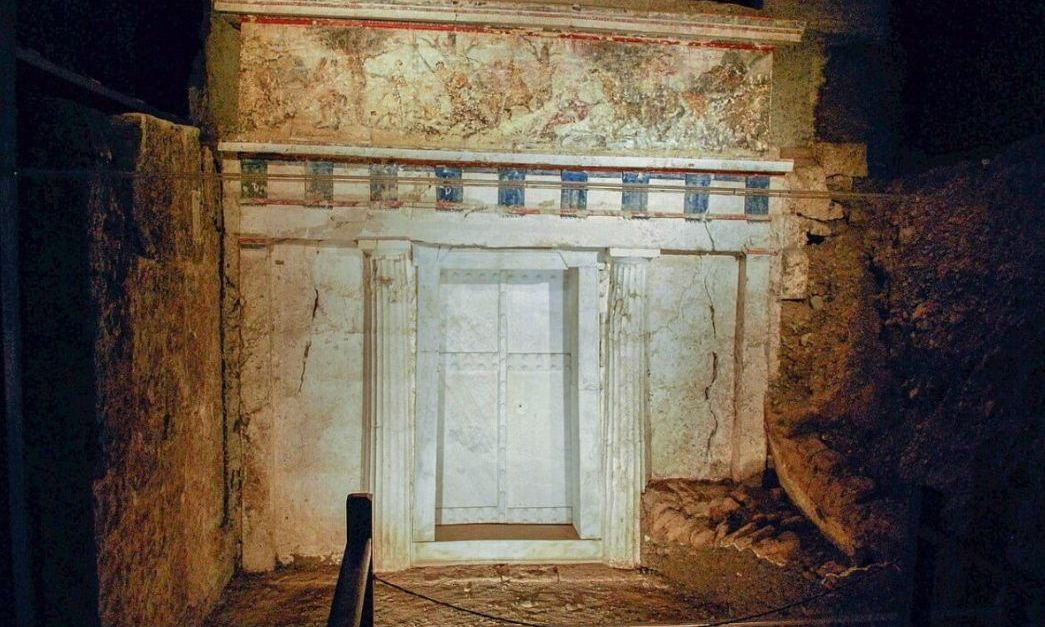
The discovery could change historical understanding of the artifacts associated with the King of the ancient Greek kingdom of Macedonia. A team of archaeologists, led by Antonios Bartziokas, emeritus professor at the Democritus University of Thrace (whose research on the royal tombs of Vergina was published in the Journal of Archaeological Science), has reportedly identified a purple cotton fabric known as a sarapis. This garment, worn by Persian kings, was adopted by Alexander the Great after his victory over Darius III of Persia.

The material was discovered in the golden ossuary in Tomb II, along with the remains of a man and the gold wreath of Vergina, adorned with myrtle leaves and flowers from the Hellenistic period (300–30 BCE), which is believed to have belonged to Meda of Odessa, the princess and fifth wife of Philip II of Macedonia.
After extensive chemical, physiological, and microscopic analyses, the researchers concluded that the fabric is made of cotton, a rare material for the time, dyed with royal purple.

The Tunic's Origins

Among the fabric’s layers, the mineral huntite was found, a shiny, white mineral used in ancient Persia. This further supports the belief that the garment originated from the East.

This discovery has far-reaching implications, as it suggests that many of the objects found in Tomb II may indeed belong to Alexander the Great, not King Philip of Macedonia, as previously believed.

Research suggests that Tomb II, located in the Royal Tombs of Vergina, may not belong to Philip II, but to his half-brother, Philip III Arrhidaeus, who inherited many of Alexander’s symbols of power after his death.

Among the items unearthed from the tomb were a gold diadem, a scepter, and a golden myrtle wreath. All of these artifacts are referenced in historical sources as royal insignia of Alexander the Great. However, the discovery of the sarapis is of exceptional importance, as it is a garment of great symbolic weight in Persian courts.

The sarapis was a purple tunic with a white stripe on the hem, worn exclusively by Persian kings. The fact that Alexander the Great adopted this symbol of Persian authority marked his dominance over the vast Persian Empire.

Extensive studies were conducted on the fabric found. The team applied advanced techniques, such as Fourier-transform infrared spectroscopy (FTIR) and gas chromatography–mass spectrometry, to identify the fabric's components.

The lab results confirmed the presence of cotton, royal purple dye, and huntite, a rare material in Greece, safely indicating Persian influence.

The application of huntite, valued for its ability to create a brilliant white color, strengthens the theory that the sarapis found in Tomb II was the one Alexander the Great wore during official ceremonies.

The production of this type of fabric was extremely expensive, as the purple dye came from the murex (a type of sea snail). Dyeing even a small piece of fabric required vast quantities of these gastropods.

A Long-Standing Debate

The identity of the individuals buried in the Royal Tombs of Vergina has been a timeless point of contention for archaeologists. Tomb II has traditionally been attributed to Philip II. However, this recent discovery provides more evidence that suggests the tomb may have belonged to Philip III Arrhidaeus.

Philip III Arrhidaeus was Alexander’s half-brother and is thought to have inherited the throne—at least nominally—after Alexander's death, although he held little actual power.

The discovery of Alexander's sarapis in Tomb II of Vergina is further supported by the depictions on the frieze of the tomb.

Additional Evidence from Depictions and Historical Sources

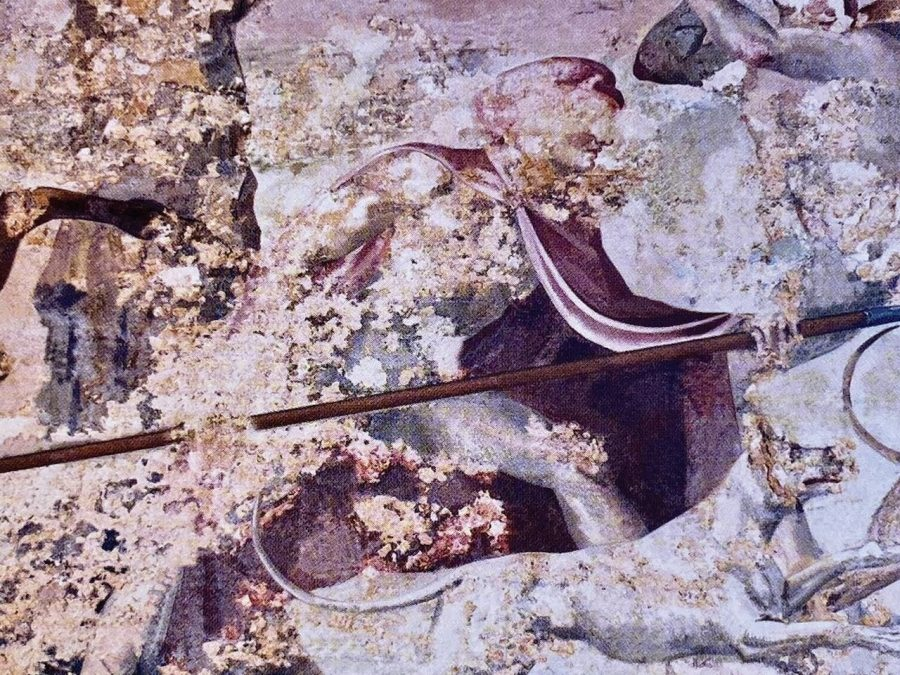
In one of the hunting scenes depicted, one of the hunters, believed to be Alexander the Great, wears a purple tunic with white stripes, similar to the description of the sarapis found in historical sources.

This visual representation strengthens the connection between the objects discovered and Alexander the Great.

The discovery of Alexander the Great's sacred tunic is not merely another piece in the archaeological puzzle of Vergina. It provides new insights into Persian influence on the Kingdom of Macedon and sheds light on Alexander’s roles as Pharaoh of Egypt, King of Greece, and Emperor of Persia.

The identification of the garment may serve as a springboard for further studies on the role of royal attire in both Hellenistic and Persian culture, as well as in the burial customs of the time.

Turkish museum takes in 1894 grave of Russian soldier

The grave of a 19th century Russian soldier, Lt. Col. Karl Karlovich, was transferred to a Turkish museum in the northeastern city of Ardahan.

The grave of a 19th century Russian soldier was found in Turkey’s northeastern city of Ardahan, which fell to Russian troops in May 1877, in a coffin decorated with the Russian Orthodox cross and transferred to a local museum.

The grave of a 19th-century Russian soldier of Polish descent has been moved to a museum over a year after it was found in northeastern Turkey, an official said on Thursday.

Efsal Alantar, Ardahan provincial director of culture and tourism, told Anadolu Agency that a team of experts had carried out the transfer process.

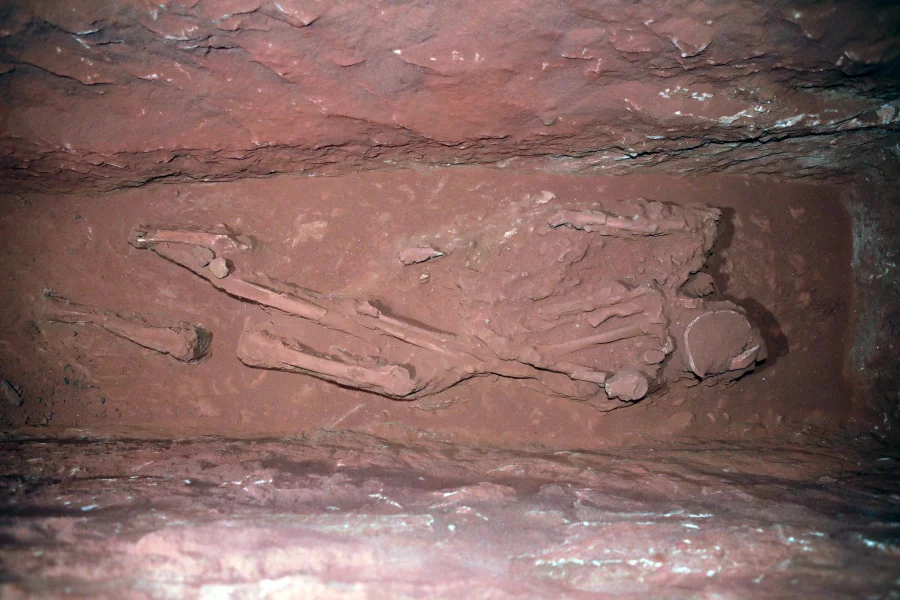
In April 2017, a skeleton belonging to 19th century Lt. Col. Karl Karlovich was found by locals doing construction work in Turkey’s northeastern province of Ardahan.

The body, which was in a coffin decorated with the Russian Orthodox cross, was found in the Karagol neighbourhood of Ardahan – which fell to Russian troops in May 1877 – and then taken to the local museum.

Alantar said that moving the grave was the decision of the Kars Regional Council for Conservation of Cultural Heritage.

“The place of the grave – that is, the brick stones that make up the grave – was moved,” he added.

He said the owner of the field where the grave was found can now proceed with his work.

Karlovich died in 1894 due to illness. During the early stages of World War II in 1914, the area reverted back to Turkish rule, which was then known as the Ottoman Empire.

Eurhinosaurus: The Ancient Marine Predator of the Jurassic Seas

In the vast oceans of the Jurassic period, around 180 million years ago, a remarkable predator dominated the waters—Eurhinosaurus, a sleek marine reptile that perfectly embodied the ancient marine ecosystems. Belonging to the Ichthyosaur family, these magnificent creatures were adapted to life in the water much like today’s dolphins and whales, combining speed, agility, and sharp hunting instincts to thrive in the seas.

Discovery and Classification

The name Eurhinosaurus (meaning "well-nosed lizard") was coined from its unique snout, one of its most distinguishing features. Fossils of this prehistoric marine reptile have primarily been found in Europe, particularly in Germany and France, providing paleontologists with rich insights into its anatomy and lifestyle. Eurhinosaurus lived during the Early Jurassic, making it a contemporary of other large marine reptiles and dinosaurs that roamed the land.

A Unique Hunter

What sets Eurhinosaurus apart from other ichthyosaurs is its elongated upper jaw, which was significantly longer than the lower one, giving it a swordfish-like appearance. This adaptation likely played a crucial role in its hunting technique. It is believed that Eurhinosaurus used its long snout to slash through schools of fish or to stir up prey from the seabed, making it easier to catch fast-moving fish, squid, and other marine animals that populated Jurassic seas.

With its streamlined body, Eurhinosaurus was built for speed. It had a dolphin-like tail and large, paddle-like fins, which allowed it to glide effortlessly through the water. This physical build, combined with its sharp teeth, made it a formidable predator, capable of pursuing and capturing prey with precision.

The Eyes of the Sea

Another notable feature of Eurhinosaurus was its large eyes, which suggest that it had excellent vision, possibly even allowing it to hunt in deeper, darker waters. The large eyes would have helped it detect movement in low-light conditions, giving it an edge over its prey. Much like modern marine predators, it was likely a highly efficient hunter, perfectly adapted to its marine environment.

The World Eurhinosaurus Lived In

Eurhinosaurus thrived in the warm, shallow seas that covered much of Europe during the Jurassic period. These oceans were teeming with life, from fish and squid to other marine reptiles like plesiosaurs and early sharks. Eurhinosaurus had to compete with other marine predators, making speed and agility essential for survival.

Extinction and Legacy

Despite its successful adaptations, Eurhinosaurus, like many marine reptiles, eventually went extinct. While the exact reasons for their extinction remain uncertain, changes in climate, ocean chemistry, and the rise of new predators could have contributed to their decline. However, its well-preserved fossils give us a glimpse into the diverse and dynamic marine ecosystems of the Jurassic period.


Eurhinosaurus stands as a fascinating example of evolutionary specialization, with its swordfish-like snout and dolphin-like body making it a formidable predator in Jurassic seas. The fossils of Eurhinosaurus continue to captivate paleontologists and enthusiasts alike, offering a window into a time when reptiles ruled not only the land but the seas as well. This ancient marine reptile’s story reminds us of the incredible diversity of life that has existed on Earth and how species can evolve in extraordinary ways to dominate their environments.