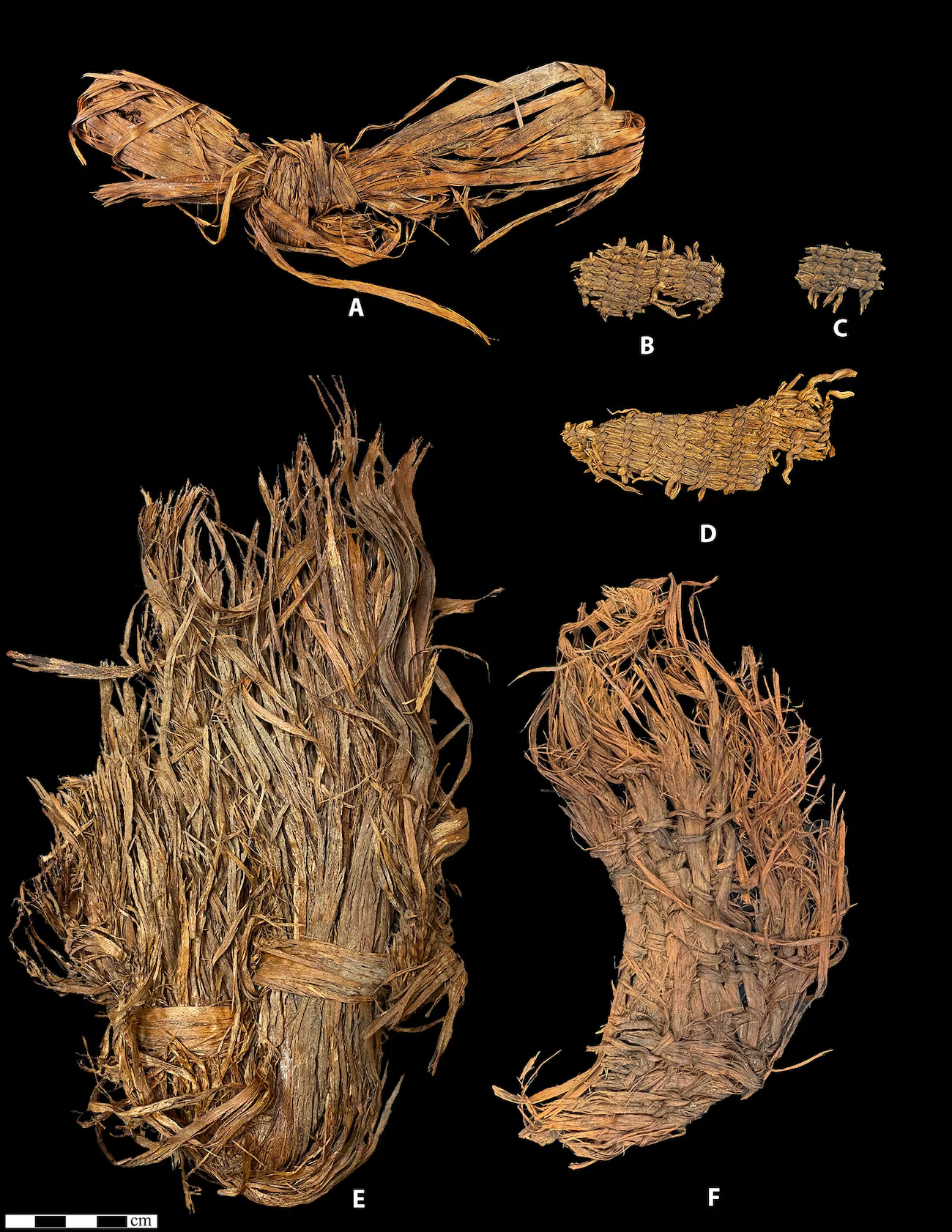
An archaeologist says a woven artifact uncovered in an Oregon cave and dated to roughly 12,000 years ago could represent one of the world’s earliest known examples of clothing or footwear.
During an interview with FOX 12 Now, archaeologist Richard Rosencrance explained that radiocarbon testing places the item in the late Pleistocene period. The object was crafted using a technique called twining, a weaving method also found in ancient baskets and mats from the region.
Although researchers cannot definitively confirm that the piece was worn as clothing, Rosencrance noted it may have formed part of a garment or footwear, such as a moccasin. The artifact was discovered at Cougar Mountain Cave in south-central Oregon, an area that includes other significant archaeological sites like Paisley and Connley Caves.
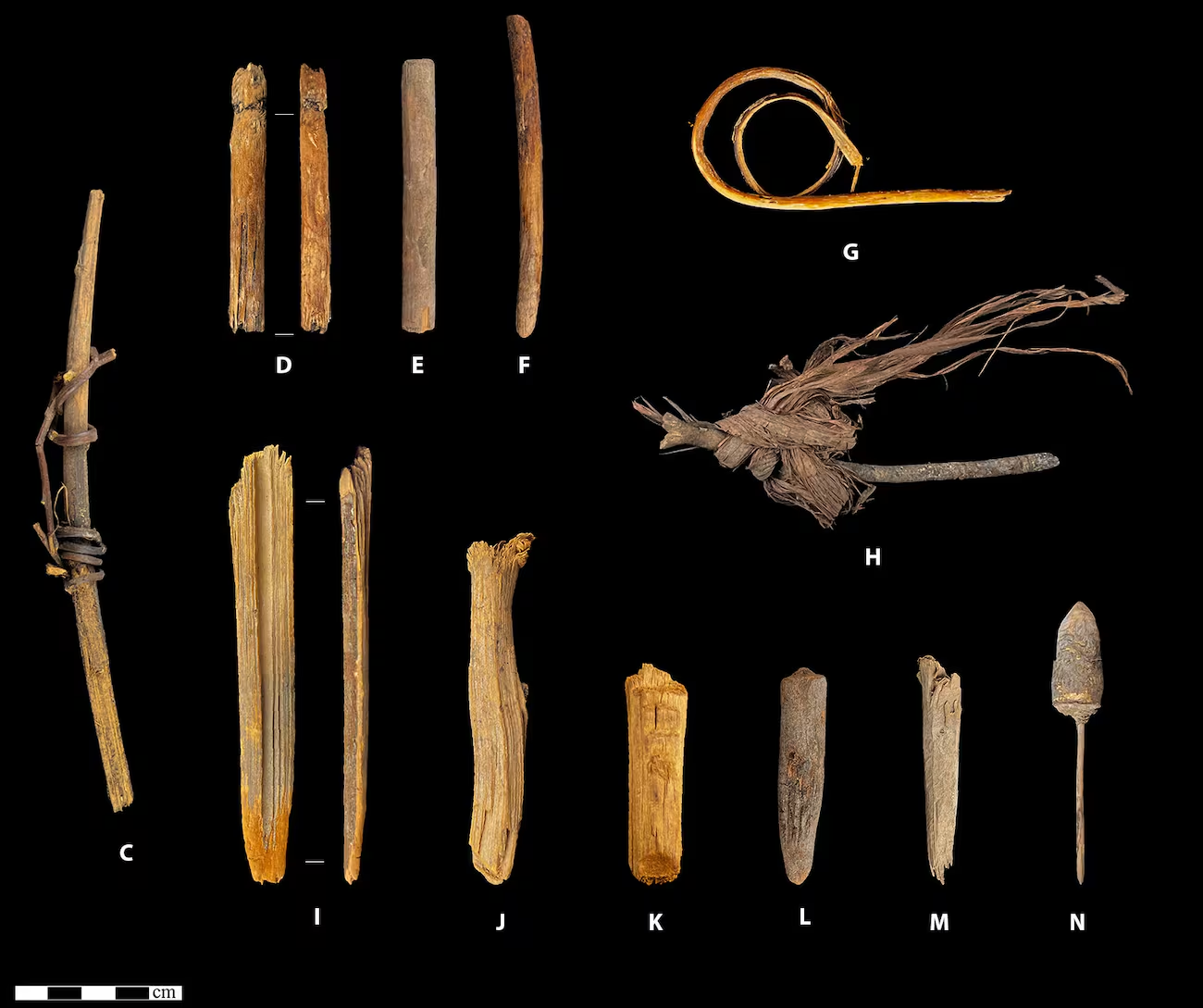
Scraps of woven materials, possibly part of clothing or footwear, found in in Oregon cave have been dated to 12,000-years-old.
“We can’t be completely certain that it’s clothing,” Rosencrance said. “However, it’s most likely either a garment or some type of footwear.”
He explained that the cave’s dry environment played a crucial role in preserving the fragile plant fibers. These conditions allowed researchers to directly radiocarbon-date the material—an uncommon opportunity when studying ancient textiles, which rarely survive intact.
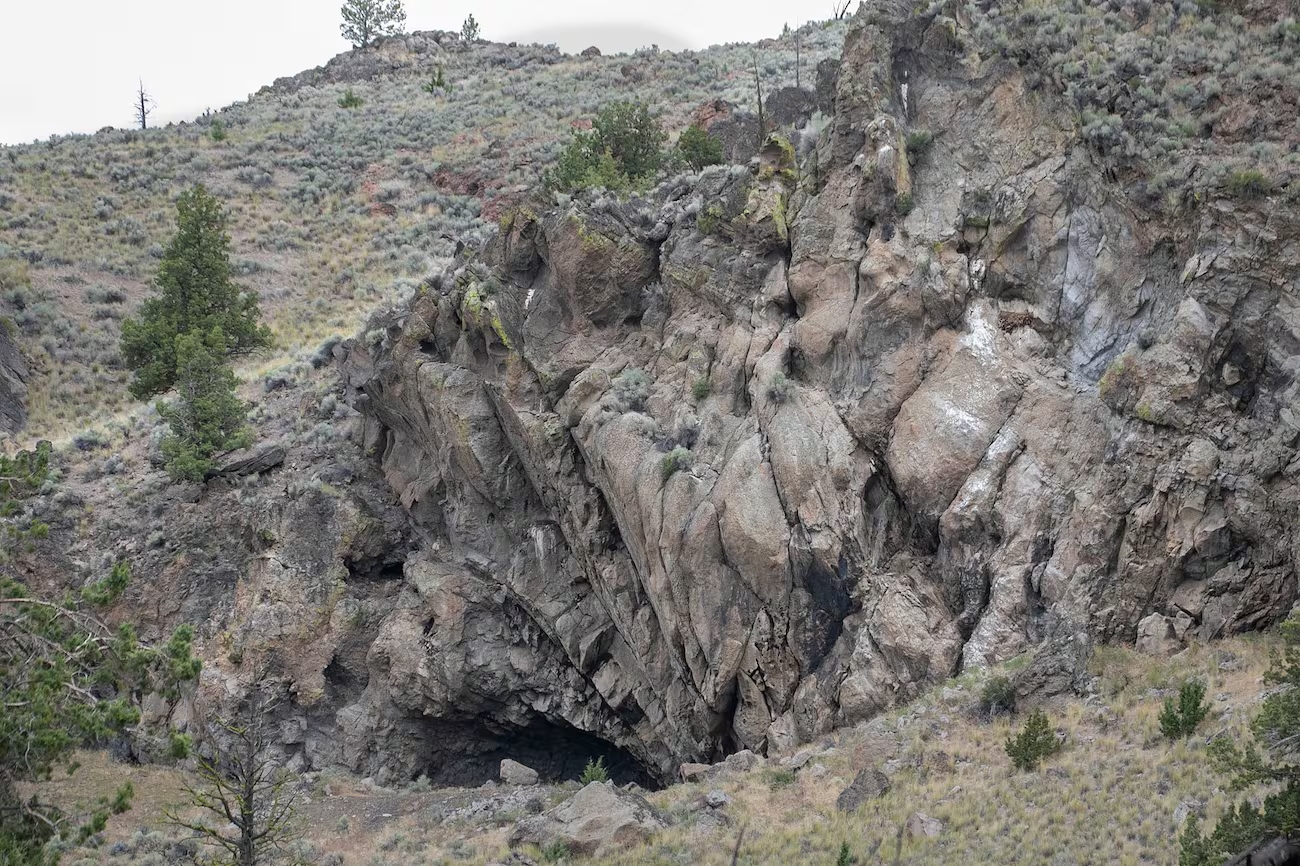
Cougar Mountain Cave in couth-central Oregon where scraps of woven material dating to 12,000 years ago was found.
Rosencrance explained that although the cave was first excavated by an amateur in the 1950s, many of the recovered materials were not accessible for detailed scientific study until recently.
He noted that the artifact may be the earliest surviving physical evidence of clothing yet found in North America.
According to Rosencrance, the find further supports evidence that ancient communities in the Great Basin possessed sophisticated weaving techniques and were well equipped to endure severe winter climates thousands of years ago.