Researchers have employed AI to decipher the rules of a board game etched into a stone discovered in Heerlen, the Netherlands, revealing that this type of game was played several centuries earlier than previously believed.
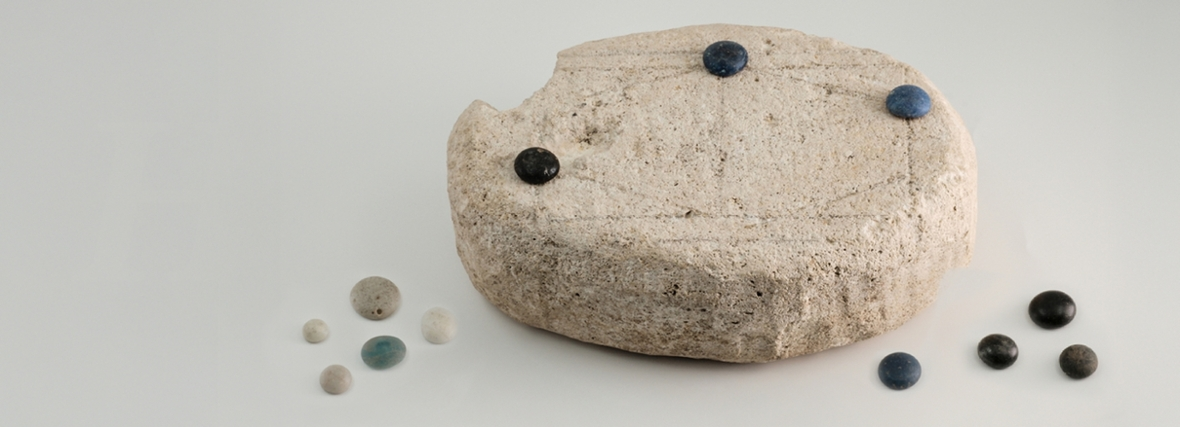
Archaeologist Walter Crist first came across the limestone slab in 2020 while studying the collection of the Thermenmuseum, now called the Roman Museum. Measuring 21 by 14.5 centimetres, the stone was originally uncovered in Heerlen in the late 19th or early 20th century. Heerlen was formerly the Roman settlement of Coriovallum. Specializing in ancient games, Crist was immediately intrigued. “The stone’s appearance, together with the wear patterns, strongly suggested a game, but I didn’t recognize the pattern from other ancient games I know,” he said. The slab features a rectangle with four diagonal lines and one straight line.
To investigate further, Crist examined the stone under a microscope and observed wear precisely along the lines where playing pieces would have been moved. He collaborated with researchers from Heerlen and Maastricht, and the Restaura restoration studio in Heerlen created high-resolution 3D scans. “The scans make the traces on the stone much clearer,” Crist explains. “Some marks are just a fraction of a millimeter deeper, indicating heavier use. The neatly finished edges suggest this was a completed product, not a work in progress.” The slab is estimated to date back 1,500 to 1,700 years.
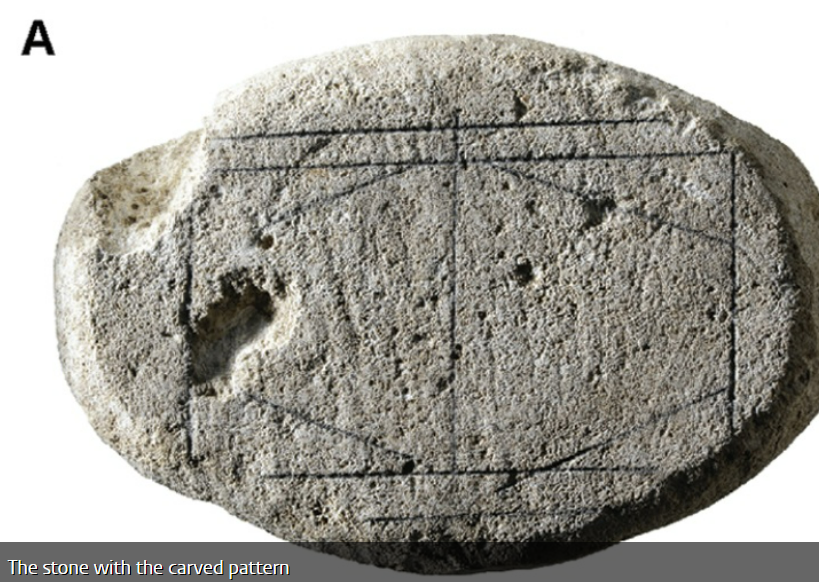
An international team of researchers from the Netherlands, Belgium, and Australia used AI to reconstruct the rules of the game and published their results in Antiquity. Employing Ludii, an AI-based game system developed at Maastricht University, the team had two AI agents simulate matches on the stone board, guided by known rules of ancient European games. Their analysis suggests that the wear patterns on the stone correspond to so-called blocking games, in which players aim to obstruct their opponent’s movements.
Blocking games were previously only documented from the Middle Ages, making this Roman-era example particularly remarkable. “The study shows that the stone was used as a board game in Roman times and played several centuries earlier than previously thought,” Crist notes.
New research methods
The study also introduces innovative ways to investigate ancient games. “This is the first time AI-driven simulated play has been combined with archaeological methods to identify a board game,” says Crist. “It gives archaeologists powerful new tools to uncover how games were played in ancient cultures.”