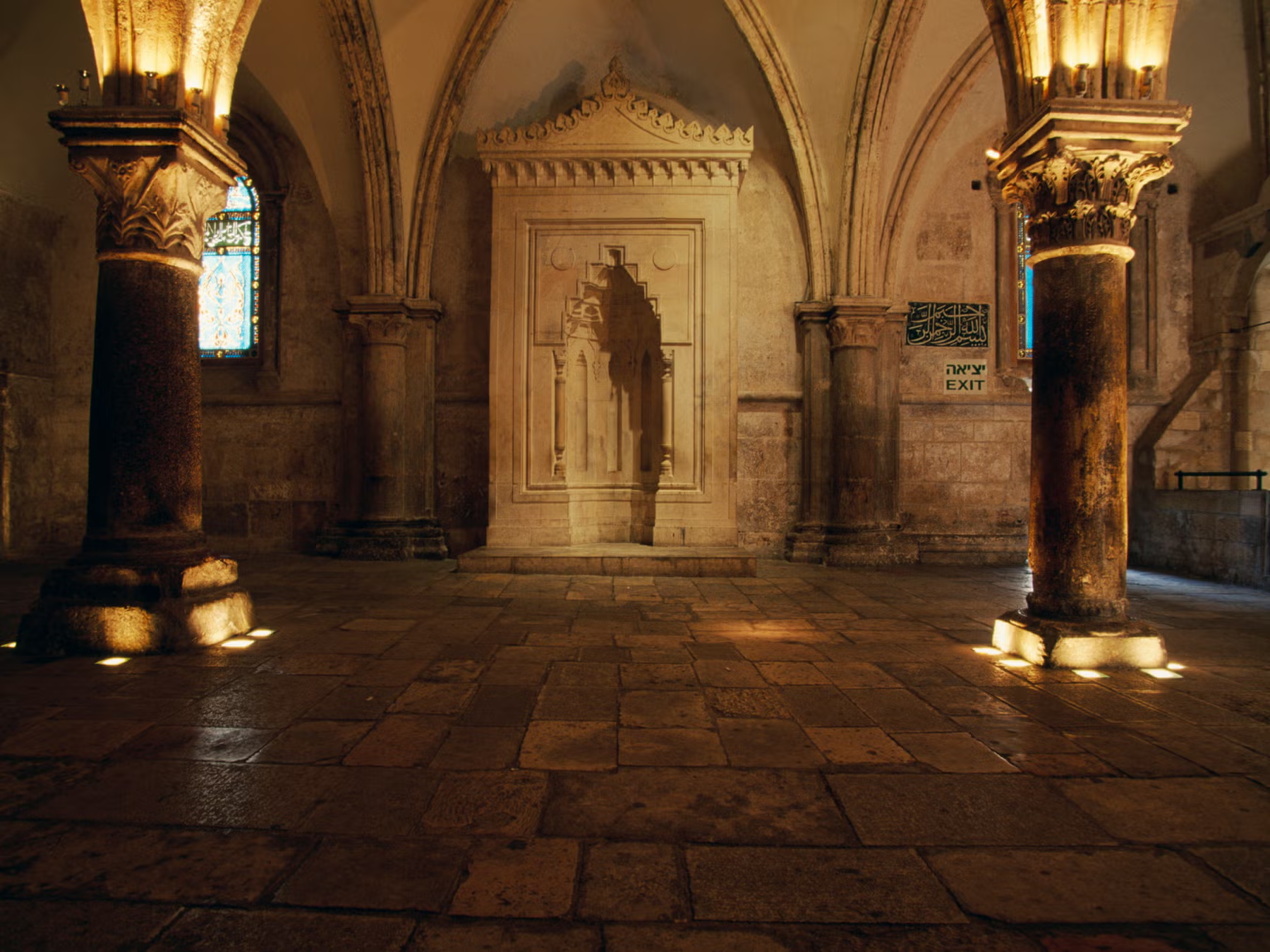
Archaeologists have discovered hidden inscriptions and graffiti left by medieval pilgrims on the walls of the Cenacle, traditionally considered the site of Jesus’s Last Supper in Jerusalem. These markings, carved centuries ago, offer unique insights into the spiritual practices and journeys of Christian pilgrims visiting this sacred location. Using advanced imaging techniques, researchers were able to reveal the texts, highlighting the Cenacle’s historical and religious significance.
The Last Supper holds a central place in Christian tradition. Recorded in all three Synoptic Gospels—Mark, Luke, and Matthew—as well as in John, this meal is where Jesus is said to have foretold Judas Iscariot’s betrayal and instituted the Eucharist, symbolically offering bread and wine as his body and blood (1 Corinthians 11:23-25).
While the Gospels do not specify an exact location, describing only a “large upper room furnished and ready” (Mark 14:13-15), later tradition identifies the event as taking place on Mount Zion, just outside Jerusalem’s Old City.