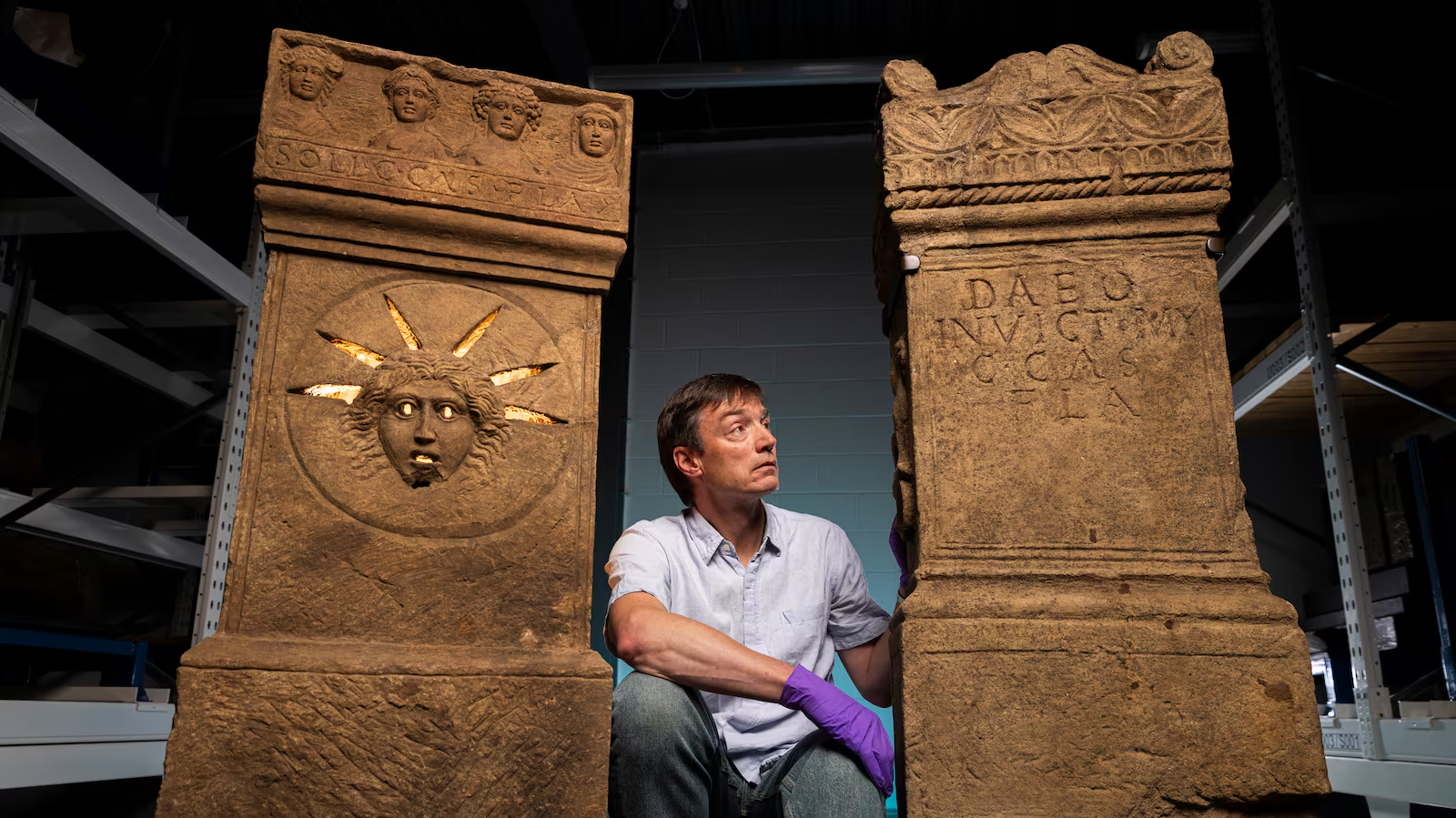
Two “remarkable” stone altars recently discovered at a Roman fort near Edinburgh—and now part of the national collection—are set to be displayed for the first time in a new exhibition.
The altars were originally the focal point of what is believed to be the northernmost temple dedicated to the god Mithras in the Roman Empire, vividly illustrating the spiritual life on the Roman frontier. Experts describe the Mithras cult as a secretive, male-only religion that celebrated the victory of good over evil and light over darkness.
Excavated at Inveresk in East Lothian, the altars date to around 140 AD, during the reoccupation of southern Scotland under Emperor Antoninus Pius. Curators note that they provide fresh insight into the religious practices and daily lives of soldiers stationed on the empire’s northern edge.
Acquired by National Museums Scotland in 2016, the altars have undergone extensive conservation and will be displayed for the first time this November in the exhibition Roman Scotland: Life On The Edge Of Empire. Dr Fraser Hunter, principal curator of prehistory and Roman archaeology at NMS, commented: “These stunning altars really bring the beliefs of the Roman frontier to life.”
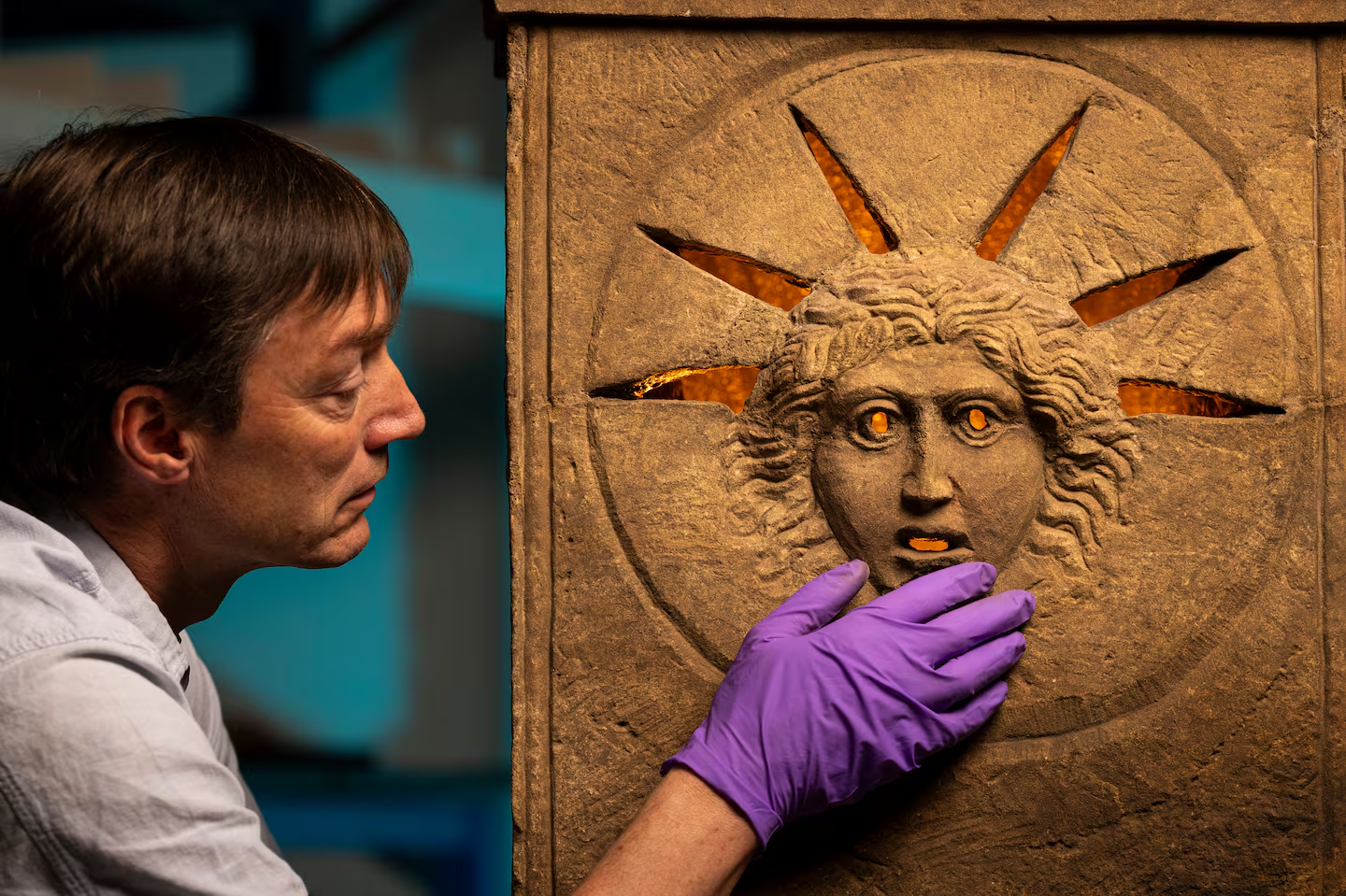
One of the altars depicts the sun god Sol
“The fine craftsmanship, remnants of paint, and use of dramatic lighting suggest these were impressive and costly monuments.
“The Mithras cult symbolized the triumph of good over evil, giving soldiers a sense of purpose in life and belief in an afterlife. I’m confident visitors will be captivated when they see the altars up close in our new exhibition, Roman Scotland: Life On The Edge Of Empire.”
One altar portrays the sun god Sol, with carvings representing the four seasons as female deities. Curators note it would have been backlit, so in the dim temple light, Sol’s eyes, mouth, and rays would have glowed.
The other altar honors Mithras and features motifs associated with Apollo, another deity of light, including a lyre, griffin, plectrum, and two ravens—symbols commonly seen in Mithraic art.
Both altars were dedicated by a legionary centurion, likely Gaius Cassius Flavianus, whose name appears abbreviated as G CAS FLA. He is thought to have commanded the fort garrison at the time.
Excavated in 2010, the altars had broken into fragments during their centuries underground. Conservation work has since reconstructed them for display, revealing traces of paint that indicate they were originally brightly colored.