• MAIN PAGE
  • LATEST NEWS
    • Lost Cities
    • Archaeology's Greatest Finds
    • Underwater Discoveries
    • Greatest Inventions
    • Studies
    • Blog
  • PHILOSOPHY
  • HISTORY
  • RELIGIONS
    • Africa
    • Anatolia
    • Arabian Peninsula
    • Balkan Region
    • China - East Asia
    • Europe
    • Eurasian Steppe
    • Levant
    • Mesopotamia
    • Oceania - SE Asia
    • Pre-Columbian Civilizations of America
    • Iranian Plateau - Central Asia
    • Indus Valley - South Asia
    • Japan
    • The Archaeologist Editor Group
    • Scientific Studies
    • Aegean Prehistory
    • Historical Period
    • Byzantine Middle Ages
    • Predynastic Period
    • Dynastic Period
    • Greco-Roman Egypt
  • Rome
  • PALEONTOLOGY
  • About us
Menu

The Archaeologist

  • MAIN PAGE
  • LATEST NEWS
  • DISCOVERIES
    • Lost Cities
    • Archaeology's Greatest Finds
    • Underwater Discoveries
    • Greatest Inventions
    • Studies
    • Blog
  • PHILOSOPHY
  • HISTORY
  • RELIGIONS
  • World Civilizations
    • Africa
    • Anatolia
    • Arabian Peninsula
    • Balkan Region
    • China - East Asia
    • Europe
    • Eurasian Steppe
    • Levant
    • Mesopotamia
    • Oceania - SE Asia
    • Pre-Columbian Civilizations of America
    • Iranian Plateau - Central Asia
    • Indus Valley - South Asia
    • Japan
    • The Archaeologist Editor Group
    • Scientific Studies
  • GREECE
    • Aegean Prehistory
    • Historical Period
    • Byzantine Middle Ages
  • Egypt
    • Predynastic Period
    • Dynastic Period
    • Greco-Roman Egypt
  • Rome
  • PALEONTOLOGY
  • About us

5,000-Year-Old Sinai Inscription Identified as Earliest Known Visual Display of Political Domination

February 1, 2026

5,000-Year-Old Egyptian Rock Inscription Reveals Early Colonial Power in Sinai

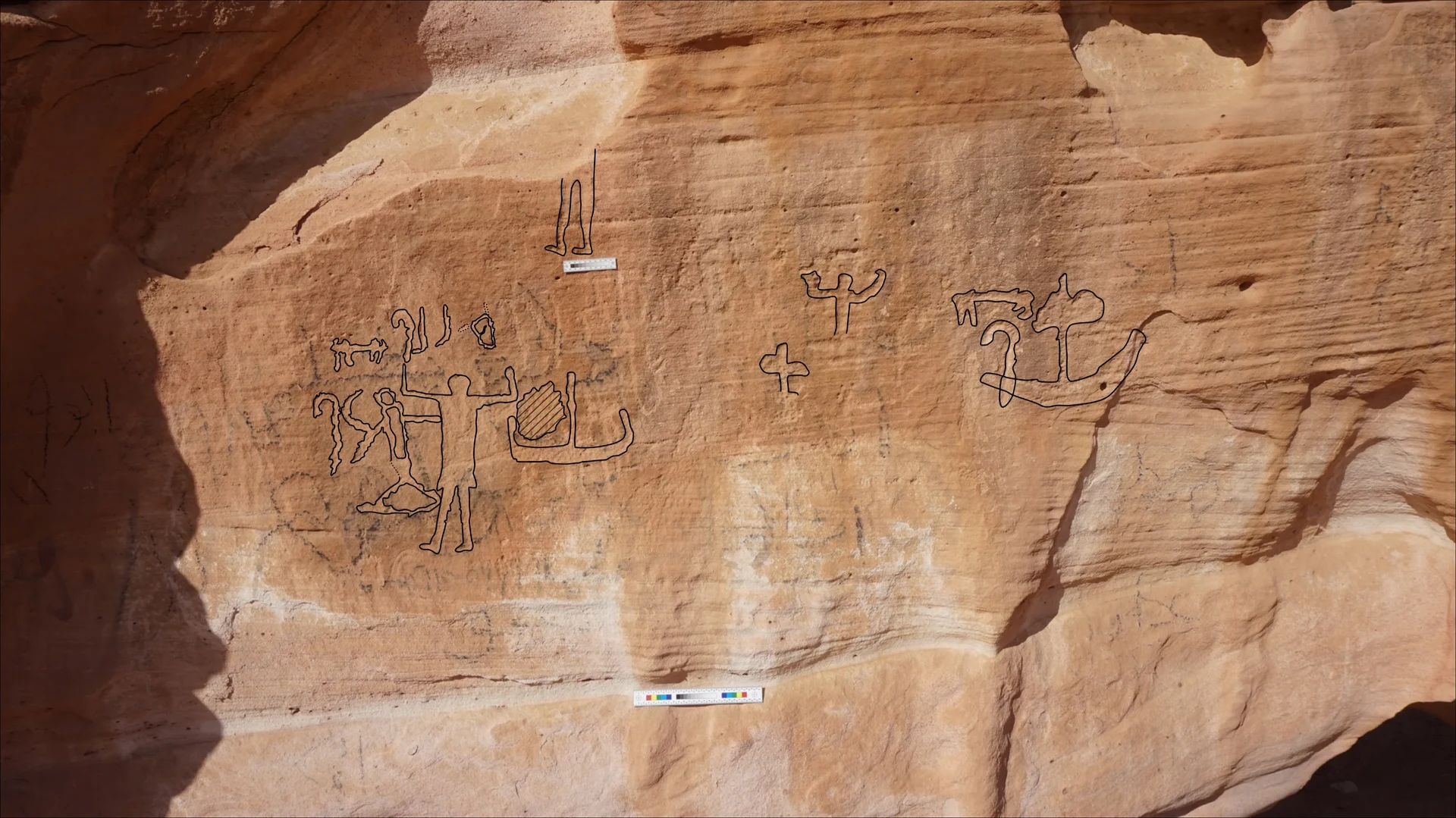
A rock inscription dating back nearly 5,000 years in Egypt’s southwestern Sinai Peninsula has provided rare insight into the earliest expressions of Egyptian colonial authority, according to Professor Ludwig Morenz of the University of Bonn. The carving, discovered in Wadi Khamila by Mustafa Nour El-Din of Egypt’s Ministry of Antiquities, depicts a towering figure—interpreted as an Egyptian ruler or the god Min—standing over a kneeling local pierced by an arrow, a clear statement of Egyptian dominance.

One of the Earliest “Smiting Scenes”
Professor Morenz notes that the inscription represents one of the oldest known “smiting scenes,” a visual motif later central to Egyptian royal ideology. The imagery conveys absolute power, designed to intimidate populations in regions that lacked formal political organization or writing at the time.

Economic Motives Behind Expansion
The Sinai Peninsula was rich in resources such as copper and turquoise, attracting Egyptian expeditions for economic gain. Wadi Khamila had previously been known only for Nabataean inscriptions, making this early Egyptian carving a surprising expansion of the known reach of Egypt’s initial colonial activities.

Dating the Inscription
Researchers dated the rock carving using iconographic, stylistic, and epigraphic analysis. The posture of the figures and symbolic elements align with Egyptian artistic conventions from the late fourth millennium BCE, a period when organized Egyptian expeditions were active in the southwest Sinai. Similar early rock art in Wadi Ameyra and Wadi Maghara supports the interpretation of a wider system of territorial marking by early Egyptians.

This discovery highlights how economic ambition, religious authority, and displays of violence intersected in Egypt’s earliest colonial endeavors, offering a unique glimpse into the mechanisms of power at the dawn of civilization.


← Science news this week: 'Cloud People' tomb found in Mexico, pancreatic cancer breakthrough, and the AI swarms poised to take over social mediaAl-Arada: Protecting antiquities national responsibility →
Featured
image_2026-02-01_115311737.png
Feb 1, 2026
Science news this week: 'Cloud People' tomb found in Mexico, pancreatic cancer breakthrough, and the AI swarms poised to take over social media
Feb 1, 2026
Read More →
Feb 1, 2026
image_2026-02-01_115200771.png
Feb 1, 2026
5,000-Year-Old Sinai Inscription Identified as Earliest Known Visual Display of Political Domination
Feb 1, 2026
Read More →
Feb 1, 2026
image_2026-02-01_112343399.png
Feb 1, 2026
Al-Arada: Protecting antiquities national responsibility
Feb 1, 2026
Read More →
Feb 1, 2026
image_2026-02-01_111347876.png
Feb 1, 2026
Saint Mary's College of California Student Christopher Baker Conducts Global Archaeological Research On Bronze Age Shipwreck
Feb 1, 2026
Read More →
Feb 1, 2026
image_2026-02-01_110858691.png
Feb 1, 2026
Xinhua Headlines: How archaeology reveals roots of China's uninterrupted civilization
Feb 1, 2026
Read More →
Feb 1, 2026
image_2026-02-01_103524729.png
Feb 1, 2026
Archaeologists Unearth unprecedented 16th-Century River Pier on the Banks of Russia’s Volkhov River
Feb 1, 2026
Read More →
Feb 1, 2026
read more

Powered by The archaeologist