Curiosity Beyond the Horizon
Long before modern navigation tools existed, ancient explorers set out to discover new lands.
Driven by curiosity, trade, and survival, these early navigators gradually expanded humanity’s knowledge of the world.
Early Navigation Techniques
Ancient sailors relied on careful observation to guide their journeys.
They studied the stars, wind patterns, ocean currents, and the behavior of birds to determine direction and distance.
These techniques allowed them to travel surprisingly far across oceans and rivers.
Mapping the Landscape
As explorers returned from distant journeys, they shared knowledge of new territories.
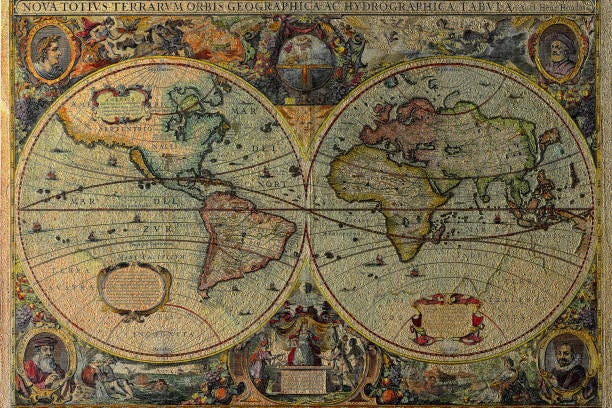
Early maps—sometimes carved into stone or recorded on clay tablets—began to depict coastlines, rivers, and trade routes.
Though simple by modern standards, these maps represented significant achievements in geographic understanding.
Evidence of Long-Distance Travel
Archaeological discoveries show that certain goods traveled vast distances long before written history.
Rare stones, shells, and metals have been found far from their natural sources, suggesting that ancient explorers connected distant regions through trade and exploration.
Expanding the Human World
Each journey expanded the known world.
Explorers carried not only goods but also ideas, technologies, and cultural traditions that spread between communities.
Their travels helped shape the early networks that connected ancient societies.
The Spirit of Discovery
The courage and curiosity of these early explorers laid the foundation for humanity’s long tradition of exploration.
Their journeys remind us that the desire to understand the unknown has always been part of the human story.