Fire Beyond Survival
Fire was one of humanity’s most transformative discoveries. It provided warmth, protection, and the ability to cook food.
But for early humans, fire quickly became more than a practical tool—it became a powerful symbol with spiritual meaning.
Fire in Early Rituals
Archaeological evidence suggests that ancient communities gathered around controlled fires for ceremonial activities.
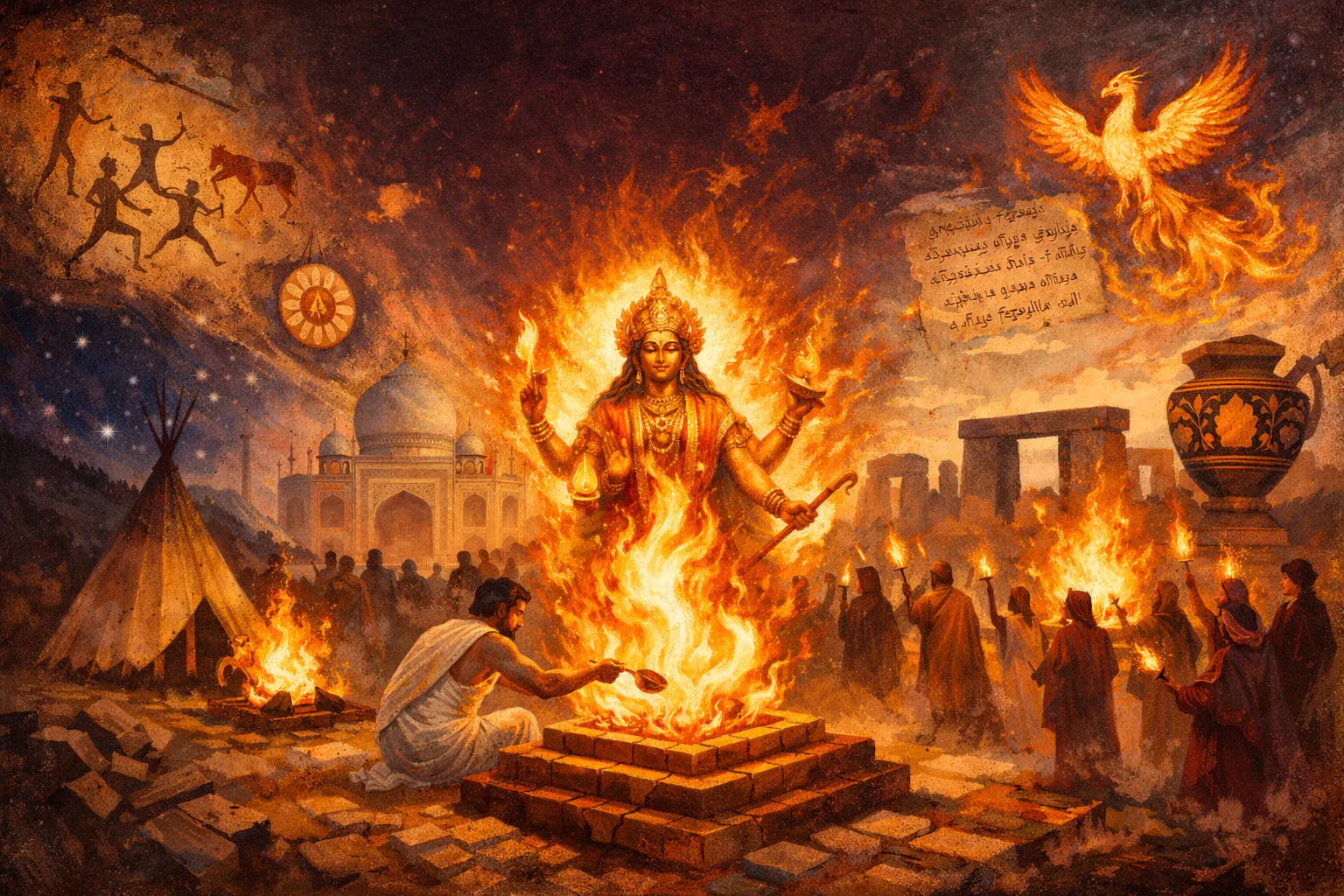
Fire may have been used in rituals marking seasonal changes, communal gatherings, or spiritual practices.
Its bright light and warmth likely created powerful shared experiences for early groups.
A Symbol of Transformation
Fire changes everything it touches. It turns raw food into cooked meals and transforms wood into ash.
Because of this transformative power, many ancient cultures saw fire as a symbol of renewal, purification, and divine energy.
Sacred Flames
Some societies maintained ritual fires that were never allowed to go out.
These flames symbolized continuity and connection between generations, serving as spiritual centers within communities.
Keeping the fire alive became both a practical and sacred responsibility.
Archaeological Evidence
Traces of ancient hearths and carefully arranged fire pits suggest that early humans used fire in structured and meaningful ways.
These discoveries provide clues about how fire influenced social and spiritual life.
The Eternal Flame of Human Culture
Fire helped shape human civilization, not only through technology but also through ritual and symbolism.
The earliest sacred flames remind us that even the most practical discoveries can inspire profound spiritual meaning.