Bronze Age Gold Torc Saved for Public Display
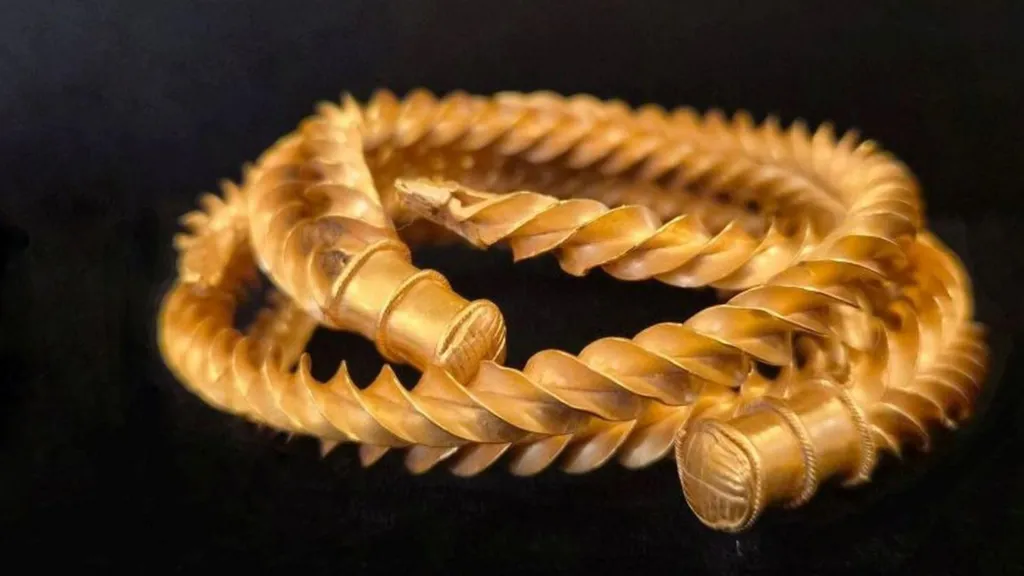
A rare 3,000-year-old gold torc discovered in Market Harborough is set to remain in the county after a successful fundraising campaign reached its target ahead of schedule.
A Remarkable Discovery
The torc—an ancient piece of jewelry typically worn around the neck or waist—was found in 2024 by metal detectorist Robert Ward. Experts believe it may have originally been worn around the waist before being modified into a neck ornament, making it even more intriguing.
Declared treasure and valued at £150,000, the piece is considered both rare and historically significant, with only a few comparable examples found across the UK.
Community Effort Secures Its Future
A public appeal launched by the Leicestershire Archaeological and Historical Society aimed to raise £10,000—and successfully surpassed it, reaching £10,050 with a week to spare.
This funding contributes toward the total needed to secure the torc for public ownership. Additional support came from major heritage organizations, including:
Art Fund
Arts Council England
The V&A Purchase Grant Fund
Without this effort, the torc could have been sold to a private collector or acquired by the British Museum.
Preserving Local Heritage
The goal is to keep the artifact in Leicestershire, with plans to display it at Harborough Museum.
Senior curator Alison Clague expressed gratitude for the public’s support, noting that museum teams are now working on how best to present the torc—highlighting its craftsmanship, historical context, and cultural importance.
A Unique Piece of History
According to Professor Elizabeth Tingle, the torc is a “unique and significant” find, never before seen in Leicestershire. Researchers from the University of Leicester also plan to study it further as part of ongoing Bronze Age research.
Why It Matters
This discovery is more than just a valuable artifact—it represents a direct connection to Bronze Age Britain, offering insight into:
Ancient craftsmanship and metalworking
Social status and personal adornment
Regional history and identity
Thanks to a strong community effort, this extraordinary piece of the past will remain accessible to the public—preserved not in private hands, but as part of shared heritage.