The Myth of the Hahnöfersand Hybrid: New Science Clarifies an Ancient Mystery
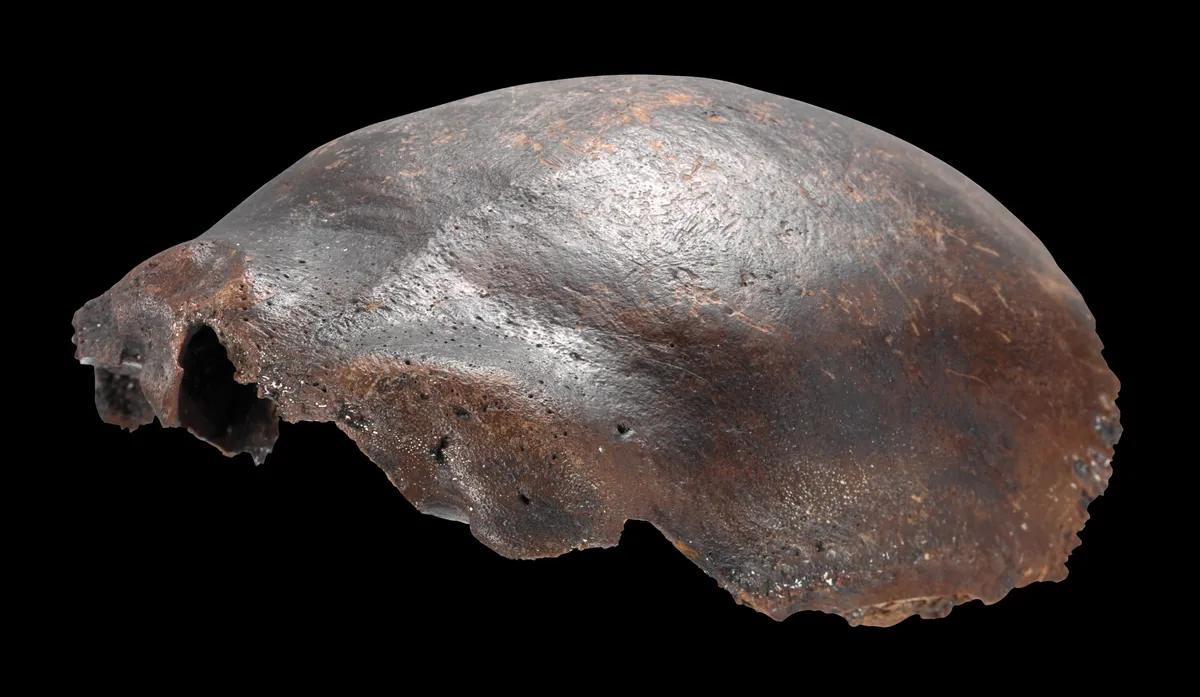
For decades, a single fragment of a human skull found in Germany sparked a heated debate among anthropologists. Was it a rare "missing link" between two human species, or simply a modern human with unique features? A comprehensive new study has finally settled the score, debunking a long-standing theory about our evolutionary history.
A Discovery Shrouded in Mystery
The story began in 1973 when archaeologists in Hahnöfersand unearthed a frontal bone (part of the forehead). Because it was found without any accompanying tools or cultural items, its origin was difficult to pin down.
Initial physical examinations noted that the bone appeared to possess a combination of Neanderthal and modern human (Homo sapiens) characteristics. When early radiocarbon dating suggested the bone was 36,000 years old, it seemed to confirm the "hybrid theory"—placing the individual exactly in the timeframe when these two species were known to have interbred.
Chronological Discrepancies
The hybrid theory first began to crumble when updated dating techniques were applied. Researchers discovered that the bone was significantly younger than previously thought, clocking in at approximately 7,500 years old.
This placed the individual in the Mesolithic period, roughly 30,000 years after Neanderthals had already vanished from the Earth. Despite this massive chronological gap, many academic papers continued to label the specimen as a hybrid, citing its "extreme" physical traits.
The Final Verdict: Firmly Human
To resolve the confusion once and for all, a research team recently utilized three-dimensional comparative analysis. They compared the Hahnöfersand bone against a vast database of Neanderthal and modern human remains from various eras.
The results, published in a new study, were conclusive:
Morphological Affinity: The bone aligns perfectly with the natural variations found in modern humans.
Debunking "Extremeness": While earlier scholars felt the bone’s proportions were too rugged for a modern human, the 3D analysis showed that even medieval human skulls frequently display similar traits.
Revised Conclusion: The study authors stated that the specimen shows no "intermediate" features between species and is consistent with other humans living during the Holocene epoch.
“Multivariate analyses show a clear and unequivocal morphological affinity between Hahnöfersand and H. sapiens,” the researchers concluded.
Where the Real Hybrids Reside
While the Hahnöfersand bone has been "demoted" to a standard modern human, the search for genuine hybrids continues elsewhere. Scientists have found more convincing evidence of interbreeding in other regions:
The Middle East: Discoveries in cave burials suggest the two species may have shared both culture and DNA as far back as 100,000 years ago.
Western Europe: Evidence suggests a hybrid population existed much later, potentially persisting until nearly 30,000 years ago.
This latest research serves as a reminder of how modern technology can correct the historical record, ensuring that "myths" like the Hahnöfersand hybrid are finally put to rest.