The Viking Age was not a "barter-only" society; it was a sophisticated, multi-faceted economy that relied heavily on the trade of precious metals. The Viking silver economy was built on a unique combination of imported foreign coinage and the physical weight of cut-up silver, a practice known as hacksilver.
I. The Islamic Connection: Dirhams
The primary source of wealth in the Viking world, particularly from the 8th to the 11th centuries, was the Islamic Dirham. Through massive trade networks stretching across the Volga and Dnieper rivers, Viking traders (often called the Rus) exchanged slaves, furs, wax, and honey with the Abbasid Caliphate and the Volga Bulgars for thousands of silver dirhams.
Standardized Currency: For the Vikings, the dirham was not used as a coin for counting; it was valued entirely for its silver content. Because Islamic dirhams were minted with a high level of purity and consistent weight, they functioned as the "gold standard" of the Viking economy.
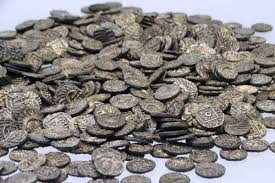
The Geographic Reach: Archaeologists have unearthed massive hoards of dirhams across Scandinavia—most notably in Gotland, Sweden. These hoards serve as a direct indicator of the volume of trade that flowed between the Baltic Sea and the heart of the Middle East.
II. The Hacksilver System
Unlike the Roman or Carolingian economies, which were driven by coins, the Viking economy was a weight-based system.
The "Hacked" Reality: If a trader needed to make a payment that didn't equal the weight of a full coin, they would physically cut, bend, or break the silver. Coins, jewelry, arm rings, and broken decorative objects were all processed into hacksilver.
The Balance and Weights: Every Viking trader carried a set of small, folding scales and a collection of standardized lead weights. Transactions were finalized by placing the hacksilver on the scales to ensure the weight matched the value of the goods being purchased.
Flexibility: This system was incredibly versatile. It allowed Vikings to incorporate a wide variety of silver sources—Roman coins, Byzantine jewelry, Frankish plate, and Islamic dirhams—into a single, unified currency based purely on the purity and weight of the metal.
III. Social and Economic Significance
This silver-based economy had profound social implications:
Wealth as Portable Capital: Because silver jewelry (like arm rings) could be cut into hacksilver, wealth was literally "wearable." High-status items served dual roles: they were symbols of rank and power, but they were also a reserve of liquid capital that could be broken up for trade at a moment's notice.
The End of the Silver Flow: By the late 11th century, the flow of Islamic silver began to dry up due to the exhaustion of silver mines in the East and changes in Abbasid economic policy. This decline triggered a massive shift in the Viking economy, leading to the development of indigenous minting in Scandinavia and the transition toward formal, European-style coin-based economies.
The "Hoard" Phenomenon: The vast majority of what we know about Viking silver comes from buried hoards. These were often buried during times of social unrest, war, or as votive offerings. They function as "archaeological time capsules," allowing researchers to track the influx of foreign goods and the changing purity of the silver over time.
The Viking silver economy was a masterpiece of pragmatism. It bypassed the need for a centralized "state" currency by trusting the universal value of raw silver, allowing the Vikings to engage in trade from the bustling markets of Baghdad to the trading posts of Ireland with equal ease.