Symbolism and Craftsmanship
The 8,500-year-old obsidian mirror adds a fascinating layer to our understanding of Neolithic symbolic life. Its polished surface reflects advanced techniques in stone working, while its likely ritual or personal use hints at complex social and cultural practices. Alongside the mirror, archaeologists recovered finely incised obsidian tools, showcasing both aesthetic skill and functional precision.
“These artifacts reveal that early Neolithic communities at Canhasan were not only technologically proficient but also engaged in symbolic expression,” Baysal notes. “The mirror, in particular, may have served as a medium for ritual, identity, or status within the settlement.”
A Window into Daily Life
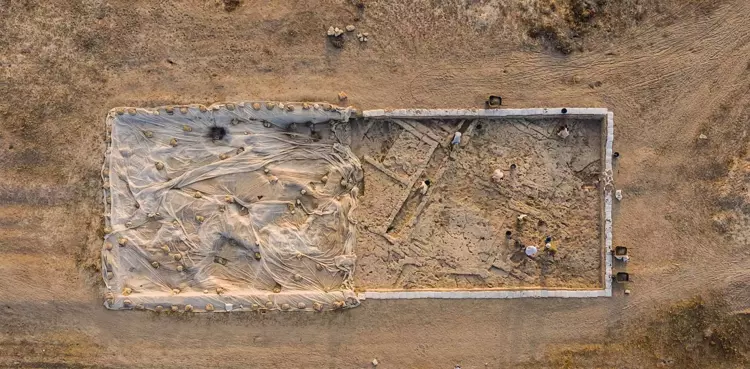
The combination of the street system and the crafted artifacts paints a detailed picture of life at Canhasan. The settlement’s organized layout implies coordinated communal activity, while the presence of high-quality obsidian items indicates specialized craftsmanship and possibly trade networks, as obsidian would have been sourced from nearby volcanic regions.
Overall, the discoveries at Canhasan provide a rare glimpse into how early Neolithic people balanced functional urban planning with cultural and symbolic expression, highlighting the sophistication of communities in central Türkiye over 8,000 years ago.
These discoveries align Canhasan with other early Neolithic centers like Aşıklı Höyük, Boncuklu Höyük, and Pınarbaşı, which collectively map out the cultural transformation that climaxed at Çatalhöyük, one of the world’s best-preserved Neolithic megasites.
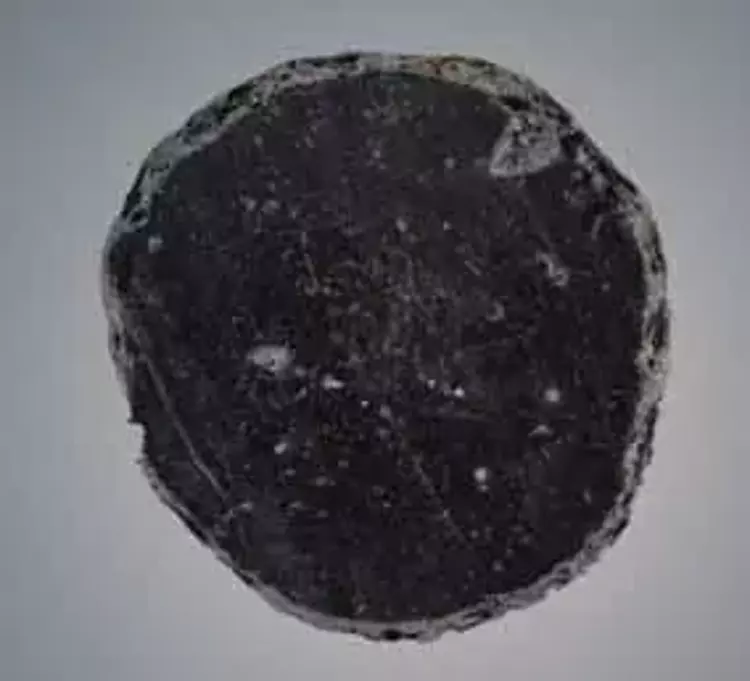
8,500-Year-Old Mirror Unearthed at Canhasan.
Trade and Connectivity
The obsidian artifacts at Canhasan also shed light on early Neolithic trade and resource networks. Obsidian, sourced from nearby volcanic regions, was highly prized for both its functional and aesthetic qualities. Its presence in Canhasan indicates not only local craftsmanship but also access to raw materials and exchange networks within the Anatolian highlands.
“These artifacts demonstrate that Canhasan was part of a broader web of Neolithic communities, exchanging materials, techniques, and cultural practices,” Baysal explains. “The combination of functional tools and symbolic objects points to a society that valued both utility and meaning.”
A Glimpse into Early Neolithic Life
Together, the street system, polished mirror, and incised arrowheads offer a comprehensive picture of daily and ritual life at Canhasan. The settlement reflects an early stage of urban planning, specialized craftsmanship, and cultural sophistication—highlighting the ingenuity and social complexity of central Türkiye’s Neolithic communities.

Obsidian, valued for its sharp edges and glasslike sheen, was widely used across the ancient Near East for toolmaking, ritual objects, and long-distance trade.
Rewriting the Story of Central Anatolia’s Neolithic Culture
For decades, Çatalhöyük has dominated academic and public attention as the heart of Central Anatolia’s Neolithic world. Its murals, figurines, and complex architecture have shaped global narratives about early farming societies.
But Baysal emphasizes that this story is incomplete. “Up until now, we have learned only the Çatalhöyük chapter of this cultural evolution,” he states.
Rethinking Neolithic Innovation
Canhasan’s discoveries reshape our understanding of early Neolithic societies in Central Anatolia. Rather than seeing technological and symbolic sophistication as emerging suddenly in large settlements, Canhasan demonstrates a gradual accumulation of skills, rituals, and planning over millennia.
The polished obsidian mirror, incised arrowheads, and 10,000-year-old street layout reveal a community that combined practical toolmaking with symbolic expression and early urban organization. This combination highlights how craft specialization, trade networks, and social complexity developed hand in hand.
By linking earlier sites such as Aşıklı Höyük and Boncuklu Höyük to later centers like Çatalhöyük, Canhasan provides a vital missing chapter in the story of how early humans transitioned from scattered agricultural villages to organized proto-urban societies, emphasizing continuity, innovation, and cultural connectivity in prehistoric Central Anatolia.
A New Chapter for Anatolia’s Deep Past
As excavations continue, researchers hope to uncover additional evidence that will illuminate the daily lives, rituals, and technological capabilities of Canhasan’s earliest inhabitants. Each new discovery adds depth to the story of how the world’s first settled societies organized themselves, shaped their tools, and expressed their identities.
For now, the obsidian mirror stands as a brilliant reminder—both literally and metaphorically—of the ingenuity and creativity of the Neolithic peoples who once lived in the high plains of Central Anatolia.