Ancient murals in Texas reveal a 4,000-year story of faith, art, and survival
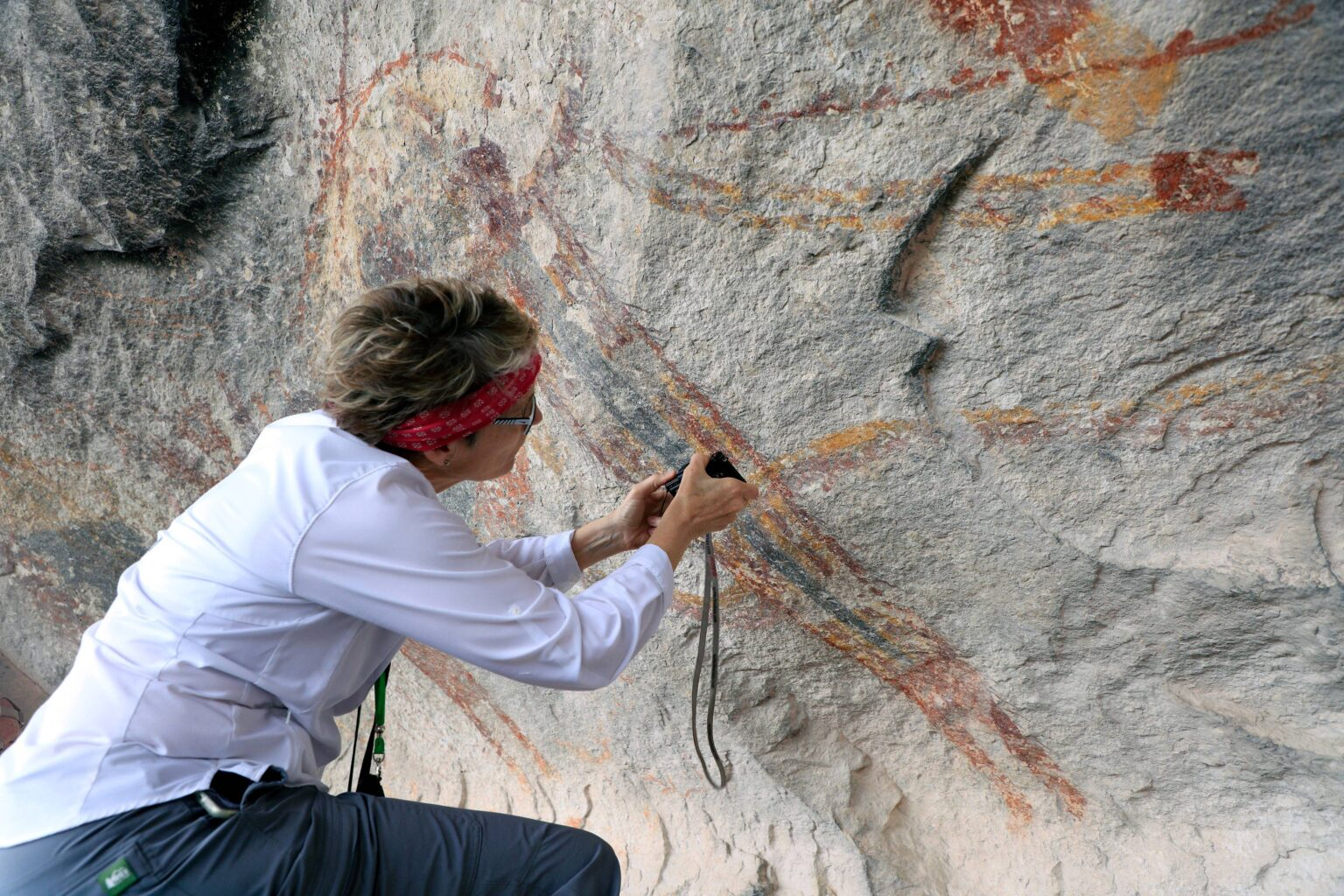
The murals depict humans engaged in hunting, ritual, and daily activities alongside a wide array of animals, including deer, bighorn sheep, and birds. The consistency of style and iconography over millennia suggests a deeply rooted cultural tradition, with knowledge and techniques passed down across countless generations.
Analyses of the pigments indicate the use of locally sourced minerals mixed with organic binders, demonstrating not only artistic skill but also an intimate understanding of available natural resources. The radiocarbon dates show that some paintings were created as early as 4,000 BCE, making them among the oldest known examples of sustained pictorial expression in North America.
This discovery sheds light on the social and spiritual life of the ancient peoples of the Lower Pecos region, emphasizing continuity, cultural identity, and the enduring power of visual storytelling.

An example of Pecos River-style artworks depicting a human-like figure holding a black spear thrower, with a dart in one hand and red darts and a staff in the other hand.
The study highlights the remarkable continuity and precision of the Pecos River style over thousands of years. Each mural was not a random accumulation of images but a carefully composed “visual manuscript,” reflecting a shared system of symbols and storytelling that persisted across generations.
The use of consistent layering techniques and pigment sequences indicates that the artists followed established conventions, likely taught through apprenticeships or communal instruction. This deliberate method allowed large, complex murals—sometimes spanning over 100 feet—to convey coherent narratives about cosmology, hunting practices, and social life.
Ultimately, the research underscores how the Lower Pecos Canyonlands’ murals are not only artistic masterpieces but also enduring records of the intellectual and spiritual sophistication of the region’s ancient hunter-gatherer communities.
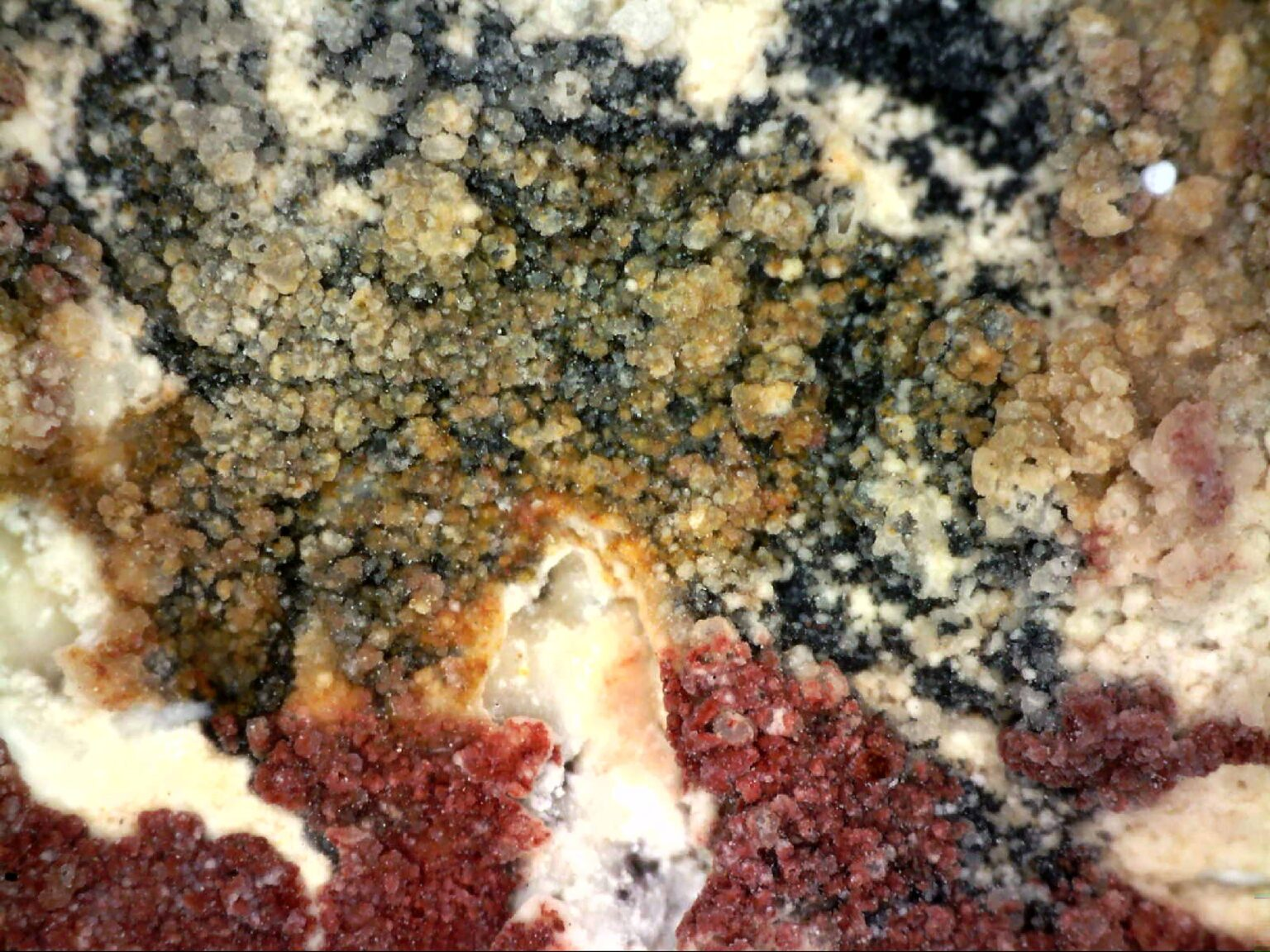
This photomicrograph, taken at Halo Shelter, shows the yellow over red over black paint layers. The black was applied first, then the red, then the yellow.
The research highlights the deep spiritual significance of the murals. Over 175 generations, artists adhered to consistent rules of composition, paint layering, and iconography, demonstrating a remarkable cultural continuity.
Recurring motifs—such as human-like figures holding spears or staffs, animal hybrids, and “power bundles” extending from the arms—persisted even as environmental conditions, tools, and daily life evolved.
The Lower Pecos Canyonlands emerge as a sacred landscape, repeatedly revisited for ritual purposes. From an Indigenous perspective, these murals are not merely ancient art—they are living entities. They are regarded as sentient ancestral deities, actively participating in creation and the ongoing maintenance of the cosmos.
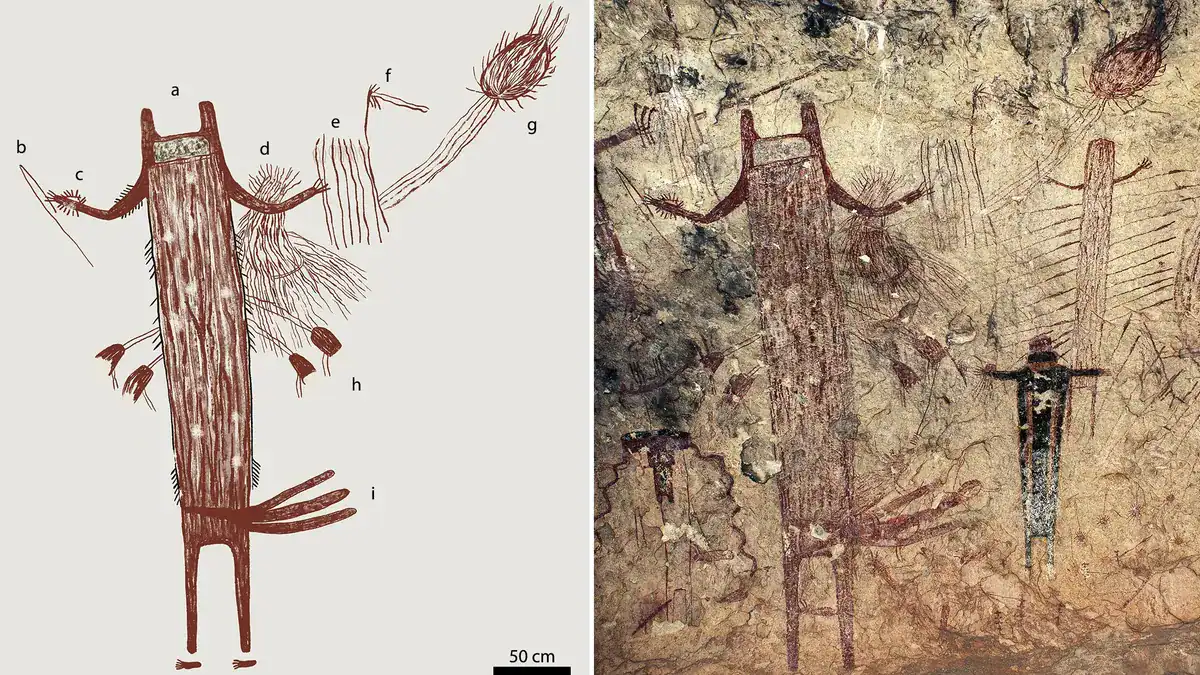
More characteristic designs of the Pecos River-style tradition, examples of which are found across the Lower Pecos Canyonlands.
The Lower Pecos region has inadvertently preserved an extraordinary cultural archive. Its dry, stable climate protected the pigments on limestone walls, keeping the organic binders intact and enabling precise radiocarbon dating.
Each mural captures a moment of ritual practice frozen in time. At site 41VV584, one of the oldest murals dated to around 5,400 years ago, an anthropomorphic figure with a “power bundle” spans the wall. Remarkably, at site 41VV1230, one of the youngest murals, similar motifs appear unchanged in form and meaning, despite a 4,000-year interval.
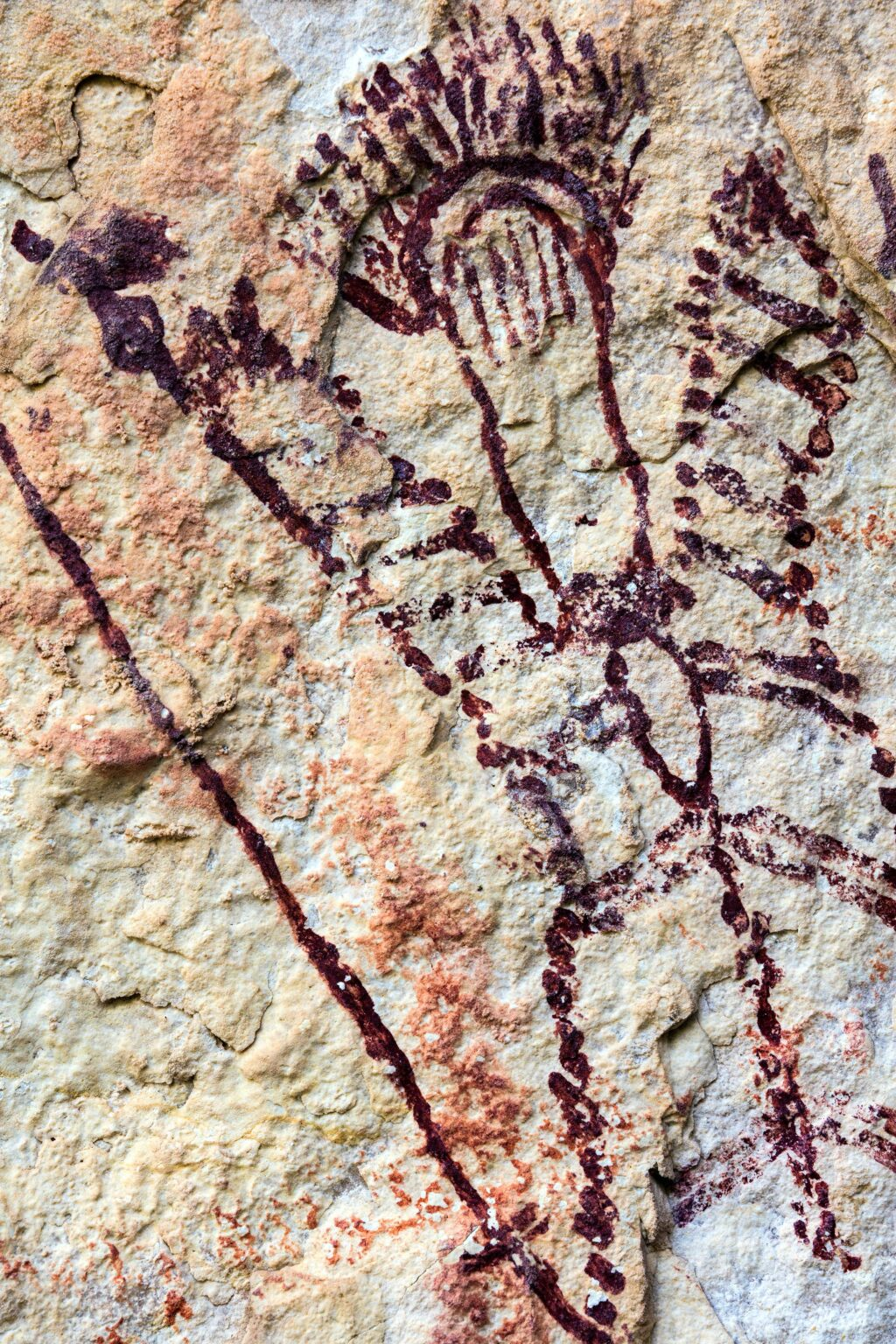
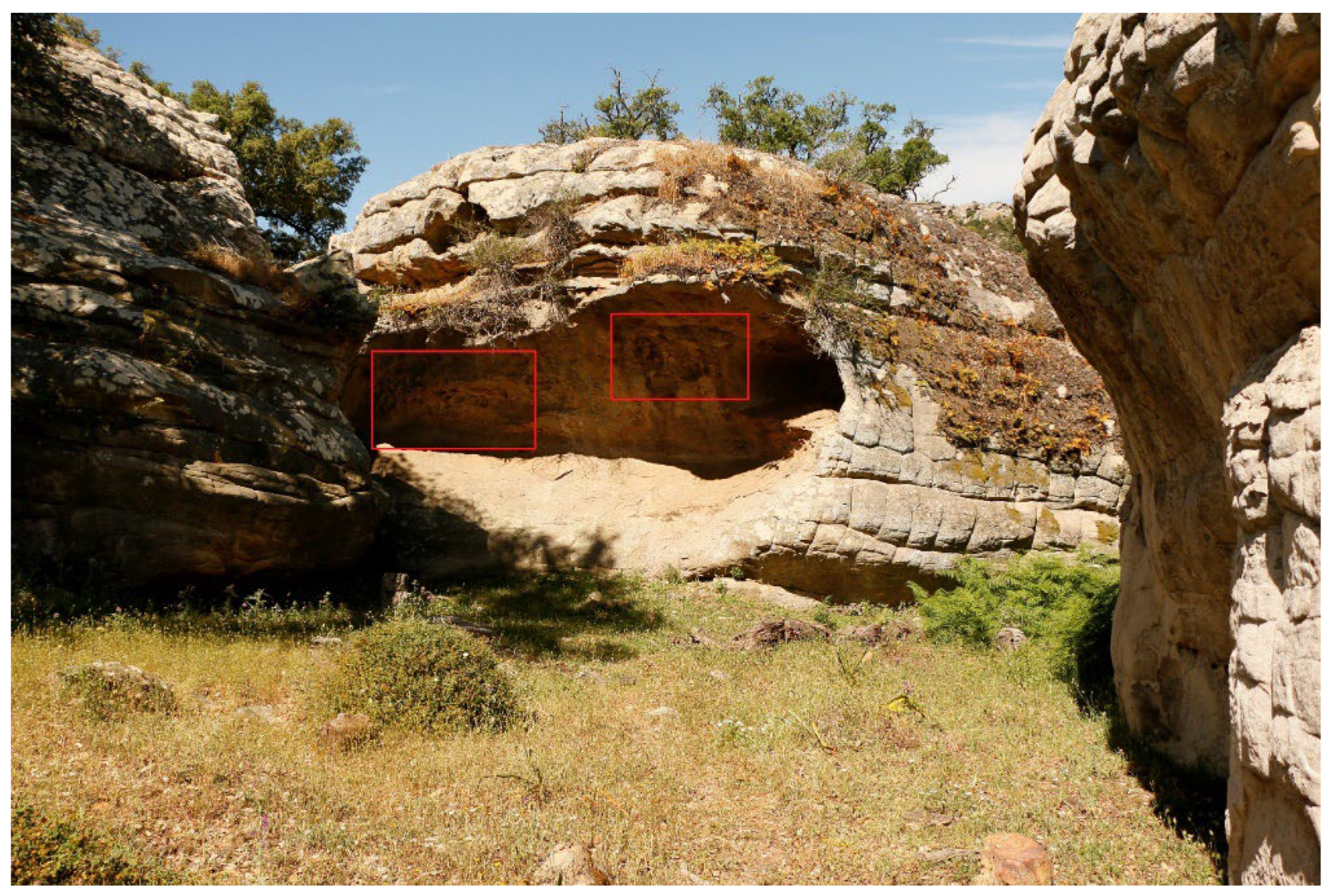
Pecos River style artists incorporated natural features in the rock wall to serve as the eyes and nose of this human-like figure. Like several figures at Halo Shelter, this one has a halo-like headdress and fine lines running vertically down its forehead.
The researchers interpret this remarkable continuity as proof of an enduring Archaic worldview that persisted despite changes in economy, climate, and population. The murals’ consistent imagery, they argue, “guaranteed accurate transmission of this sophisticated metaphysical system” over thousands of years.