A Library Lost to Fire, Preserved by Chance
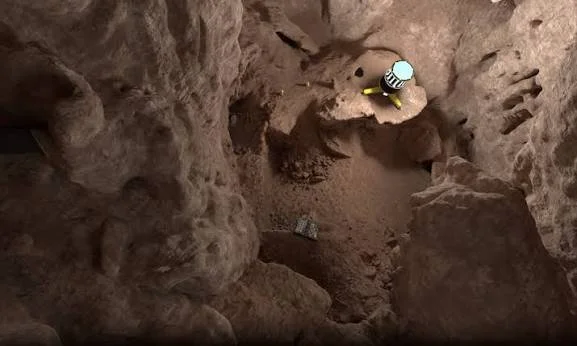
When Mount Vesuvius erupted in 79 CE, it destroyed entire Roman cities—but in Herculaneum, something extraordinary survived. Hidden inside a seaside villa was a collection of ancient scrolls, carbonized by intense heat yet miraculously preserved.
These scrolls, known as the Herculaneum papyri, are the only surviving library from the classical world. However, their survival came at a cost—each scroll was turned into a fragile, charcoal-like cylinder that crumbles if touched.
For centuries, scholars faced a painful paradox: the texts existed, but could not be read.
The Birth of Digital Unrolling
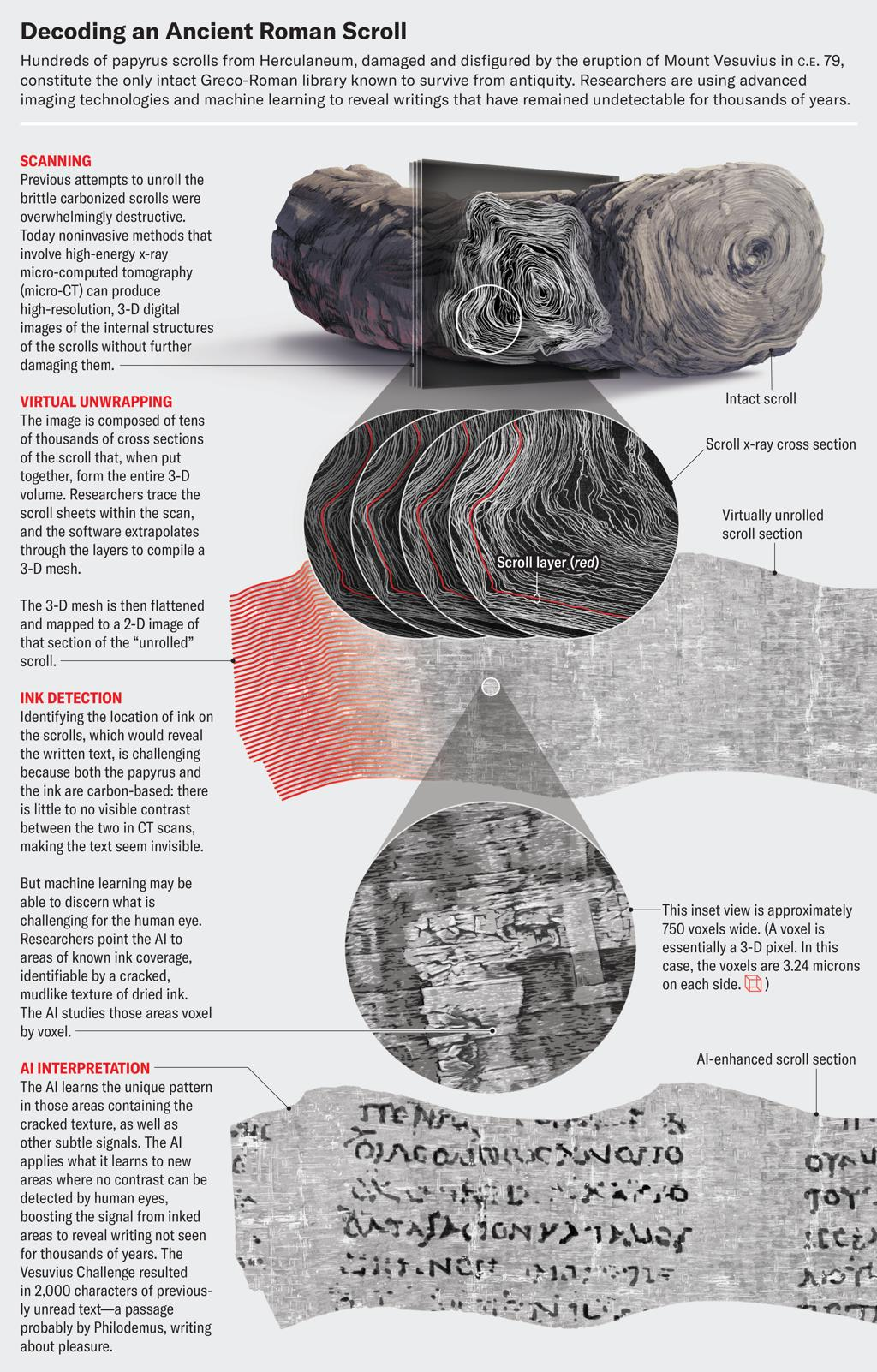
Traditional attempts to open the scrolls physically often resulted in irreversible damage. This changed with the introduction of advanced imaging technologies and artificial intelligence.
Researchers now use:
X-ray phase-contrast tomography to scan internal layers
Machine learning algorithms to detect faint ink traces
Digital modeling to reconstruct each layer virtually
Instead of opening the scroll, scientists peel it back digitally, revealing text hidden for nearly 2,000 years.
Teaching AI to Read the Invisible
One of the greatest challenges is that the ink used in ancient texts is often carbon-based—making it nearly indistinguishable from the burnt papyrus.
AI solves this by:
Identifying subtle density differences
Recognizing patterns consistent with handwriting
Learning from known Greek and Latin texts
This process allows researchers to reconstruct letters, words, and even entire passages.
What the Scrolls Might Contain
Many of the recovered texts are believed to belong to Epicurean philosophy, possibly linked to the philosopher Philodemus. However, the full contents of the library remain unknown.
Future discoveries could include:
Lost works of classical philosophers
New insights into Roman intellectual life
Previously unknown authors
A New Chapter in Archaeology
The Herculaneum papyri represent a turning point. For the first time, technology is allowing us to read texts that were once thought permanently lost.
AI is not just preserving history—it is bringing it back to life.