What was actually found
At the Funnel Beaker Culture site in north-central Poland (Sławęcinek), archaeologists analyzed pottery dating to about 3,500 BCE (~5,500 years ago) and identified:
Milk proteins from cow
Milk proteins from sheep/goat
Evidence that the milk had been processed (likely fermented or separated)
This strongly suggests early dairy processing—similar to:
cheese-making
whey separation
fermented milk beverages
Funnelbeaker culture communities were not just consuming raw milk, but actively transforming it into digestible forms.
🥛 Why this matters: lactose intolerance as a driver of innovation
At that time, most adults in Europe were still lactose intolerant, meaning:
raw milk was hard to digest
unprocessed dairy could cause illness
survival depended on processing techniques
So instead of avoiding milk, Neolithic farmers adapted by:
fermenting it
turning it into low-lactose liquids
producing early dairy-based “ritual drinks”
This shows early food technology was already highly adaptive and experimental.
🍶 The ritual drinking set
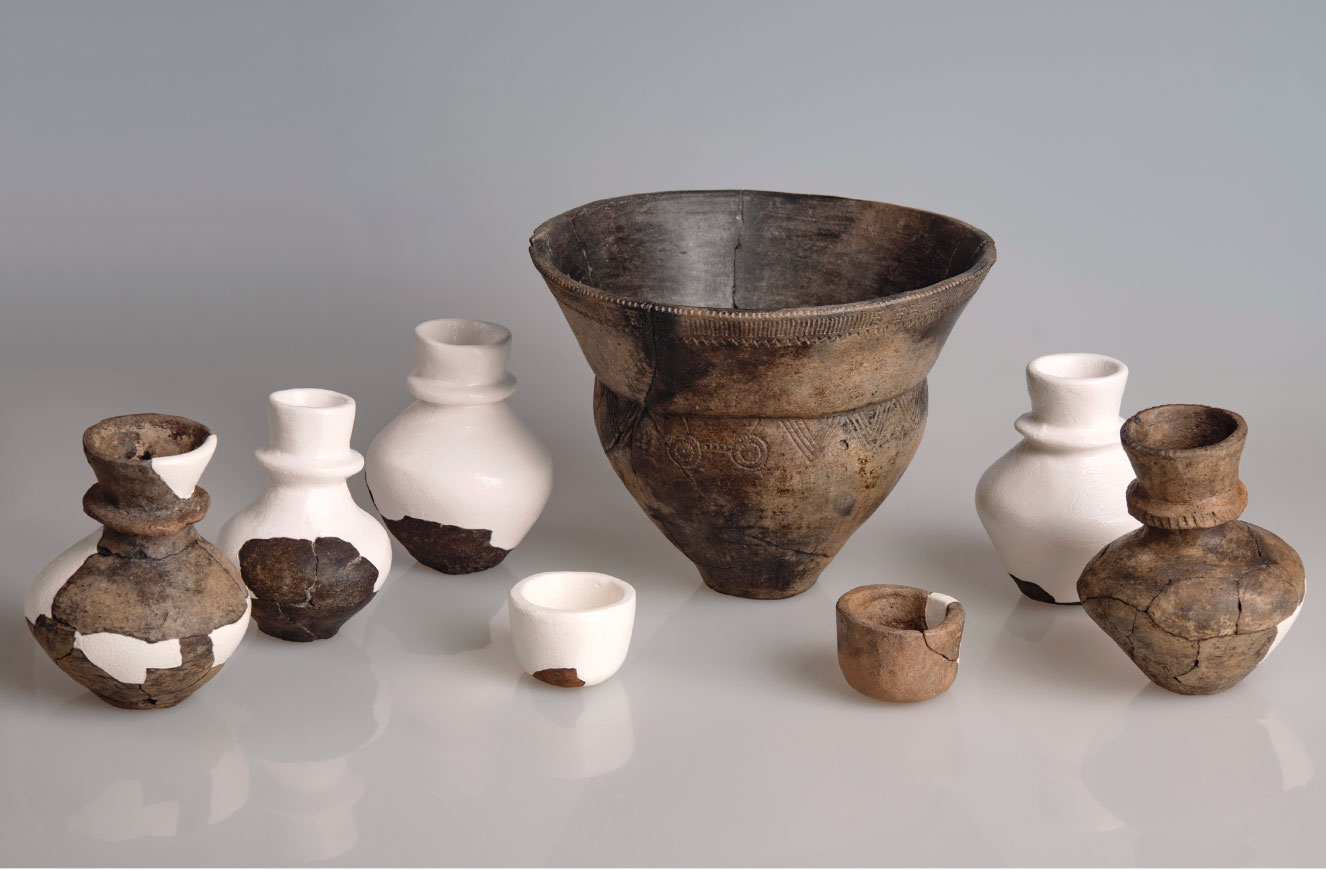
Researchers identified a structured group of vessels:
a funnel-shaped beaker
five collared flasks
two drinking cups
These weren’t random pots—they look like a purpose-built set for controlled pouring and consumption, suggesting:
shared drinking events
possible ceremonial feasting
socially organized gatherings
In other words, drinking dairy wasn’t just nutritional—it may have been ritualized behavior.
🧍♀️ The most debated interpretation: women-centered ritual space
One of the most intriguing (and cautious) interpretations comes from the burial context:
nearby graves contained only women
no male remains were associated with the feasting deposits
cattle/pig bones suggest communal consumption events nearby
From this, researchers propose a hypothesis:
these could be female-led or female-exclusive ritual gatherings
possibly linked to:
fertility symbolism
motherhood ideologies
kinship or lineage reinforcement
But it’s important to stress: this is interpretation, not confirmed social structure.
Bonus clue: early symbolic imagery
One vessel also shows markings interpreted as a possible vehicle or wheeled object, which—if correct—would be among the earliest symbolic representations of transport in Europe.
That would place this site at the intersection of:
early agriculture
early dairy technology
early symbolic/artistic abstraction
possibly early conceptualization of mobility
🧠 Big-picture significance
This site contributes to a much larger archaeological shift:
Instead of seeing Neolithic Europe as simple farming villages, we now see:
advanced food processing systems
ritualized consumption practices
gendered or structured social gatherings (possibly)
symbolic thinking embedded in daily objects
early biochemical food engineering