Introduction
Perched precariously on a razor-thin volcanic ridge between the sheer 300-meter cliffs of the Pacific Ocean and the deep crater lake of Rano Kau, the ceremonial village of Orongo documents one of the most abrupt and fascinating religious transformations in human history. Flourishing between the 17th and late 19th centuries CE, Orongo served as the exclusive stage for the Tangata Manu (Birdman) cult—a competitive, resource-driven religious system that completely replaced the classic, ancestor-worshiping moai era. While popular media long attributed this cultural shift to total societal collapse, systematic landscape archaeology at Orongo has revealed a highly organized, adaptive response to environmental stress, where the islanders engineered a new political structure based on merit and religious competition rather than inherited royal lineages.
Lithic Architecture, Petroglyphs, and the Tangata Manu Logistics
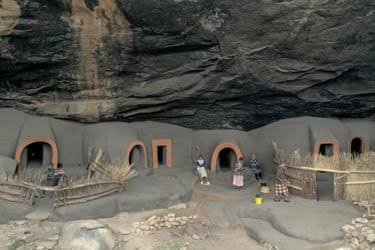
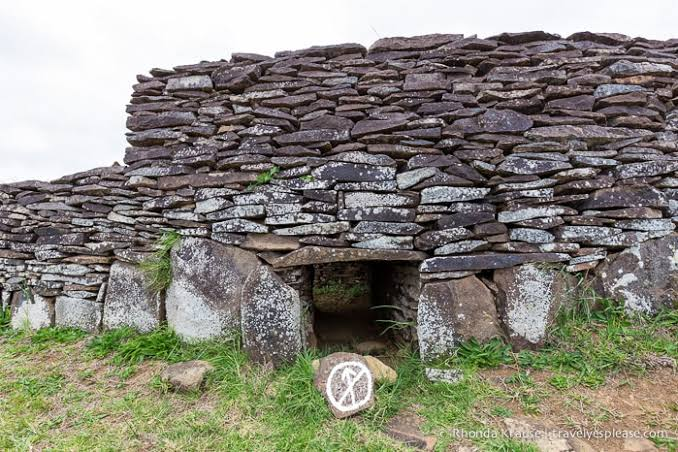
The architectural design of Orongo stands completely apart from the residential settlements found across the rest of the island. Rather than using standard timber-framed thatch houses, the builders constructed 53 low-slung, oval-shaped buildings using a corbeled masonry technique with thin, naturally split slabs of basaltic slate. These stone structures were intentionally designed to withstand the fierce, continuous gales of the high crater ridge. They feature tiny, tunnel-like entrances that forced individuals to crawl inside on their stomachs, maximizing internal heat retention and creating a highly secure, restricted space for elite religious chiefs.
Excavations around the complex and the adjacent sea cliffs have documented an extraordinary density of rock art, mapping out the ritual logistics of the Birdman competition. The natural basalt rocks at Orongo are carved with over 400 complex petroglyphs, predominantly depicting the Tangata Manu—a hybrid figure possessing a human body and the long, curved beak of a frigatebird or sooty tern.
The annual ritual required chosen athletes from each clan to scale down the vertical 300-meter cliffs of Orongo, swim through shark-infested waters on reed floats to the isolated islet of Motu Nui, retrieve the first laid egg of the migrating sooty tern, and climb back up the cliff face intact. The winning clan secured absolute political dominance and priority access to the island's scarce remaining resources for the following year, showing that Orongo functioned as a highly sophisticated civic mechanism designed to regulate tribal warfare through controlled religious competition.
Conclusion
The systematic unmasking of Orongo Village provides a brilliant example of ideological adaptation under extreme environmental constraints. It proves that the ancient Rapanui did not passively slide into chaos when their forest ecosystems collapsed; instead, they completely reinvented their architectural styles, political structures, and religious expressions to match their changing world. The unique slate village and dramatic birdman petroglyphs stand as an enduring monument to human adaptability, proving that cultural resilience can forge entirely new social systems on the very edge of survival.