Orchards have long connected agricultural production with the organization and meaning of landscapes. Trees provide fruit, nuts, shade, timber, and other useful resources, while their long life cycles require communities to plan planting and maintenance over extended periods. In some historical and archaeological settings, orchards were enclosed by ditches, banks, fences, or combinations of these features. Such boundaries could protect valuable trees, control the movement of animals, manage water, or define ownership. The possibility that some enclosed orchards also held ritual significance offers a way to investigate how agricultural management and cultural practices interacted in the past.
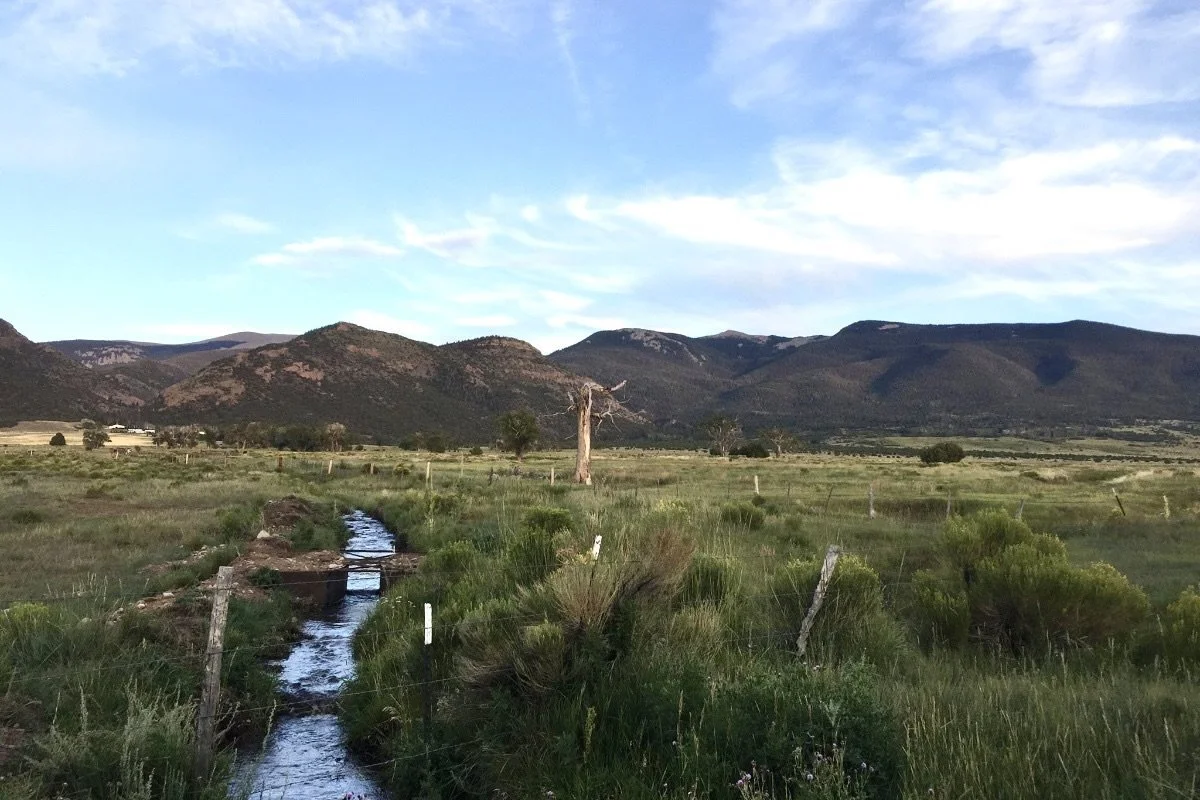
A ditch-fenced orchard is a cultivated area in which a ditch or associated boundary feature helped define or protect the growing space. A ditch could discourage livestock from entering an orchard, improve drainage, or provide soil that could be used to create a raised bank. Where timber was available, posts and wooden fencing might have supplemented the ditch. In other cases, hedges, stone walls, or living barriers could have served similar purposes. The design depended on local materials, terrain, climate, and the needs of the community.
Archaeological identification begins with the landscape itself. A surviving ditch may appear as a shallow depression, a linear soil mark, or a buried feature detectable through geophysical survey. If the ditch forms a closed or nearly closed enclosure and contains evidence of tree cultivation, researchers may consider an orchard interpretation. Yet enclosed areas could also have served as animal pens, gardens, fields, defensive works, or boundaries between properties. The shape of the enclosure alone is not sufficient to establish its function.
Environmental evidence can help identify the vegetation that once grew within an enclosure. Pollen analysis may reveal the presence of particular tree groups, while seeds, fruit stones, nutshells, and charcoal can provide additional clues about cultivated or collected plants. Phytoliths and other microscopic botanical remains may also contribute to the reconstruction, depending on the species and preservation conditions. However, pollen can travel considerable distances, and charcoal may have originated from fuel brought from elsewhere. The strongest interpretations combine several forms of evidence from securely dated deposits.
The structure of the ditch may reveal how the enclosure was managed. Its depth and width can indicate the amount of labor invested in construction, while the distribution of sediment within it may show whether it was cleaned, recut, or allowed to fill gradually. Repeated episodes of maintenance suggest that the boundary remained important to its users. If the ditch also controlled drainage, its position in relation to slopes and watercourses may reveal how farmers managed soil moisture around the trees.
The agricultural value of an enclosed orchard would have depended on the species cultivated and the local environment. Fruit trees often require protection during early growth, and livestock can damage young trunks or eat developing vegetation. Enclosures could also help establish property boundaries and regulate access to valuable harvests. In some landscapes, orchards may have been maintained by individual households, while larger enclosed areas could have belonged to estates, religious institutions, or communal organizations.
The concept of agro-ritual landscape management introduces the possibility that cultivation was linked to ceremonies, beliefs, or practices that gave agricultural spaces additional meaning. Trees may have been associated with fertility, seasonal renewal, ancestors, sacred places, or community identity in particular cultural settings. An orchard could therefore serve practical purposes while also forming part of a ritual landscape. However, this interpretation requires evidence beyond the presence of fruit trees or an enclosure.
Possible evidence of ritual activity might include deliberately placed deposits, repeated offerings, unusual structures, or a clear spatial relationship between the orchard and a ceremonial site. Historical texts or ethnographic information may also provide relevant context, provided that comparisons are made carefully. Objects found within a ditch could have entered through ordinary refuse disposal, accidental loss, or later disturbance rather than through ritual deposition. Researchers must evaluate these alternatives before attributing ceremonial meaning to an agricultural feature.
The relationship between agriculture and ritual was not necessarily a division between practical and symbolic behavior. A community could perform ceremonies connected with planting or harvest while also using the orchard as a productive resource. Boundaries might have had social meanings because they defined access to land, marked inherited property, or separated spaces with different responsibilities. These functions could coexist, even if the archaeological evidence does not allow every aspect to be reconstructed.
Dating an orchard enclosure can be challenging because ditches may remain in use for long periods. Sediment accumulating in a ditch may contain organic materials suitable for radiocarbon dating, but the material could be older than the deposit in which it was found. Pottery and other artifacts can provide chronological clues, although objects may have been redeposited. Researchers must establish the sequence of construction, maintenance, and abandonment rather than treating the entire enclosure as a single event.
Landscape analysis can reveal how orchards related to nearby settlements, water sources, paths, and other agricultural areas. An enclosure positioned near a dwelling might have supported household consumption, while one connected to larger agricultural installations could indicate more extensive production. If several enclosures occur together, their arrangement may reflect a planned agricultural landscape, although the pattern could have developed gradually through successive generations.
Ancient ditch-fenced orchards demonstrate that agricultural landscapes were shaped by both practical needs and social choices. Ditches and fences could protect trees, manage water, define property, and organize access, while some cultivated spaces may also have held cultural or ceremonial importance. By combining botanical analysis, landscape archaeology, excavation, and historical evidence, researchers can investigate these functions without assuming that every enclosed orchard had a ritual purpose. The result is a richer understanding of how ancient communities managed productive land and assigned meaning to the environments they cultivated.