Ancient Egyptian Beer: Replicating the Thick Porridge-Like Ale of the Workers
In ancient Egypt, beer—known as heqet or hekt—was not merely an intoxicating beverage; it was a fundamental dietary staple, a source of vital nutrients, and a form of currency. Far from the clear, highly filtered lagers of today, the everyday beer consumed by the workers who built the pyramids was a thick, nourishing, porridge-like ale.
Archaeological studies, including microscopic residue analysis and the replication of brewing methods by institutions like the British Museum, have provided deep insights into how the ancient Egyptians produced this unique beverage.
1. Ingredients and the Bread Connection
The foundation of heqet relied on two primary cereals grown along the Nile: emmer wheat and barley.
The Mash Loaves: Instead of modern malting processes, the Egyptians ground grains and mixed them with water to create a mash, from which they shaped moist loaves. These loaves were lightly baked on the outside while remaining raw and doughy on the inside. This technique preserved the enzymes in the grain and acted as a stable way to store yeast and sugars.
Nutritional Density: The resulting mixture was rich in carbohydrates, proteins, and active enzymes. Because the mixture wasn't boiled at high temperatures, it maintained a high calorie count, which sustained laborers during intense physical work.
2. The Two-Stage Mashing Technique
The brewing process used by the ancient Egyptians was remarkably efficient, relying on a two-stage method to extract fermentable sugars without the use of modern thermometers.
The Cold Mash: Ground, malted grain was mixed with room-temperature water. This stage preserved the active enzymes needed to convert starches into sugars.
The Hot Mash: Ground, unmalted grain was mixed with warm or heated water (usually kept below 80°C to prevent the earthenware from cracking and to avoid killing the enzymes) to open up the starches.
Combining the Mashes: Once combined, the hot and cold mashes sat together to allow the enzymes to convert the starches into fermentable sugars. The liquid was then strained and transferred into fermentation vessels.
3. Fermentation and Flavor Profiles
The vessels used for fermentation were essential to the final flavor and character of the beer.
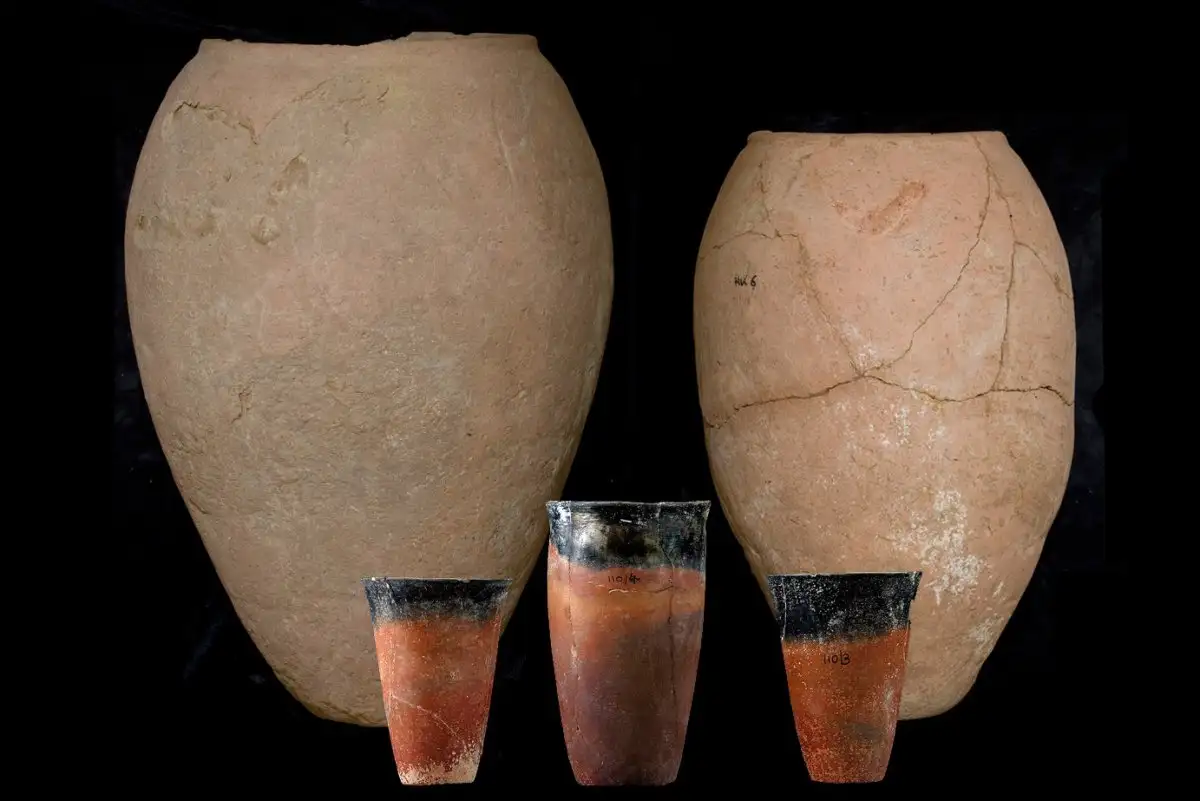
Porous Terracotta Vats: The Egyptians used unglazed, single-fired terracotta vessels. The porous walls of these pots harbored wild yeasts and cooled the mixture through gentle evaporation in the hot, arid climate.
Additives and Flavorings: Since hops were unknown, brewers used adjuncts to alter the flavor and increase alcohol content. Popular additions included dates for sweetness, honey, and botanicals like coriander, cumin, sesame seeds, and even pistachio resin.
Festival Ales: For special occasions, such as the Festival of Drunkenness honoring the goddess Sekhmet, the ale was occasionally dyed red using pomegranate juice or mineral clay (ochre).
4. Consumption: The Need for Straws
Because the mash was not filtered to the degree of modern brewing, the resulting product was thick and brothy, with a layer of solid grain sediment resting on top.
The Straw Method: To avoid consuming the bitter mash, the Egyptians drank the beer through long, reed or metal tubes equipped with a strainer or sieve at the bottom.
Nutritional Value: The final product had a lower alcohol content than modern beer (usually around 2% to 4%) and functioned more like liquid bread.