The Rosetta Stone’s Rivals: Other Multi-Lingual Decrees of Ancient Egypt
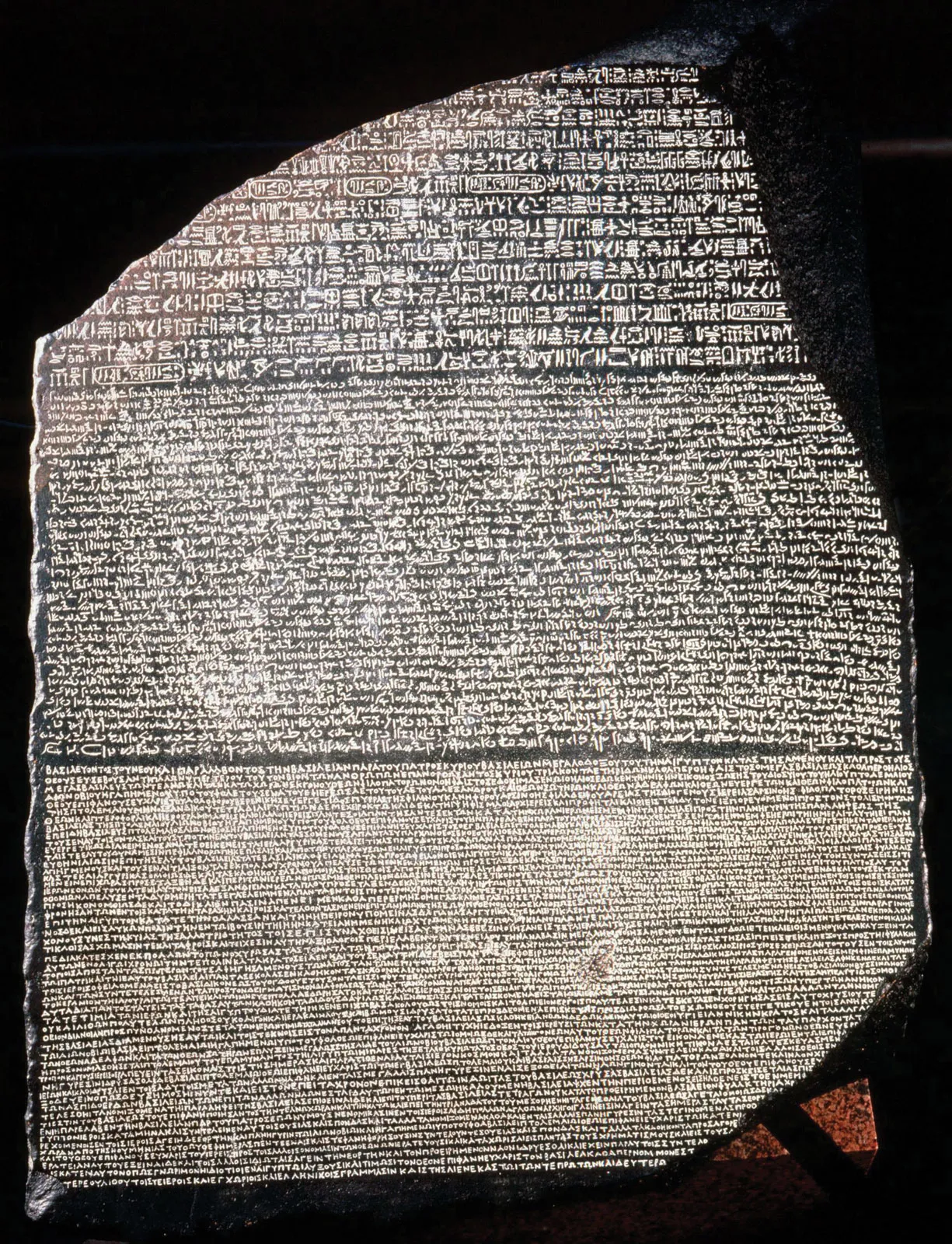
While the Rosetta Stone is world-famous for unlocking the secrets of Egyptian hieroglyphs, it is actually not a unique artifact. It is part of a larger series of mass-produced, multilingual inscriptions known as the Ptolemaic sacerdotal decrees.
These decrees were issued by assemblies of Egyptian priests to honor the Ptolemaic pharaohs, and copies were distributed and displayed in major temples across Egypt. Long before the discovery of the Rosetta Stone, earlier decrees used the same trilingual and multiscript formula to communicate royal messages in Hieroglyphs, Demotic, and Ancient Greek.
1. The Decree of Canopus (238 BCE)
Predating the Rosetta Stone by more than 40 years, the Decree of Canopus was issued during the reign of Ptolemy III Euergetes and his wife, Queen Berenice.
The Inscription: The stele is carved with a decree in three writing systems: Egyptian hieroglyphs, Demotic script, and Ancient Greek.
Historical Significance: The text touches on significant events, including the return of looted religious statues from the Persian empire, famine relief, and a calendar reform that introduced the concept of the leap year (adding a quarter day every four years).
Recent Discoveries: In 2024, archaeologists in the Sharqia governorate of Egypt discovered a near-perfect unilingual copy of this decree, adding to our understanding of the priests' alliance with the monarchy.
2. The Decree of Alexandria (243 BCE)
As the earliest in the known series of these Ptolemaic decrees, the Decree of Alexandria was proclaimed during the early reign of Ptolemy III.
Purpose: It honors the king and queen for their benefactions to the temples and their efforts to maintain order.
Distribution: Like its successors, it was designed to be publicly posted in temples to legitimize the Greco-Macedonian rulers in the eyes of the native Egyptian population.
3. The Raphia Decree (217 BCE)
Issued under the reign of Ptolemy IV Philopator, this decree commemorates the king’s victory against the Seleucid Empire at the Battle of Raphia.
Content: It lavishes praise on Ptolemy IV and outlines his support for traditional Egyptian religious practices and temples. The text highlights how the royal house negotiated authority with the Egyptian priesthood to ensure regional stability.
4. Sister Copies of the Memphis Decree (The Rosetta Stone Series)
The text inscribed on the Rosetta Stone is officially known as the Memphis Decree, issued in 196 BCE under Ptolemy V. The Rosetta Stone is only one surviving fragment of this decree. Several other copies or near-copies have been found:
The Nubayrah Stele: Discovered in the 1880s, this stele carries much of the same text and helped scholars fill in the missing passages of the damaged hieroglyphic section on the Rosetta Stone.
The Taposiris Magna Stele: Discovered in 2023, this stele is inscribed with the Memphis Decree. Dated two years earlier than the Rosetta Stone's inscription, it focuses on the king's donations to the goddess Isis.