Viking Winter Camps: The Archaeology of the Great Heathen Army in England
Starting in AD 865, a massive Scandinavian coalition known to the Anglo-Saxon Chronicle as the Great Heathen Army (micel here) launched an unprecedented invasion of England. Rather than engaging in short, seasonal coastal raids, the army adapted its strategy to campaign year-round. This operational shift relied heavily on establishing semi-permanent winter camps (wintersetl).
Archaeological investigations over the last few decades, particularly at Torksey and Repton, have revolutionized our understanding of these sites, revealing them not merely as military garrisons, but as bustling, self-sustaining communities on the move.
1. The Camps: Torksey and Repton
For a long time, historians relied solely on written texts, but recent archaeological excavations have uncovered the physical footprint of the Great Army's winter bases.
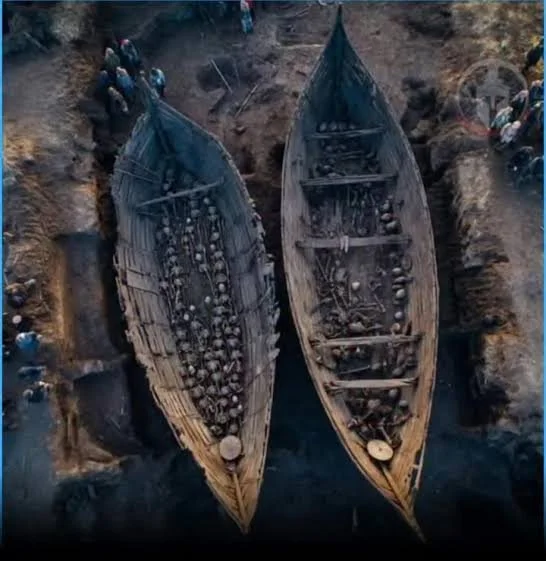
Repton (Derbyshire, AD 873–874): Excavated between 1974 and 1993, this camp was situated along the River Trent and fortified with ditch-and-bank earthworks. The site contained a mass grave holding the remains of nearly 300 individuals, many bearing violent injuries, alongside weaponry and gaming pieces.
Torksey (Lincolnshire, AD 872–873): Recent excavations have shown that the camp covered an enormous 136-acre expanse—far larger than previously thought. Located on a natural island on the banks of the River Trent, the site was surrounded by marshes rather than heavy stone or earthen defenses.
2. Logistics, Economy, and Daily Life
The archaeological assemblages found at winter camps suggest that the Vikings did not hunker down in isolation. Instead, they transformed these sites into economic hubs.
Bullion Economy: A high concentration of hacksilver (cut-up silver pieces) and hackgold, along with over 350 lead weights and hundreds of early medieval coins (including Arabic dirhams), indicates a thriving bullion-based economy and active trade with local populations.
Crafting and Industry: Archaeologists found evidence of metal casting, textile production (spindle whorls), and equipment repairs. This portrays an army accompanied by families, craftspeople, and merchants.
Leisure: The discovery of numerous lead gaming pieces and dice suggests that the warriors engaged in board games and pastimes during the harsh winter months.
Historical Note: The massive influx of Islamic silver dirhams found at Torksey suggests strong trade networks extending as far as the Near East, demonstrating that the army's reach was highly international.
3. Strategic Placement and Military Tactics
The selection of winter camp locations was deeply tied to mobility and geographical advantages.
Waterways: Both major camps were situated directly on the River Trent, providing direct access to the North Sea and inland waterways for their fleets.
Horses and Raids: The Great Heathen Army acquired horses from the local Anglo-Saxon populations, allowing them to transform into a highly mobile mounted force. The camps acted as a base from which to launch inland raids and secure tribute.