• MAIN PAGE
  • LATEST NEWS
    • Lost Cities
    • Archaeology's Greatest Finds
    • Underwater Discoveries
    • Greatest Inventions
    • Studies
    • Blog
  • PHILOSOPHY
  • HISTORY
  • RELIGIONS
    • Africa
    • Anatolia
    • Arabian Peninsula
    • Balkan Region
    • China - East Asia
    • Europe
    • Eurasian Steppe
    • Levant
    • Mesopotamia
    • Oceania - SE Asia
    • Pre-Columbian Civilizations of America
    • Iranian Plateau - Central Asia
    • Indus Valley - South Asia
    • Japan
    • The Archaeologist Editor Group
    • Scientific Studies
    • Aegean Prehistory
    • Historical Period
    • Byzantine Middle Ages
    • Predynastic Period
    • Dynastic Period
    • Greco-Roman Egypt
  • Rome
  • PALEONTOLOGY
  • About us
Menu

The Archaeologist

  • MAIN PAGE
  • LATEST NEWS
  • DISCOVERIES
    • Lost Cities
    • Archaeology's Greatest Finds
    • Underwater Discoveries
    • Greatest Inventions
    • Studies
    • Blog
  • PHILOSOPHY
  • HISTORY
  • RELIGIONS
  • World Civilizations
    • Africa
    • Anatolia
    • Arabian Peninsula
    • Balkan Region
    • China - East Asia
    • Europe
    • Eurasian Steppe
    • Levant
    • Mesopotamia
    • Oceania - SE Asia
    • Pre-Columbian Civilizations of America
    • Iranian Plateau - Central Asia
    • Indus Valley - South Asia
    • Japan
    • The Archaeologist Editor Group
    • Scientific Studies
  • GREECE
    • Aegean Prehistory
    • Historical Period
    • Byzantine Middle Ages
  • Egypt
    • Predynastic Period
    • Dynastic Period
    • Greco-Roman Egypt
  • Rome
  • PALEONTOLOGY
  • About us
No results found

Roman Mining in Spain: The Las Medulas Gold Mine and Hydraulic Power

May 10, 2026

Roman Mining in Spain: The Las Médulas Gold Mine and Hydraulic Power

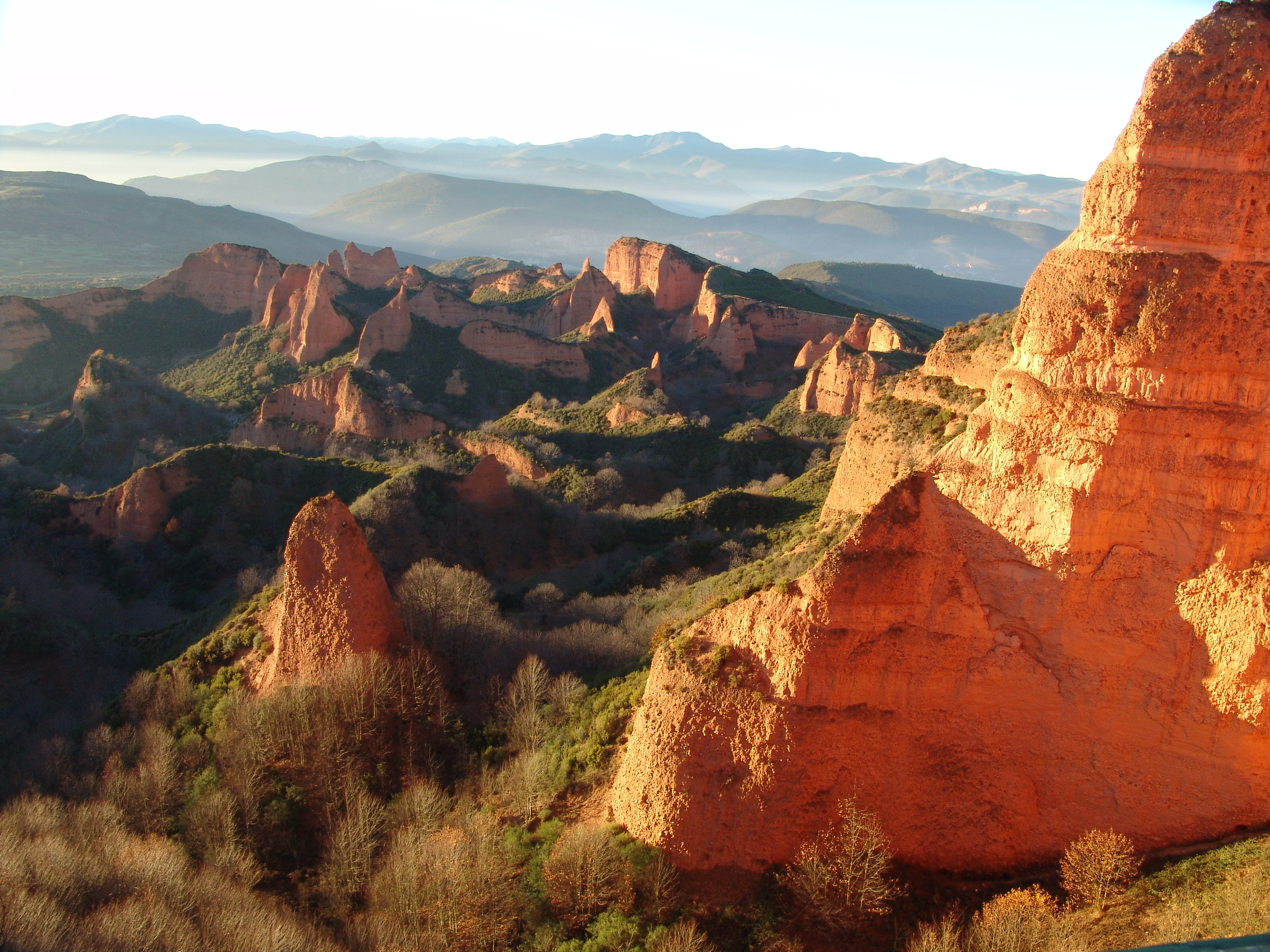
Located in the León province of northwestern Spain, Las Médulas is the largest open-pit gold mine in the Roman Empire. Following the conquest of the region by Emperor Augustus around 25 BCE, the Romans transformed a natural landscape into an industrial complex.

Rather than relying purely on manual excavation, the Romans used the erosive force of water to extract the gold, applying a technique known as ruina montium (the wrecking of the mountains).

1. The Mechanics of Ruina Montium

The mining process was described in detail by Pliny the Elder, who served as a procurator in the region around 74 CE. It combined tunneling and hydraulics.

  • Excavation of Galleries: Miners dug a vast, complex network of tunnels and shafts into the mountainside using oil lamps and hand tools.

  • Water Supply and Pressure: The Romans built huge reservoirs at high altitudes above the mountain, fed by an intricate network of aqueducts.

  • The Collapse: Once the reservoirs were full, the floodgates were released, sending immense torrents of water crashing into the vertical shafts. The build-up of hydraulic pressure and volume would fracture the rock from the inside, causing whole mountainsides to collapse into a heap of muddy sediment.

2. The Massive Hydraulic Network

To supply enough water to the site, the Romans designed and built an expansive aqueduct system across the surrounding mountain ranges.

  • Canal Network: More than $700 \text{ km}$ of canals were cut into the rock and built along the slopes of the mountains to capture meltwater and rainfall from the Sierra del Teleno and La Cabrera.

  • Slopes and Gradients: The canals maintained a precise and gentle gradient of 0.15% to 0.40% across varied geological formations, using tunnels through quartzite and stone retaining walls in slate regions.

  • Reservoir Basins: The water was stored in large, high-altitude collection basins (up to $18,000 \text{ m}^3$ capacity) to ensure a sudden, massive release of water.

3. Processing and the Resulting Landscape

Once the mountain collapsed, the slurry was washed through massive channels and sluice boxes to separate the gold from the waste rock.

  • Sluicing: The finer materials were washed over sloped tables with riffles to catch the heavy gold particles, while barren sediment was discarded into valleys.

  • Tailings and Lakes: The sheer volume of tailings altered local river drainage patterns. For example, it blocked the valley streams to form Lake Carucedo, a wetland near the site.

  • The Modern Landscape: The result of over two centuries of mining is a surreal landscape of red clay towers, steep cliffs, and canyons. The site was named a UNESCO World Heritage Site in 1997.
← The Olmec Influence: How the "Mother Culture" Shaped MesoamericaThe Ancient Silk Road: How Buddhism Traveled from India to China →
Featured
image_2026-05-06_232406053.png
May 10, 2026
Ancient Egyptian Beer: Replicating the Thick Porridge-Like Ale of the Workers
May 10, 2026
Read More →
May 10, 2026
image_2026-05-06_232215258.png
May 10, 2026
The Olmec Influence: How the "Mother Culture" Shaped Mesoamerica
May 10, 2026
Read More →
May 10, 2026
image_2026-05-06_232138830.png
May 10, 2026
Roman Mining in Spain: The Las Medulas Gold Mine and Hydraulic Power
May 10, 2026
Read More →
May 10, 2026
image_2026-05-06_232056709.png
May 10, 2026
The Ancient Silk Road: How Buddhism Traveled from India to China
May 10, 2026
Read More →
May 10, 2026
image_2026-05-06_232007219.png
May 10, 2026
Viking Winter Camps: The Archaeology of the Great Heathen Army in England
May 10, 2026
Read More →
May 10, 2026
image_2026-05-06_231851444.png
May 10, 2026
The Rosetta Stone’s Rivals: Other Multi-Lingual Decrees of Ancient Egypt
May 10, 2026
Read More →
May 10, 2026
read more

Powered by The archaeologist