Ancient Egyptian jewelry was never merely ornamental; it was "magical armor." For a pharaoh like Tutankhamun, every piece of jewelry found within his tomb was designed to provide protection, identify his divine status, and ensure his safe passage through the perils of the Underworld (Duat).
1. The Pectoral: The Solar and Lunar Shield
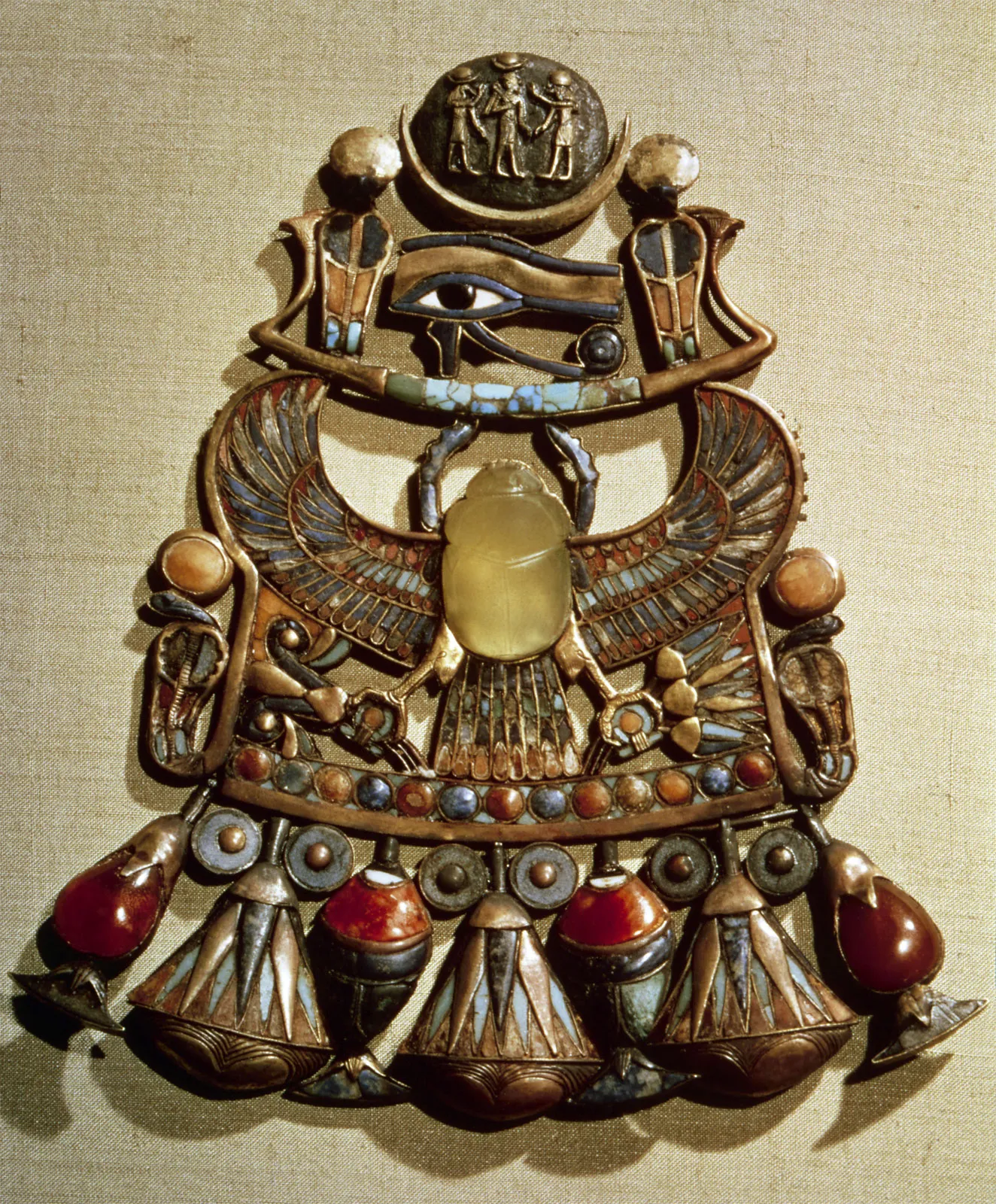
The Pectoral is a large, elaborate chest ornament worn by the Pharaoh, often suspended by a heavy gold chain or beads. Tutankhamun’s collection contains some of the most complex lapidary work in human history.
The Winged Scarab: Many of his pectorals feature the scarab beetle, representing Khepri (the rising sun). In one famous piece, the scarab is carved from rare Libyan Desert Glass—a yellow-green silica formed by a meteorite impact 26 million years ago.
Celestial Symbolism: These pieces often combine the sun disk and the crescent moon, symbolizing the Pharaoh’s dominion over the entire cosmic cycle of day and night.
The Eye of Horus (Udjat): Frequently integrated into pectorals, this symbol represented healing, wholeness, and protection against the "Evil Eye."
2. Materials of Power
The Egyptians chose materials based on their "heka" (magical) properties rather than just their rarity.
Gold (The Flesh of the Gods): Gold was considered indestructible and eternal. Because it did not tarnish, it was believed to possess the essence of the sun.
Lapis Lazuli (The Night Sky): This deep blue stone, imported from as far away as modern-day Afghanistan, represented the heavens and the hair of the gods.
Carnelian (The Blood of Isis): The fiery orange-red stone symbolized life-force, energy, and the protective blood of the goddess Isis.
Turquoise (The Joy of Hathor): Linked to the goddess Hathor, turquoise represented the color of the Nile and the concept of rebirth.
3. The Cloisonné Technique
The precision of Tutankhamun’s jewelry was achieved through Cloisonné.
Craftsmen would solder thin strips of gold (cloisons) onto a baseplate to create a "cell" or outline of a design.
Precious stones or glass paste were then precisely cut to fit into these tiny gold cells.
The result was a vibrant, mosaic-like image that appeared to be a solid gemstone but was actually a complex assembly of dozens of individual pieces.
4. Amulets for the Afterlife
When Howard Carter unwrapped Tutankhamun’s mummy, he found 143 amulets tucked within the linen layers. These served specific functions:
The Heart Scarab: Placed over the heart, it was inscribed with a spell from the Book of the Dead pleading with the heart not to "rise up as a witness" against the King during the Weighing of the Heart ceremony.
The Djed Pillar: Symbolizing the backbone of Osiris, this amulet provided the King with stability and eternal endurance.
The Ankh: The universal symbol of "life," ensuring that the King would breathe the air of the afterlife.
Ancient Egyptian jewelry was never merely ornamental; it was "magical armor." For a pharaoh like Tutankhamun, every piece of jewelry found within his tomb was designed to provide protection, identify his divine status, and ensure his safe passage through the perils of the Underworld (Duat).
1. The Pectoral: The Solar and Lunar Shield
The Pectoral is a large, elaborate chest ornament worn by the Pharaoh, often suspended by a heavy gold chain or beads. Tutankhamun’s collection contains some of the most complex lapidary work in human history.
The Winged Scarab: Many of his pectorals feature the scarab beetle, representing Khepri (the rising sun). In one famous piece, the scarab is carved from rare Libyan Desert Glass—a yellow-green silica formed by a meteorite impact 26 million years ago.
Celestial Symbolism: These pieces often combine the sun disk and the crescent moon, symbolizing the Pharaoh’s dominion over the entire cosmic cycle of day and night.
The Eye of Horus (Udjat): Frequently integrated into pectorals, this symbol represented healing, wholeness, and protection against the "Evil Eye."
2. Materials of Power
The Egyptians chose materials based on their "heka" (magical) properties rather than just their rarity.
Gold (The Flesh of the Gods): Gold was considered indestructible and eternal. Because it did not tarnish, it was believed to possess the essence of the sun.
Lapis Lazuli (The Night Sky): This deep blue stone, imported from as far away as modern-day Afghanistan, represented the heavens and the hair of the gods.
Carnelian (The Blood of Isis): The fiery orange-red stone symbolized life-force, energy, and the protective blood of the goddess Isis.
Turquoise (The Joy of Hathor): Linked to the goddess Hathor, turquoise represented the color of the Nile and the concept of rebirth.
3. The Cloisonné Technique
The precision of Tutankhamun’s jewelry was achieved through Cloisonné.
Craftsmen would solder thin strips of gold (cloisons) onto a baseplate to create a "cell" or outline of a design.
Precious stones or glass paste were then precisely cut to fit into these tiny gold cells.
The result was a vibrant, mosaic-like image that appeared to be a solid gemstone but was actually a complex assembly of dozens of individual pieces.
4. Amulets for the Afterlife
When Howard Carter unwrapped Tutankhamun’s mummy, he found 143 amulets tucked within the linen layers. These served specific functions:
The Heart Scarab: Placed over the heart, it was inscribed with a spell from the Book of the Dead pleading with the heart not to "rise up as a witness" against the King during the Weighing of the Heart ceremony.
The Djed Pillar: Symbolizing the backbone of Osiris, this amulet provided the King with stability and eternal endurance.
The Ankh: The universal symbol of "life," ensuring that the King would breathe the air of the afterlife.
5. Symbolic Summary
PieceMaterial HighlightPrimary FunctionGold MaskSolid Gold & LapisTransformation into a god.Falcon PectoralGold, Carnelian, GlassProtection of the chest/soul.Vulture CollarSheet GoldThe protection of the goddess Nekhbet.Signet RingsGold & ChalcedonyRoyal authority and legal identity.
5. The "Curse" and the Craft
While the "Curse of the Pharaohs" dominated headlines after the 1922 discovery, the real wonder was the technological level of the 18th Dynasty. The jewelry demonstrated that Egyptian smiths had mastered soldering, granulation, and glass-making to a degree that was not surpassed for thousands of years.