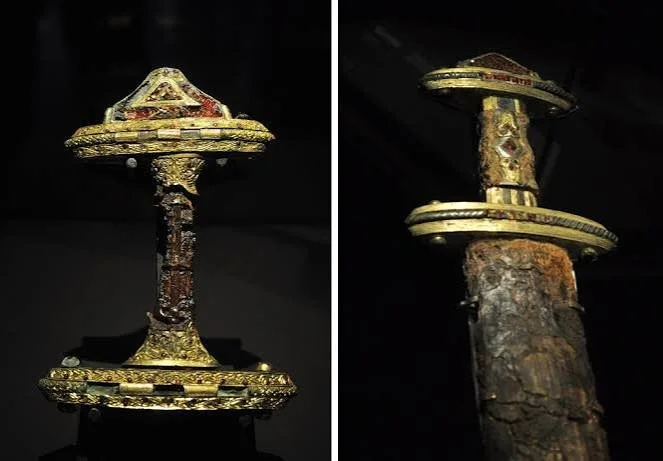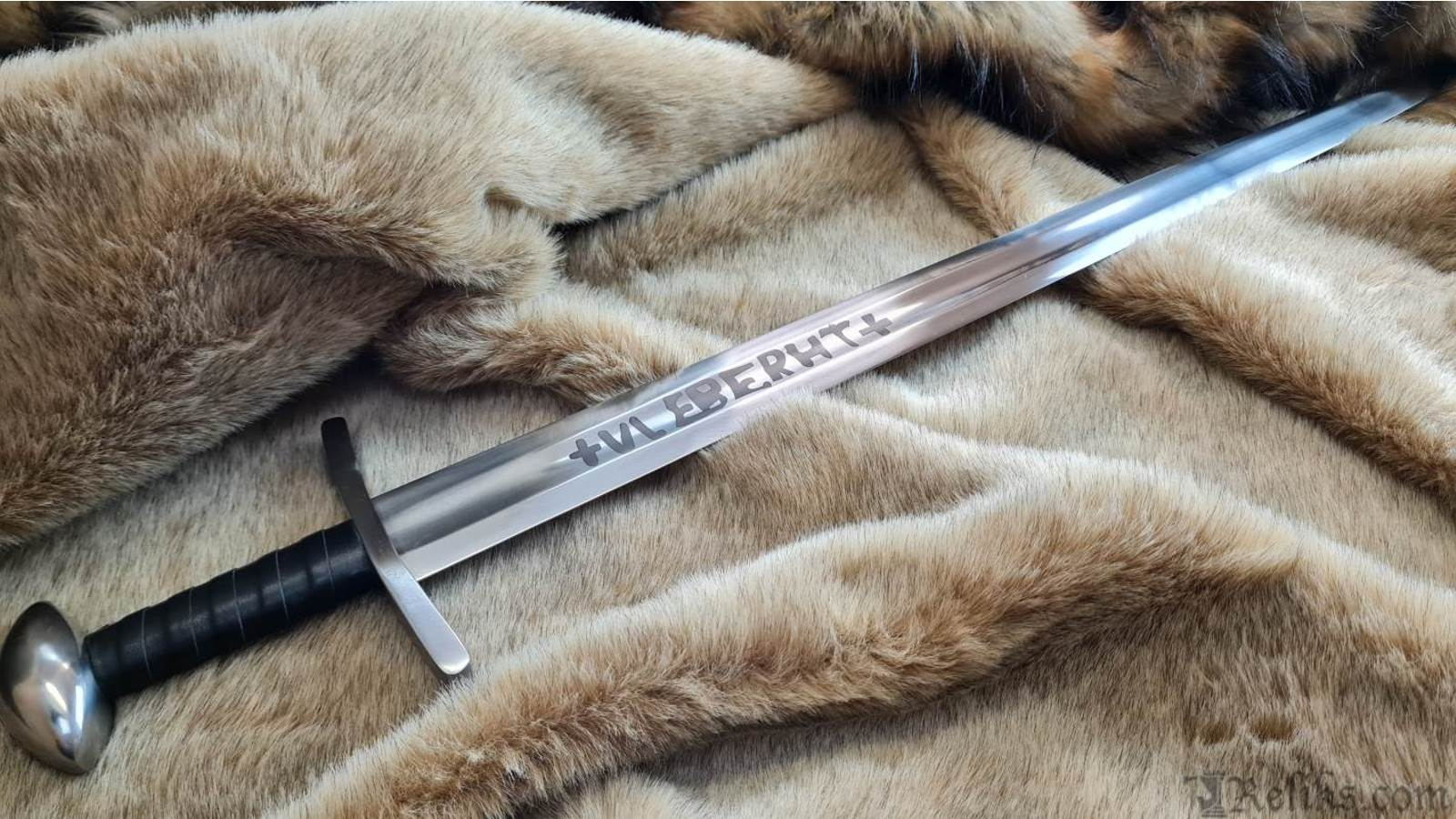
The Ulfberht swords represent one of the greatest technological enigmas of the medieval world. Emerging between the 9th and 11th centuries, these blades were the "super-weapons" of their time—so advanced that they appeared nearly a thousand years ahead of their technological neighbors.
While thousands of Viking-era swords have been found, only about 170 bear the distinct "signature" of the Ulfberht.
1. The Crucible Steel Mystery
Most Viking swords were made using pattern-welding, a process of twisting together strips of low-carbon iron and high-carbon steel. While beautiful, these blades were often brittle or prone to bending.
The Ulfberht Difference: Genuine Ulfberht blades were made of crucible steel (often called "wootz" or "Bulat" steel).
The Chemistry: These blades had a carbon content of approximately 1.2%, nearly triple that of other contemporary European swords. This removed impurities (slag) so effectively that the blades were stronger, sharper, and far more flexible than anything else on the battlefield.
The Temperature: To achieve this, the iron had to be heated to roughly 1,650°C ($3,000^\circ F$) to liquefy it and remove slag. European furnaces at the time were generally incapable of reaching these temperatures.
2. The Eastern Connection
How did Norse smiths acquire the technology to melt iron? Most archaeologists point to the Volga Trade Route.
The Silk Road Link: While the Vikings were raiding the West, they were trading in the East. It is believed that the raw "ingots" of crucible steel were imported from Central Asia or India (where wootz steel originated) via the Caspian Sea and the Russian rivers.
The Knowledge Gap: Once the Volga trade route declined in the 11th century, the supply of high-carbon steel dried up, and the production of Ulfberht-quality swords vanished from Europe until the Industrial Revolution.
3. The "Brand Name" and Ancient Forgeries
The word +VLFBERHT+ is inlaid into the blade using iron wire. It was essentially the first "luxury brand" in European history. Because these swords were so coveted, they were frequently counterfeited.
The Real Deal: Genuine blades usually feature the inscription +VLFBERH+T.
The Fakes: Many "knock-offs" have been found with slight misspellings, such as +VLFBERHT+ (note the placement of the cross).
Quality Control: The "fakes" were often made of inferior, slag-heavy iron. A Viking warrior who bought a counterfeit Ulfberht might find his sword shattering upon impact with a shield—a fatal marketing failure.
4. The Ritual of "Killing" the Sword
Interestingly, many Ulfberht swords have been found in rivers or burial mounds in a "bent" or broken state. This wasn't due to combat failure, but a ritual practice.
Retiring the Soul: Vikings believed great swords had a spirit. When a warrior died, the sword was "killed"—deliberately bent or broken—so that it could follow its master to Valhalla and couldn't be used by a common thief.
The Ulfberht remains a testament to the global reach of the Viking world, proving that "Dark Age" technology was often far more illuminated than we give it credit for.