The Epic of Gilgamesh is not only a masterpiece of world literature but a monumental achievement of archaeology. Its rediscovery in the 19th century shifted our understanding of history, proving that the roots of the "Great Flood" and the quest for immortality reached back millennia before the Bible was written.
1. The Lost Library of Ashurbanipal
For thousands of years, the story of Gilgamesh existed only as a whisper in ancient king lists. Its physical resurrection began in 1849, when the British archaeologist Austen Henry Layard excavated the ruins of Nineveh (modern-day Iraq).
The Discovery: Layard found the Royal Library of King Ashurbanipal, containing over 30,000 clay tablets and fragments.
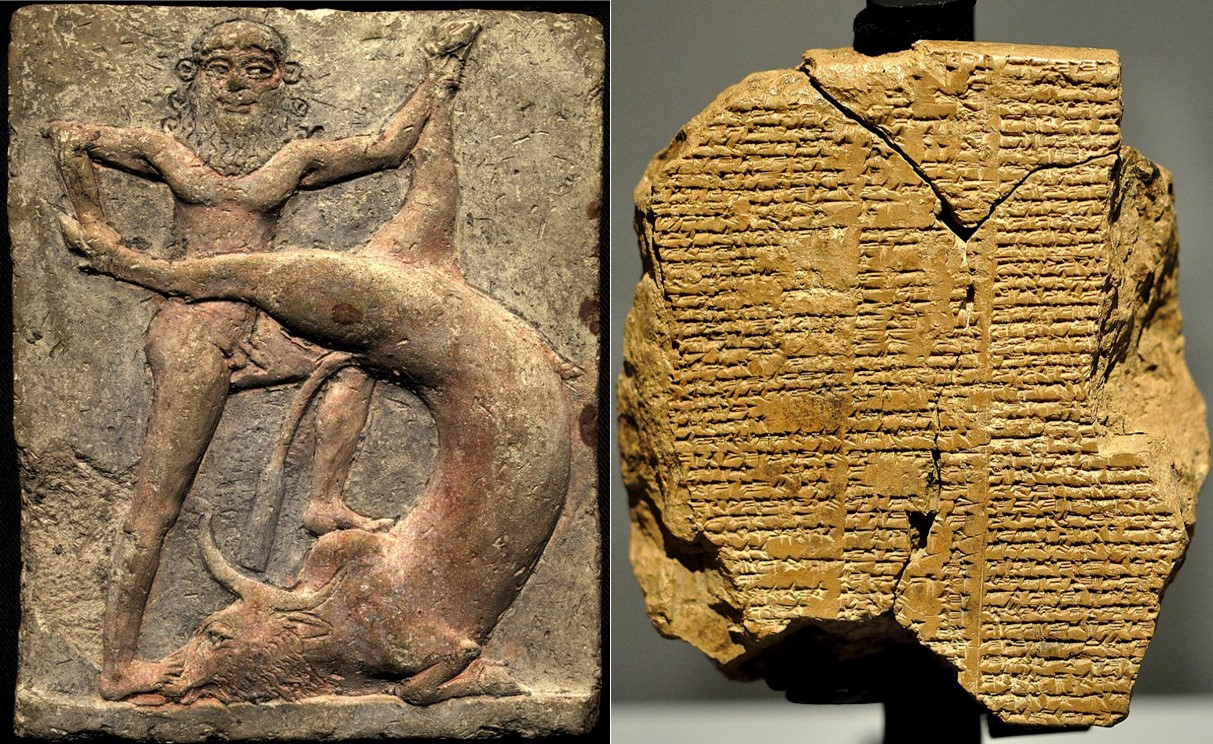
The Language: The tablets were written in Cuneiform, the wedge-shaped script of ancient Mesopotamia. At the time of their discovery, the script had been dead for nearly two millennia, and the contents of the tablets were a mystery.
2. George Smith and the "Flood Tablet"
The most dramatic moment in the archaeology of the Epic occurred in 1872 at the British Museum. George Smith, a self-taught cuneiform scholar, was sorting through the Nineveh fragments when he began reading Tablet XI.
The Shock: Smith realized he was reading an account of a great flood, a ship built to save animals and seeds, and a bird sent out to find land—details strikingly similar to the Book of Genesis.
The Reaction: Legend has it that Smith became so excited he began to tear off his clothes in the middle of the museum. This discovery caused a global sensation, as it provided the first extra-biblical evidence of the Deluge.
3. The Evolution of the Text
Archaeology has revealed that there was no single "author" of Gilgamesh. The story evolved over 2,000 years through several distinct phases:
Sumerian Oral Tradition (c. 2100 BCE): Independent poems about "Bilgames" (the Sumerian name) were composed.
Old Babylonian Version (c. 1800 BCE): These stories were integrated into a single narrative, including the famous meeting between Gilgamesh and the wild man Enkidu.
Standard Babylonian Version (c. 1200 BCE): A priest named Sîn-lēqi-unninni edited and expanded the text, adding the prologue and the 11-tablet structure found in Nineveh.
4. The Real King Gilgamesh
While the Epic describes him as two-thirds god and one-third man, archaeology suggests Gilgamesh was a historical figure.
The Tummal Inscription: This ancient Sumerian text credits Gilgamesh with rebuilding a shrine in Nippur, placing his reign around 2700 BCE.
The Walls of Uruk: The Epic begins and ends by praising the massive walls of the city of Uruk. Excavations at the site (modern-day Warka, Iraq) have uncovered defensive walls nearly six miles long, dating precisely to the early 3rd millennium BCE—the era of the historical Gilgamesh.
5. The Quest for Immortality
The story follows Gilgamesh’s grief after the death of Enkidu, leading him to seek out Utnapishtim, the Mesopotamian Noah. The archaeology of the poem mirrors its theme: while the man Gilgamesh died nearly 5,000 years ago, his "immortality" was achieved through the very medium the Epic praises—the enduring strength of the written word on clay.
The Epic of Gilgamesh remains the ultimate archaeological bridge, connecting the modern world to the dawn of human civilization.