The Mississippian culture represents one of the most complex and sophisticated societies in pre-contact North America. Reaching its peak between 1000 and 1550 CE, this civilization was defined by vast trade networks, advanced maize agriculture, and, most famously, the construction of massive earthen pyramids.
At the heart of this culture in the Southeast lies the Etowah Indian Mounds in present-day Georgia—a site that offers a window into the social and religious life of these "Mound Builders."
1. The Architecture of Power: The Mounds
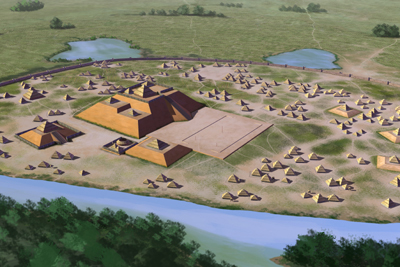
The inhabitants of Etowah did not live on the mounds; rather, the mounds served as platforms for the elite.
Mound A (The Great Mound): Standing over 60 feet tall, this massive earthen pyramid served as the platform for the chief’s residence. From this height, the "Great Sun" (the hereditary leader) could look down upon the entire village, physically reinforcing his status as a mediator between the earthly and divine realms.
Mound B: This secondary mound likely housed the residences of lesser nobles or priests.
Mound C: This was a specialized mortuary mound. It was used for the burial of the elite and has yielded some of the most significant archaeological artifacts in North America.
2. The Southeastern Ceremonial Complex (SECC)
The people of Etowah were part of a vast religious and trade network known as the Southeastern Ceremonial Complex. This "cult" shared a specific set of symbols and rituals that spanned from the Atlantic coast to Oklahoma.
The Birdman: A central figure in their mythology, often depicted as a warrior dressed in falcon feathers. This represented the Upper World and the power of the sky.
Shell Gorgets: Archaeologists have found intricate neck ornaments carved from whelk shells imported from the Gulf of Mexico. These were engraved with images of dancing warriors, spiders, and the "Cross-in-Circle" symbol representing the four directions of the cosmos.
3. The Etowah Marble Statues
Perhaps the most iconic discovery at the site is a pair of carved marble statues found in a log tomb within Mound C.
The Figures: They consist of a male and a female figure, each about two feet tall, carved from local Georgia marble and painted with red, black, and white pigments.
Function: They are believed to represent ancestral spirits or the founders of a specific lineage. They were treated as living beings, "fed" with offerings, and moved between locations during significant ceremonies.
4. Daily Life and Defense
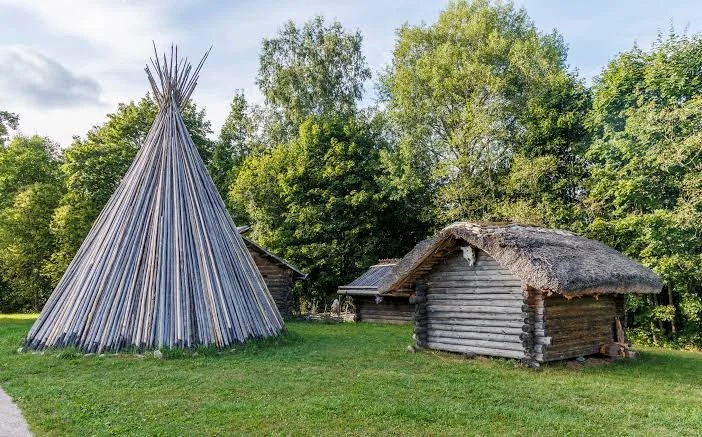
Beyond the mounds, Etowah was a bustling town of several thousand people.
The Palisade: The entire 54-acre site was enclosed by a deep moat and a massive wooden palisade (fence) with guard towers every 80 feet. This suggests that despite their artistic and religious sophistication, the Mississippian period was a time of frequent inter-tribal warfare.
Agriculture: They were master farmers of the "Three Sisters" (maize, beans, and squash), which provided the surplus food necessary to support a specialized class of priests, warriors, and craftsmen.