Introduction: The Shadow Behind the Throne
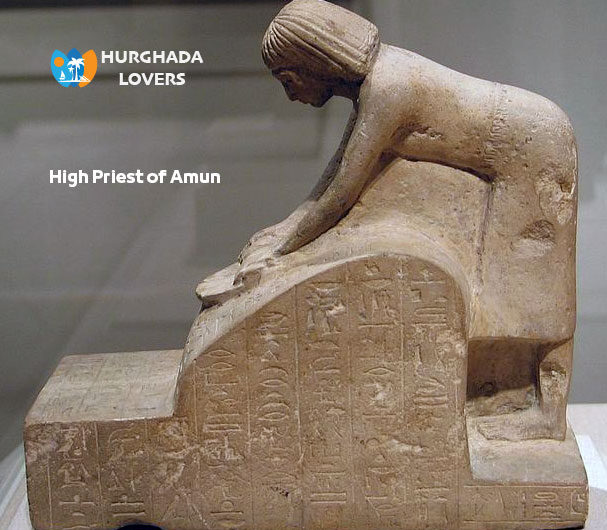
During the New Kingdom of Egypt (c. 1550–1069 BCE), the pharaoh was officially recognized as the living incarnation of Horus on earth and the supreme high priest of every deity. In reality, however, no single monarch could personally manage the daily rituals across hundreds of temples spanning the Nile. To bridge this gap, the pharaohs delegated their sacred duties to a professional class of priests. At the absolute apex of this religious hierarchy stood the High Priest of Amun (also known as the First Prophet of Amun).
Based in the monumental temple complex of Karnak in Thebes, the High Priest of Amun was responsible for overseeing the cult of Amun-Ra, the King of the Gods and the patron deity of the New Kingdom empire. As the empire expanded through military conquest, wealth in the form of gold, land, and prisoners of war poured directly into Amun’s treasuries. This economic influx transformed the high priesthood from a purely spiritual office into an incredibly powerful corporate state—one that eventually rivaled, and sometimes eclipsed, the political authority of the pharaoh himself.
1. Sacred Duties: Serving the Divine Image
The primary responsibility of the High Priest of Amun was not to preach to a congregation, but to physically care for the god. The ancient Egyptians believed that the actual life force of Amun resided within a sacred, golden cult statue housed deep inside the pitch-black, innermost sanctuary of the temple.
The Daily Morning Ritual: Every morning at dawn, the High Priest would break the clay seal on the sanctuary doors, light a torch, and rouse the god. He would wash the statue, perfume it with incense, drape it in fresh linen garments, and apply sacred cosmetics to its face.
The Divine Menu: The priest then presented the deity with a lavish banquet of roasted meats, fresh bread, fruits, wine, and beer. After the spiritual essence of the food was consumed by the god, the physical offerings were removed and redistributed to feed the temple staff—a process known as the reversion of offerings.
The Oracle Queries: During major religious festivals, the High Priest would help carry the heavy, boat-shaped shrine (barque) containing the god's statue out of the temple on the shoulders of the lower clergy. If a citizen or official stepped forward to ask the god a question, the High Priest would interpret the subtle swaying or tilting of the heavy barque as Amun's affirmative or negative response.
2. The Economic Superpower of Karnak
The spiritual authority of the High Priest was backed by an astronomical amount of material wealth. By the late New Kingdom, the Temple of Amun at Karnak had become the largest corporate landowner in Egypt.
Managing this vast economic empire meant that the High Priest of Amun effectively functioned as a chief financial officer. He controlled the collection of agricultural taxes across millions of acres, directed thousands of artisans, and managed the state grain reserves, which gave him immense leverage over the domestic economy.
3. The Ritual Vestments of the Priesthood
To enter the presence of the King of the Gods, the High Priest had to adhere to a strict code of ritual purity (uab). This daily discipline visually set the high clergy apart from the rest of Egyptian society.
The Shaved Head: Priests were required to completely shave their heads and body hair every few days to eliminate any risk of lice or contamination within the sacred precincts.
The Leopard Skin: During the most sacred funerary and temple rituals, the High Priest wore a genuine panther or leopard skin draped over his shoulder, symbolizing raw cosmic power and his authority to mediate between the living world and the divine.
The White Linen: Wool and leather were strictly forbidden inside the inner temple because they were derived from living animals and considered ritually unclean. The High Priest wore only the finest, pristine white linen pleated robes and sandals woven from papyrus reeds.
4. The Geopolitical Pivot: The Collapse of the New Kingdom
For centuries, pharaohs attempted to control the High Priesthood by appointing loyal family members or trusted military generals to the post. However, during the weak reigns of the late Twentieth Dynasty (the Ramesside Period), this delicate balance of power permanently fractured.
When the pharaohs lost control of the military, the High Priests of Amun simply stepped forward and assumed the crown themselves.
During the reign of Ramesses XI, a powerful military commander named Herihor seized the office of High Priest of Amun. Rather than remaining a subservient religious official, Herihor began writing his name inside a royal cartouche—a privilege strictly reserved for monarchs—and claimed royal titles.
This bold political maneuver effectively split Egypt in half, triggering the Third Intermediate Period. While the official pharaohs continued to rule Lower Egypt from the northern city of Tanis, the High Priests of Amun ruled Upper Egypt from Thebes as independent, military-backed hereditary monarchs. The temple of the god had officially swallowed the state.