Introduction: The Stone of Empire
Augustus famously boasted that he found Rome a city of brick and left it a city of marble. To achieve this unprecedented architectural transformation, the Roman Empire developed a massive, highly organized logistical network, extracting millions of tons of decorative stone from across the Mediterranean basin.
Marble was not merely a building material; it was a potent symbol of imperial power, wealth, and the subjugation of distant provinces. Transporting monoliths from the remote deserts of Egypt to the center of Rome served as a constant, physical reminder of the empire's vast reach.
1. The Imperial Monopoly: Ratio Marmorum
During the Roman Republic, marble was largely imported by wealthy private individuals. However, as the Empire expanded, the state assumed direct control over the most valuable quarries through a centralized administrative department known as the ratio marmorum.
Imperial Properties: Quarries producing the most prestigious stones were designated as imperial property. This ensured a steady supply for state monuments and prevented private citizens from outshining the emperor with their domestic architecture.
The Workforce: The brutal work of extracting stone was largely carried out by condemned criminals (damnati ad metalla), prisoners of war, and enslaved people. They were managed by military overseers and skilled engineers who lived in fortified, isolated quarry towns.
2. The Principal Mediterranean Quarries
Roman architects favored distinct colored marbles, and identifying these specific stones helps modern archaeologists map ancient trade routes and establish the wealth of specific buildings.
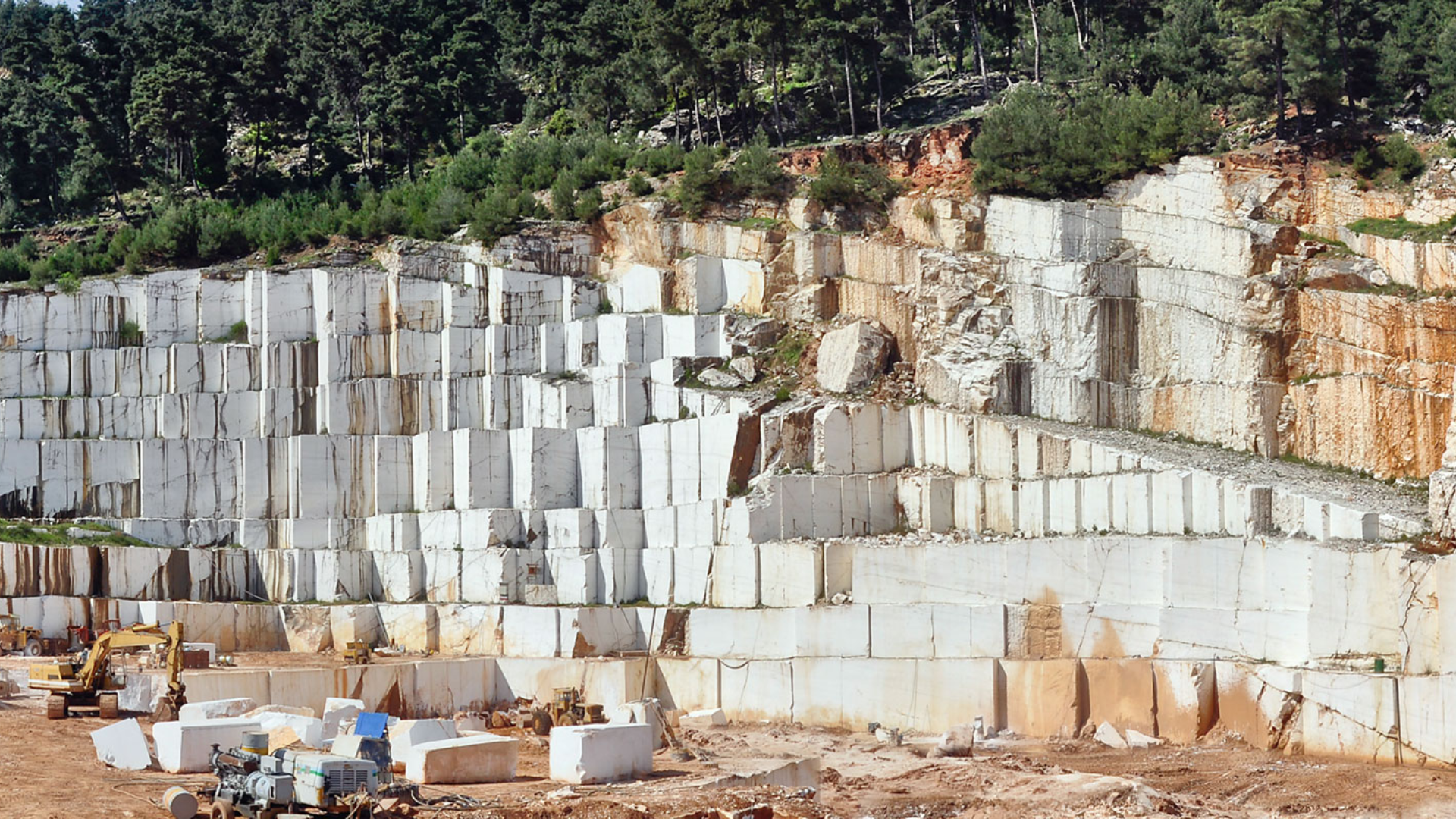
Luni (Carrara, Italy): The primary source of white marble (marmor Lunense). Because it was located on the Italian peninsula, it was significantly cheaper to transport to Rome than Greek equivalents and became the standard for imperial statues and temple cladding.
Mons Porphyrites (Egypt): Located deep in the Eastern Desert, this remote quarry was the sole source of Imperial Porphyry. Characterized by its deep purple color—the color of royalty—it was exclusively reserved for imperial use, particularly for sarcophagi and monolithic columns.
Chemtou (Tunisia): The source of Giallo Antico (Numidian marble), a highly prized yellow stone heavily veined with red or pink. It was frequently used for interior columns, pavements, and intricate veneer works in basilicas.
Carystus (Greece): Located on the island of Euboea, this quarry produced Cipollino (onion-stone), a distinctive white and pale green marble with heavy, wavy striations that resembled an onion's layers.
3. The Logistics of Extraction and Transport
Moving monoliths weighing hundreds of tons across the Mediterranean required engineering ingenuity that bordered on the miraculous.
The Extraction Process: Stonemasons did not use explosives. Instead, they carved deep grooves into the bedrock and hammered in dry wooden wedges. They then soaked the wood with water; as the wood swelled, the sheer physical force would cleanly split the stone from the mountain.
The Stone Ships (Naves Lapidariae): Rome constructed massive, specialized cargo ships designed specifically to transport immense weights. Some of these vessels were large enough to carry Egyptian obelisks weighing over 300 tons across the open sea.
The Marmorata: Once the ships reached the port of Ostia, the stone was transferred to flat-bottomed river barges and towed up the Tiber by teams of oxen to the Marmorata, Rome's sprawling riverside marble yards. Here, blocks were cataloged, stamped with lead seals, and stored until needed.
4. Modern Archaeological Identification
For centuries, archaeologists relied on visual inspection to identify the origin of marble fragments, which was frequently inaccurate due to weathering and natural variations within a single quarry. Today, science provides definitive answers.
Key insight: The most definitive method for sourcing ancient marble is isotopic analysis. By measuring the specific ratios of carbon and oxygen isotopes within a stone sample, scientists can create a chemical "fingerprint" that uniquely matches the marble to its original bedrock quarry.
This scientific sourcing has revolutionized our understanding of the Roman economy, proving that even modest provincial towns successfully imported expensive, colored Mediterranean marbles to mimic the imperial grandeur of the capital.