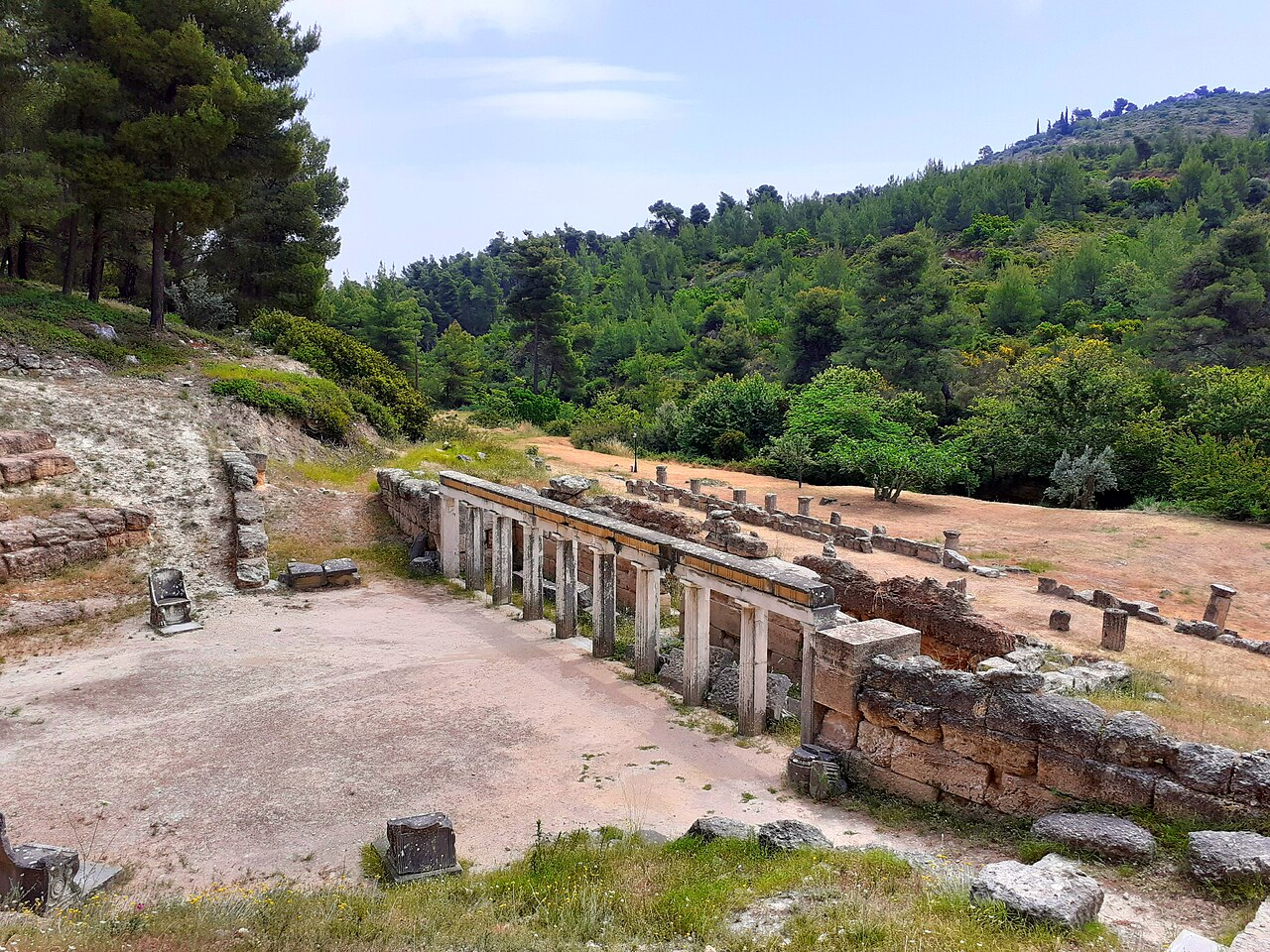
The Sanctuary of Amphiaraus at Oropos, situated on the border between Attica and Boeotia, serves as one of the most intriguing archaeological examples of an "incubation sanctuary" (abaton). Unlike the major political oracles like Delphi, Oropos was dedicated to the hero-physician Amphiaraus, functioning as a center for miraculous healing and divine dream-revelation.
The Architectural Layout
The Sacred Spring: The heart of the site is the spring located directly in front of the altar. Ancient tradition held that Amphiaraus emerged from the earth at this spot. Pilgrims would toss coins into the water, which were then periodically collected by the sanctuary officials to fund the site’s operations.
The Abaton (Dormitory): This was a long, stoa-like structure where pilgrims underwent the incubation ritual. After purification and sacrifice, supplicants would sleep here, hoping to be visited by Amphiaraus in a dream. The god would then provide instructions for their cure—such as specific diets, medical treatments, or religious offerings.
The Theater: A remarkably well-preserved theater sits integrated into the sanctuary landscape. While it hosted standard dramatic performances, it also functioned as a space for civic gatherings and festivals held in honor of the healing hero, emphasizing the intersection of public spectacle and private religious experience.
The Stoa: This large colonnade provided a waiting area and shelter for visitors. The walls were lined with inscriptions detailing successful cures and testimonies from pilgrims, serving as both a historical record and an advertisement for the god's efficacy.
The Ritual of Incubation
Purification: Before approaching the god, seekers had to undergo a rigorous purification process, which included fasting and ritual bathing in the sacred spring. This ensured both physical and spiritual readiness.
Sacrificial Gateway: Pilgrims sacrificed a ram to the hero, using its skin as a bedding material inside the abaton. This act of "sacrificial intimacy" was believed to bridge the gap between the mortal and the divine, facilitating the dream-state required for the god to intervene.
Interpretation: The healing process was not always direct. The dream was often symbolic or cryptic, requiring the sanctuary's resident priests to interpret the god’s message. This turned the sanctuary into a center of intellectual activity, where medicine, theology, and philosophy intersected.
Sociopolitical Significance
Neutral Territory: The sanctuary’s location on the border of Attica and Boeotia was strategic. It acted as a neutral ground where citizens from warring city-states could gather for healing, making it a rare space of trans-regional cooperation in a fractured Greek landscape.
Evidence of Healing: Archaeological finds include a wealth of votive offerings, such as anatomical clay models of body parts (eyes, hands, legs). These were left as tokens of gratitude or as a prayer for the healing of specific ailments, providing a visceral record of the health concerns and anxieties of ancient society.
Civic Branding: The sanctuary was a major source of revenue and prestige for Oropos. The construction of elaborate public works, such as the theater and fountain house, was funded by the influx of wealthy pilgrims, demonstrating how religious sites could drive regional economic and architectural development.
The Sanctuary of Amphiaraus remains an essential site for understanding the "lived religion" of the Greeks. It highlights that, beyond the grand Olympian temples, the ancient world was defined by localized cults that addressed the immediate, human realities of suffering, mortality, and the desperate search for divine intervention.