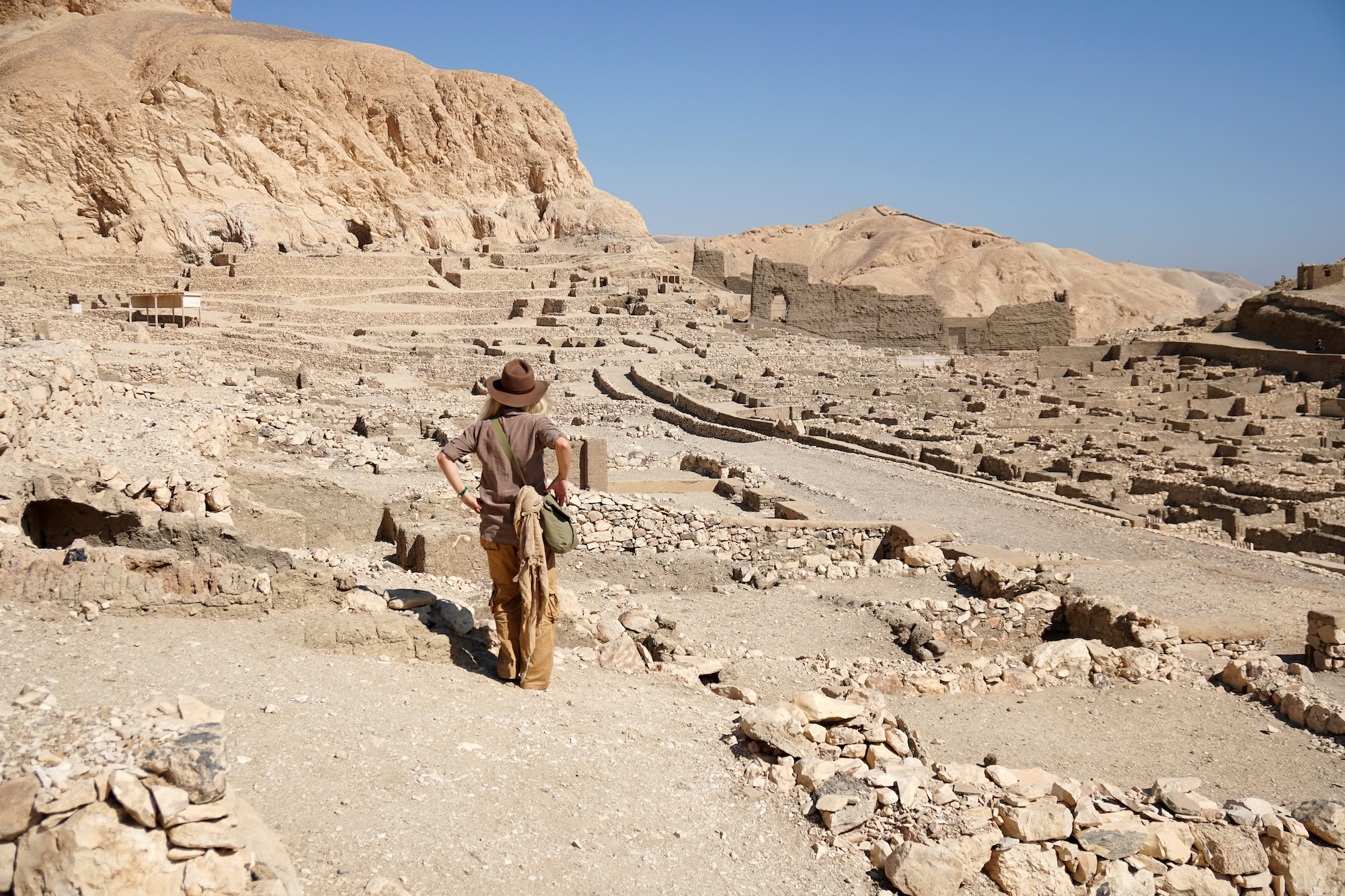
Deir el-Medina is the most important "living" archaeological site in Egypt. While the pyramids and temples tell us about the divine and the dead, Deir el-Medina reveals the intimate, messy, and incredibly bureaucratic reality of the people who actually built the tombs in the Valley of the Kings.
Located in a quiet desert valley across the Nile from modern-day Luxor, this was a purpose-built, walled settlement for the elite workforce—the royal tomb builders—during the New Kingdom (c. 1550–1070 BCE).
1. The "Community of the Tomb"
Unlike the common laborers who hauled stones for pyramids, the residents of Deir el-Medina were highly skilled professionals: master painters, sculptors, draftsmen, and stonecutters. Because they were privy to the state secrets of the royal necropolis, they were sequestered away from the rest of the population in this specialized village.
State-Provided Lifestyle: The state provided them with housing, water, grain, fish, fuel, and even medical care.
The Work Week: They worked in 10-day shifts, living in temporary shelters in the Valley of the Kings while on duty, and returning to their families in the village for the remaining days of the month.
Literacy: Because they were artists, literacy was remarkably high. We have found thousands of ostraca (limestone flakes or pottery shards used as scratchpads), which provide us with "micro-histories"—from lists of rations and legal complaints to shopping notes and even personal letters.
2. A Window into Private Life
Because the site was abandoned rather than continuously occupied, it preserved a snapshot of daily life that is unmatched anywhere else in the ancient world.
Legal Disputes: We have records of the village court. One famous case involves a man who stole a cloak and the subsequent legal battle to retrieve it. We have records of divorces, property disputes, and even strikes.
The First Recorded Strike: In the 29th year of the reign of Ramesses III (c. 1159 BCE), the artisans famously stopped working and marched on the mortuary temples because their grain rations were late. This is recognized by historians as one of the world's first recorded labor strikes.
Domestic Religion: While they worked on royal tombs for the Pharaoh, the villagers had their own vibrant private religious life. They worshipped deities like Meretseger ("She Who Loves Silence"), a cobra-goddess who guarded the Valley of the Kings, and Bes, a domestic god who protected households and children.
3. Personal Tombs and Artistic Legacy
The artisans didn't just build tombs for kings; they built them for themselves. The private tombs located at the edge of the village are among the most beautiful in Egypt.
Unlike the dark, intimidating royal tombs, the artisans' tombs are vibrant and personal. They feature scenes of the owners harvesting in the afterlife, enjoying family feasts, and playing board games. These tombs prove that these "ordinary" workers had a sophisticated understanding of theology and an exceptional command of the same artistic techniques used in the royal burials.
4. The Value of the Ostraca
The true treasure of Deir el-Medina is not gold, but the thousands of inscribed ostraca. They transform the ancient Egyptians from monolithic statues into real human beings.
Deir el-Medina serves as an essential counterweight to the monumental history of the Pharaohs. It proves that behind the grandeur of the New Kingdom lay a highly organized, literate, and deeply human middle class who managed the complex logistics of immortality for the entire Egyptian state.