• MAIN PAGE
  • LATEST NEWS
    • Lost Cities
    • Archaeology's Greatest Finds
    • Underwater Discoveries
    • Greatest Inventions
    • Studies
    • Blog
  • PHILOSOPHY
  • HISTORY
  • RELIGIONS
    • Africa
    • Anatolia
    • Arabian Peninsula
    • Balkan Region
    • China - East Asia
    • Europe
    • Eurasian Steppe
    • Levant
    • Mesopotamia
    • Oceania - SE Asia
    • Pre-Columbian Civilizations of America
    • Iranian Plateau - Central Asia
    • Indus Valley - South Asia
    • Japan
    • The Archaeologist Editor Group
    • Scientific Studies
    • Aegean Prehistory
    • Historical Period
    • Byzantine Middle Ages
    • Predynastic Period
    • Dynastic Period
    • Greco-Roman Egypt
  • Rome
  • PALEONTOLOGY
  • About us
Menu

The Archaeologist

  • MAIN PAGE
  • LATEST NEWS
  • DISCOVERIES
    • Lost Cities
    • Archaeology's Greatest Finds
    • Underwater Discoveries
    • Greatest Inventions
    • Studies
    • Blog
  • PHILOSOPHY
  • HISTORY
  • RELIGIONS
  • World Civilizations
    • Africa
    • Anatolia
    • Arabian Peninsula
    • Balkan Region
    • China - East Asia
    • Europe
    • Eurasian Steppe
    • Levant
    • Mesopotamia
    • Oceania - SE Asia
    • Pre-Columbian Civilizations of America
    • Iranian Plateau - Central Asia
    • Indus Valley - South Asia
    • Japan
    • The Archaeologist Editor Group
    • Scientific Studies
  • GREECE
    • Aegean Prehistory
    • Historical Period
    • Byzantine Middle Ages
  • Egypt
    • Predynastic Period
    • Dynastic Period
    • Greco-Roman Egypt
  • Rome
  • PALEONTOLOGY
  • About us
No results found

Ancient Irrigation: How the Hohokam People Flowered the Arizona Desert

April 23, 2026

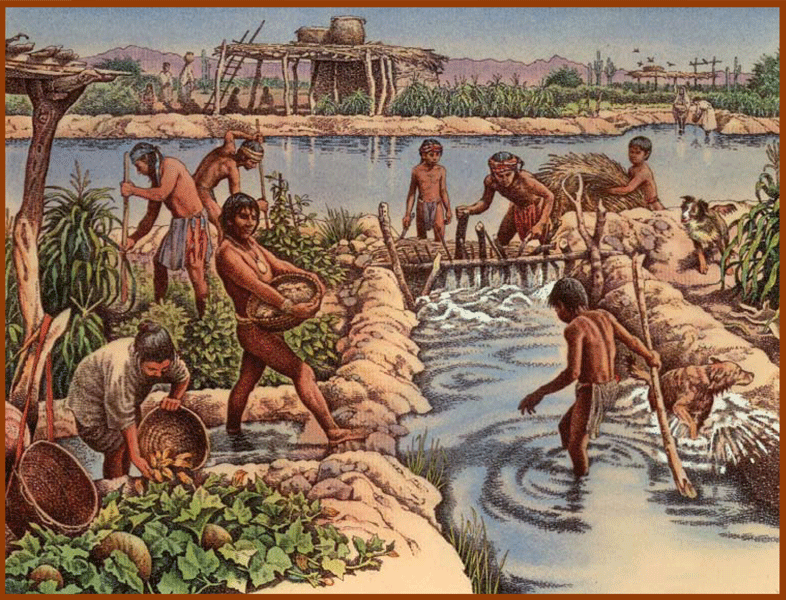
The Hohokam civilization (c. 300–1450 CE) represents one of the most impressive examples of environmental adaptation in ancient North America. Living in the arid desert of Arizona, they transformed dry land into productive farmland through large-scale irrigation systems.

This achievement allowed them to build stable communities and sustain agriculture in one of the harshest climates.

1. The Challenge: Farming in the Desert

The Hohokam lived in the Sonoran Desert, an environment with extreme heat and minimal rainfall.

  • Limited Water Sources: Rainfall was unpredictable, making traditional farming unreliable.

  • Nearby Rivers: The Gila and Salt Rivers became essential water sources, but required engineering to be useful.

  • Need for Innovation: Survival depended on controlling and distributing water efficiently.

2. The Canal System

The Hohokam built one of the largest irrigation networks in prehistoric North America.

  • Extensive Canals: Some canals stretched over 20 kilometers, carefully sloped to maintain water flow.

  • Engineering Skill: They controlled water speed to prevent erosion and flooding.

  • Maintenance: Regular clearing of sediment showed long-term planning and organization.

3. Agricultural Success

The irrigation system supported a thriving agricultural economy.

  • Crops Grown: Corn, beans, squash, and cotton were major products.

  • Food Surplus: Extra production allowed population growth and trade.

  • Cotton Use: Used for textiles, showing economic and cultural development.

4. Social Organization

Large-scale irrigation required cooperation and leadership.

  • Community Labor: Canal construction and repair involved many people.

  • Leadership Roles: Suggests organized governance or authority systems.

  • Settlement Growth: Villages expanded due to stable food supply.

5. Decline and Legacy

Around the 15th century, the Hohokam system declined.

  • Possible Causes: Drought, flooding, or resource depletion.

  • Abandonment: Settlements were eventually left behind.

  • Modern Impact: Some modern Arizona canals follow Hohokam routes.

6. Historical Significance

The Hohokam demonstrate how innovation can overcome environmental limits. Their irrigation system shows advanced engineering and strong social organization.

Do you think modern societies could learn from the Hohokam in managing water resources in today’s climate challenges?
← The Kingdom of Aksum: The Forgotten Empire That Rivaled RomeThe Vinland Map Controversy: Is It a Genuine Viking Map of America? →
Featured
image_2026-06-13_215346224.png
June 14, 2026
The Mycenaean Civilization: The Influence of the Minoan Culture
June 14, 2026
Read more →
June 14, 2026
image_2026-06-13_215237071.png
June 14, 2026
The Viking Age Trade Centers: The Town of Ribe and the Early Market
June 14, 2026
Read more →
June 14, 2026
image_2026-06-13_215150532.png
June 14, 2026
Ancient Egyptian Religion: The Importance of the Afterlife and the Heart
June 14, 2026
Read more →
June 14, 2026
image_2026-06-13_215112949.png
June 14, 2026
The Roman Emperor Marcus Aurelius: The Column of Marcus Aurelius
June 14, 2026
Read more →
June 14, 2026
image_2026-06-13_215017490.png
June 14, 2026
Ancient Greek Philosophy: The Stoics, Epicureans, and Skeptics
June 14, 2026
Read more →
June 14, 2026
image_2026-06-13_214932674.png
June 14, 2026
The Minoan Civilization: The Architecture of the Cretan Palaces
June 14, 2026
Read more →
June 14, 2026
read more

Powered by The archaeologist