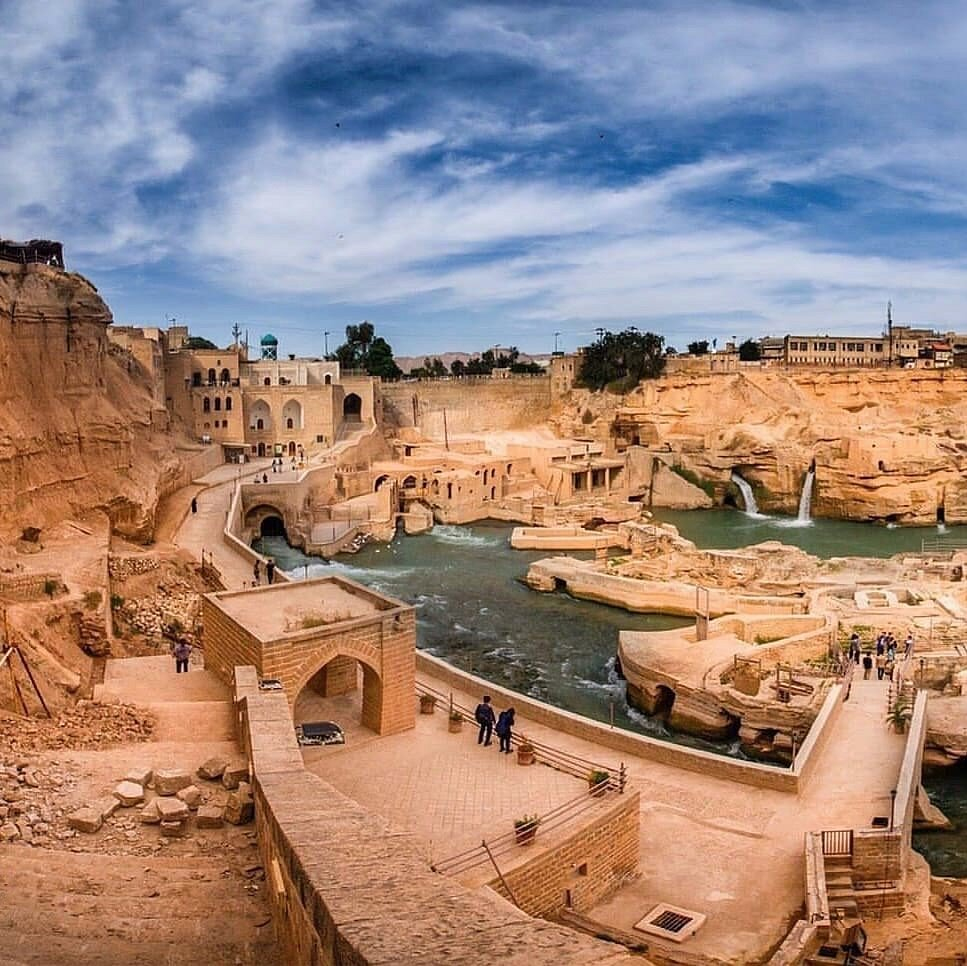
Ancient Irrigation in Iran: The Shushtar Historical Hydraulic System
The Shushtar Historical Hydraulic System, a UNESCO World Heritage site, is a masterpiece of creative genius dating back to the Achaemenid and Sassanid eras (specifically the 3rd century CE). Often described by UNESCO as a "masterpiece of the ancient world," it represents one of the most sophisticated examples of water management and civil engineering in human history.
1. The Core Concept: Diverting the Karun River
The system's brilliance lies in its ability to harness the power of the Karun River, Iran’s most effluent river, to provide water for irrigation, domestic use, and industrial power (mills).
The Gargar Canal: Engineers dug a massive artificial canal, known as the Gargar, which acted as a secondary river. By diverting water from the main Karun stream, they created an island of the city of Shushtar.
The Band-e Kaisar (Caesar's Weir): This was a dual-purpose bridge and dam built by Roman prisoners of war after the defeat of Emperor Valerian by the Sassanid King Shapur I. It was the first in Iran to combine a bridge with a dam, regulating water flow into the canal system.
2. The Cliff-Side Waterfalls and Mills
The most visually stunning part of the system is the mill area, where water diverted from the Gargar canal is channeled through a series of tunnels cut into the sandstone cliffs.
Tunnels and Vertical Shafts: Water enters the cliffside through tunnels and drops vertically onto the blades of watermills.
The "Waterfalls": After powering the mills, the water "spews" out of the cliff face in dozens of artificial waterfalls, cascading into a central basin. This process not only powered industry but also oxygenated the water and cooled the surrounding microclimate.
The Three Basins: The water was managed across three distinct levels, ensuring that even during seasonal fluctuations, there was enough pressure to keep the mills turning.
3. Engineering Innovations
The Shushtar system utilized several advanced hydraulic techniques that were ahead of their time:
Qanat Integration: The system worked in tandem with Qanats (underground aqueducts) to transport water to the surrounding agricultural plains even during the scorching Iranian summers.
Sluice Gates and Weirs: A series of weirs (like the Band-e Mizan) were strategically placed to maintain a constant water level, preventing the system from being overwhelmed during floods.
Durable Mortar (Sarooj): The structures were held together by Sarooj, a traditional water-resistant mortar made of lime, sand, clay, and even goat hair or eggshells, which allowed the tunnels to withstand the constant pressure of rushing water for nearly 1,700 years.
4. Social and Agricultural Impact
The Shushtar system wasn't just a feat of engineering; it was the lifeblood of a massive regional economy.
Year-Round Farming: By providing a reliable water source, the system allowed for the cultivation of over 40,000 hectares of land, turning the arid plains of Khuzestan into a lush agricultural hub for sugarcane and grains.
Urban Cooling: The network of canals running through the city of Shushtar acted as a primitive form of air conditioning, significantly lowering the ambient temperature during the peak of summer.
The Shushtar Historical Hydraulic System is a testament to the Sassanid philosophy of "Earth Management," proving that ancient civilizations could manipulate their environment on a massive scale without destroying the ecological balance.